Michael A. Arends – författare
Visar alla böcker från författaren Michael A. Arends. Handla med fri frakt och snabb leverans.
12 produkter
Drugs, Addiction, and the Brain
Av George F. Koob, Michael A. Arends m. fl.
Inbunden, 2014
1051 kr
Lägg i varukorg
Drugs, Addiction, and the Brain explores the molecular, cellular, and neurocircuitry systems in the brain that are responsible for drug addiction. Common neurobiological elements are emphasized that provide novel insights into how the brain mediates the acute rewarding effects of drugs of abuse and …
Drugs, Addiction, and the Brain
Av Michel Le Moal, Michael A. Arends m. fl.
E-bok, 2014
1119 kr
Lägg i varukorg
Drugs, Addiction, and the Brain explores the molecular, cellular, and neurocircuitry systems in the brain that are responsible for drug addiction. Common neurobiological elements are emphasized that provide novel insights into how the brain mediates the acute rewarding effects of drugs of abuse and …
Cannabis
Av George F. Koob, Michael A. Arends m. fl.
Häftad, 2026
1238 kr
Lägg i varukorg
Cannabis, Volume Five in the Neurobiology of Addiction series, explores the molecular and cellular systems in the brain that are responsible for both nicotine and marijuana addiction. The book includes thorough descriptions of the physiological effects and behavioral effects of nicotine and …
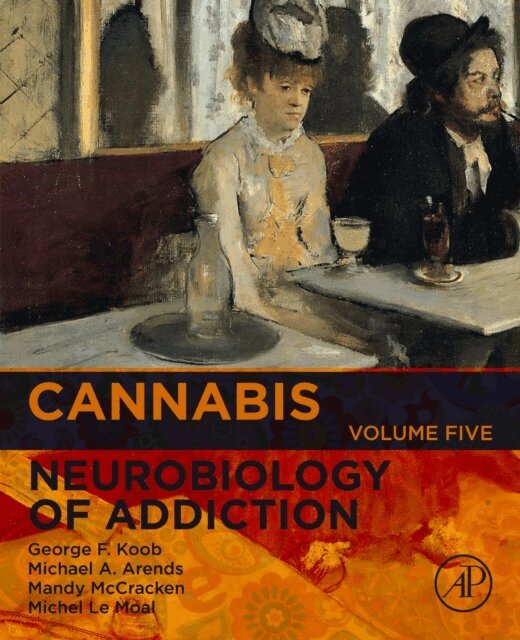
Cannabis
Av Michel Le Moal, Mandy L McCracken m. fl.
E-bok, 2026
1564 kr
Lägg i varukorg
Cannabis, Volume Five in the Neurobiology of Addiction series, explores the molecular and cellular systems in the brain that are responsible for both nicotine and marijuana addiction. The book includes thorough descriptions of the physiological effects and behavioral effects of nicotine and …
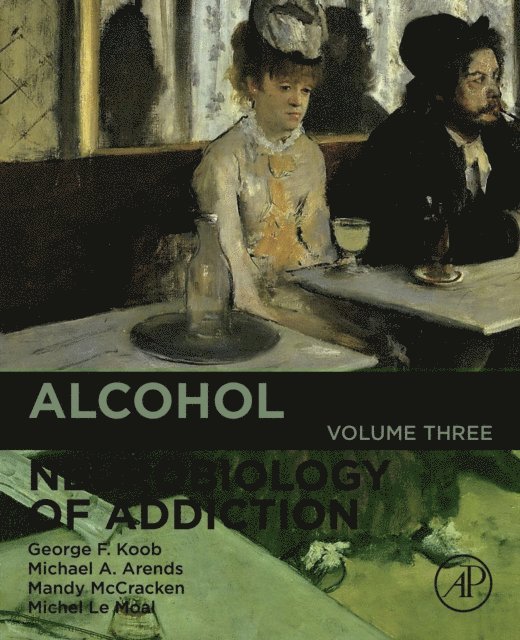
Alcohol
Neurobiology of Addiction
Av George F. Koob, Michael A. Arends m. fl.
Häftad, 2021
1302 kr
Lägg i varukorg
A current survey and synthesis of the most important findings in our understanding of the neurobiological mechanisms of addiction is detailed in our Neurobiology of Addiction series, each volume addressing a specific area of addiction. Alcohol, Volume 3 in the series, explores the molecular, …
Alcohol
Neurobiology of Addiction
Av Michel Le Moal, Mandy L McCracken m. fl.
E-bok, 2021
1759 kr
Lägg i varukorg
A current survey and synthesis of the most important findings in our understanding of the neurobiological mechanisms of addiction is detailed in our Neurobiology of Addiction series, each volume addressing a specific area of addiction. Alcohol, Volume 3 in the series, explores the molecular, …
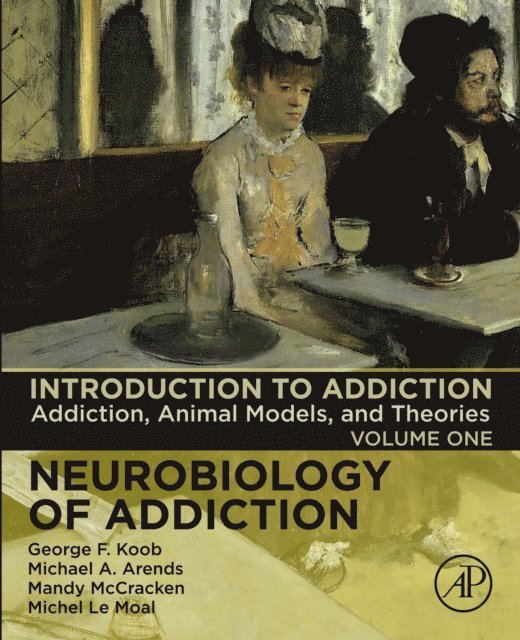
Introduction to Addiction
Addiction, Animal Models, and Theories
Av Michel Le Moal, Mandy L McCracken m. fl.
E-bok, 2019
1814 kr
Lägg i varukorg
Introduction to Addiction, Volume One in the series, introduces the reader to the study of neurobiology of addiction by clearly defining addiction and its neuroadaptational views. This volume includes thorough descriptions of the various animal models applicable to the study of addiction, including …
Introduction to Addiction
Addiction, Animal Models, and Theories
Av George F. Koob, Michael A. Arends m. fl.
Häftad, 2019
1315 kr
Lägg i varukorg
Introduction to Addiction, Volume One in the series, introduces the reader to the study of neurobiology of addiction by clearly defining addiction and its neuroadaptational views. This volume includes thorough descriptions of the various animal models applicable to the study of addiction, including …
Opioids
Av George F. Koob, Michael A. Arends m. fl.
Häftad, 2023
1265 kr
Lägg i varukorg
A current survey and synthesis of the most important findings in our understanding of the neurobiological mechanisms of addiction is detailed in our Neurobiology of Addiction series, each volume addressing a specific area of addiction. Opioids, Volume 4 in the series, explores the molecular, …
Opioids
Av Michel Le Moal, Mandy L McCracken m. fl.
E-bok, 2023
1759 kr
Lägg i varukorg
A current survey and synthesis of the most important findings in our understanding of the neurobiological mechanisms of addiction is detailed in our Neurobiology of Addiction series, each volume addressing a specific area of addiction. Opioids, Volume 4 in the series, explores the molecular, …
Psychostimulants
Av George F. Koob, Michael A. Arends m. fl.
Häftad, 2020
1265 kr
Lägg i varukorg
A current survey and synthesis of the most important findings in our understanding of the neurobiological mechanisms of addiction are detailed in our Neurobiology of Addiction series, each volume addressing a specific area of addiction. Psychostimulants , Volume 2 in the series, explores the …
Psychostimulants
Av Michel Le Moal, Mandy L McCracken m. fl.
E-bok, 2020
1759 kr
Lägg i varukorg
A current survey and synthesis of the most important findings in our understanding of the neurobiological mechanisms of addiction are detailed in our Neurobiology of Addiction series, each volume addressing a specific area of addiction. Psychostimulants, Volume 2 in the series, explores the …