Michael Bernstein – författare
Visar alla böcker från författaren Michael Bernstein. Handla med fri frakt och snabb leverans.
8 produkter
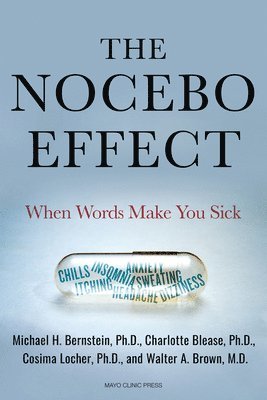
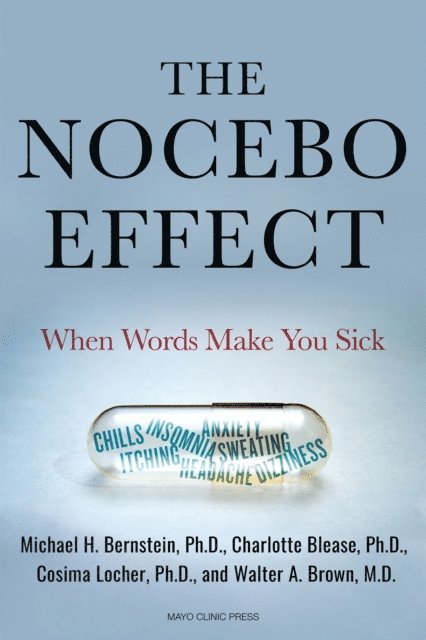
The Nocebo Effect: When Words Make You Sick
Av Michael Bernstein, Charlotte Blease
Inbunden, 2024
305 kr
Lägg i varukorg
Handbook of Collective Intelligence
Av Michael Bernstein, Thomas W. Malone
E-bok, 2015
477 kr
Lägg i varukorg
Experts describe the latest research in a rapidly growing multidisciplinary field, the study of groups of individuals acting collectively in ways that seem intelligent. Intelligence does not arise only in individual brains; it also arises in groups of individuals. This is collective intelligence: …
Handbook of Collective Intelligence
Av Thomas W. Malone, Michael Bernstein
Häftad, 2022
564 kr
Lägg i varukorg
The Ultimate Guide to Planning Your Personal Finances: The Big 6 of Personal Financial Planning
Häftad
319 kr
Lägg i varukorg
FLAPPERHOUSE #15 - Fall 2017
Av Chris Antzoulis, Michael Bernstein m. fl.
Häftad, 2017
116 kr
Lägg i varukorg
Nocebo Effect
When Words Make You Sick
Av Walter Brown, Cosima Locher m. fl.
E-bok, 2024
42 kr
Lägg i varukorg
An investigation of the nocebo effect—the placebo effect's evil twin. Can beliefs make you sick? Consider "The June Bug" incident from a US textile factory in the early 1960s. Many employees began to feel dizzy, had an upset stomach, and vomited. Some were even hospitalized. The illness was …
Five Portraits
Modernity and the Imagination in Twentieth-Century German Writing
Häftad, 2000
315 kr
Tillfälligt slut
In Five Portraits, one of the most acute critical thinkers of our time presents essays on five of the most important writers of the past hundred years: Rainer Maria Rilke, Paul Celan, Robert Musil, Martin Heidegger, and Walter Benjamin. The result is a remarkable examination of a moment when these …