Michael C. Thrun – författare
Visar alla böcker från författaren Michael C. Thrun. Handla med fri frakt och snabb leverans.
8 produkter
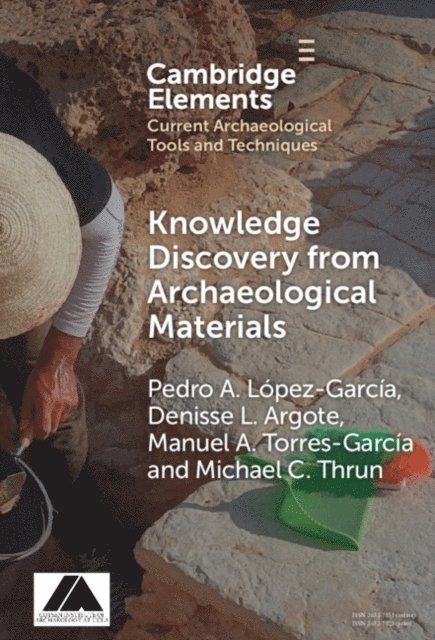
Knowledge Discovery from Archaeological Materials
Av Pedro A. López García, Denisse L. Argote m. fl.
Häftad, 2024
317 kr
Lägg i varukorg
This Element highlights the employment within archaeology of classification methods developed in the field of chemometrics, artificial intelligence, and Bayesian statistics. These operate in both high- and low-dimensional environments and often have better results than traditional methods. The …
Knowledge Discovery from Archaeological Materials
Av Michael C. Thrun, Manuel A. Torres-Garcia m. fl.
E-bok, 2024
303 kr
Lägg i varukorg
Knowledge Discovery from Archaeological Materials
Av Michael C. Thrun, Manuel A. Torres-Garcia m. fl.
E-bok, 2024
303 kr
Lägg i varukorg
This Element highlights the employment within archaeology of classification methods developed in the field of chemometrics, artificial intelligence, and Bayesian statistics. These operate in both high- and low-dimensional environments and often have better results than traditional methods. The …
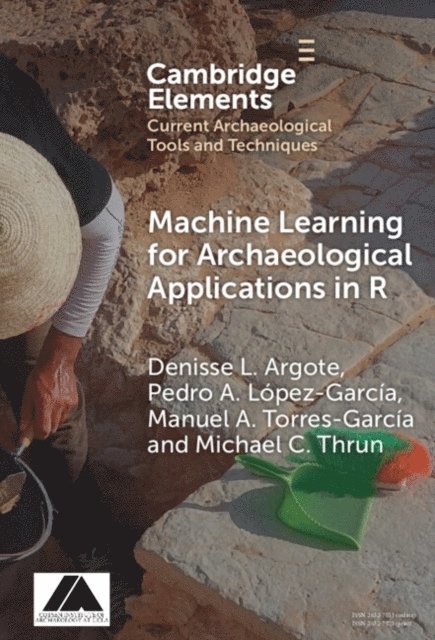
Machine Learning for Archaeological Applications in R
Av Denisse L. Argote, Pedro A. López-­García m. fl.
Inbunden, 2025
938 kr
Lägg i varukorg
This Element highlights the employment within archaeology of classification methods developed in the field of chemometrics, artificial intelligence, and Bayesian statistics. These run in both high- and low-dimensional environments and often have better results than traditional methods. Instead of a …
Machine Learning for Archaeological Applications in R
Av Michael C. Thrun, Manuel A. Torres--Garcia m. fl.
E-bok, 2025
303 kr
Lägg i varukorg
Machine Learning for Archaeological Applications in R
Av Michael C. Thrun, Manuel A. Torres--Garcia m. fl.
E-bok, 2025
303 kr
Lägg i varukorg
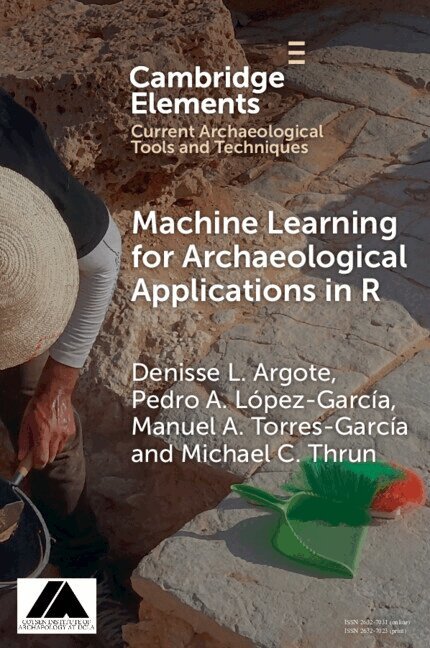
Machine Learning for Archaeological Applications in R
Av Denisse L. Argote, Pedro A. López-­García m. fl.
Häftad, 2025
317 kr
Lägg i varukorg
This Element highlights the employment within archaeology of classification methods developed in the field of chemometrics, artificial intelligence, and Bayesian statistics. These run in both high- and low-dimensional environments and often have better results than traditional methods. Instead of a …
Knowledge Discovery from Archaeological Materials
Av Pedro A. López García, Denisse L. Argote m. fl.
Inbunden, 2024
938 kr
Lägg i varukorg
This Element highlights the employment within archaeology of classification methods developed in the field of chemometrics, artificial intelligence, and Bayesian statistics. These operate in both high- and low-dimensional environments and often have better results than traditional methods. The …