Michael D. Barber - Böcker
Visar alla böcker från författaren Michael D. Barber. Handla med fri frakt och snabb leverans.
6 produkter
6 produkter
640 kr
Tillfälligt slut
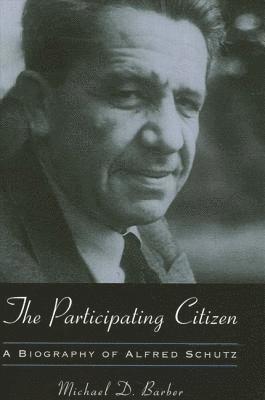
An in-depth biography of the philosopher who brought phenomenology to the social sciences.Winner of the2007 Edward Goodwin Ballard Book Prize in Phenomenology presented by the Center for Advanced Research in Phenomenology with interest from a fund raised from Professor Ballard's family, students, and friends Vienna-born philosopher and social scientist Alfred Schutz (1899–1959) is primarily responsible for applying to the social sciences the resources of phenomenology, the prominent philosophical movement begun by Edmund Husserl in the early twentieth century. Drawing on previously unavailable letters, this biography depicts Schutz's childhood, adolescence, first visit to the United States, struggle to secure asylum for family and friends after the Austrian Anschluss, family and business life, and connections with phenomenologists worldwide, the New School for Social Research, and close friends. As a philosophical biography, it examines the ethical dimensions of his philosophical work, including its resistance to ethical theory, and shows how during the civil rights movement he articulated a standard for assessing democracy in terms of ability to facilitate individual citizen participation.
427 kr
Tillfälligt slut
An in-depth biography of the philosopher who brought phenomenology to the social sciences.Winner of the2007 Edward Goodwin Ballard Book Prize in Phenomenology presented by the Center for Advanced Research in Phenomenology with interest from a fund raised from Professor Ballard's family, students, and friends Vienna-born philosopher and social scientist Alfred Schutz (1899–1959) is primarily responsible for applying to the social sciences the resources of phenomenology, the prominent philosophical movement begun by Edmund Husserl in the early twentieth century. Drawing on previously unavailable letters, this biography depicts Schutz's childhood, adolescence, first visit to the United States, struggle to secure asylum for family and friends after the Austrian Anschluss, family and business life, and connections with phenomenologists worldwide, the New School for Social Research, and close friends. As a philosophical biography, it examines the ethical dimensions of his philosophical work, including its resistance to ethical theory, and shows how during the civil rights movement he articulated a standard for assessing democracy in terms of ability to facilitate individual citizen participation.
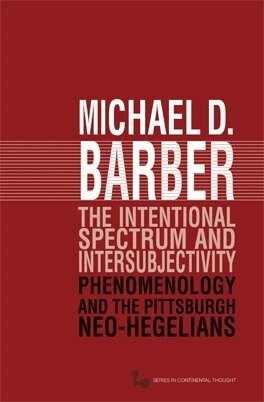
Intentional Spectrum and Intersubjectivity
Phenomenology and the Pittsburgh Neo-Hegelians
Inbunden, Engelska, 2011
1 022 kr
Skickas inom 10-15 vardagar
World-renowned analytic philosophers John McDowell and Robert Brandom, dubbed “Pittsburgh Neo-Hegelians,” recently engaged in an intriguing debate about perception. In The Intentional Spectrum and Intersubjectivity Michael D. Barber is the first to bring phenomenology to bear not just on the perspectives of McDowell or Brandom alone, but on their intersection. He argues that McDowell accounts better for the intelligibility of empirical content by defending holistically functioning, reflectively distinguishable sensory and intellectual intentional structures. He reconstructs dimensions implicit in the perception debate, favoring Brandom on knowledge’s intersubjective features that converge with the ethical characteristics of intersubjectivity Emmanuel Levinas illuminates.Phenomenology becomes the third partner in this debate between two analytic philosophers, critically mediating their discussion by unfolding the systematic interconnectionamong perception, intersubjectivity, metaphilosophy, and ethics.
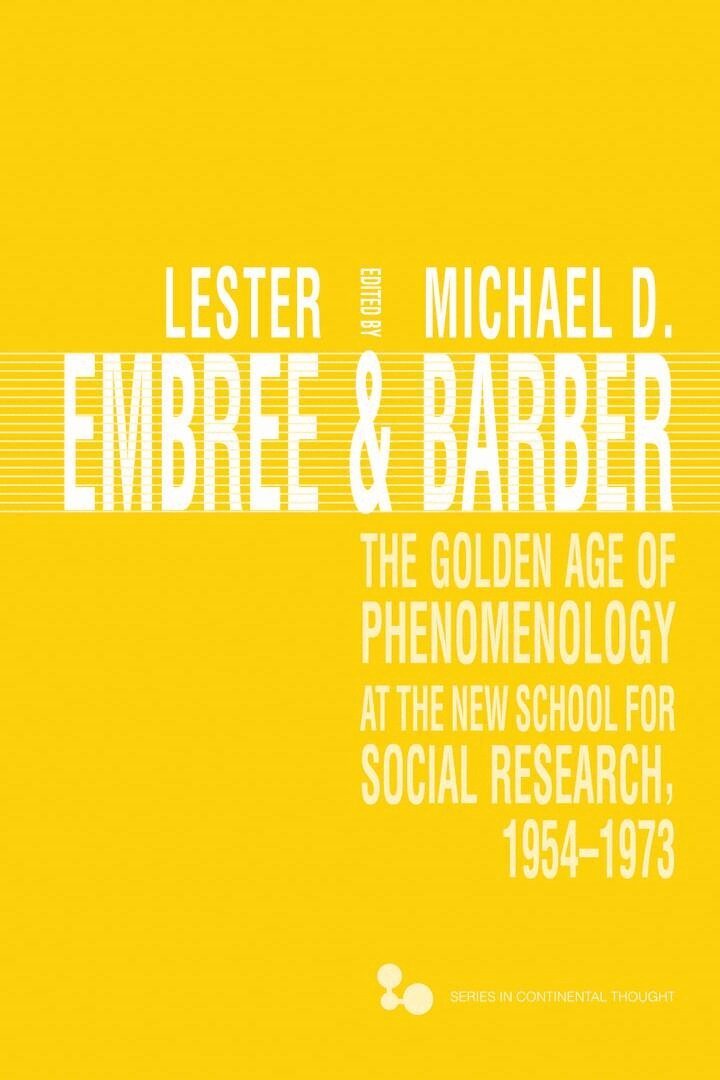
Golden Age of Phenomenology at the New School for Social Research, 1954–1973
Inbunden, Engelska, 2017
1 183 kr
Skickas inom 10-15 vardagar
This collection focuses on the introduction of phenomenology to the United States by the community of scholars who taught and studied at the New School for Social Research from 1954 through 1973. During those years, Dorion Cairns, Alfred Schutz, and Aron Gurwitsch—all former students of Edmund Husserl—came together in the department of philosophy to establish the first locus of phenomenology scholarship in the country. This founding trio was soon joined by three other prominent scholars in the field: Werner Marx, Thomas M. Seebohm, and J. N. Mohanty. The Husserlian phenomenology that they brought to the New School has subsequently spread through the Anglophone world as the tradition of Continental philosophy.The first part of this volume includes original works by each of these six influential teachers of phenomenology, introduced either by one of their students or, in the case of Seebohm and Mohanty, by the thinkers themselves. The second part comprises contributions from twelve leading scholars of phenomenology who trained at the New School during this period. The result is a powerful document tracing the lineage and development of phenomenology in the North American context, written by members of the first two generations of scholars who shaped the field.Contributors: Michael Barber, Lester Embree, Jorge García-Gómez, Fred Kersten, Thomas M. T. Luckmann, William McKenna, J. N. Mohanty, Giuseppina C. Moneta, Thomas Nenon, George Psathas, Osborne P. Wiggins, Matthew M. Seebohm, and Richard M. Zaner.
862 kr
Skickas inom 10-15 vardagar
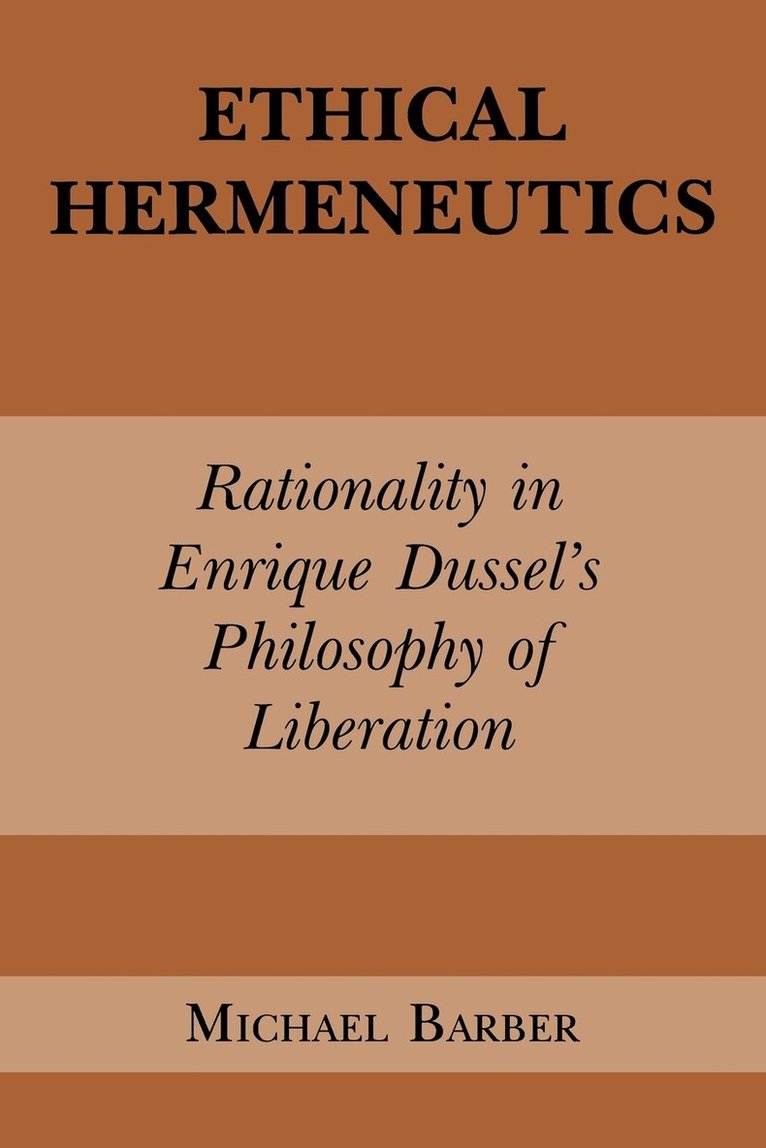
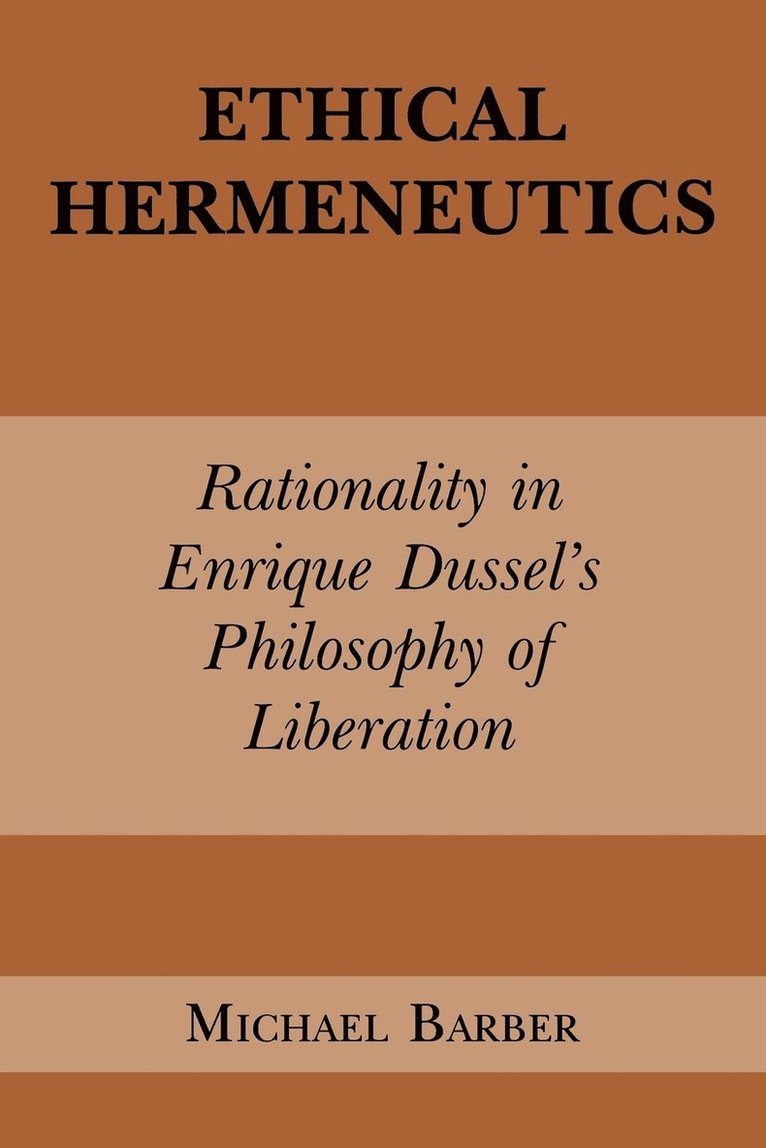
The essence of Dussel's thought is presented through the concept of "ethical hermeneutics" which seeks to interpret reality from the viewpoint of what Emmanuel Levinas presents as the "other" - those who are vanquished, forgotten, or excluded from existent socio-political or cultural systems. Barber traces Dussel's development toward Levinas' philosophy through his discussion of the Hegelian dialectic and through the stages of Dussel's own ethical theory.
402 kr
Skickas inom 7-10 vardagar
The essence of Dussel's thought is presented through the concept of "ethical hermeneutics" which seeks to interpret reality from the viewpoint of what Emmanuel Levinas presents as the "other" - those who are vanquished, forgotten, or excluded from existent socio-political or cultural systems. Barber traces Dussel's development toward Levinas' philosophy through his discussion of the Hegelian dialectic and through the stages of Dussel's own ethical theory.