Michael D. Kennedy - Böcker
Visar alla böcker från författaren Michael D. Kennedy. Handla med fri frakt och snabb leverans.
7 produkter
7 produkter
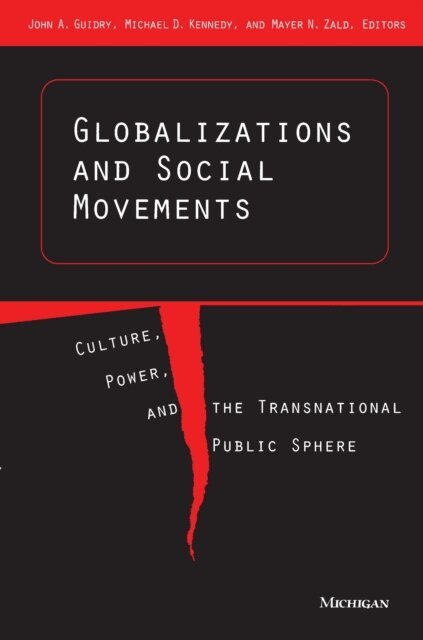
Globalizations and Social Movements
Culture, Power, and the Transnational Public Sphere
Häftad, Engelska, 2000
460 kr
Skickas inom 7-10 vardagar
Globalization is a set of processes that are weakening national boundaries. Both transnational and local social movements develop to resist the processes of globalization--migration, economic interdependence, global media coverage of events and issues, and intergovernmental relations. Globalization not only spurs the creation of social movements, but affects the way many social movements are structured and work. The essays in this volume illuminate how globalization is caught up in social movement processes and question the boundaries of social movement theory.The book builds on the modern theory of social movements that focuses upon political process and opportunity, resource mobilization and mobilization structure, and the cultural framing of grievances, utopias, ideologies, and options. Some of the essays deal with the structure of international campaigns, while others are focused upon conflicts and movements in less developed countries that have strong international components. The fourteen essays are written by both well established senior scholars and younger scholars in anthropology, political science, sociology, and history. The essays cover a range of time periods and regions of the world.This book is relevant for anyone interested in the politics and social change processes related to globalization as well as social-movement theory.Mayer Zald is Professor of Sociology, University of Michigan. Michael Kennedy is Vice Provost for International Programs, Associate Professor of Sociology, and Director of the Center for Russian and East European Affairs, University of Michigan. John Guidry is Assistant Professor of Political Science, Augustana College.
516 kr
Skickas inom 7-10 vardagar
What kinds of intellectual practices are influential in the making and remaking of nations? How do literary texts shape nation-making? When are intellectuals most and least relevant to developing the nation? How do liberal, socialist, and nationalist intellectuals shape national ideologies? One of the principal debates in the study of nations concerns the relative significance of elites, specifically intellectuals, in inventing the nation. Intellectuals and the Articulation of the Nation delimits the capacities of intellectuals for shaping nations, as well as the ways in which the development of nations shapes intellectual practices. The introductory chapter presents the principal debates around nation-making and the identity and practices of intellectuals. Contributors from anthropology, history, literature, political science and sociology then explore the capacities and limits of intellectuals in the formation and restructuring of national identities in general, and in Eastern Europe and the former Soviet Union in particular. Each essay is followed by a brief intellectual autobiography in which the author's own relationship to nations is explored. The editors conclude the volume by developing a general theory of national intellectual practice.The principal focus of this book--the mutual articulation of intellectuals and nations--is a key subject for students and scholars of history, cultural studies, political science, anthropology, and sociology. Ronald Grigor Suny is Professor of Political Science, University of Chicago. Michael D. Kennedy is Associate Professor of Sociology, University of Michigan.
Del 79 - Cambridge Russian, Soviet and Post-Soviet Studies
Professionals, Power and Solidarity in Poland
A Critical Sociology of Soviet-Type Society
Häftad, Engelska, 2008
665 kr
Skickas inom 7-10 vardagar
The Solidarity movement of the early 1980s not only triggered a transformation in Polish society, it forced a fundamental reconsideration of the nature of socialism throughout the Soviet Union and Eastern Europe. Seen as one of the most important social movements of the twentieth century, Michael Kennedy develops a theoretical conception of Soviet-type societies by analysing Solidarity's significance. He explains the background to the nature of the conflict between Solidarity and the authorities and considers the implications of Solidarity's struggle for the theory of the Soviet-type system's reproduction and transformation. Then, the internal constitution of Solidarity in terms of gender and, in particular, cross-class alliances is examined, which is followed by the implications of his analysis both for understanding perestroika in the Soviet Union and more generally for reformulating a critical sociology of Soviet-type societies.
Del 79 - Cambridge Russian, Soviet and Post-Soviet Studies
Professionals, Power and Solidarity in Poland
A Critical Sociology of Soviet-Type Society
Inbunden, Engelska, 1991
1 666 kr
Skickas inom 7-10 vardagar
The Solidarity movement of the early 1980s not only triggered a transformation in Polish society, it forced a fundamental reconsideration of the nature of socialism throughout the Soviet Union and Eastern Europe. Seen as one of the most important social movements of the twentieth century, Michael Kennedy develops a theoretical conception of Soviet-type societies by analysing Solidarity's significance. He explains the background to the nature of the conflict between Solidarity and the authorities and considers the implications of Solidarity's struggle for the theory of the Soviet-type system's reproduction and transformation. Then, the internal constitution of Solidarity in terms of gender and, in particular, cross-class alliances is examined, which is followed by the implications of his analysis both for understanding perestroika in the Soviet Union and more generally for reformulating a critical sociology of Soviet-type societies.
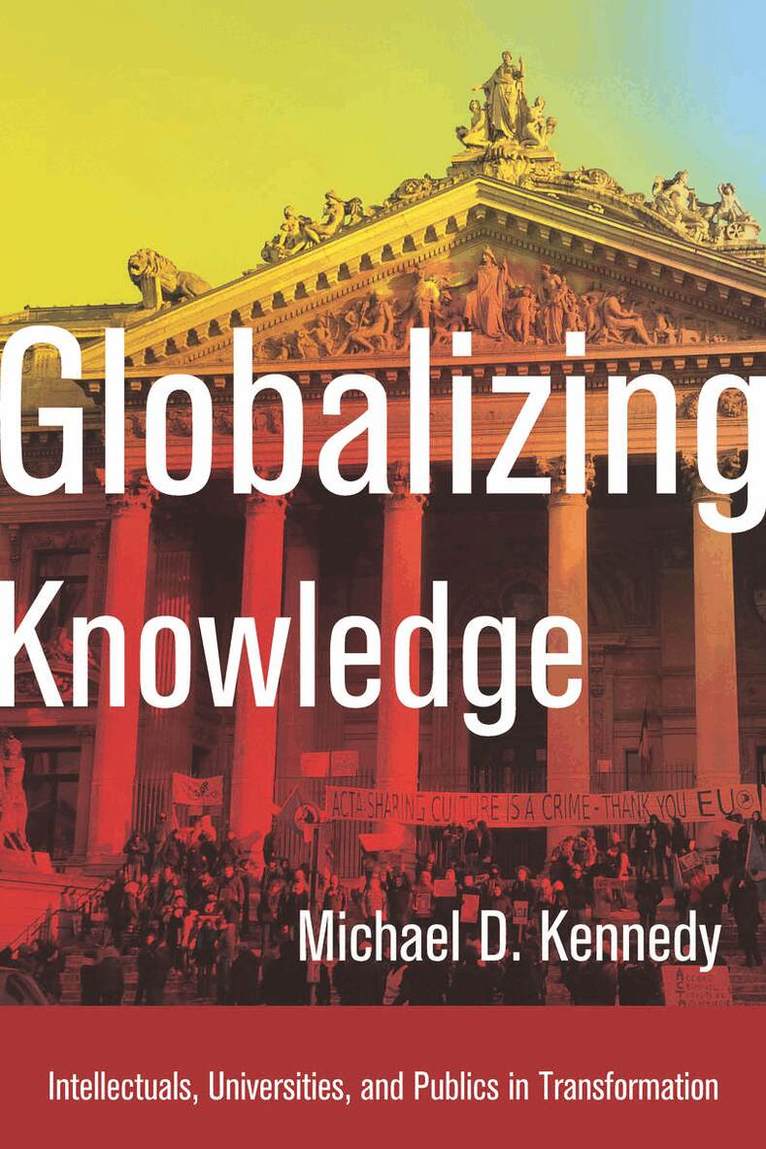
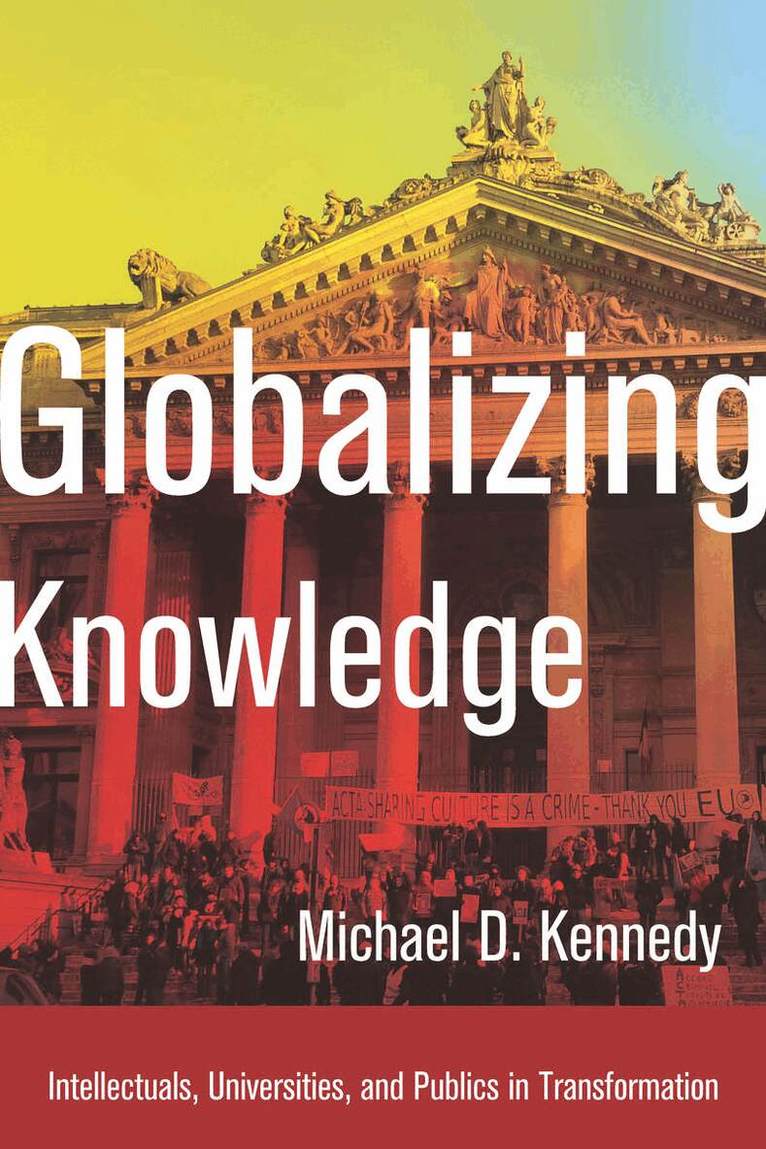
Globalizing Knowledge
Intellectuals, Universities, and Publics in Transformation
Inbunden, Engelska, 2014
1 627 kr
Skickas inom 7-10 vardagar
Heralding a push for higher education to adopt a more global perspective, the term "globalizing knowledge" is today a popular catchphrase among academics and their circles. The complications and consequences of this desire for greater worldliness, however, are rarely considered critically. In this groundbreaking cultural-political sociology of knowledge and change, Michael D. Kennedy rearticulates questions, approaches, and case studies to clarify intellectuals' and institutions' responsibilities in a world defined by transformation and crisis. Globalizing Knowledge introduces the stakes of globalizing knowledge before examining how intellectuals and their institutions and networks shape and are shaped by globalization and world-historical events from 2001 through the uprisings of 2011–13. But Kennedy is not only concerned with elaborating how wisdom is maintained and transmitted, he also asks how we can recognize both interconnectedness and inequalities, and possibilities for more knowledgeable change within and beyond academic circles. Subsequent chapters are devoted to issues of public engagement, the importance of recognizing difference and the local's implication in the global, and the specific ways in which knowledge, images, and symbols are shared globally. Kennedy considers numerous case studies, from historical happenings in Poland, Kosova, Ukraine, and Afghanistan, to today's energy crisis, Pussy Riot, the Occupy Movement, and beyond, to illuminate how knowledge functions and might be used to affect good in the world.
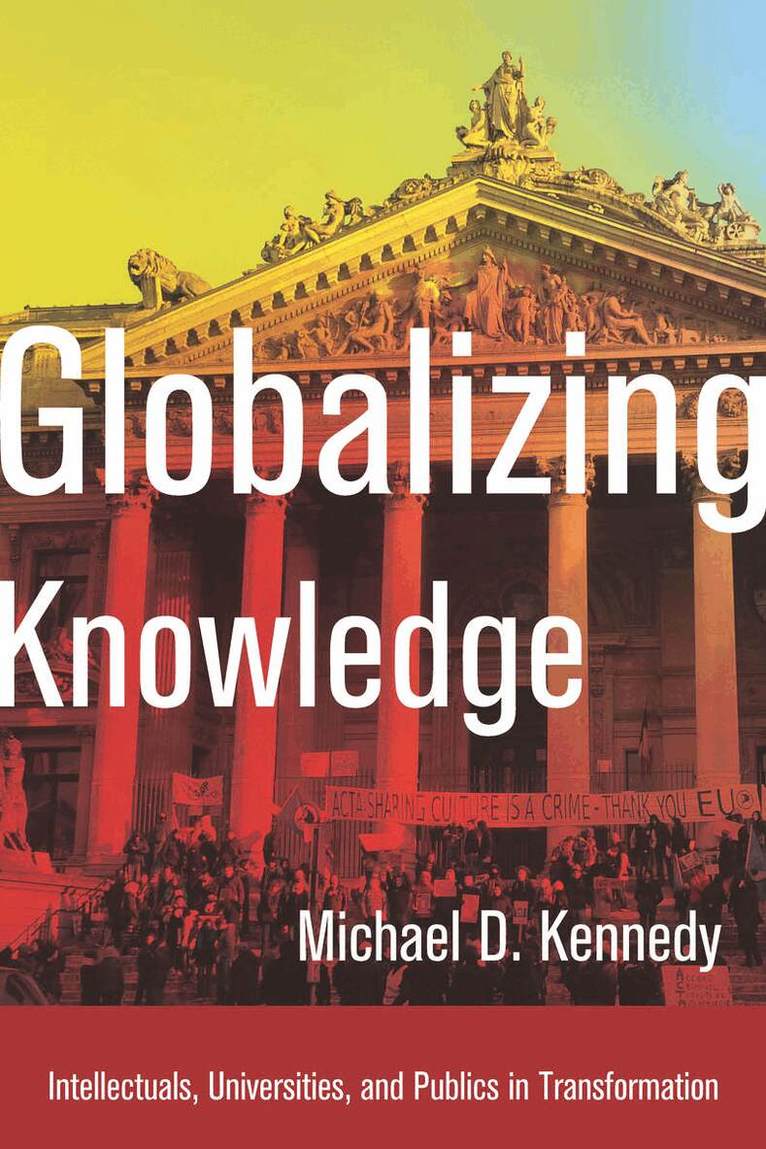
Globalizing Knowledge
Intellectuals, Universities, and Publics in Transformation
Häftad, Engelska, 2014
403 kr
Skickas inom 7-10 vardagar
Heralding a push for higher education to adopt a more global perspective, the term "globalizing knowledge" is today a popular catchphrase among academics and their circles. The complications and consequences of this desire for greater worldliness, however, are rarely considered critically. In this groundbreaking cultural-political sociology of knowledge and change, Michael D. Kennedy rearticulates questions, approaches, and case studies to clarify intellectuals' and institutions' responsibilities in a world defined by transformation and crisis. Globalizing Knowledge introduces the stakes of globalizing knowledge before examining how intellectuals and their institutions and networks shape and are shaped by globalization and world-historical events from 2001 through the uprisings of 2011–13. But Kennedy is not only concerned with elaborating how wisdom is maintained and transmitted, he also asks how we can recognize both interconnectedness and inequalities, and possibilities for more knowledgeable change within and beyond academic circles. Subsequent chapters are devoted to issues of public engagement, the importance of recognizing difference and the local's implication in the global, and the specific ways in which knowledge, images, and symbols are shared globally. Kennedy considers numerous case studies, from historical happenings in Poland, Kosova, Ukraine, and Afghanistan, to today's energy crisis, Pussy Riot, the Occupy Movement, and beyond, to illuminate how knowledge functions and might be used to affect good in the world.
1 319 kr
Skickas inom 11-20 vardagar
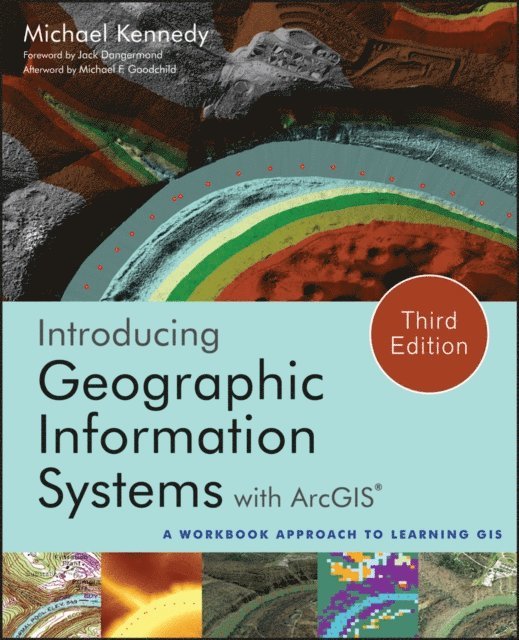
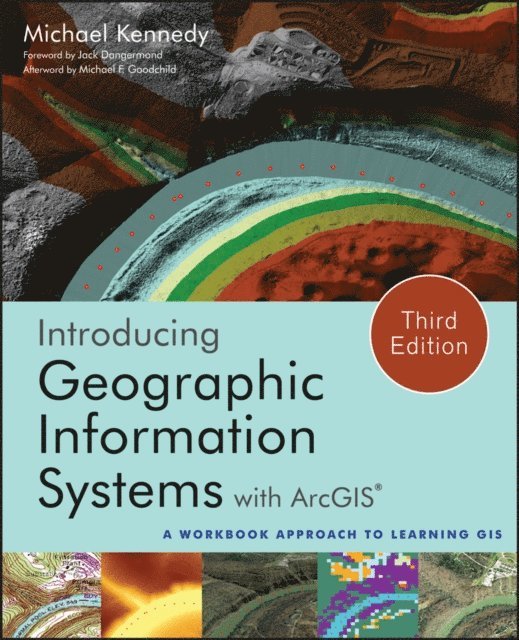
An integrated approach that combines essential GIS background with a practical workbook on applying the principles in ArcGIS 10.0 and 10.1Introducing Geographic Information Systems with ArcGISintegrates a broad introduction to GIS with a software-specific workbook for Esri's ArcGIS. Where most courses make do using two separate texts, one covering GIS and another the software, this book enables students and instructors to use a single text with an integrated approach covering both in one volume with a common vocabulary and instructional style.This revised edition focuses on the latest software updates—ArcGIS 10.0 and 10.1. In addition to its already successful coverage, the book allows students to experience publishing maps on the Internet through new exercises, and introduces the idea of programming in the language Esri has chosen for applications (i.e., Python). A DVD is packaged with the book, as in prior editions, containing data for working out all of the exercises.This complete, user-friendly coursebook: Is updated for the latest ArcGIS releases—ArcGIS 10.0 and 10.1Introduces the central concepts of GIS and topics needed to understand spatial information analysisProvides a considerable ability to operate important tools in ArcGISDemonstrates new capabilities of ArcGIS 10.0 and 10.1Provides a basis for the advanced study of GIS and the study of the newly emerging field of GIScienceIntroducing Geographic Information Systems with ArcGIS, Third Edition is the ideal guide for undergraduate students taking courses such as Introduction to GIS, Fundamentals of GIS, and Introduction to ArcGIS Desktop. It is also an important guide for professionals looking to update their skills for ArcGIS 10.0 and 10.1.