Michael Elleman – författare
369 kr
Skickas inom 10-15 vardagar
2 402 kr
Skickas inom 10-15 vardagar
401 kr
Läs direkt efter köp
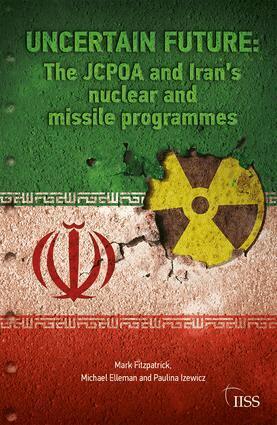
In July 2015, eight parties – France, Germany and the United Kingdom, together with the European Union and China, Russia and the United States on the one side, and Iran on the other – adopted the Joint Comprehensive Plan of Action (JCPOA), better known as the Iran nuclear deal. Under the agreement, Iran accepted limits to its nuclear programme in return for sanctions relief. Hailed by some as a diplomatic achievement, detractors – both in the US and the Middle East – saw the deal as overly lenient. In May 2018, US President Donald Trump announced that the US would cease waiving sanctions and withdraw from the agreement.
This Adelphi book assesses that Trump’s decision was a grave error. Like any multilateral agreement, the deal was not perfect, but Iran had been honouring its commitments. Drawing on a deep understanding of the non-proliferation regime and technical expertise, the authors trace the emergence of antipathy to the JCPOA and set out how many of the politicised criticisms of the accord are demonstrably incorrect. They argue that the little-known Procurement Channel – established by the JCPOA to give Iran a legitimate route to procure goods and services for its now-limited nuclear programme – has been an effective check on Iran’s illicit procurement of nuclear-related goods. Moreover, this book demonstrates that Iran’s nuclear and ballistic-missile programmes are not intrinsically linked, as not all Iranian missiles are designed to be nuclear-capable. While the deal endures for now, its survival will ultimately depend on Iran.
401 kr
Läs direkt efter köp
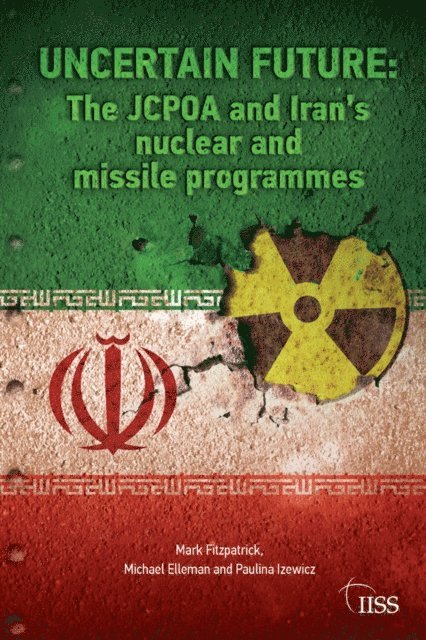
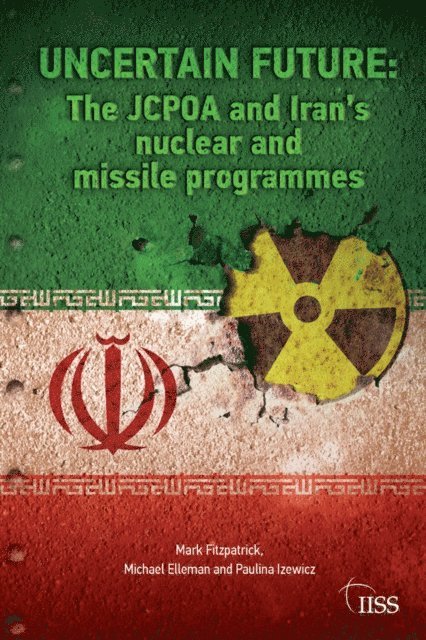
In July 2015, eight parties – France, Germany and the United Kingdom, together with the European Union and China, Russia and the United States on the one side, and Iran on the other – adopted the Joint Comprehensive Plan of Action (JCPOA), better known as the Iran nuclear deal. Under the agreement, Iran accepted limits to its nuclear programme in return for sanctions relief. Hailed by some as a diplomatic achievement, detractors – both in the US and the Middle East – saw the deal as overly lenient. In May 2018, US President Donald Trump announced that the US would cease waiving sanctions and withdraw from the agreement.
This Adelphi book assesses that Trump’s decision was a grave error. Like any multilateral agreement, the deal was not perfect, but Iran had been honouring its commitments. Drawing on a deep understanding of the non-proliferation regime and technical expertise, the authors trace the emergence of antipathy to the JCPOA and set out how many of the politicised criticisms of the accord are demonstrably incorrect. They argue that the little-known Procurement Channel – established by the JCPOA to give Iran a legitimate route to procure goods and services for its now-limited nuclear programme – has been an effective check on Iran’s illicit procurement of nuclear-related goods. Moreover, this book demonstrates that Iran’s nuclear and ballistic-missile programmes are not intrinsically linked, as not all Iranian missiles are designed to be nuclear-capable. While the deal endures for now, its survival will ultimately depend on Iran.
807 kr
Läs direkt efter köp
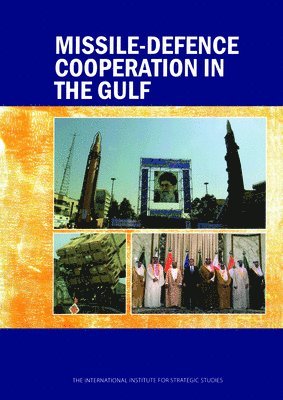
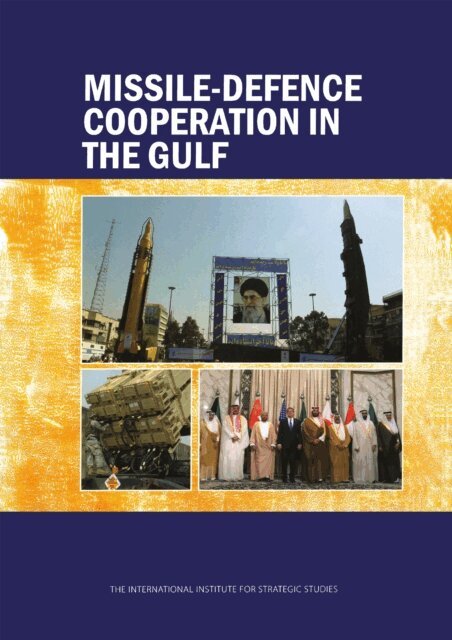
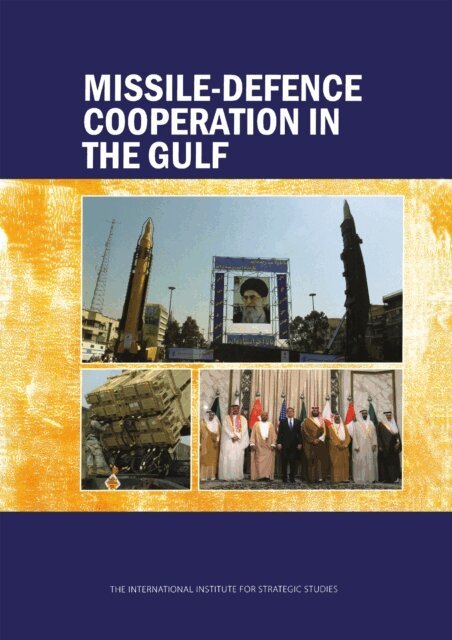
Iran’s short- and medium-range ballistic missiles are instrumental to its military doctrine and deterrence strategy. Yet despite having long faced a direct threat from these missiles, the members of the Gulf Cooperation Council remain unable or unwilling to effectively coordinate and integrate their missile-defence capabilities. They have gained a measure of protection through bilateral procurement of technology and expertise from the United States. But a more strategically efficient approach would be to pool resources such as radars and other sensors, and to integrate their systems in ways that require difficult compromises between state sovereignty and security.
Written by a team of IISS experts, Missile-Defence Cooperation in the Gulf contributes to the ongoing policy debate on Middle Eastern collective security. The report examines the development of Iran’s missile capabilities over several decades, parallel efforts to counter the threat they pose by Gulf Arab states and the broader evolution of security structures in the region. It is a valuable resource for policymakers, scholars and government officials seeking to understand the ‘security complex’ that encompasses all states in the Gulf, and that shapes their decisions on politically sensitive issues of missile defence.
805 kr
Läs direkt efter köp
Iran’s short- and medium-range ballistic missiles are instrumental to its military doctrine and deterrence strategy. Yet despite having long faced a direct threat from these missiles, the members of the Gulf Cooperation Council remain unable or unwilling to effectively coordinate and integrate their missile-defence capabilities. They have gained a measure of protection through bilateral procurement of technology and expertise from the United States. But a more strategically efficient approach would be to pool resources such as radars and other sensors, and to integrate their systems in ways that require difficult compromises between state sovereignty and security.
Written by a team of IISS experts, Missile-Defence Cooperation in the Gulf contributes to the ongoing policy debate on Middle Eastern collective security. The report examines the development of Iran’s missile capabilities over several decades, parallel efforts to counter the threat they pose by Gulf Arab states and the broader evolution of security structures in the region. It is a valuable resource for policymakers, scholars and government officials seeking to understand the ‘security complex’ that encompasses all states in the Gulf, and that shapes their decisions on politically sensitive issues of missile defence.