Toby Dodge - Böcker
Visar alla böcker från författaren Toby Dodge. Handla med fri frakt och snabb leverans.
15 produkter
15 produkter
398 kr
Skickas inom 10-15 vardagar
2 191 kr
Skickas inom 3-6 vardagar
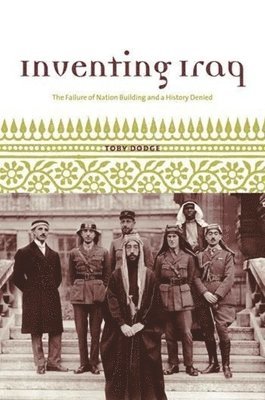
If we think there is a fast solution to changing the governance of Iraq, warned U.S. Marine General Anthony Zinni in the months before the United States and Britain invaded Iraq, "then we don't understand history." Never has the old line about those who fail to understand the past being condemned to repeat it seemed more urgently relevant than in Iraq today, with potentially catastrophic consequences for the Iraqi people, the Middle East region, and the world. Examining the construction of the modern state of Iraq under the auspices of the British empire-the first attempt by a Western power to remake Mesopotamia in its own image-renowned Iraq expert Toby Dodge uncovers a series of shocking parallels between the policies of a declining British empire and those of the current American administration. Between 1920 and 1932, Britain endeavored unsuccessfully to create a modern democratic state from three former provinces of the Ottoman Empire, which it had conquered and occupied during the First World War.Caught between the conflicting imperatives of controlling a region of great strategic importance (Iraq straddled the land and air route between British India and the Mediterranean) and reconstituting international order through the liberal ideal of modern state sovereignty under the League of Nations Mandate system, British administrators undertook an extremely difficult task. To compound matters, they did so without the benefit of detailed information about the people and society they sought to remake. Blinded by potent cultural stereotypes and subject to mounting pressures from home, these administrators found themselves increasingly dependent on a mediating class of shaikhs to whom they transferred considerable power and on whom they relied for the maintenance of order. When order broke down, as it routinely did, the British turned to the airplane. (This was Winston Churchill's lasting contribution to the British enterprise in Iraq: the concerted use of air power-of what would in a later context be called "shock and awe"-to terrorize and subdue dissident factions of the Iraqi people.)Ultimately, Dodge shows, the state the British created held all the seeds of a violent, corrupt, and relentlessly oppressive future for the Iraqi people, one that has continued to unfold. Like the British empire eight decades before, the United States and Britain have taken upon themselves today the grand task of transforming Iraq and, by extension, the political landscape of the Middle East. Dodge contends that this effort can succeed only with a combination of experienced local knowledge, significant deployment of financial and human resources, and resolute staying power. Already, he suggests, ominous signs point to a repetition of the sequence of events that led to the long nightmare of Saddam Hussein's murderous tyranny.
610 kr
Skickas inom 3-6 vardagar
If we think there is a fast solution to changing the governance of Iraq, warned U.S. Marine General Anthony Zinni in the months before the United States and Britain invaded Iraq, "then we don't understand history." Never has the old line about those who fail to understand the past being condemned to repeat it seemed more urgently relevant than in Iraq today, with potentially catastrophic consequences for the Iraqi people, the Middle East region, and the world. Examining the construction of the modern state of Iraq under the auspices of the British empire-the first attempt by a Western power to remake Mesopotamia in its own image-renowned Iraq expert Toby Dodge uncovers a series of shocking parallels between the policies of a declining British empire and those of the current American administration. Between 1920 and 1932, Britain endeavored unsuccessfully to create a modern democratic state from three former provinces of the Ottoman Empire, which it had conquered and occupied during the First World War.Caught between the conflicting imperatives of controlling a region of great strategic importance (Iraq straddled the land and air route between British India and the Mediterranean) and reconstituting international order through the liberal ideal of modern state sovereignty under the League of Nations Mandate system, British administrators undertook an extremely difficult task. To compound matters, they did so without the benefit of detailed information about the people and society they sought to remake. Blinded by potent cultural stereotypes and subject to mounting pressures from home, these administrators found themselves increasingly dependent on a mediating class of shaikhs to whom they transferred considerable power and on whom they relied for the maintenance of order. When order broke down, as it routinely did, the British turned to the airplane. (This was Winston Churchill's lasting contribution to the British enterprise in Iraq: the concerted use of air power-of what would in a later context be called "shock and awe"-to terrorize and subdue dissident factions of the Iraqi people.)Ultimately, Dodge shows, the state the British created held all the seeds of a violent, corrupt, and relentlessly oppressive future for the Iraqi people, one that has continued to unfold. Like the British empire eight decades before, the United States and Britain have taken upon themselves today the grand task of transforming Iraq and, by extension, the political landscape of the Middle East. Dodge contends that this effort can succeed only with a combination of experienced local knowledge, significant deployment of financial and human resources, and resolute staying power. Already, he suggests, ominous signs point to a repetition of the sequence of events that led to the long nightmare of Saddam Hussein's murderous tyranny.
386 kr
Skickas inom 10-15 vardagar
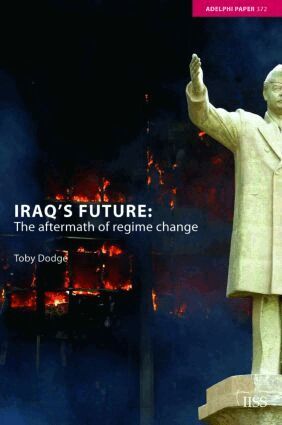
It is hard to over estimate what is at stake in Iraq today. The removal of Saddam Hussein’s regime in April 2003 has proved to be the beginning, not the culmination, of a long and very uncertain process of state-building. This Adelphi Paper examines this process from a military, political and sociological perspective. Possible futures for Iraq are charted, first by studying the evolution of the criminal and politically-motivated violence that has come to dominate the everyday lives of ordinary Iraqis. The paper then details the strengths and weaknesses of the political structures built after the fall of Saddam’s regime, from the formation of the Iraqi Governing Council in 2004 to the elections of January 2005, and traces the forces driving political mobilization in post-Saddam Iraq. It concludes by analyzing the ramifications of regime change for US policy and the wider Middle East.
1 037 kr
Skickas inom 10-15 vardagar
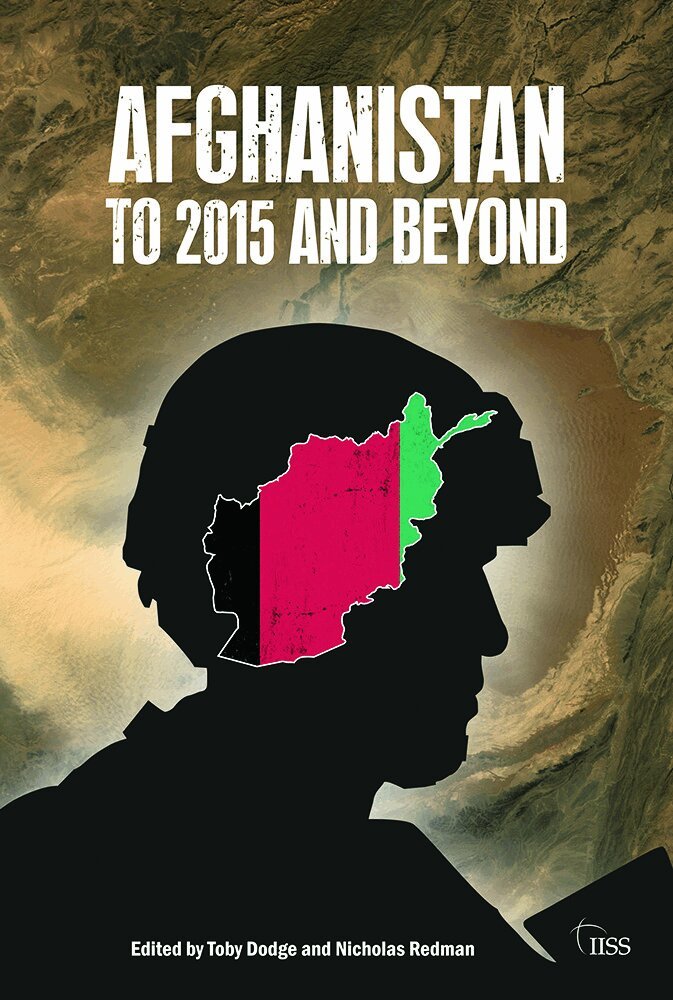
As the international security forces prepare to depart from Afghanistan, this Adelphi turns attention to the ability of a ravaged country to tackle its myriad security problems, overcome crippling poverty and corruption and somehow revive its devastated economy. The government faces daunting challenges, ranging from the threat of insurgency and cross-border terrorism to the difficulty of reintegrating and reconciling former Taliban figures and combatants into a political settlement. It must do so against the background of continuing and potentially increasing regional instability, with the country’s neighbours tempted to step up their interference in Afghan affairs. Stability depends upon drawing the wider Pashtun community into the ruling coalition, while simultaneously maintaining security, increasing the capability of the state and balancing the interests of its neighbours and regional powers. This volume draws together expert analysis to provide a comprehensive study of the obstacles that Afghanistan must overcome, together with regional and international partners, as it charts a slow course back to functional statehood.
414 kr
Skickas inom 10-15 vardagar
As the international security forces prepare to depart from Afghanistan, this Adelphi turns attention to the ability of a ravaged country to tackle its myriad security problems, overcome crippling poverty and corruption and somehow revive its devastated economy. The government faces daunting challenges, ranging from the threat of insurgency and cross-border terrorism to the difficulty of reintegrating and reconciling former Taliban figures and combatants into a political settlement. It must do so against the background of continuing and potentially increasing regional instability, with the country’s neighbours tempted to step up their interference in Afghan affairs. Stability depends upon drawing the wider Pashtun community into the ruling coalition, while simultaneously maintaining security, increasing the capability of the state and balancing the interests of its neighbours and regional powers. This volume draws together expert analysis to provide a comprehensive study of the obstacles that Afghanistan must overcome, together with regional and international partners, as it charts a slow course back to functional statehood.
332 kr
Skickas inom 10-15 vardagar
Iraq recovered its full sovereignty at the end of 2011, with the departure of all US military forces. The 2003 invasion was undertaken to dismantle a regime that had long threatened its own population and regional peace, as well as to establish a stable, democratic state in the heart of the Middle East. This Adelphi looks at the legacy of that intervention and subsequent state-building efforts. It analyses the evolution of the insurgency, the descent into full-scale civil war and the implementation of the ‘surge’ as a counterinsurgency strategy. It goes on to examine US and Iraqi efforts to reconstruct the state’s military and civilian capacity. By developing a clear understanding of the current situation in Iraq, this book seeks to answer three questions that are central to the country’s future. Will it continue to suffer high levels of violence or even slide back into a vicious civil war? Will Iraq continue on a democratic path, as exemplified by the three competitive national elections held since 2005? And does the new Iraq pose a threat to its neighbours?
1 953 kr
Skickas inom 10-15 vardagar
2 496 kr
Skickas inom 10-15 vardagar
A war against Iraq will spur radical changes in the way the country is governed, how its people live, and its relationship to its neighbours and to the West. This book depicts the evolution of Iraq under Saddam Hussein, and describes each side's battle plan and the war's likely aftermath.
2 423 kr
Skickas inom 10-15 vardagar
It is hard to over estimate what is at stake in Iraq today. The removal of Saddam Hussein‘s regime in April 2003 has proved to be the beginning, not the culmination, of a long and very uncertain process of state-building. This Adelphi Paper examines this process from a military, political and sociological perspective. Possible futures for Iraq are charted, first by studying the evolution of the criminal and politically-motivated violence that has come to dominate the everyday lives of ordinary Iraqis. The paper then details the strengths and weaknesses of the political structures built after the fall of Saddam‘s regime, from the formation of the Iraqi Governing Council in 2004 to the elections of January 2005, and traces the forces driving political mobilization in post-Saddam Iraq. It concludes by analyzing the ramifications of regime change for US policy and the wider Middle East.
2 423 kr
Skickas inom 10-15 vardagar
Iraq recovered its full sovereignty at the end of 2011, with the departure of all US military forces. The 2003 invasion was undertaken to dismantle a regime that had long threatened its own population and regional peace, as well as to establish a stable, democratic state in the heart of the Middle East. This Adelphi looks at the legacy of that intervention and subsequent state-building efforts. It analyses the evolution of the insurgency, the descent into full-scale civil war and the implementation of the ‘surge as a counterinsurgency strategy. It goes on to examine US and Iraqi efforts to reconstruct the state‘s military and civilian capacity. By developing a clear understanding of the current situation in Iraq, this book seeks to answer three questions that are central to the country‘s future. Will it continue to suffer high levels of violence or even slide back into a vicious civil war? Will Iraq continue on a democratic path, as exemplified by the three competitive national elections held since 2005? And does the new Iraq pose a threat to its neighbours?
2 423 kr
Skickas inom 10-15 vardagar
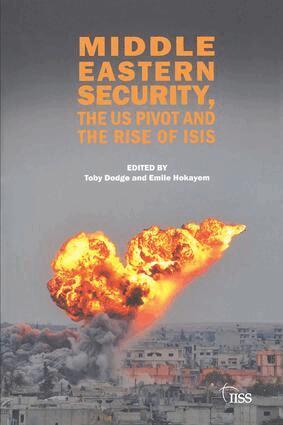
To mark the tenth anniversary of The IISS Manama Dialogue process and to capitalise on the new light it has shed on security issues in the Gulf and the wider Middle East, this Adelphi brings together the results of two workshops held by the IISS in its Middle East office in Manama. Featuring essays by nine IISS analysts and a number of outside experts, the book examines the most important geostrategic issues in the region, including the myriad security challenges it faces. These interlinked papers focus in particular on the regional ramifications of the civil war in Syria and the effects of the United States changing posture in the Middle East.The aim of the Adelphi is to both highlight and develop the ongoing discussions and debates about Gulf security that have taken place in the Manama Dialogue over the previous decade, and that will continue to do so over the next ten years. As such, it capitalises on the IISS‘s global reputation not only as the world leader in convening para-diplomatic events, but also as a provider of the best possible objective information and analysis on global military and political developments.
201 kr
Tillfälligt slut
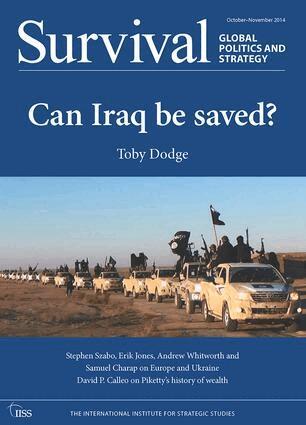
Survival, the bi-monthly publication from The International Institute for Strategic Studies, is a leading forum for analysis and debate of international and strategic affairs. With a diverse range of authors, thoughtful reviews and review essays, Survival is scholarly in depth while vivid, well-written and policy-relevant in approach. Shaped by its editors to be both timely and forward-thinking, the publication encourages writers to challenge conventional wisdom and bring fresh, often controversial, perspectives to bear on the strategic issues of the moment.
332 kr
Skickas inom 10-15 vardagar
To mark the tenth anniversary of The IISS Manama Dialogue process and to capitalise on the new light it has shed on security issues in the Gulf and the wider Middle East, this Adelphi brings together the results of two workshops held by the IISS in its Middle East office in Manama. Featuring essays by nine IISS analysts and a number of outside experts, the book examines the most important geostrategic issues in the region, including the myriad security challenges it faces. These interlinked papers focus in particular on the regional ramifications of the civil war in Syria and the effects of the United States changing posture in the Middle East.The aim of the Adelphi is to both highlight and develop the ongoing discussions and debates about Gulf security that have taken place in the Manama Dialogue over the previous decade, and that will continue to do so over the next ten years. As such, it capitalises on the IISS’s global reputation not only as the world leader in convening para-diplomatic events, but also as a provider of the best possible objective information and analysis on global military and political developments.
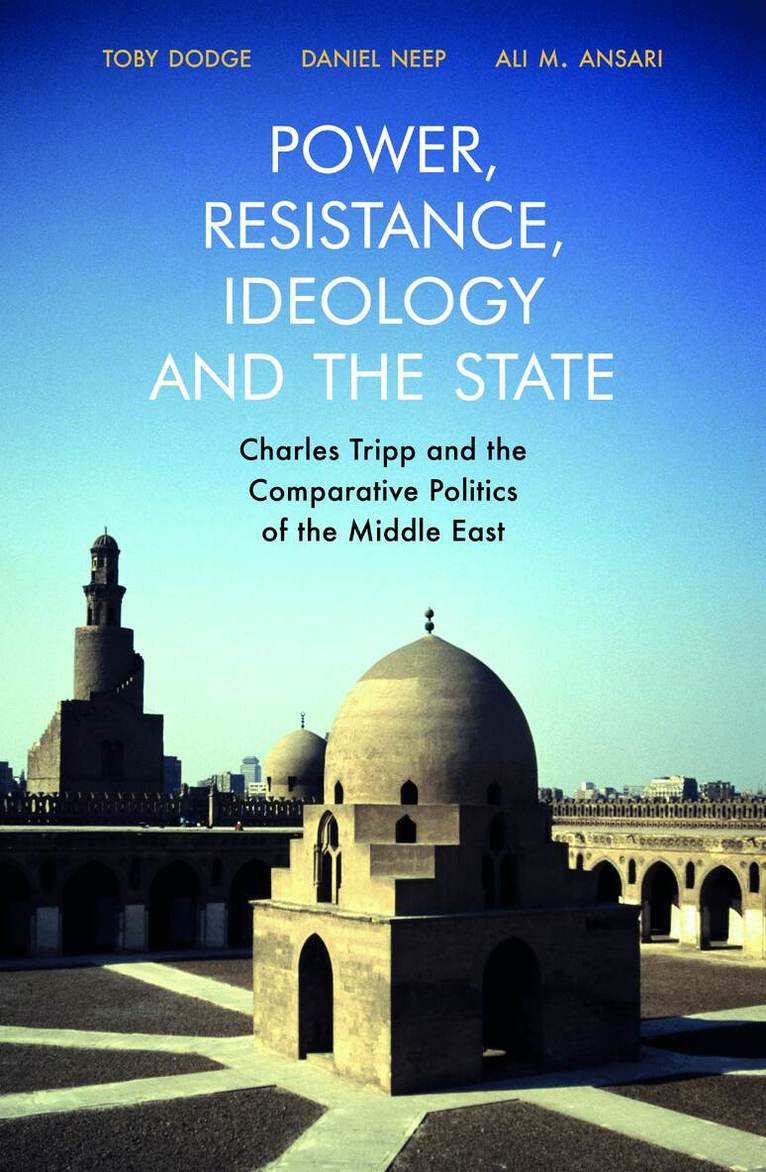
Power, Resistance, Ideology and the State
Charles Tripp and the Comparative Politics of the Middle East
Inbunden, Engelska, 2025
705 kr
Skickas inom 7-10 vardagar
The work of Charles Tripp – professor at the School of Oriental and African Studies (SOAS) for over three decades – has shaped a distinct approach to the study of Middle East politics: an analytical sensibility that is empirically rich, theoretically insightful, and historically sensitive.Power, Resistance, Ideology and the State brings together contributions from ten political scientists and historians from across Europe, the United States, and the Middle East, each of which takes Tripp’s work as an intellectual point of departure for studying politics in the region. The contributions focus on four central themes – power, resistance, ideology and the state – that are central in the field of Middle East politics as a means of examining political trends in cases ranging from Iran and Iraq to Jordan, Lebanon and Syria. Each chapter combines extensive field research and a knowledge of regional politics with methodological and philosophical reflexivity to produce a collection of papers at the cutting edge of contemporary Middle East Studies.This volume seeks to present a new understanding of a region of unprecedented volatility, where post-colonial projects of state-driven development have now expired, old ruling elites have been delegitimised, and political Islam discredited. Against this background, the contributors explore the contemporary developments that have emerged to fill the intellectual and material shortcomings created by the systemic failures of economics and politics in the region. Examining topics such as the rise of elite-promoted sectarianism in Iraq, thwarted attempts to manage neoliberalism in Lebanon, and new grassroots social movements in Syria, Power, Resistance, Ideology and the State offers an essential addition to the exploration of the politics of today’s Middle East.