Michael Gilek – författare
Visar alla böcker från författaren Michael Gilek. Handla med fri frakt och snabb leverans.
8 produkter
8 produkter
E-bok
Engelska, 2016942 kr
Läs direkt efter köp
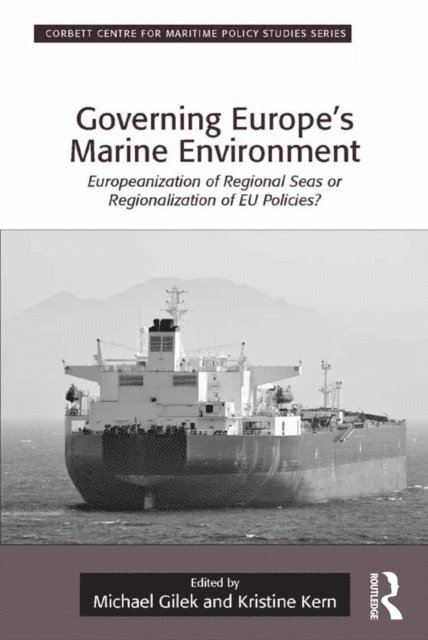
Governing Europe''s Marine Environment is a coherent up-to-date multidisciplinary analysis of current approaches and challenges to the sustainable governance of Europe''s marine environment. Structured in three parts, Part 1 outlines general theoretical ideas about governance, governing, and governability and serves as a starting point for analysing the development of marine governance in Europe from the perspective of different disciplines. Part 2 includes studies of EU marine governance. Part 3 focuses on Europe''s regional seas, namely the Baltic Sea, the North Sea, the Black Sea, and the Mediterranean Sea. This book presents a better understanding of the fragmented governance of marine governance in Europe and in particular the tension between the Europeanization of regional seas and the regionalization of EU policies.
E-bok
PDF, Engelska, 2016942 kr
Läs direkt efter köp
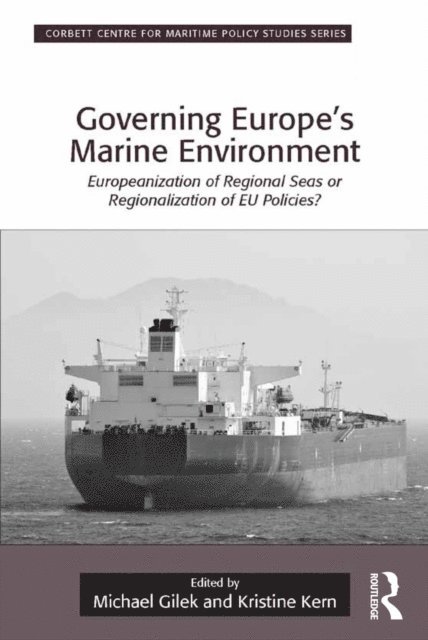
Governing Europe''s Marine Environment is a coherent up-to-date multidisciplinary analysis of current approaches and challenges to the sustainable governance of Europe''s marine environment. Structured in three parts, Part 1 outlines general theoretical ideas about governance, governing, and governability and serves as a starting point for analysing the development of marine governance in Europe from the perspective of different disciplines. Part 2 includes studies of EU marine governance. Part 3 focuses on Europe''s regional seas, namely the Baltic Sea, the North Sea, the Black Sea, and the Mediterranean Sea. This book presents a better understanding of the fragmented governance of marine governance in Europe and in particular the tension between the Europeanization of regional seas and the regionalization of EU policies.
Inbunden, Engelska, 2015
2 008 kr
Skickas inom 10-15 vardagar
Governing Europe's Marine Environment is a coherent up-to-date multidisciplinary analysis of current approaches and challenges to the sustainable governance of Europe's marine environment. Structured in three parts, Part 1 outlines general theoretical ideas about governance, governing, and governability and serves as a starting point for analysing the development of marine governance in Europe from the perspective of different disciplines. Part 2 includes studies of EU marine governance. Part 3 focuses on Europe's regional seas, namely the Baltic Sea, the North Sea, the Black Sea, and the Mediterranean Sea. This book presents a better understanding of the fragmented governance of marine governance in Europe and in particular the tension between the Europeanization of regional seas and the regionalization of EU policies.
Del 10 - MARE Publication Series
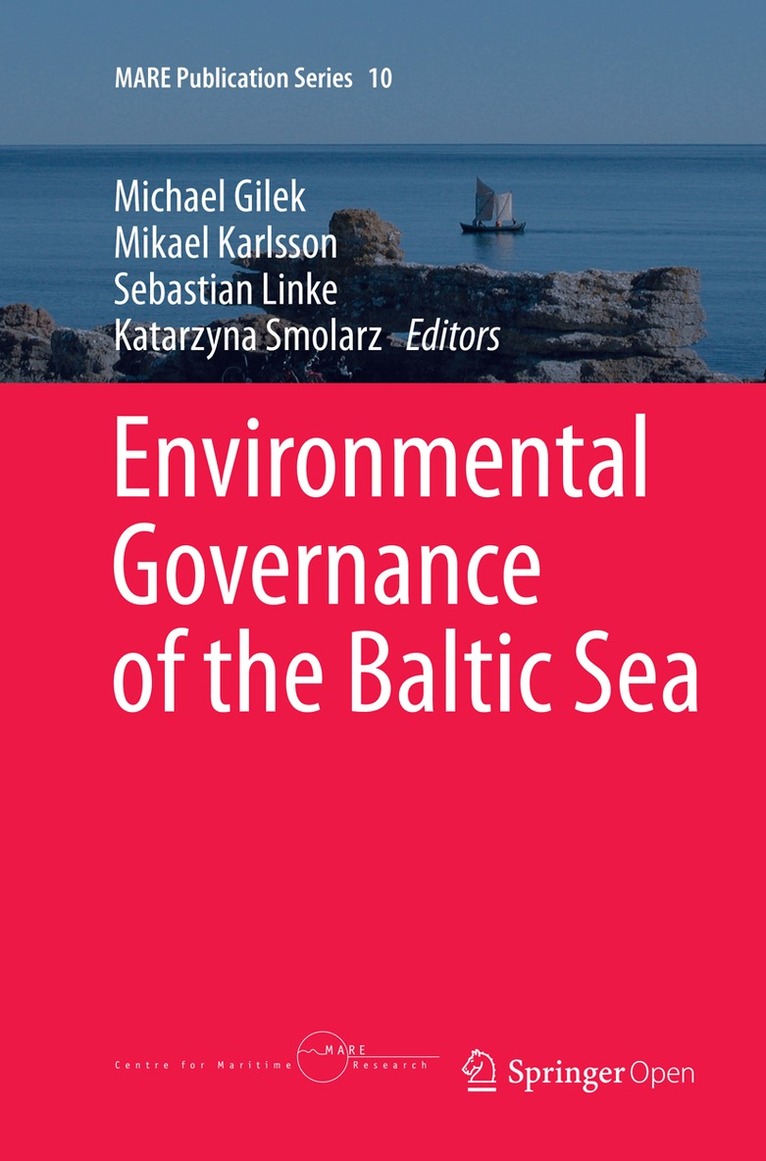
Environmental Governance of the Baltic Sea
Inbunden, Engelska, 2016
549 kr
Skickas inom 10-15 vardagar
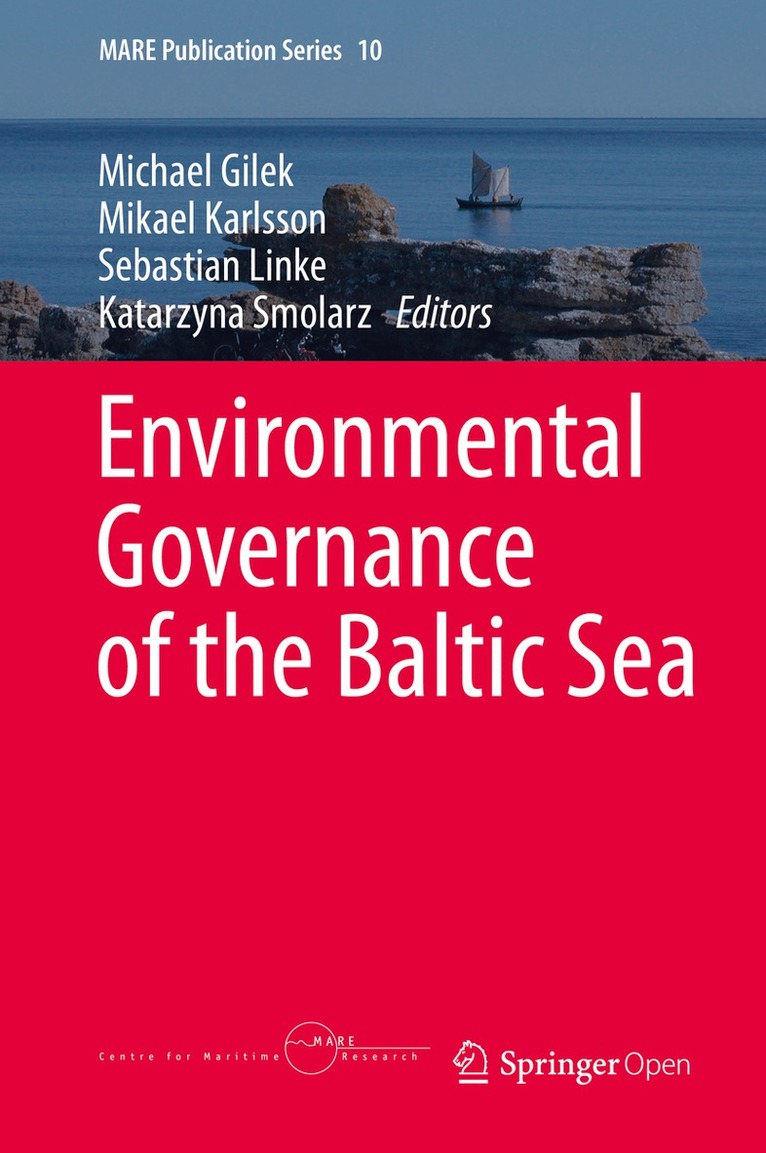
This edited volume presents a comprehensive and coherent interdisciplinary analysis of challenges and possibilities for sustainable governance of the Baltic Sea ecosystem by combining knowledge and approaches from natural and social sciences. Focusing on the Ecosystem Approach to Management (EAM) and associated multi-level, multi-sector and multi-actor challenges, the book provides up-to-date descriptions and analyses of environmental governance structures and processes at the macro-regional Baltic Sea level. Organised in two parts, Part 1 presents in-depth case studies of environmental governance practices and challenges linked to five key environmental problems - eutrophication, chemical pollution, overfishing, oil discharges and invasive species. Part 2 analyses and compares governance challenges and opportunities across the five case studies, focusing on governance structures and EAM implementation, knowledge integration and science support, as well as stakeholder communication andparticipation. Based on these cross-case comparisons, this book also draws a set of general conclusions on possible ways of improving the governance of the Baltic Sea by promoting what are identified as vital functions of environmental governance: coordination, integration, interdisciplinarity, precaution, deliberation, communication and adaptability.
Del 10 - MARE Publication Series
Environmental Governance of the Baltic Sea
Häftad, Engelska, 2018
549 kr
Skickas inom 10-15 vardagar
This edited volume presents a comprehensive and coherent interdisciplinary analysis of challenges and possibilities for sustainable governance of the Baltic Sea ecosystem by combining knowledge and approaches from natural and social sciences. Focusing on the Ecosystem Approach to Management (EAM) and associated multi-level, multi-sector and multi-actor challenges, the book provides up-to-date descriptions and analyses of environmental governance structures and processes at the macro-regional Baltic Sea level. Organised in two parts, Part 1 presents in-depth case studies of environmental governance practices and challenges linked to five key environmental problems - eutrophication, chemical pollution, overfishing, oil discharges and invasive species. Part 2 analyses and compares governance challenges and opportunities across the five case studies, focusing on governance structures and EAM implementation, knowledge integration and science support, as well as stakeholder communication andparticipation. Based on these cross-case comparisons, this book also draws a set of general conclusions on possible ways of improving the governance of the Baltic Sea by promoting what are identified as vital functions of environmental governance: coordination, integration, interdisciplinarity, precaution, deliberation, communication and adaptability.
Inbunden, Engelska, 2010
1 502 kr
Skickas inom 10-15 vardagar
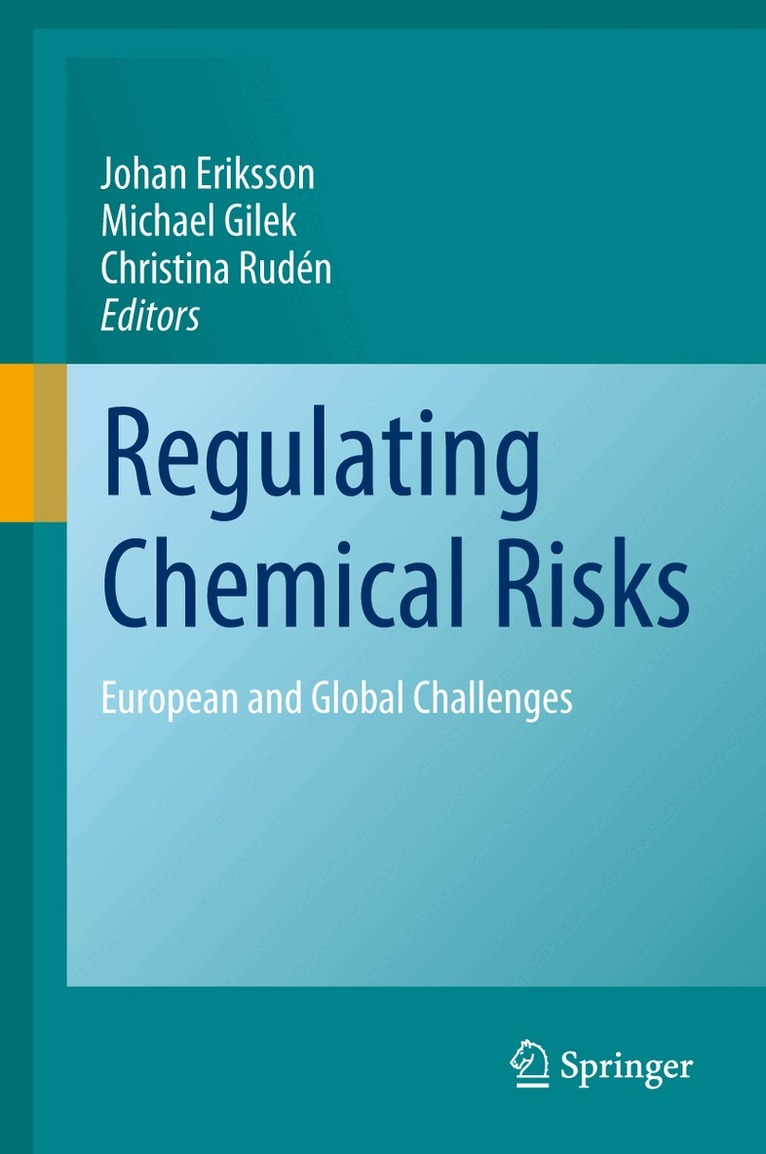
This volume presents research on current trends in chemical regulations – a fa- growing, complex, and increasingly internationalized field. The book grew out from a multidisciplinary research project entitled ‘Regulating Chemical Risks in the Baltic Sea Area: Science, Politics, and the Media’, led by Michael Gilek at Södertörn University, Sweden. This research project involved scholars and experts from natural as well as social sciences, based at Södertörn University, Swedish Royal Institute of Technology (KTH), Karolinska Institutet, and Umeå University. The project group organized a multidisciplinary research conference on chemical risk regulations, held in Stockholm, August 15–17, 2007. Most of the contributions published in this book were, in draft form, first presented at this conference. The conference, like the ensuing edited volume, expanded the geographical focus beyond the Baltic Sea area to include wider European, and to some extent also global trends. Many thanks to all project colleagues and conference participants! We are very grateful for the generous financial support received from The Foundation for Baltic and East European Studies (Östersjöstiftelsen), The Swedish Research Council Formas, and from Södertörn University. Without this support the present book would not have been possible. Special thanks to all of our fellow contributors, all of whom have submitted to- cal papers based on high-quality research. Many thanks also to Tobias Evers, who assisted us with technical editing. Finally, we are grateful for the professionalism shown by our editors at Springer.
E-bok
PDF, Engelska, 20101 885 kr
Läs direkt efter köp
This volume presents research on current trends in chemical regulations – a fa- growing, complex, and increasingly internationalized field. The book grew out from a multidisciplinary research project entitled ‘Regulating Chemical Risks in the Baltic Sea Area: Science, Politics, and the Media’, led by Michael Gilek at Södertörn University, Sweden. This research project involved scholars and experts from natural as well as social sciences, based at Södertörn University, Swedish Royal Institute of Technology (KTH), Karolinska Institutet, and Umeå University. The project group organized a multidisciplinary research conference on chemical risk regulations, held in Stockholm, August 15–17, 2007. Most of the contributions published in this book were, in draft form, first presented at this conference. The conference, like the ensuing edited volume, expanded the geographical focus beyond the Baltic Sea area to include wider European, and to some extent also global trends. Many thanks to all project colleagues and conference participants! We are very grateful for the generous financial support received from The Foundation for Baltic and East European Studies (Östersjöstiftelsen), The Swedish Research Council Formas, and from Södertörn University. Without this support the present book would not have been possible. Special thanks to all of our fellow contributors, all of whom have submitted to- cal papers based on high-quality research. Many thanks also to Tobias Evers, who assisted us with technical editing. Finally, we are grateful for the professionalism shown by our editors at Springer.
Häftad, Engelska, 2014
1 502 kr
Skickas inom 10-15 vardagar
This volume presents research on current trends in chemical regulations – a fa- growing, complex, and increasingly internationalized field. The book grew out from a multidisciplinary research project entitled ‘Regulating Chemical Risks in the Baltic Sea Area: Science, Politics, and the Media’, led by Michael Gilek at Södertörn University, Sweden. This research project involved scholars and experts from natural as well as social sciences, based at Södertörn University, Swedish Royal Institute of Technology (KTH), Karolinska Institutet, and Umeå University. The project group organized a multidisciplinary research conference on chemical risk regulations, held in Stockholm, August 15–17, 2007. Most of the contributions published in this book were, in draft form, first presented at this conference. The conference, like the ensuing edited volume, expanded the geographical focus beyond the Baltic Sea area to include wider European, and to some extent also global trends. Many thanks to all project colleagues and conference participants! We are very grateful for the generous financial support received from The Foundation for Baltic and East European Studies (Östersjöstiftelsen), The Swedish Research Council Formas, and from Södertörn University. Without this support the present book would not have been possible. Special thanks to all of our fellow contributors, all of whom have submitted to- cal papers based on high-quality research. Many thanks also to Tobias Evers, who assisted us with technical editing. Finally, we are grateful for the professionalism shown by our editors at Springer.