Michael Grubb – författare
1 772 kr
Skickas inom 10-15 vardagar
501 kr
Skickas inom 10-15 vardagar
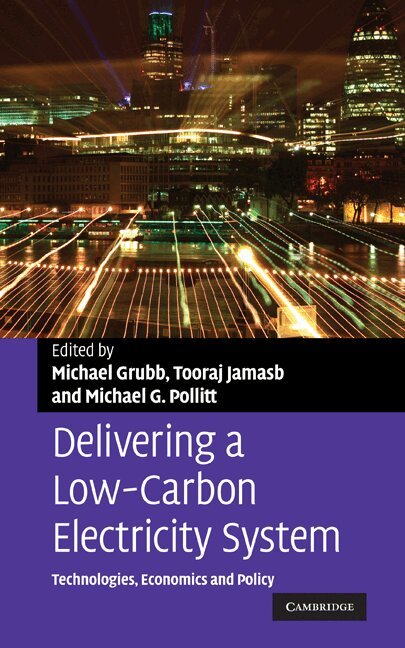
Delivering a Low Carbon Electricity System
Technologies, Economics and Policy
1 838 kr
Skickas inom 7-10 vardagar
589 kr
Läs direkt efter köp
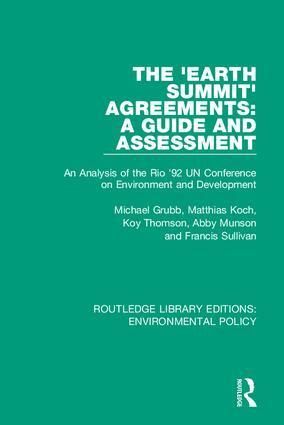
First published in 1993. The United Nations Conference on Environment and Development (UNCED) in Rio de Janeiro, in June 1992, was a unique event in the annals of international affairs. The ‘Earth Summit’ brought more heads of state and government together than any previous meeting, and five separate agreements were signed by most of the participating governments. It was billed as the world’s greatest opportunity to resolve pressing problems of continuing poverty and environmental destruction and to set the world on a path of sustainable development. Thirty thousand people descended upon the city, and the Summit received a blaze of publicity around the world.
Yet despite the vast efforts devoted to it, and the unprecedented press coverage which it received, to many the Earth Summit is still a mystery. The outcome has been labelled as everything from a disastrous fiasco to an outstanding success. Which was it; indeed, what was it? What came out of it? What was actually agreed, and what does it mean for the future of environment and development issues?
This book presents a major summary and analysis of UNCED. It explains the background to the conference, its major achievements and disappointments, and the legacy which it has left. Individual chapters examine in detail each of the five main agreements signed at Rio, providing a short description of the negotiating background, analysis of the final text, and the likely implications. This title will be of great interest to students of environmental studies.
495 kr
Läs direkt efter köp
The EU emissions trading scheme is the largest emissions control scheme in the world, capping almost half of European CO2 emissions. As the scheme emerges from its pilot phase, this special issue of Climate Policy journal analyses the lessons learned from the last two years and their implications for phase II.
The volume presents some of the key analyses that helped inform the European Commission''s decisions on national allocation plans, with research ranging from detailed country-by-country comparisons to more generic analysis that puts forward the case for harmonization. Challenging calls to seperate electricity from other sectors, a macroeconomic study suggests that the biggest efficiency gains come from inter-sectoral trading, even more than international trading. Empirical papers, which look at the expected scarcity of allowances in the market and merge models for the power and non-power sectors to project emissions and contrast these to the aggregate allocation volume, are complemented by two numerical simulations of trade and distributional effects, estimating the efficiency gains of the EU ETS in phase I and assessing allocation and distribution effects in the RGGI context.
495 kr
Läs direkt efter köp
The EU emissions trading scheme is the largest emissions control scheme in the world, capping almost half of European CO2 emissions. As the scheme emerges from its pilot phase, this special issue of Climate Policy journal analyses the lessons learned from the last two years and their implications for phase II.
The volume presents some of the key analyses that helped inform the European Commission''s decisions on national allocation plans, with research ranging from detailed country-by-country comparisons to more generic analysis that puts forward the case for harmonization. Challenging calls to seperate electricity from other sectors, a macroeconomic study suggests that the biggest efficiency gains come from inter-sectoral trading, even more than international trading. Empirical papers, which look at the expected scarcity of allowances in the market and merge models for the power and non-power sectors to project emissions and contrast these to the aggregate allocation volume, are complemented by two numerical simulations of trade and distributional effects, estimating the efficiency gains of the EU ETS in phase I and assessing allocation and distribution effects in the RGGI context.
404 kr
Läs direkt efter köp
Complying with the forthcoming tightening of CO2 emission allocations in the EU may mean big bills for the industries affected. In this special issue of Climate Policy journal, leading experts examine the impacts on competitiveness and the commercial incentives available from the CO2 allowance allocations under the methodologies, and whether - and if so at what stage - the ETS itself may need to be amended.
The study is multidisciplinary, combining economic, legal and policy analysis with specific studies of impacts on electricity, cement and other industrial sectors and the allocation issues. It brings together the results of research conducted over the past two year from various research centres and consultancies in Europe, and in particular, work commissioned by the Carbon Trust and Climate Strategies Network. Through these, it presents the most comprehensive and detailed set of analyses yet conducted of the impacts of allocation on competitiveness - one of the most critical issues for the sectors affected and for the operation of the ETS.
404 kr
Läs direkt efter köp
Complying with the forthcoming tightening of CO2 emission allocations in the EU may mean big bills for the industries affected. In this special issue of Climate Policy journal, leading experts examine the impacts on competitiveness and the commercial incentives available from the CO2 allowance allocations under the methodologies, and whether - and if so at what stage - the ETS itself may need to be amended.
The study is multidisciplinary, combining economic, legal and policy analysis with specific studies of impacts on electricity, cement and other industrial sectors and the allocation issues. It brings together the results of research conducted over the past two year from various research centres and consultancies in Europe, and in particular, work commissioned by the Carbon Trust and Climate Strategies Network. Through these, it presents the most comprehensive and detailed set of analyses yet conducted of the impacts of allocation on competitiveness - one of the most critical issues for the sectors affected and for the operation of the ETS.
1 983 kr
Skickas inom 10-15 vardagar
515 kr
Skickas inom 10-15 vardagar
605 kr
Läs direkt efter köp
Originally published in 1999, The Kyoto Protocol provides a detailed discussion on the history, terms and implications of the Kyoto Protocol 1997. It explains the meaning of provision on emissions trading and other flexibility mechanisms, and provides a quantitative analysis using the Energy and Environment Programme''s emissions trading model. It also contains the full text of the Kyoto Protocol and developments at the 4th Conference of the Parties in December 1998. This book will be of interest to academics working in the field of climate change, as well as the broader area of environment and sustainability.
605 kr
Läs direkt efter köp
Originally published in 1999, The Kyoto Protocol provides a detailed discussion on the history, terms and implications of the Kyoto Protocol 1997. It explains the meaning of provision on emissions trading and other flexibility mechanisms, and provides a quantitative analysis using the Energy and Environment Programme''s emissions trading model. It also contains the full text of the Kyoto Protocol and developments at the 4th Conference of the Parties in December 1998. This book will be of interest to academics working in the field of climate change, as well as the broader area of environment and sustainability.
614 kr
Tillfälligt slut
1 216 kr
Tillfälligt slut
389 kr
Tillfälligt slut