Michael Hitchcock – författare
Visar alla böcker från författaren Michael Hitchcock. Handla med fri frakt och snabb leverans.
21 produkter
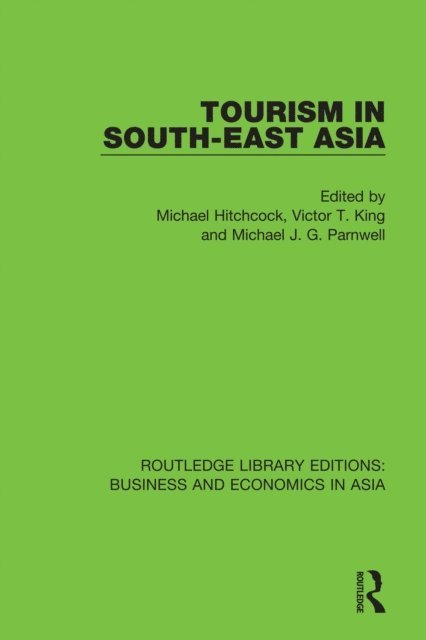
Tourism in South-East Asia
Av Michael J.G. Parnwell, Victor T. King m. fl.
E-bok, 2018
658 kr
Lägg i varukorg
South-East Asia has developed rapidly as a tourist destination, but what are the effects of this growth upon the peoples of the region? How far is it possible to control the impact of tourism whilst also supporting the industry''s role in the region''s development? This book, first published in …
Tourism in South-East Asia
Av Michael J.G. Parnwell, Victor T. King m. fl.
E-bok, 2018
658 kr
Lägg i varukorg
South-East Asia has developed rapidly as a tourist destination, but what are the effects of this growth upon the peoples of the region? How far is it possible to control the impact of tourism whilst also supporting the industry''s role in the region''s development? This book, first published in …
ASEAN Business in Crisis
Context and Culture
Av Mhinder Bhopal, Michael Hitchcock
Inbunden, 2002
2591 kr
Lägg i varukorg
The impact of the Asia crisis has contributed to the debate about the need for regulation of global markets. This book outlines the events leading up to and during the Financial Crisis of 1997 and assesses the responses of the financial contagion.
Tourism, Development and Terrorism in Bali
Inbunden, 2018
1569 kr
Lägg i varukorg
This book investigates tourism as a form of globalization within the context of the island of Bali, which has been voted the world's top island destination for the third time running by American travellers. The volume covers the onset of the Asian Crisis, the largest stock-market crash since the …
ASEAN Business in Crisis
Context and Culture
Av Michael Hitchcock, Mhinder Bhopal
E-bok, 2013
856 kr
Lägg i varukorg
The impact of the Asia crisis has contributed to the debate about the need for regulation of global markets. This book outlines the events leading up to and during the Financial Crisis of 1997 and assesses the responses of the financial contagion.
ASEAN Business in Crisis
Context and Culture
Av Michael Hitchcock, Mhinder Bhopal
E-bok, 2013
856 kr
Lägg i varukorg
The impact of the Asia crisis has contributed to the debate about the need for regulation of global markets. This book outlines the events leading up to and during the Financial Crisis of 1997 and assesses the responses of the financial contagion.
Building on Batik
The Globalization of a Craft Community
Av Michael Hitchcock, Wiendu Nuryanti
Häftad, 2016
853 kr
Lägg i varukorg
The word ’batik’ is possibly of Malay origin from the word ’tik’ meaning ’to drip’ or ’to drop.’ The term is applied to a resist dye technique invented independently in locations as diverse as Ancient Egypt, Japan and Turkestan. Batik is a remarkably flexible textile technique and is suited to …
Tourism, Development and Terrorism in Bali
Häftad, 2024
758 kr
Lägg i varukorg
This book investigates tourism as a form of globalization within the context of the island of Bali, which has been voted the world's top island destination for the third time running by American travellers. The volume covers the onset of the Asian Crisis, the largest stock-market crash since the …
Tourism in South-East Asia
Av Michael Hitchcock, Victor T. King m. fl.
Inbunden, 2018
2200 kr
Lägg i varukorg
South-East Asia has developed rapidly as a tourist destination, but what are the effects of this growth upon the peoples of the region? How far is it possible to control the impact of tourism whilst also supporting the industry's role in the region's development? This book, first published in 1993, …
Tourism in South-East Asia
Av Michael Hitchcock, Victor T. King m. fl.
Häftad, 2020
578 kr
Lägg i varukorg
South-East Asia has developed rapidly as a tourist destination, but what are the effects of this growth upon the peoples of the region? How far is it possible to control the impact of tourism whilst also supporting the industry's role in the region's development? This book, first published in 1993, …
Souvenirs
The Material Cultre of Tourism
Av Michael Hitchcock, Ken Teague
Häftad, 2021
533 kr
Lägg i varukorg
This title was first published in 2000: Souvenirs, broadly conceived, are generally thought to be the material counterpart of travels, events, relationships and memories of all kinds. The material items classed as souvenirs discussed in this text have memorial functions, usually connected with the …
Souvenirs
The Material Cultre of Tourism
Av Michael Hitchcock, Ken Teague
Inbunden, 2019
1834 kr
Lägg i varukorg
This title was first published in 2000: Souvenirs, broadly conceived, are generally thought to be the material counterpart of travels, events, relationships and memories of all kinds. The material items classed as souvenirs discussed in this text have memorial functions, usually connected with the …
Tourism, Development and Terrorism in Bali
E-bok, 2023
866 kr
Lägg i varukorg
This book investigates tourism as a form of globalization within the context of the island of Bali, which has been voted the world''s top island destination for the third time running by American travellers. The volume covers the onset of the Asian Crisis, the largest stock-market crash since the …
Tourism, Development and Terrorism in Bali
E-bok, 2023
866 kr
Lägg i varukorg
This book investigates tourism as a form of globalization within the context of the island of Bali, which has been voted the world''s top island destination for the third time running by American travellers. The volume covers the onset of the Asian Crisis, the largest stock-market crash since the …
Souvenirs
The Material Cultre of Tourism
Av Ken Teague, Michael Hitchcock
E-bok, 2019
604 kr
Lägg i varukorg
This title was first published in 2000: Souvenirs, broadly conceived, are generally thought to be the material counterpart of travels, events, relationships and memories of all kinds. The material items classed as souvenirs discussed in this text have memorial functions, usually connected with the …
Souvenirs
The Material Cultre of Tourism
Av Ken Teague, Michael Hitchcock
E-bok, 2019
624 kr
Lägg i varukorg
This title was first published in 2000: Souvenirs, broadly conceived, are generally thought to be the material counterpart of travels, events, relationships and memories of all kinds. The material items classed as souvenirs discussed in this text have memorial functions, usually connected with the …
Building on Batik
The Globalization of a Craft Community
Av Wiendu Nuryanti, Michael Hitchcock
E-bok, 2016
1004 kr
Lägg i varukorg
The word ’batik’ is possibly of Malay origin from the word ’tik’ meaning ’to drip’ or ’to drop.’ The term is applied to a resist dye technique invented independently in locations as diverse as Ancient Egypt, Japan and Turkestan. Batik is a remarkably flexible textile technique and …
Building on Batik
The Globalization of a Craft Community
Av Wiendu Nuryanti, Michael Hitchcock
E-bok, 2016
1002 kr
Lägg i varukorg
The word ’batik’ is possibly of Malay origin from the word ’tik’ meaning ’to drip’ or ’to drop.’ The term is applied to a resist dye technique invented independently in locations as diverse as Ancient Egypt, Japan and Turkestan. Batik is a remarkably flexible textile technique and …
Building on Batik
The Globalization of a Craft Community
Av Michael Hitchcock, Wiendu Nuryanti
Inbunden, 2000
2591 kr
Lägg i varukorg
The word ’batik’ is possibly of Malay origin from the word ’tik’ meaning ’to drip’ or ’to drop.’ The term is applied to a resist dye technique invented independently in locations as diverse as Ancient Egypt, Japan and Turkestan. Batik is a remarkably flexible textile technique and is suited to …
Politics of World Heritage
Negotiating Tourism and Conservation
Av David Harrison, Michael Hitchcock
Inbunden, 2005
1409 kr
Lägg i varukorg
This collection of papers discuss World Trade Law and focus on the contested nature of World Heritage at sites as diverse as The Netherlands, Ellis Island (USA), post-colonial Mesoamerica, Cambodia, Fiji, Kyrgyzstan, and Vietnam. In addition, eight research notes explore heritage interpretation in …