Wiendu Nuryanti – författare
Visar alla böcker från författaren Wiendu Nuryanti. Handla med fri frakt och snabb leverans.
4 produkter
4 produkter
Häftad, Engelska, 2016
784 kr
Skickas inom 10-15 vardagar
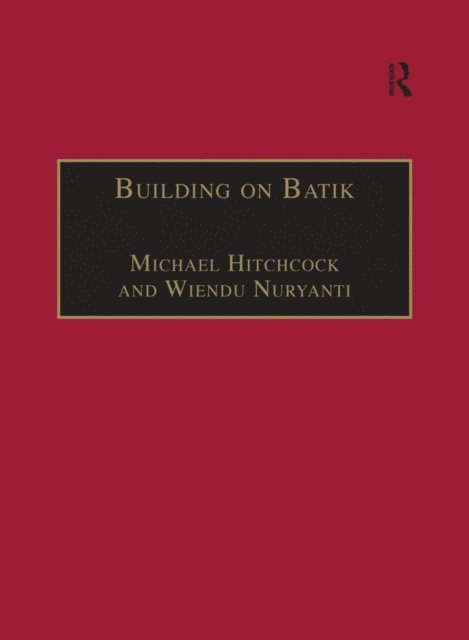
The word ’batik’ is possibly of Malay origin from the word ’tik’ meaning ’to drip’ or ’to drop.’ The term is applied to a resist dye technique invented independently in locations as diverse as Ancient Egypt, Japan and Turkestan. Batik is a remarkably flexible textile technique and is suited to small-scale methods of production, but demand from the fashion and tourism industries is increasing. This volume brings together the experiences and concerns of the international community of batik producers. It gives voice to their suggestions for ensuring that the producers of this traditional craft are integrated into its increasingly global production rather than excluded from it. Building on the work of batik designers and producers the book discusses the emergence of a global craft consciousness. Batik producers report on innovative measures taken both individually and collectively to hold their market position while commercial producers frequently annex and mass-produce traditional batik design. The book concludes with a discussion of marketing and production innovations and tourism which enable the producers of batik to maintain the integrity of their designs whilst harnessing the benefits of new commercial forms.
E-bok
Engelska, 2016925 kr
Läs direkt efter köp
The word ’batik’ is possibly of Malay origin from the word ’tik’ meaning ’to drip’ or ’to drop.’ The term is applied to a resist dye technique invented independently in locations as diverse as Ancient Egypt, Japan and Turkestan. Batik is a remarkably flexible textile technique and is suited to small-scale methods of production, but demand from the fashion and tourism industries is increasing. This volume brings together the experiences and concerns of the international community of batik producers. It gives voice to their suggestions for ensuring that the producers of this traditional craft are integrated into its increasingly global production rather than excluded from it. Building on the work of batik designers and producers the book discusses the emergence of a global craft consciousness. Batik producers report on innovative measures taken both individually and collectively to hold their market position while commercial producers frequently annex and mass-produce traditional batik design. The book concludes with a discussion of marketing and production innovations and tourism which enable the producers of batik to maintain the integrity of their designs whilst harnessing the benefits of new commercial forms.
E-bok
PDF, Engelska, 2016925 kr
Läs direkt efter köp
The word ’batik’ is possibly of Malay origin from the word ’tik’ meaning ’to drip’ or ’to drop.’ The term is applied to a resist dye technique invented independently in locations as diverse as Ancient Egypt, Japan and Turkestan. Batik is a remarkably flexible textile technique and is suited to small-scale methods of production, but demand from the fashion and tourism industries is increasing. This volume brings together the experiences and concerns of the international community of batik producers. It gives voice to their suggestions for ensuring that the producers of this traditional craft are integrated into its increasingly global production rather than excluded from it. Building on the work of batik designers and producers the book discusses the emergence of a global craft consciousness. Batik producers report on innovative measures taken both individually and collectively to hold their market position while commercial producers frequently annex and mass-produce traditional batik design. The book concludes with a discussion of marketing and production innovations and tourism which enable the producers of batik to maintain the integrity of their designs whilst harnessing the benefits of new commercial forms.
Inbunden, Engelska, 2000
2 264 kr
Skickas inom 10-15 vardagar
The word ’batik’ is possibly of Malay origin from the word ’tik’ meaning ’to drip’ or ’to drop.’ The term is applied to a resist dye technique invented independently in locations as diverse as Ancient Egypt, Japan and Turkestan. Batik is a remarkably flexible textile technique and is suited to small-scale methods of production, but demand from the fashion and tourism industries is increasing. This volume brings together the experiences and concerns of the international community of batik producers. It gives voice to their suggestions for ensuring that the producers of this traditional craft are integrated into its increasingly global production rather than excluded from it. Building on the work of batik designers and producers the book discusses the emergence of a global craft consciousness. Batik producers report on innovative measures taken both individually and collectively to hold their market position while commercial producers frequently annex and mass-produce traditional batik design. The book concludes with a discussion of marketing and production innovations and tourism which enable the producers of batik to maintain the integrity of their designs whilst harnessing the benefits of new commercial forms.