Michael J. Behe – författare
Visar alla böcker från författaren Michael J. Behe. Handla med fri frakt och snabb leverans.
10 produkter
10 produkter
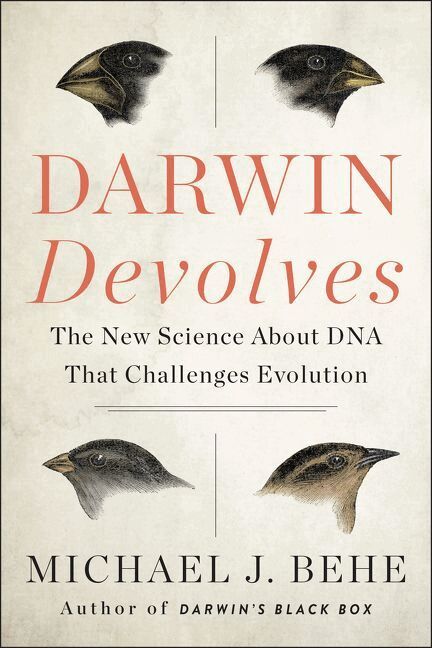
Häftad, Engelska, 2020
231 kr
Skickas inom 5-8 vardagar
E-bok
Engelska, 2001117 kr
Läs direkt efter köp
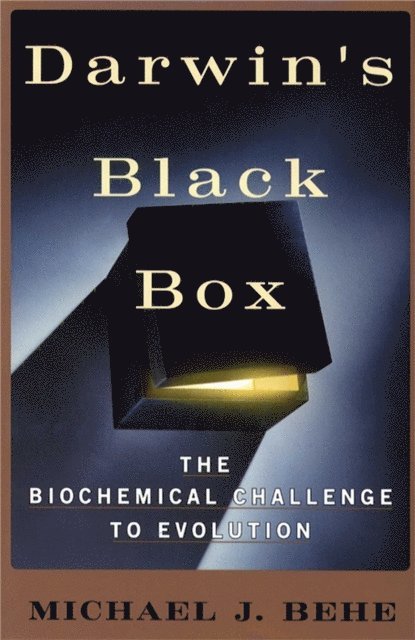
The groundbreaking, "seminal work" (Time) on intelligent design that dares to ask, was Darwin wrong?In 1996, Darwin''s Black Box helped to launch the intelligent design movement: the argument that nature exhibits evidence of design, beyond Darwinian randomness. It sparked a national debate on evolution, which continues to intensify across the country. From one end of the spectrum to the other, Darwin''s Black Box has established itself as the key intelligent design text—the one argument that must be addressed in order to determine whether Darwinian evolution is sufficient to explain life as we know it. In a major new Afterword for this edition, Behe explains that the complexity discovered by microbiologists has dramatically increased since the book was first published. That complexity is a continuing challenge to Darwinism, and evolutionists have had no success at explaining it. Darwin''s Black Box is more important today than ever.
Häftad, Engelska, 2006
254 kr
Skickas inom 3-6 vardagar
Ten years ago, Darwin's Black Box launched the Intelligent Design movement: the argument that nature exhibits evidence of design, beyond Darwinian randomness. Today the movement is stronger than ever, and the book is a classic and an international bestseller. At last, Michael Behe has updated the book with a major new afterword on the state of the debate. The Intelligent Design movement was born when a handful of scientists realized that nature exhibits characteristics that could not have evolved by random mutation. Prominent among them was Michael Behe, a microbiologist working in a field that Darwin could not even have imagined existing. Microbiology has discovered staggering complexity at the cellular level of life and during his research Behe made a stunning discovery: Some parts of life are irreducibly complex. They cannot function without all of their parts. Yet step-by-step genetic mutations would never produce all of those parts together at once. Some parts of the biological world must have been designed. From one end of the spectrum to the other, DARWIN'S BLACK BOX has established itself as the key text in the intelligent design movement, the one argument that must be addressed in order to determine whether Darwinian evolution is sufficient to explain life as we know it, or not.
Häftad, Engelska, 2008
254 kr
Skickas inom 3-6 vardagar
E-bok
Engelska, 2007190 kr
Läs direkt efter köp
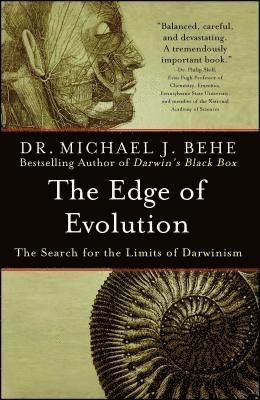
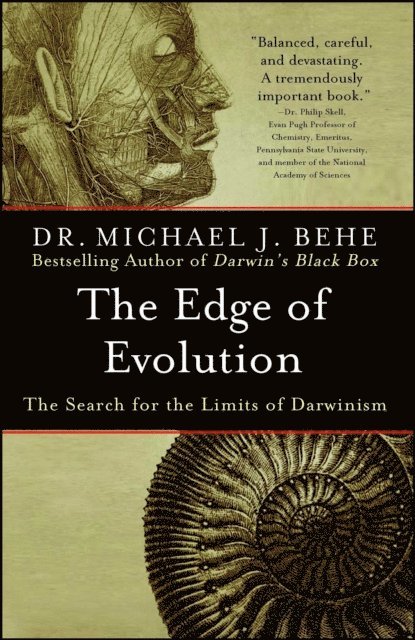
When Michael J. Behe''s first book, Darwin''s Black Box, was published in 1996, it launched the intelligent design movement. Critics howled, yet hundreds of thousands of readers -- and a growing number of scientists -- were intrigued by Behe''s claim that Darwinism could not explain the complex machinery of the cell. Now, in his long-awaited follow-up, Behe presents far more than a challenge to Darwinism: He presents the evidence of the genetics revolution -- the first direct evidence of nature''s mutational pathways -- to radically redefine the debate about Darwinism. How much of life does Darwin''s theory explain? Most scientists believe it accounts for everything from the machinery of the cell to the history of life on earth. Darwin''s ideas have been applied to law, culture, and politics. But Darwin''s theory has been proven only in one sense: There is little question that all species on earth descended from a common ancestor. Overwhelming anatomical, genetic, and fossil evidence exists for that claim. But the crucial question remains: How did it happen? Darwin''s proposed mechanism -- random mutation and natural selection -- has been accepted largely as a matter of faith and deduction or, at best, circumstantial evidence. Only now, thanks to genetics, does science allow us to seek direct evidence. The genomes of many organisms have been sequenced, and the machinery of the cell has been analyzed in great detail. The evolutionary responses of microorganisms to antibiotics and humans to parasitic infections have been traced over tens of thousands of generations. As a result, for the first time in history Darwin''s theory can be rigorously evaluated. The results are shocking. Although it can explain marginal changes in evolutionary history, random mutation and natural selection explain very little of the basic machinery of life. The "edge" of evolution, a line that defines the border between random and nonrandom mutation, lies very far from where Darwin pointed. Behe argues convincingly that most of the mutations that have defined the history of life on earth have been nonrandom. Although it will be controversial and stunning, this finding actually fits a general pattern discovered by other branches of science in recent decades: The universe as a whole was fine-tuned for life. From physics to cosmology to chemistry to biology, life on earth stands revealed as depending upon an endless series of unlikely events. The clear conclusion: The universe was designed for life.
Häftad, Engelska, 1999
206 kr
Skickas inom 5-8 vardagar
Inbunden, Engelska, 2020
404 kr
Skickas inom 5-8 vardagar
Häftad, Engelska, 2020
331 kr
Skickas inom 5-8 vardagar
E-bok
Engelska105 kr
Läs direkt efter köp
Inbunden, Engelska, 2013
3 271 kr
Tillfälligt slut
In the spring of 2011, a diverse group of scientists gathered at Cornell University to discuss their research into the nature and origin of biological information. This symposium brought together experts in information theory, computer science, numerical simulation, thermodynamics, evolutionary theory, whole organism biology, developmental biology, molecular biology, genetics, physics, biophysics, mathematics, and linguistics. This volume presents new research by those invited to speak at the conference.The contributors to this volume use their wide-ranging expertise in the area of biological information to bring fresh insights into the many explanatory difficulties associated with biological information. These authors raise major challenges to the conventional scientific wisdom, which attempts to explain all biological information exclusively in terms of the standard mutation/selection paradigm.Several clear themes emerged from these research papers: 1) Information is indispensable to our understanding of what life is; 2) Biological information is more than the material structures that embody it; 3) Conventional chemical and evolutionary mechanisms seem insufficient to fully explain the labyrinth of information that is life. By exploring new perspectives on biological information, this volume seeks to expand, encourage, and enrich research into the nature and origin of biological information.