Michael Jerryson – författare
Visar alla böcker från författaren Michael Jerryson. Handla med fri frakt och snabb leverans.
22 produkter
22 produkter
Häftad, Engelska, 2010
458 kr
Skickas inom 5-8 vardagar
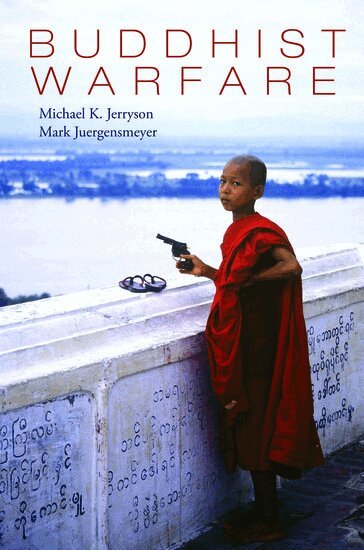
Buddhism has played a significant role in the current global rise in religious nationalism and violence, but the violent aspects of Buddhist tradition have been neglected in the outpouring of academic analyses and case studies of this disturbing trend. This book offers eight essays examining the dark side of a tradition often regarded as the religion of peace. The authors note the conflict between the Buddhist norms of non-violence and the prohibition of the killing of sentient beings and acts of state violence supported by the Buddhist community (sangha), acts of civil violence in which monks participate, and Buddhist intersectarian violence. They consider contemporary and historical cases of Buddhist warfare from a wide range of traditions - Tibetan, Mongolian, Japanese, Chinese, Sri Lankan, and Thai - critically examining both Buddhist textual sources justifying violence and Buddhist actors currently engaged in violence. They draw not only on archival material but interviews with those living and involved in war zones around the world. The book enriches our understanding both of the complexities of the Buddhist tradition and of the violence that is found in virtually all of the world's religious traditions.
Häftad, Engelska, 2015
691 kr
Skickas inom 5-8 vardagar
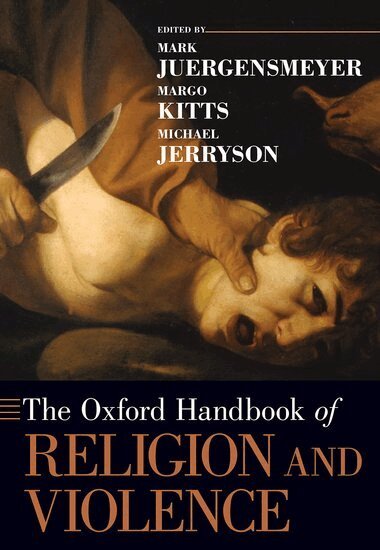
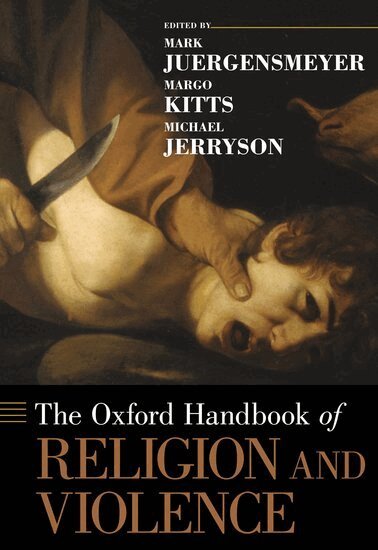
Violence has always played a part in the religious imagination, from symbols and myths to legendary battles, from colossal wars to the theater of terrorism. The Oxford Handbook of Religion and Violence surveys intersections between religion and violence throughout history and around the world.The forty original essays in this volume include overviews of major religious traditions, showing how violence is justified within the literary and theological foundations of the tradition, how it is used symbolically and in ritual practice, and how social acts of violence and warfare have been justified by religious ideas. The essays also examine patterns and themes relating to religious violence, such as sacrifice and martyrdom, which are explored in cross-disciplinary or regional analyses; and offer major analytic approaches, from literary to social scientific studies. The contributors to this volume--innovative thinkers who are forging new directions in theory and analysis related to religion and violence--provide novel insights into this important field of studies. By mapping out the whole field of religion and violence, The Oxford Handbook of Religion and Violence will prove an authoritative source for students and scholars for years to come.
E-bok
Engelska, 20161 994 kr
Läs direkt efter köp
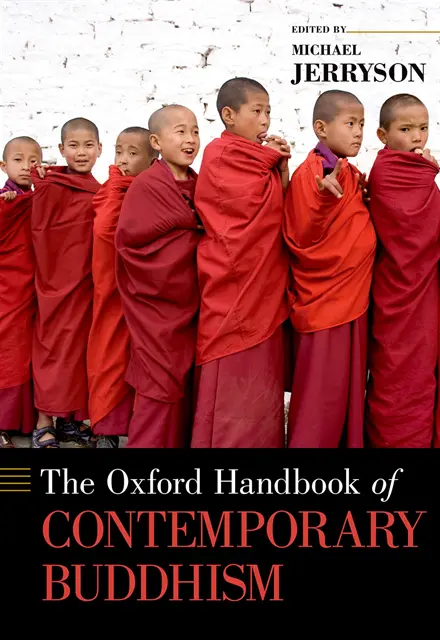
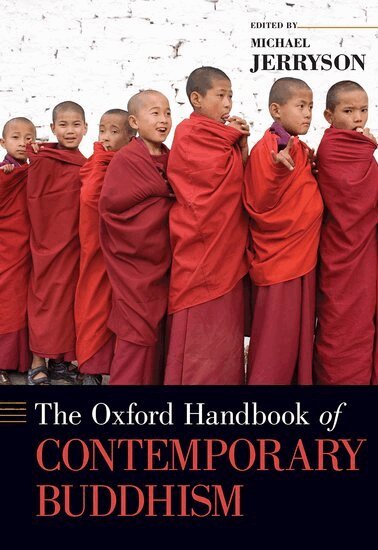
As an incredibly diverse religious system, Buddhism is constantly changing. The Oxford Handbook of Contemporary Buddhism offers a comprehensive collection of work by leading scholars in the field that tracks these changes up to the present day. Taken together, the book provides a blueprint to understanding Buddhism''s past and uses it to explore the ways in which Buddhism has transformed in the twentieth and twenty-first centuries.The volume contains 41 essays, divided into two sections. The essays in the first section examine the historical development of Buddhist traditions throughout the world. These chapters cover familiar settings like India, Japan, and Tibet as well as the less well-known countries of Vietnam, Bhutan, and the regions of Latin America, Africa, and Oceania. Focusing on changes within countries and transnationally, this section also contains chapters that focus explicitly on globalization, such as Buddhist international organizations and diasporic communities. The second section tracks the relationship between Buddhist traditions and particular themes. These chapters review Buddhist interactions with contemporary topics such as violence and peacebuilding, and ecology, as well as Buddhist influences in areas such as medicine and science. Offering coverage that is both expansive and detailed, The Oxford Handbook of Contemporary Buddhism delves into some of the most debated and contested areas within Buddhist Studies today.
Inbunden, Engelska, 2017
1 795 kr
Skickas inom 5-8 vardagar
Though much has been written about particular forms of violence related to religion, such as sacrificial rites and militant martyrdom, there have been few efforts to survey the phenomena in all of the world's major religious traditions, historically and in the present, viewing the subject in personal as well as social dimensions, and covering both literary themes and political conflicts. This compact collection of essays provides such an overview. Each of the essays explores the ways in which violence is justified within the literary and theological foundation of the tradition, how it is used symbolically and in ritual practice, and how social acts of vengeance and warfare have been justified by religious ideas.The nature of the connection between violence and faith has always been a topic of heated debate, especially as acts of violence performed in the name of religion have erupted onto the global stage. Some scholars argue that these acts of violence are not really religious at all, but symptomatic of other elements of society or human nature. Others however point to the fact that often the perpetrators of these acts cite the faith's own foundational texts as their inspiration-and that the occurrence of violence in the name of religion exists across all faith traditions. Is violence, then, the rare exception in religious traditions or is it one of the rules? The contributors to this volume explore many possible approaches to this question and myriad others. How is religion defined? Must a religion be centered on supernatural beings? Does the term refer to social behavior or private? Is dogma or practice the key to its essence? Is it a philosophical system or a poetic structure? And how should violence be defined? From whose perspective and at what point is an act to be deemed violent? What act cannot be construed as violent in some way? For instance, are we talking only about war and genocide, or psychological coercion, social restrictions and binding categorizations?Collectively, the essays in this volume reflect the complex and contested meanings of both religion and violence, providing overviews of engagements with violence in Hindu, Buddhist, Chinese, Sikh, Jewish, Christian, Islamic, African, and Pacific Island religious traditions. By shedding light on the intersection of violence with faith, this volume does much to expand the understanding of the nature of religion itself, and the diverse forms it may take.
Häftad, Engelska, 2017
307 kr
Skickas inom 5-8 vardagar
Though much has been written about particular forms of violence related to religion, such as sacrificial rites and militant martyrdom, there have been few efforts to survey the phenomena in all of the world's major religious traditions, historically and in the present, viewing the subject in personal as well as social dimensions, and covering both literary themes and political conflicts. This compact collection of essays provides such an overview. Each of the essays explores the ways in which violence is justified within the literary and theological foundation of the tradition, how it is used symbolically and in ritual practice, and how social acts of vengeance and warfare have been justified by religious ideas.The nature of the connection between violence and faith has always been a topic of heated debate, especially as acts of violence performed in the name of religion have erupted onto the global stage. Some scholars argue that these acts of violence are not really religious at all, but symptomatic of other elements of society or human nature. Others however point to the fact that often the perpetrators of these acts cite the faith's own foundational texts as their inspiration-and that the occurrence of violence in the name of religion exists across all faith traditions. Is violence, then, the rare exception in religious traditions or is it one of the rules? The contributors to this volume explore many possible approaches to this question and myriad others. How is religion defined? Must a religion be centered on supernatural beings? Does the term refer to social behavior or private? Is dogma or practice the key to its essence? Is it a philosophical system or a poetic structure? And how should violence be defined? From whose perspective and at what point is an act to be deemed violent? What act cannot be construed as violent in some way? For instance, are we talking only about war and genocide, or psychological coercion, social restrictions and binding categorizations?Collectively, the essays in this volume reflect the complex and contested meanings of both religion and violence, providing overviews of engagements with violence in Hindu, Buddhist, Chinese, Sikh, Jewish, Christian, Islamic, African, and Pacific Island religious traditions. By shedding light on the intersection of violence with faith, this volume does much to expand the understanding of the nature of religion itself, and the diverse forms it may take.
E-bok
PDF, Engelska, 2016333 kr
Läs direkt efter köp
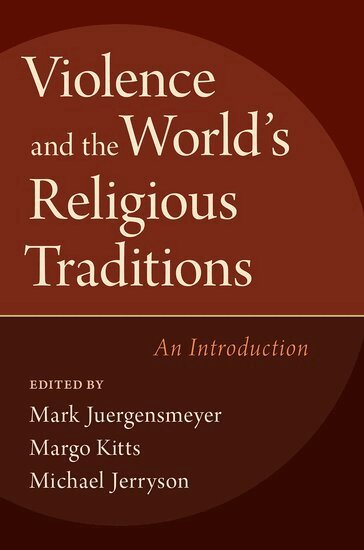
Is religion inherently predisposed to violence? Or has religion been taken hostage by a politics of aggression? The years since the end of the Cold War have shown a noticeable shift in patterns of religious extremism, accentuating the uncomfortable, complex, and oft-misunderstood relationship between religion and violence. The essays in this succinct new volume examine that relationship by offering a well-rounded look at violence as it appears in the world''s most prominent religious traditions, exploring Hindu, Buddhist, Chinese, Sikh, Jewish, Christian, Islamic, African, and Pacific Island texts and practices. The essays in Violence and the World''s Religious Traditions explore the ways in which specific religions have justified acts of destruction, in history, in scripture, and in the contemporary world. But the collection also offers an investigation of religious symbols and practices, shedding new light on the very nature of religion and confronting the question of how deeply intertwined are violence and faith.
E-bok
Engelska, 2016333 kr
Läs direkt efter köp
Is religion inherently predisposed to violence? Or has religion been taken hostage by a politics of aggression? The years since the end of the Cold War have shown a noticeable shift in patterns of religious extremism, accentuating the uncomfortable, complex, and oft-misunderstood relationship between religion and violence. The essays in this succinct new volume examine that relationship by offering a well-rounded look at violence as it appears in the world''s most prominent religious traditions, exploring Hindu, Buddhist, Chinese, Sikh, Jewish, Christian, Islamic, African, and Pacific Island texts and practices. The essays in Violence and the World''s Religious Traditions explore the ways in which specific religions have justified acts of destruction, in history, in scripture, and in the contemporary world. But the collection also offers an investigation of religious symbols and practices, shedding new light on the very nature of religion and confronting the question of how deeply intertwined are violence and faith.
Inbunden, Engelska, 2018
1 563 kr
Skickas inom 5-8 vardagar
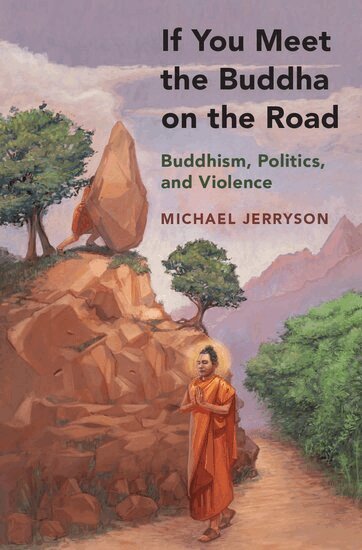
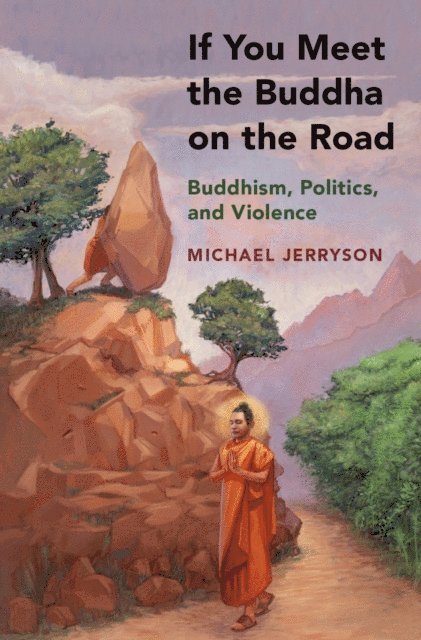
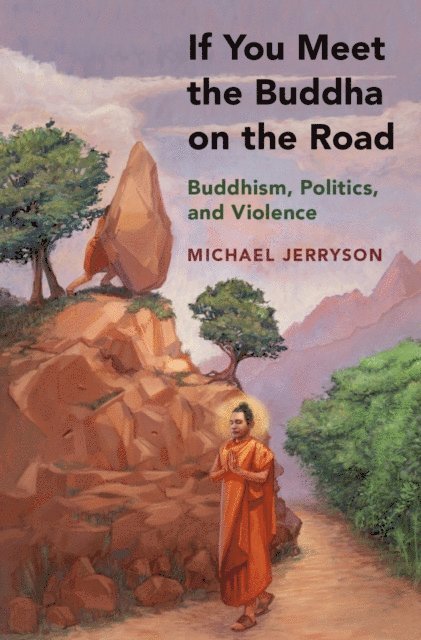
It is said that the famous ninth century Chinese Buddhist monk Linji Yixuan told his disciples, "If you meet the Buddha on the road, kill him." The deliberately confounding statement is meant to shock people out of complacent ways of thinking. But beyond the purposeful jolt from complacency there is another intention. For liberation, this axiom suggests that one should seek the Buddha nature that resides within, rather than a mere Buddha exterior. In this way, the metaphor of killing the Buddha dislodges a person from the illusionary perspective that enlightenment lies outside the body. The proclamation also highlights the power of violence, even on a symbolic level. Violence abounds in Buddhist thoughts, doctrine, and actions, however unacknowledged or misunderstood. If You Meet the Buddha on the Road addresses one important absence in the study of religion and violence: the religious treatment of violence. In order to pursue an understanding of the relationship between Buddhism and violence, it is important to first wonder how Buddhist scriptures and followers understand violence. Drawing on Buddhist treatments of violence, Michael Jerryson explores the ways in which Buddhists invoke, support, or justify war, conflict, state violence, and gender discrimination. In addition, the book examines the ways in which Buddhists address violence as military chaplains, cope with violence in a conflict zone, and serve as witnesses of blasphemy to Buddhist doctrine and Buddha images.
E-bok
PDF, Engelska, 20181 531 kr
Läs direkt efter köp
It is said that the famous ninth century Chinese Buddhist monk Linji Yixuan told his disciples, "If you meet the Buddha on the road, kill him." The deliberately confounding statement is meant to shock people out of complacent ways of thinking. But beyond the purposeful jolt from complacency there is another intention. This axiom suggests that, for liberation, one should seek the Buddha nature that resides within, rather than a mere Buddha exterior. The metaphor of killing the Buddha dislodges a person from the illusion that enlightenment lies outside the body. The proclamation also highlights the power of violence, even on a symbolic level. Violence abounds in Buddhist thoughts, doctrine, and actions, however unacknowledged or misunderstood.If You Meet the Buddha on the Road addresses an important absence in the study of religion and violence: the religious treatment of violence. In order to pursue an understanding of the relationship between Buddhism and violence, it is important to first consider how Buddhist scriptures and followers understand violence. Drawing on Buddhist treatments of violence, Michael Jerryson explores the ways in which Buddhists invoke, support, or justify war, conflict, state violence, and gender discrimination. In addition, the book examines the ways in which Buddhists address violence as military chaplains, cope with violence in a conflict zone, and serve as witnesses of blasphemy to Buddhist doctrine and Buddha images.
E-bok
Engelska, 20181 531 kr
Läs direkt efter köp
It is said that the famous ninth century Chinese Buddhist monk Linji Yixuan told his disciples, "If you meet the Buddha on the road, kill him." The deliberately confounding statement is meant to shock people out of complacent ways of thinking. But beyond the purposeful jolt from complacency there is another intention. This axiom suggests that, for liberation, one should seek the Buddha nature that resides within, rather than a mere Buddha exterior. The metaphor of killing the Buddha dislodges a person from the illusion that enlightenment lies outside the body. The proclamation also highlights the power of violence, even on a symbolic level. Violence abounds in Buddhist thoughts, doctrine, and actions, however unacknowledged or misunderstood.If You Meet the Buddha on the Road addresses an important absence in the study of religion and violence: the religious treatment of violence. In order to pursue an understanding of the relationship between Buddhism and violence, it is important to first consider how Buddhist scriptures and followers understand violence. Drawing on Buddhist treatments of violence, Michael Jerryson explores the ways in which Buddhists invoke, support, or justify war, conflict, state violence, and gender discrimination. In addition, the book examines the ways in which Buddhists address violence as military chaplains, cope with violence in a conflict zone, and serve as witnesses of blasphemy to Buddhist doctrine and Buddha images.
Inbunden, Engelska, 2010
1 670 kr
Skickas inom 5-8 vardagar
Buddhism has played a significant role in the current global rise in religious nationalism and violence, but the violent aspects of Buddhist tradition have been neglected in the outpouring of academic analyses and case studies of this disturbing trend. This book offers eight essays examining the dark side of a tradition often regarded as the religion of peace. The authors note the conflict between the Buddhist norms of non-violence and the prohibition of the killing of sentient beings and acts of state violence supported by the Buddhist community (sangha), acts of civil violence in which monks participate, and Buddhist intersectarian violence. They consider contemporary and historical cases of Buddhist warfare from a wide range of traditions - Tibetan, Mongolian, Japanese, Chinese, Sri Lankan, and Thai - critically examining both Buddhist textual sources justifying violence and Buddhist actors currently engaged in violence. They draw not only on archival material but interviews with those living and involved in war zones around the world. The book enriches our understanding both of the complexities of the Buddhist tradition and of the violence that is found in virtually all of the world's religious traditions.
E-bok
PDF, Engelska, 2013641 kr
Läs direkt efter köp
Violence has always played a part in the religious imagination, from symbols and myths to legendary battles, from colossal wars to the theater of terrorism. The Oxford Handbook of Religion and Violence surveys intersections between religion and violence throughout history and around the world.The forty original essays in this volume include overviews of major religious traditions, showing how violence is justified within the literary and theological foundations of the tradition, how it is used symbolically and in ritual practice, and how social acts of violence and warfare have been justified by religious ideas. The essays also examine patterns and themes relating to religious violence, such as sacrifice and martyrdom, which are explored in cross-disciplinary or regional analyses; and offer major analytic approaches, from literary to social scientific studies. The contributors to this volume--innovative thinkers who are forging new directions in theory and analysis related to religion and violence--provide novel insights into this important field of studies. By mapping out the whole field of religion and violence, The Oxford Handbook of Religion and Violence will prove an authoritative source for students and scholars for years to come.
Inbunden, Engelska, 2016
2 162 kr
Skickas inom 5-8 vardagar
As an incredibly diverse religious system, Buddhism is constantly changing. The Oxford Handbook of Contemporary Buddhism offers a comprehensive collection of work by leading scholars in the field that tracks these changes up to the present day. Taken together, the book provides a blueprint to understanding Buddhism's past and uses it to explore the ways in which Buddhism has transformed in the twentieth and twenty-first centuries.The volume contains 41 essays, divided into two sections. The essays in the first section examine the historical development of Buddhist traditions throughout the world. These chapters cover familiar settings like India, Japan, and Tibet as well as the less well-known countries of Vietnam, Bhutan, and the regions of Latin America, Africa, and Oceania. Focusing on changes within countries and transnationally, this section also contains chapters that focus explicitly on globalization, such as Buddhist international organizations and diasporic communities. The second section tracks the relationship between Buddhist traditions and particular themes. These chapters review Buddhist interactions with contemporary topics such as violence and peacebuilding, and ecology, as well as Buddhist influences in areas such as medicine and science. Offering coverage that is both expansive and detailed, The Oxford Handbook of Contemporary Buddhism delves into some of the most debated and contested areas within Buddhist Studies today.
E-bok
PDF, Engelska, 20162 118 kr
Läs direkt efter köp
As an incredibly diverse religious system, Buddhism is constantly changing. The Oxford Handbook of Contemporary Buddhism offers a comprehensive collection of work by leading scholars in the field that tracks these changes up to the present day. Taken together, the book provides a blueprint to understanding Buddhism''s past and uses it to explore the ways in which Buddhism has transformed in the twentieth and twenty-first centuries.The volume contains 41 essays, divided into two sections. The essays in the first section examine the historical development of Buddhist traditions throughout the world. These chapters cover familiar settings like India, Japan, and Tibet as well as the less well-known countries of Vietnam, Bhutan, and the regions of Latin America, Africa, and Oceania. Focusing on changes within countries and transnationally, this section also contains chapters that focus explicitly on globalization, such as Buddhist international organizations and diasporic communities. The second section tracks the relationship between Buddhist traditions and particular themes. These chapters review Buddhist interactions with contemporary topics such as violence and peacebuilding, and ecology, as well as Buddhist influences in areas such as medicine and science. Offering coverage that is both expansive and detailed, The Oxford Handbook of Contemporary Buddhism delves into some of the most debated and contested areas within Buddhist Studies today.
E-bok
PDF, Engelska, 2010475 kr
Läs direkt efter köp
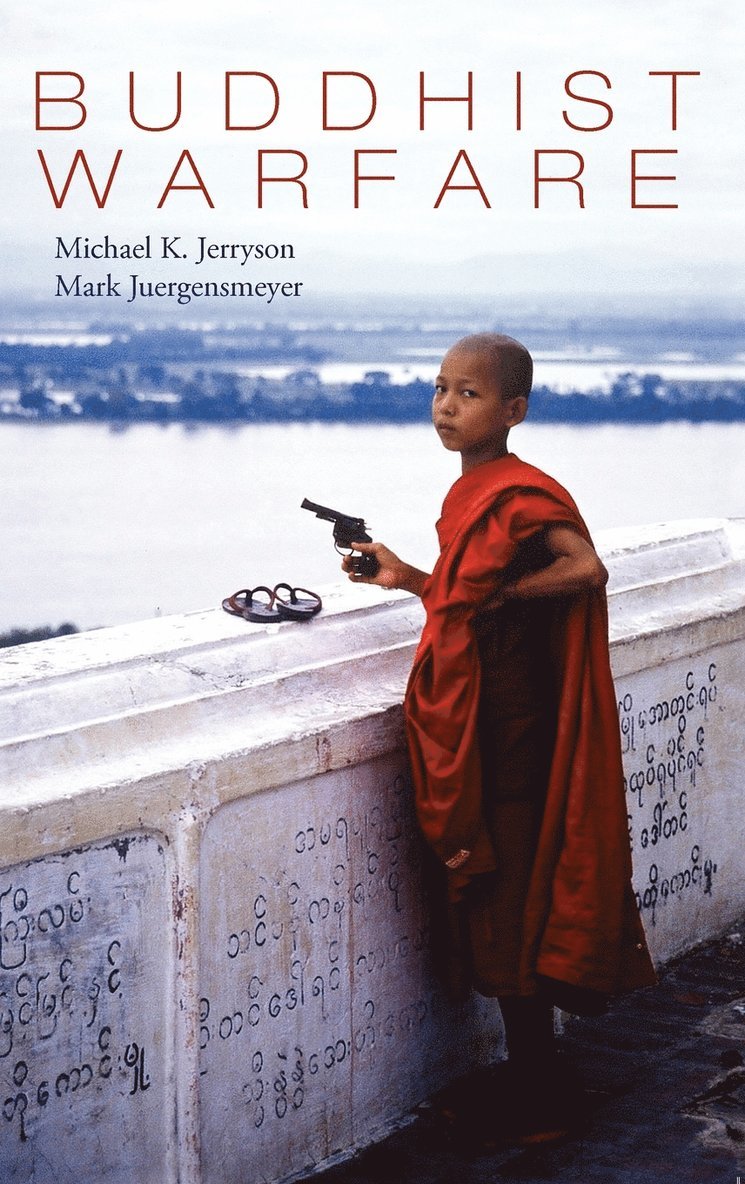
Though traditionally regarded as a peaceful religion, Buddhism has a dark side. On multiple occasions over the past fifteen centuries, Buddhist leaders have sanctioned violence, and even war. The eight essays in this book focus on a variety of Buddhist traditions, from antiquity to the present, and show that Buddhist organizations have used religious images and rhetoric to support military conquest throughout history. Buddhist soldiers in sixth century China were given the illustrious status of Bodhisattva after killing their adversaries. In seventeenth century Tibet, the Fifth Dalai Lama endorsed a Mongol ruler''s killing of his rivals. And in modern-day Thailand, Buddhist soldiers carry out their duties undercover, as fully ordained monks armed with guns. Buddhist Warfare demonstrates that the discourse on religion and violence, usually applied to Judaism, Islam, and Christianity, can no longer exclude Buddhist traditions. The book examines Buddhist military action in Tibet, China, Korea, Japan, Mongolia, Sri Lanka, and Thailand, and shows that even the most unlikely and allegedly pacifist religious traditions are susceptible to the violent tendencies of man.
Inbunden, Engelska, 2013
2 151 kr
Skickas inom 5-8 vardagar
Violence has always played a part in the religious imagination, from symbols and myths to legendary battles, from colossal wars to the theater of terrorism. The Oxford Handbook of Religion and Violence surveys intersections between religion and violence throughout history and around the world. The forty original essays in this volume include overviews of major religious traditions, showing how violence is justified within the literary and theological foundations of the tradition, how it is used symbolically and in ritual practice, and how social acts of violence and warfare have been justified by religious ideas. The essays also examine patterns and themes relating to religious violence, such as sacrifice and martyrdom, which are explored in cross-disciplinary or regional analyses; and offer major analytic approaches, from literary to social scientific studies. The contributors to this volume---innovative thinkers who are forging new directions in theory and analysis related to religion and violence---provide novel insights into this important field of studies. By mapping out the whole field of religion and violence, The Oxford Handbook of Religion and Violence will prove an authoritative source for students and scholars for years to come.
E-bok
Engelska, 2010534 kr
Läs direkt efter köp
Though traditionally regarded as a peaceful religion, Buddhism has a dark side. On multiple occasions over the past fifteen centuries, Buddhist leaders have sanctioned violence, and even war. The eight essays in this book focus on a variety of Buddhist traditions, from antiquity to the present, and show that Buddhist organizations have used religious images and rhetoric to support military conquest throughout history. Buddhist soldiers in sixth century China were given the illustrious status of Bodhisattva after killing their adversaries. In seventeenth century Tibet, the Fifth Dalai Lama endorsed a Mongol ruler''s killing of his rivals. And in modern-day Thailand, Buddhist soldiers carry out their duties undercover, as fully ordained monks armed with guns. Buddhist Warfare demonstrates that the discourse on religion and violence, usually applied to Judaism, Islam, and Christianity, can no longer exclude Buddhist traditions. The book examines Buddhist military action in Tibet, China, Korea, Japan, Mongolia, Sri Lanka, and Thailand, and shows that even the most unlikely and allegedly pacifist religious traditions are susceptible to the violent tendencies of man.
E-bok
Engelska, 20202 364 kr
Läs direkt efter köp
Through sections containing overview essays and reference entries related to particular religions, this resource explores the rise of religious violence, hate crime, and persecution around the world.Religious violence and persecution have been growing steadily both within the United States and around the world. Drawing on the expertise of a wide range of scholars, this current and comprehensive reference helps readers understand the persecution of members of particular faiths as well as violence committed by members of those faiths. In doing so, it promotes a greater understanding of the role of religion in global politics, domestic and international terrorism, and religious bigotry.The book contains sections on particular religious traditions from around the world. Each section begins with an overview essay surveying violence related to that particular religion, whether committed by or against members of that faith. Reference entries in each section then provide objective, fundamental information about particular topics related to violence and the religion discussed. The entries provide cross-references and suggestions for further reading, and the work closes with a bibliography of resources for further study.
Inbunden, Engelska, 2020
1 623 kr
Skickas inom 10-15 vardagar
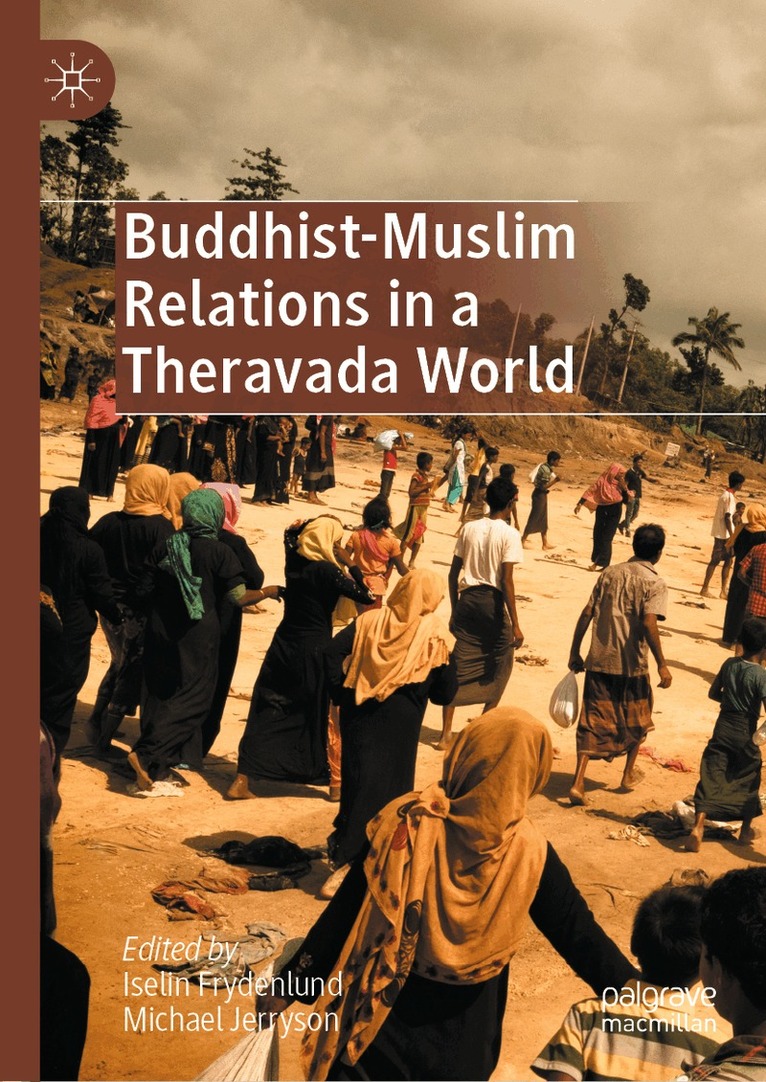
This book is the first to critically analyze Buddhist-Muslim relations in Theravada Buddhist majority states in South and Southeast Asia. Asia is home to the largest population of Buddhists and Muslims. In recent years, this interfaith communal living has incurred conflicts, such as the ethnic-religious conflicts in Myanmar, Sri Lanka, and Thailand. Experts from around the world collaborate to provide a comprehensive look into religious pluralism and religious violence. The book is divided into two sections. The first section provides historical background to the three countries with the largest Buddhist-Muslim relations. The second section has chapters that focus on specific encounters between Buddhists and Muslims, which includes anti-Buddhist sentiments in Bangladesh, the role of gender in Muslim-Buddhist relations and the rise of anti-Muslim and anti-Rohingya sentiments in Myanmar. By exploring historical fluctuations over time—paying particular attention to how state-formations condition Muslim-Buddhist entanglements—the book shows the processual and relational aspects of religious identity constructions and Buddhist-Muslim interactions in Theravada Buddhist majority states.
E-bok
Engelska, 20202 049 kr
Läs direkt efter köp
This book is the first to critically analyze Buddhist-Muslim relations in Theravada Buddhist majority states in South and Southeast Asia. Asia is home to the largest population of Buddhists and Muslims. In recent years, this interfaith communal living has incurred conflicts, such as the ethnic-religious conflicts in Myanmar, Sri Lanka, and Thailand. Experts from around the world collaborate to provide a comprehensive look into religious pluralism and religious violence. The book is divided into two sections. The first section provides historical background to the three countries with the largest Buddhist-Muslim relations. The second section has chapters that focus on specific encounters between Buddhists and Muslims, which includes anti-Buddhist sentiments in Bangladesh, the role of gender in Muslim-Buddhist relations and the rise of anti-Muslim and anti-Rohingya sentiments in Myanmar. By exploring historical fluctuations over time—paying particular attention to how state-formations condition Muslim-Buddhist entanglements—the book shows the processual and relational aspects of religious identity constructions and Buddhist-Muslim interactions in Theravada Buddhist majority states.
Häftad, Engelska, 2021
1 623 kr
Skickas inom 10-15 vardagar
This book is the first to critically analyze Buddhist-Muslim relations in Theravada Buddhist majority states in South and Southeast Asia. Asia is home to the largest population of Buddhists and Muslims. In recent years, this interfaith communal living has incurred conflicts, such as the ethnic-religious conflicts in Myanmar, Sri Lanka, and Thailand. Experts from around the world collaborate to provide a comprehensive look into religious pluralism and religious violence. The book is divided into two sections. The first section provides historical background to the three countries with the largest Buddhist-Muslim relations. The second section has chapters that focus on specific encounters between Buddhists and Muslims, which includes anti-Buddhist sentiments in Bangladesh, the role of gender in Muslim-Buddhist relations and the rise of anti-Muslim and anti-Rohingya sentiments in Myanmar. By exploring historical fluctuations over time—paying particular attention to how state-formations condition Muslim-Buddhist entanglements—the book shows the processual and relational aspects of religious identity constructions and Buddhist-Muslim interactions in Theravada Buddhist majority states.
E-bok
Engelska, 20202 417 kr
Läs direkt efter köp
Through sections containing overview essays and reference entries related to particular religions, this resource explores the rise of religious violence, hate crime, and persecution around the world.Religious violence and persecution have been growing steadily both within the United States and around the world. Drawing on the expertise of a wide range of scholars, this current and comprehensive reference helps readers understand the persecution of members of particular faiths as well as violence committed by members of those faiths. In doing so, it promotes a greater understanding of the role of religion in global politics, domestic and international terrorism, and religious bigotry.The book contains sections on particular religious traditions from around the world. Each section begins with an overview essay surveying violence related to that particular religion, whether committed by or against members of that faith. Reference entries in each section then provide objective, fundamental information about particular topics related to violence and the religion discussed. The entries provide cross-references and suggestions for further reading, and the work closes with a bibliography of resources for further study.