Michael Theune - Böcker
Visar alla böcker från författaren Michael Theune. Handla med fri frakt och snabb leverans.
7 produkter
7 produkter
305 kr
Skickas inom 3-6 vardagar
Del 16 - New Writing Viewpoints
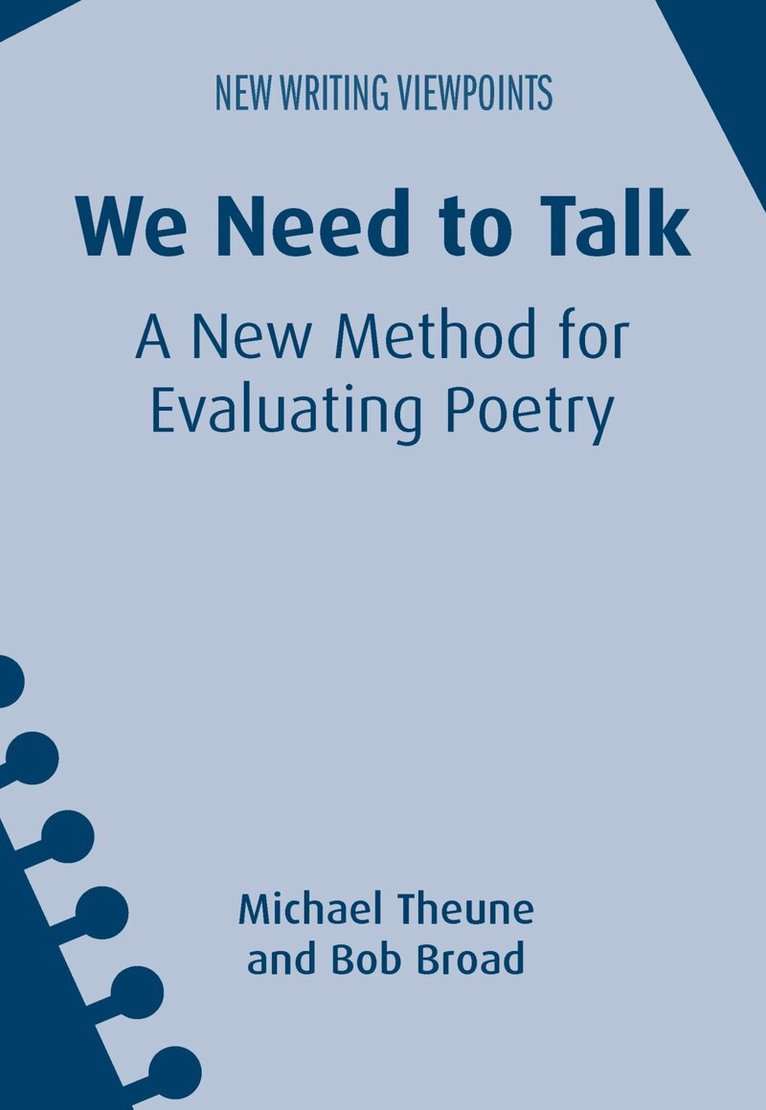
We Need to Talk
A New Method for Evaluating Poetry
Inbunden, Engelska, 2017
1 622 kr
Skickas inom 5-8 vardagar
We evaluate poems constantly: as workshop leaders, competition judges and journal editors. But how do we judge the success of verse in these contexts? The authors propose an innovative method by which anyone involved in the assessment of poetry can be more transparent about how they value verse. This book foregrounds the ethical and professional obligations of poets, teachers and critics to conduct axiological inquiry so they can discover and publish what they value. We Need to Talk suggests why and how people who care about poetry should communally explore and document their shared (and conflicting) values. This is the first book to provide the background and theory, as well as a practical, working model, for the communal, empirical evaluation of creative writing.
2 057 kr
Tillfälligt slut
2 057 kr
Tillfälligt slut
2 057 kr
Tillfälligt slut
Del 6 - Romantic Reconfigurations: Studies in Literature and Culture 1780-1850
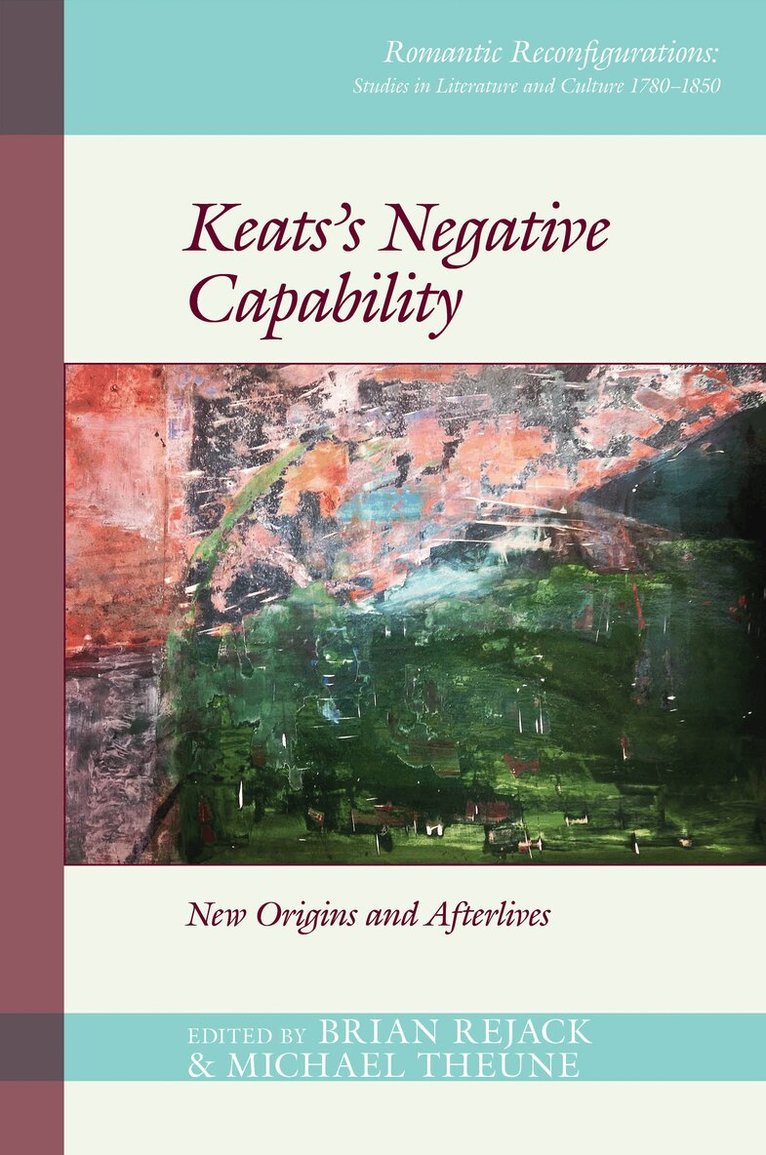
Keats’s Negative Capability
New Origins and Afterlives
Inbunden, Engelska, 2019
2 129 kr
Skickas inom 7-10 vardagar
In late December 1817, when attempting to name “what quality went to form a Man of Achievement especially in Literature,” John Keats coined the term “negative capability,” which he glossed as “being in uncertainties, Mysteries, doubts, without any irritable reaching after fact & reason.” Since then negative capability has continued to shape assessments of and responses to Keats’s work, while also surfacing in other contexts ranging from contemporary poetry to punk rock. The essays collected in this volume, taken as a whole, account for some of the history of negative capability, and propose new models and directions for its future in scholarly and popular discourse. The book does not propose a particular understanding of negative capability from among the many options (radical empathy, annihilation of self, philosophical skepticism, celebration of ambiguity) as the final word on the topic; rather, the book accounts for the multidimensionality of negative capability. Essays treat negative capability’s relation to topics including the Christmas pantomime, psychoanalysis, Zen Buddhism, nineteenth-century medicine, and Philip Pullman’s His Dark Materials trilogy. Describing the “poetical Character” Keats notes that “it enjoys light and shade; it lives in gusto, be it foul or fair, high or low, rich or poor, mean or elevated.” This book, too, revels in such multiplicity.
Del 6 - Romantic Reconfigurations: Studies in Literature and Culture 1780-1850
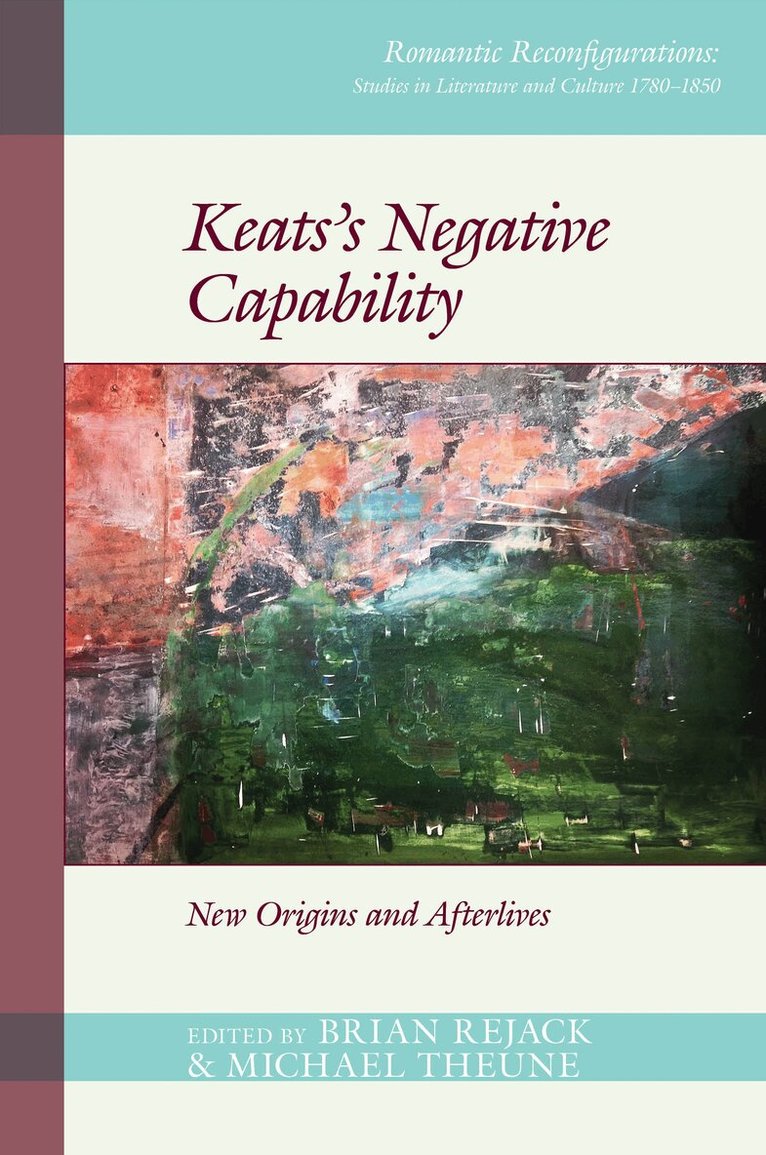
Keats’s Negative Capability
New Origins and Afterlives
Häftad, Engelska, 2021
585 kr
Skickas inom 7-10 vardagar
In late December 1817, when attempting to name “what quality went to form a Man of Achievement especially in Literature,” John Keats coined the term “negative capability,” which he glossed as “being in uncertainties, Mysteries, doubts, without any irritable reaching after fact & reason.” Since then negative capability has continued to shape assessments of and responses to Keats’s work, while also surfacing in other contexts ranging from contemporary poetry to punk rock. The essays collected in this volume, taken as a whole, account for some of the history of negative capability, and propose new models and directions for its future in scholarly and popular discourse. The book does not propose a particular understanding of negative capability from among the many options (radical empathy, annihilation of self, philosophical skepticism, celebration of ambiguity) as the final word on the topic; rather, the book accounts for the multidimensionality of negative capability. Essays treat negative capability’s relation to topics including the Christmas pantomime, psychoanalysis, Zen Buddhism, nineteenth-century medicine, and Philip Pullman’s His Dark Materials trilogy. Describing the “poetical Character” Keats notes that “it enjoys light and shade; it lives in gusto, be it foul or fair, high or low, rich or poor, mean or elevated.” This book, too, revels in such multiplicity.