Michael Zimpfer – författare
Visar alla böcker från författaren Michael Zimpfer. Handla med fri frakt och snabb leverans.
3 produkter
3 produkter
Häftad, Engelska, 1995
565 kr
Skickas inom 10-15 vardagar
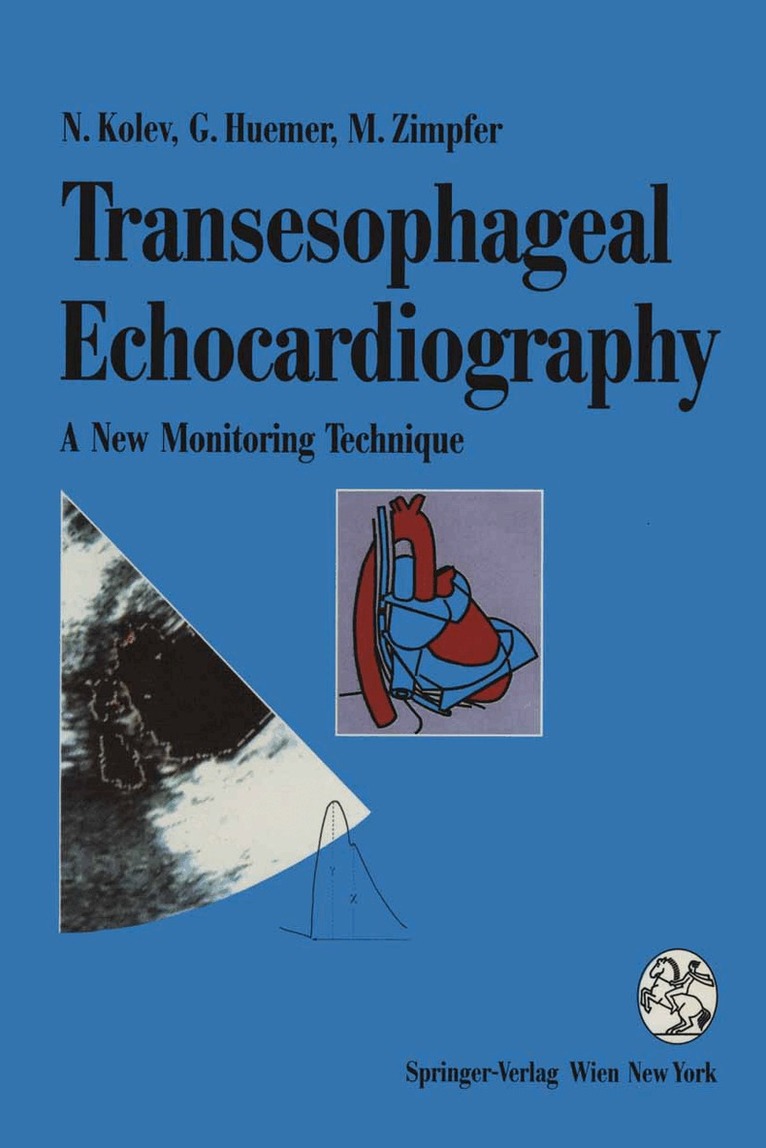
"Everything should be as simple as can be, but not simpler. " Albert Einstein The past decade has been marked by a trend from invasive to noninvasive intraoperative monitoring. As far as respiratory monitoring is concerned, initial experience with transcutaneous gas analysis laid the foundation for widespread clinical use of pulse oximetry and end-tidal gas analysis. It has been long recognized that echo cardiography might become an equally useful adjunct to cardiovascular monitoring. The fundamental purpose of cardiac monitoring is to warn the anesthesiologist of existing or impending cardiac abnormalities, so they can be corrected or prevented before the patient is harmed. Forces wi thin and ou tside of medicine are pressuring our specialty to improve cardiovascular monitoring. For instance, the average age of the population is increasing, resulting in more elderly patients presenting for major surgical procedures. At the same time, the medical-legal establishment stands ready to hold anesthesiologists accountable for almost any adverse outcome associated with anesthesia or surgery. ! In an effort to deal with this pressure, anesthesiologists have often resorted to invasive cardiovascular monitoring. However, invasive procedures are expensive, and even in the most experienced hands, they sometimes result in complications. In the past few years, with the development of modern computerized medical ultrasonics, anesthesiologists have recognized the usefulness of trans esophageal echocardiography (TEE) as a new monitoring technique. TEE is the most complex, sophisticated, and potent cardiovascular monitor ever introduced.
E-bok
PDF, Engelska, 2012708 kr
Läs direkt efter köp
"Everything should be as simple as can be, but not simpler. " Albert Einstein The past decade has been marked by a trend from invasive to noninvasive intraoperative monitoring. As far as respiratory monitoring is concerned, initial experience with transcutaneous gas analysis laid the foundation for widespread clinical use of pulse oximetry and end-tidal gas analysis. It has been long recognized that echo cardiography might become an equally useful adjunct to cardiovascular monitoring. The fundamental purpose of cardiac monitoring is to warn the anesthesiologist of existing or impending cardiac abnormalities, so they can be corrected or prevented before the patient is harmed. Forces wi thin and ou tside of medicine are pressuring our specialty to improve cardiovascular monitoring. For instance, the average age of the population is increasing, resulting in more elderly patients presenting for major surgical procedures. At the same time, the medical-legal establishment stands ready to hold anesthesiologists accountable for almost any adverse outcome associated with anesthesia or surgery. ! In an effort to deal with this pressure, anesthesiologists have often resorted to invasive cardiovascular monitoring. However, invasive procedures are expensive, and even in the most experienced hands, they sometimes result in complications. In the past few years, with the development of modern computerized medical ultrasonics, anesthesiologists have recognized the usefulness of trans esophageal echocardiography (TEE) as a new monitoring technique. TEE is the most complex, sophisticated, and potent cardiovascular monitor ever introduced.
E-bok
Tyska, 2020228 kr
Läs direkt efter köp
Beim Befahren einer Wehranlage kentert der Physiker Wolfgang Kerber am 13. 3. 1999 mit seinem Kajak. Als er geborgen wird, hat er eine Körpertemperatur von 24 Grad. Er ist klinisch tot. Nur drei Monate später arbeitet er wieder in seinem alten Beruf, unternimmt Klettertouren und Kajakfahrten. In diesem Buch berichtet er von seinem Nahtod-Erlebnis und der Rückkehr ins Leben und dankt zugleich für die sprichwörtliche zweite Chance. Kerber gelingt dabei mit wissenschaftlich geschulter Beobachtungsgabe eine frappierend genaue Schilderung seines Zustands, die nicht nur Einblick in die ärztliche Kunst gewährt, sondern auch Aufschlüsse über Extremsituationen und die Psychologie eines Betroffenen gibt. Glück oder Vorsehung oder Ergebnis medizinischer Höchstleistungen? Kerbers behandelnder Arzt Michael Zimpfer schildert diesen seinen spektakulären Fall aus medizinischer Sicht und stößt unweigerlich auf Fragen, die uns immer wieder bedrängen: "Was leistet unsere Natur?", "Was kostet ein Mensch?" und "Was kann unsere Medizin – wenn man sie lässt?"