Michel Meyer - Böcker
Visar alla böcker från författaren Michel Meyer. Handla med fri frakt och snabb leverans.
16 produkter
16 produkter
406 kr
Skickas inom 7-10 vardagar
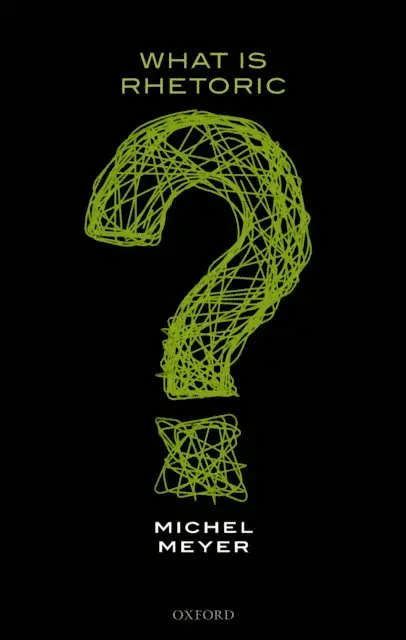
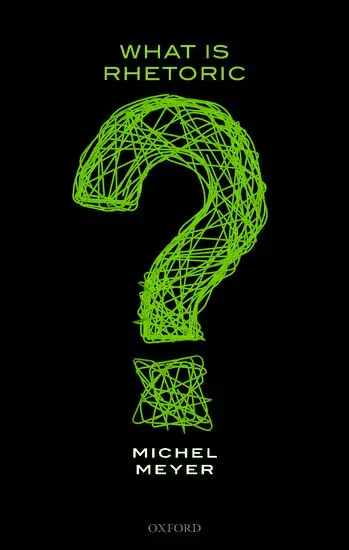
This book offers a new approach to the principles and functioning of rhetoric. In everyday life, we often debate issues or simply discuss questions. Rhetoric is the way in which we answer questions in an interpersonal context, when we want to have an effect on those with whom we are communicating. They can be convinced or charmed, persuaded or influenced, and the language used can range from reasoning to the sharing of narratives, literary or otherwise. What is Rhetoric? provides a breakthrough in the field, offering a systematic and unified view of the topic. The book combines the social aspects of rhetoric, such as the negotiation of distance between speakers, with the theory of emotions. All the principal authors from Plato and Aristotle to contemporary theorists are integrated into Michel Meyer's "problematological" conception of rhetoric, based on the primacy of questioning and answering in language and thought.
1 083 kr
Skickas inom 3-6 vardagar
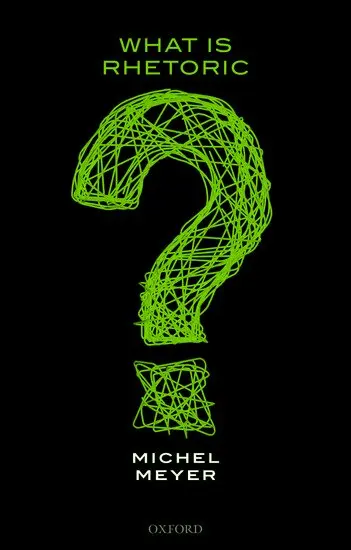
This book offers a new approach to the principles and functioning of rhetoric. In everyday life, we often debate issues or simply discuss questions. Rhetoric is the way in which we answer questions in an interpersonal context, when we want to have an effect on those with whom we are communicating. They can be convinced or charmed, persuaded or influenced, and the language used can range from reasoning to the sharing of narratives, literary or otherwise. What is Rhetoric? provides a breakthrough in the field, offering a systematic and unified view of the topic. The book combines the social aspects of rhetoric, such as the negotiation of distance between speakers, with the theory of emotions. All the principal authors from Plato and Aristotle to contemporary theorists are integrated into Michel Meyer's 'problematological' conception of rhetoric, based on the primacy of questioning and answering in language and thought.
978 kr
Tillfälligt slut
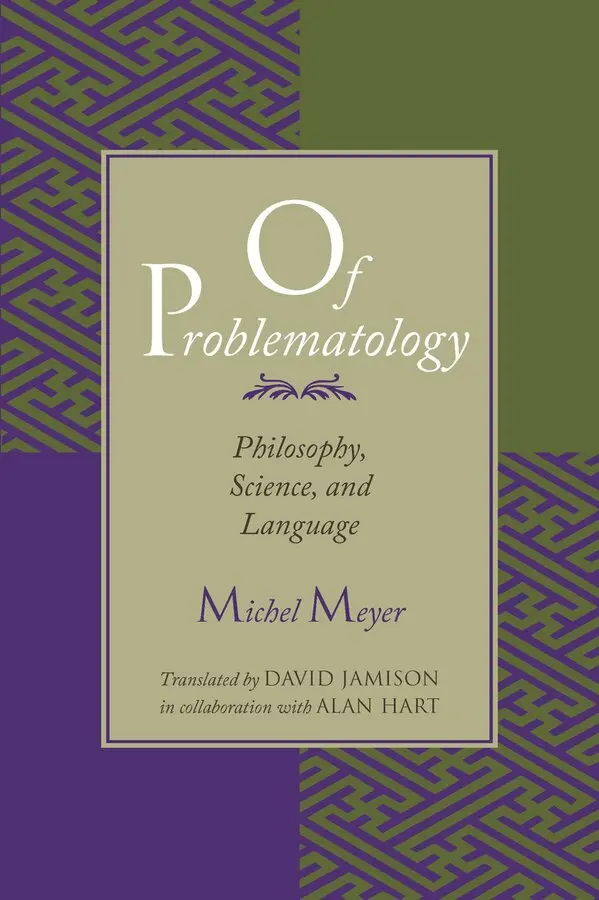
This text offers a new beginning for philosophy rooted in a theory of questioning which the author calls "problematology." He argues that a new beginning is necessary in order to resituate philosophy, science and linguistic analysis. For Meyer, philosophy does not solve problems or give answers but instead shows how propositions are related to a whole field of questions that give them meaning. Reason is identified not with answers but with the question-answer process. Meyer pursues this theory of reason and meaning in a critique of Western philosophy from Socrates, Plato and Aristotle through Heidegger, Wittgenstein and Foucault. He provides an analysis of Descartes' notion of radical doubt and demonstrates its implications for the subsequent philosophical tradition. Meyer argues that recent work in rhetoric points toward a theory of radical questioning and claims that the methods of rhetoric and argumentation must be turned back on philosophy itself in order to recover the original significance of metaphysics as the science of ultimate questions.
298 kr
Skickas inom 7-10 vardagar
This text offers a new beginning for philosophy rooted in a theory of questioning which the author calls "problematology." He argues that a new beginning is necessary in order to resituate philosophy, science and linguistic analysis. For Meyer, philosophy does not solve problems or give answers but instead shows how propositions are related to a whole field of questions that give them meaning. Reason is identified not with answers but with the question-answer process. Meyer pursues this theory of reason and meaning in a critique of Western philosophy from Socrates, Plato and Aristotle through Heidegger, Wittgenstein and Foucault. He provides an analysis of Descartes' notion of radical doubt and demonstrates its implications for the subsequent philosophical tradition. Meyer argues that recent work in rhetoric points toward a theory of radical questioning and claims that the methods of rhetoric and argumentation must be turned back on philosophy itself in order to recover the original significance of metaphysics as the science of ultimate questions.
509 kr
Skickas inom 7-10 vardagar
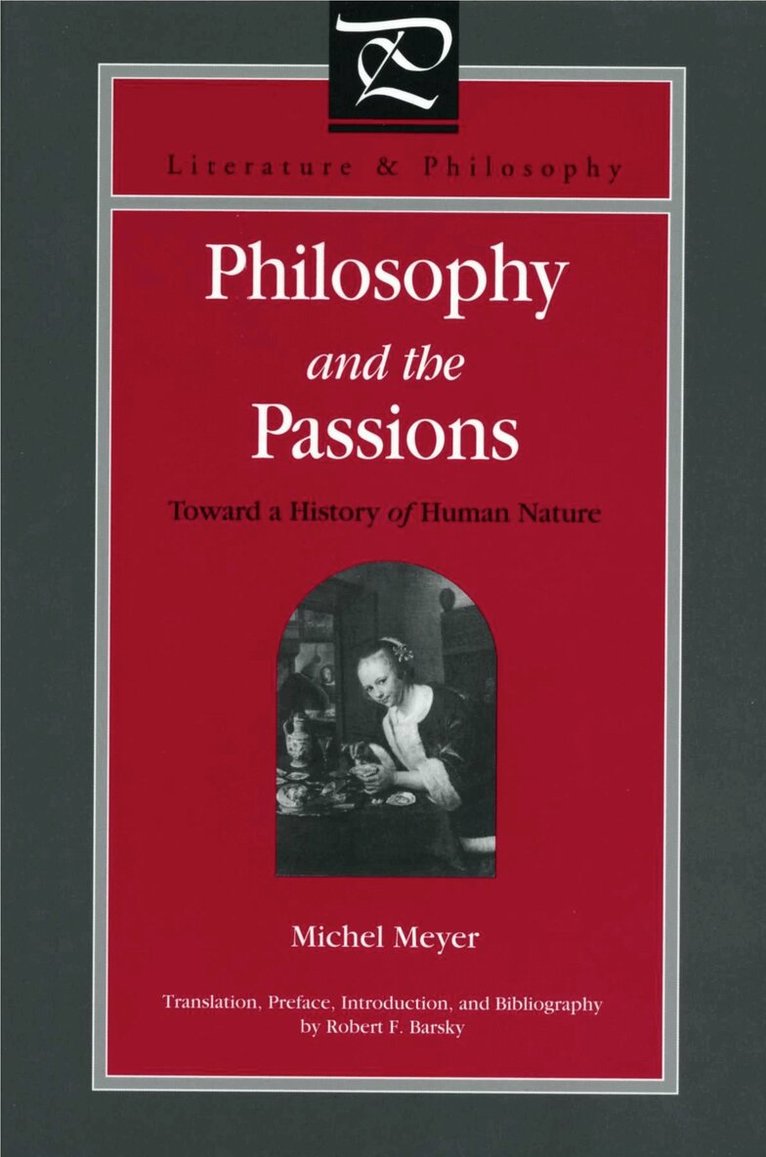
The subject of the passions has always haunted Western philosophy and, more often than not, aroused harsh judgments. For the passions represent a force of excess and lawlessness in humanity that produces troubling, confusing paradoxes.Michel Meyer provides new insight into an age-old dilemma: Does passion torture people because it blinds them, or, on the contrary, does it permit them to apprehend who and what we really are?
436 kr
Skickas inom 7-10 vardagar
Contemporary or postmodern thought is based on the lack of foundation. The impossibility of having a principle for philosophy has become a position of principle. As a result, rhetoric has taken over. Content has given way to the priority of form. Michel Meyer's book aims at showing that philosophy as foundational is possible and necessary, and that rhetoric can flourish alongside, but the conception of reason must be changed. Questioning rather than answering must be considered as the guiding principle. What the author calls "problematology" is not only the study of questioning but also the analysis of the reasons why it has been repressed throughout the history of philosophy. Since Socrates, philosophers and scientists have reasoned by asking questions and by trying to solve them. Questioning has been the unthematized foundation of philosophy and thought at large. Philosophers, however, have preferred another norm, granting privilege to the answers and thereby repressing the questions into the realm of the preliminary and unessential. They have not considered their discursive practice as being based upon some question-answer (or problem-solution) complex, but exclusively on the results they call propositions. Meyer argues that propositions ensue from corresponding questions, and not the other way around.Anthropology, ontology, reasoning, and language thus receive a new interpretation in the problematological conception of philosophy, a conception in which questions and problems are thematized afresh. The theory of language in everyday use, in argumentation, or in literary analysis receives a full and decisive treatment here, making Meyer's question-view one of the leading theories in contemporary thought, alongside his rhetoric for which he is already well known.
1 682 kr
Skickas
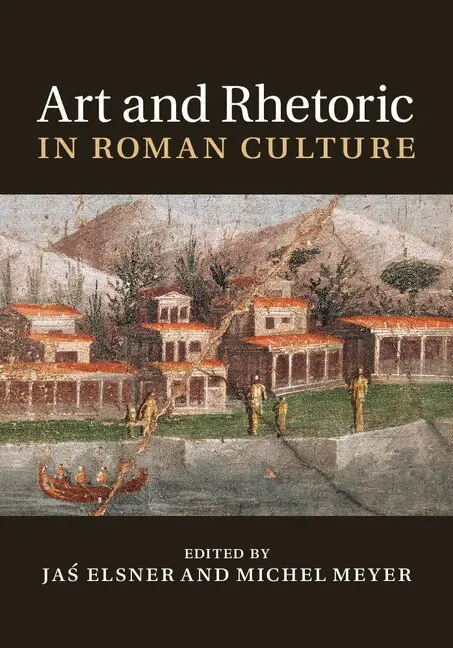
Rhetoric was fundamental to education and to cultural aspiration in the Greek and Roman worlds. It was one of the key aspects of antiquity that slipped under the line between the ancient world and Christianity erected by the early Church in late antiquity. Ancient rhetorical theory is obsessed with examples and discussions drawn from visual material. This book mines this rich seam of theoretical analysis from within Roman culture to present an internalist model for some aspects of how the Romans understood, made and appreciated their art. The understanding of public monuments like the Arch of Titus or Trajan's Column or of imperial statuary, domestic wall painting, funerary altars and sarcophagi, as well as of intimate items like children's dolls, is greatly enriched by being placed in relevant rhetorical contexts created by the Roman world.
1 861 kr
Skickas inom 10-15 vardagar
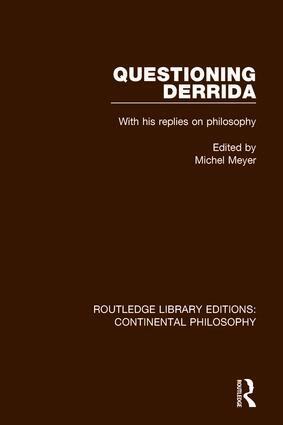
This title was first published in 2001. Derrida's work testifies to the problematic state of contemporary thought. Questioning Derrida offers new explorations into Derrida's contribution to philosophy. Presenting contributions from prominent philosophers worldwide, this book explores many aspects of Derrida's philosophical perspective. With contributors commenting on a particular topic or defending alternative viewpoints, this book examines the work of Plato, Hegel, Aristotle, Heidegger and also the philosophy of science. Focusing on 'problematology' - a conception of philosophy as questioning - the contributors explore this new way of 'doing' philosophy. Including a concluding chapter from Derrida himself, this book presents Derrida in question and Derrida and his answers and opens new debate for readers across the fields of philosophy and literature, particularly those exploring the work of Derrida, issues in continental philosophy, and the theory of questioning. Michel Meyer is Director of the Revue Internationale de Philosophie journal and based at Université Libre de Bruxelles, Belgium. He is also the series editor of Ashgate's Philosophy in Question series which is published in association with Revue Internationale de Philosophie from which the volumes in the series evolve.
569 kr
Skickas inom 10-15 vardagar
This title was first published in 2001. Derrida's work testifies to the problematic state of contemporary thought. Questioning Derrida offers new explorations into Derrida's contribution to philosophy. Presenting contributions from prominent philosophers worldwide, this book explores many aspects of Derrida's philosophical perspective. With contributors commenting on a particular topic or defending alternative viewpoints, this book examines the work of Plato, Hegel, Aristotle, Heidegger and also the philosophy of science. Focusing on 'problematology' - a conception of philosophy as questioning - the contributors explore this new way of 'doing' philosophy. Including a concluding chapter from Derrida himself, this book presents Derrida in question and Derrida and his answers and opens new debate for readers across the fields of philosophy and literature, particularly those exploring the work of Derrida, issues in continental philosophy, and the theory of questioning. Michel Meyer is Director of the Revue Internationale de Philosophie journal and based at Université Libre de Bruxelles, Belgium. He is also the series editor of Ashgate's Philosophy in Question series which is published in association with Revue Internationale de Philosophie from which the volumes in the series evolve.
755 kr
Skickas inom 3-6 vardagar
650 kr
Skickas inom 5-8 vardagar
2 217 kr
Skickas inom 3-6 vardagar
No detailed description available for "Questions and Questioning".
1 064 kr
Skickas inom 10-15 vardagar
by the question in its being an answer, if only in a circumstantial (i. e. inessential) manner. One indeed must question oneself in order to remember, says Plato, but the dialectic, which would be scientific, must be something else even if it remains a play of question and answer. This contradiction did not escape Aristotle: he split the scientific from the dialectic and logic from argumentation whose respective theories he was led to conceive in order to clearly define their boundaries and specificities. As for Plato, he found in the famous theory of Ideas what he sought in order to justify knowledge as that which is supposed to hold its truth only from itself. What do Ideas mean within the framework of our approach? In what consists the passage from rhetoric to ontology which leads to the denaturation of argumentation? When Socrates asked, for example, "What is virtue?", he thought one could not answer such a question because the answer refers to a single proposition, a single truth, whereas the formulation of the question itself does not indicate this unicity. For any answer, another can be given and thus continuously, if necessary, until eventually one will come across an incompatibility. Now, to a question as to what X, Y, or Z is, one can answer in many ways and nothing in the question itself prohibits multiplicity. Virtue is courage, is justice, and so on.
1 064 kr
Skickas inom 10-15 vardagar
by the question in its being an answer, if only in a circumstantial (i. e. inessential) manner. One indeed must question oneself in order to remember, says Plato, but the dialectic, which would be scientific, must be something else even if it remains a play of question and answer. This contradiction did not escape Aristotle: he split the scientific from the dialectic and logic from argumentation whose respective theories he was led to conceive in order to clearly define their boundaries and specificities. As for Plato, he found in the famous theory of Ideas what he sought in order to justify knowledge as that which is supposed to hold its truth only from itself. What do Ideas mean within the framework of our approach? In what consists the passage from rhetoric to ontology which leads to the denaturation of argumentation? When Socrates asked, for example, "What is virtue?", he thought one could not answer such a question because the answer refers to a single proposition, a single truth, whereas the formulation of the question itself does not indicate this unicity. For any answer, another can be given and thus continuously, if necessary, until eventually one will come across an incompatibility. Now, to a question as to what X, Y, or Z is, one can answer in many ways and nothing in the question itself prohibits multiplicity. Virtue is courage, is justice, and so on.
Del 15 - Series On Chemistry, Energy And The Environment
Emerging Analytical Techniques For Chemical Speciation Studies - Part 1: Electrochemical And Migration Methods
Inbunden, Engelska, 2024
1 502 kr
Skickas inom 3-6 vardagar
Guest-edited by Dr Michel Meyer (CNRS, Université de Bourgogne, Dijon) and Prof. Demetrio Milea (Università degli Studi di Messina), Emerging Analytical Techniques for Chemical Speciation Studies focuses on a selection of valuable instrumental methods for investigating complex formation equilibria in solution, providing information on the speciation (stoichiometry and in some instances structure of the formed species) but also allowing the measurement of thermodynamic parameters (equilibrium constants, reaction enthalpy and entropy). The title is split into two volumes belonging to the Series on Chemistry, Energy and the Environment. Part 1 (Volume 15 of this series), discusses various electrochemical, electromigration, and thermophoresis-based methods. Authored by eminent practitioners in their field, each of the four chapters covers both the theoretical and the practical aspects with helpful experimental guidelines. The latest technical and computational advances are described in a way that unambiguously show the major contributions of the authors at the top of their field. Hence, this book is intended to be a valuable introduction to newcomers, while being at the same time a helpful companion to more experienced users of each instrumental techniques. It provides an up-to-date overview with useful tips and hints on the application of selected cutting-edge analytical methods that allow unravelling and modelling intricate complex formation equilibria. So far, there has been no such book focussing specifically on the measurement of thermodynamic parameters, while covering such a wide panel of techniques. This book will be of interest to a broad readership, including analytical, coordination, supramolecular, environmental, instrumental, and physical chemists, radiochemists, electrochemists, and biochemists among others.
Del 16 - Series On Chemistry, Energy And The Environment
Emerging Analytical Techniques For Chemical Speciation Studies - Part 2: Spectroscopic Methods
Inbunden, Engelska, 2027
1 237 kr
Kommande
Guest-edited by Dr Michel Meyer (CNRS, Université Bourgogne Europe, Dijon) and Prof. Demetrio Milea (Università degli Studi di Messina), Emerging Analytical Techniques for Chemical Speciation Studies focuses on a selection of valuable instrumental methods for investigating complex formation equilibria in solution, providing information on the speciation (stoichiometry and in some instances structure of the formed species) but also allowing the measurement of thermodynamic parameters (equilibrium constants, reaction enthalpy and entropy). The title is split into two volumes belonging to the Series on Chemistry, Energy and the Environment. Part 2 (Volume 16 of this series), is dedicated to spectroscopic techniques, including X-ray absorption spectroscopy (XAS), electron paramagnetic resonance spectroscopy (EPR), and nuclear magnetic resonance spectroscopy (NMR). Authored by eminent practitioners in their field, each of the three chapters covers both the theoretical and the practical aspects with helpful experimental guidelines. The latest technical and computational advances are described in a way that unambiguously show the major contributions of the authors at the top of their field. Hence, this book is intended to be a valuable introduction to newcomers, while being at the same time a helpful companion to more experienced users of each instrumental techniques. It provides an up-to-date overview with useful tips and hints on the application of selected cutting-edge analytical methods that allow unravelling and modelling intricate complex formation equilibria. So far, there has been no such book focussing specifically on the measurement of thermodynamic parameters, while covering such a wide panel of techniques. This book will be of interest to a broad readership, including analytical, coordination, supramolecular, environmental, instrumental, and physical chemists, radiochemists, electrochemists, and biochemists among others.