Michelle de Haan – författare
Visar alla böcker från författaren Michelle de Haan. Handla med fri frakt och snabb leverans.
12 produkter
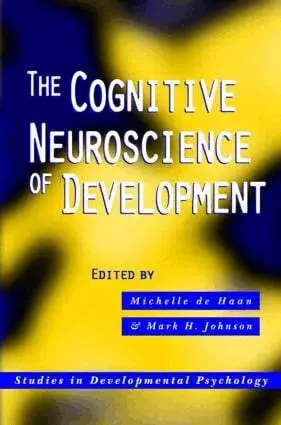
Cognitive Neuroscience of Development
Av Michelle de Haan, Mark H. Johnson
Häftad, 2013
832 kr
Lägg i varukorg
How are the experiences of childhood incorporated into the structures of the developing brain, and how do these changes in the brain influence behaviour? This is one of the many questions motivating research in the relatively new field of developmental cognitive neuroscience. This book provides an …
Infant EEG and Event-Related Potentials
Häftad, 2013
889 kr
Lägg i varukorg
Infancy is a time of rapid growth, when brain plasticity is at a maximum. Event-related potentials (ERPs) are one of the few methods that can easily and safely be used to study this process, and have led to exciting discoveries about human brain functioning and the neural basis of cognition. Over …
Key Topics in Infant Development
Av Michelle de Haan, Laura Katus
Häftad, 2027
328 kr
Kommande
Key Topics in Infant Development provides a comprehensive and accessible introduction to the science of infant development from birth to three years of age. Bringing together classic theories, contemporary research, and developmental neuroscience perspectives, it explores how infants learn, think, …
Key Topics in Infant Development
Av Michelle de Haan, Laura Katus
Inbunden, 2027
1893 kr
Kommande
Key Topics in Infant Development provides a comprehensive and accessible introduction to the science of infant development from birth to three years of age. Bringing together classic theories, contemporary research, and developmental neuroscience perspectives, it explores how infants learn, think, …
Infant EEG and Event-Related Potentials
E-bok, 2013
1051 kr
Lägg i varukorg
Infancy is a time of rapid growth, when brain plasticity is at a maximum. Event-related potentials (ERPs) are one of the few methods that can easily and safely be used to study this process, and have led to exciting discoveries about human brain functioning and the neural basis of cognition. Over …
Infant EEG and Event-Related Potentials
E-bok, 2013
1074 kr
Lägg i varukorg
Infancy is a time of rapid growth, when brain plasticity is at a maximum. Event-related potentials (ERPs) are one of the few methods that can easily and safely be used to study this process, and have led to exciting discoveries about human brain functioning and the neural basis of cognition. Over …
Cognitive Neuroscience of Development
Av Mark H. Johnson, Michelle de Haan
E-bok, 2005
983 kr
Lägg i varukorg
How are the experiences of childhood incorporated into the structures of the developing brain, and how do these changes in the brain influence behaviour? This is one of the many questions motivating research in the relatively new field of developmental cognitive neuroscience. This book provides an …
Cognitive Neuroscience of Development
Av Mark H. Johnson, Michelle de Haan
E-bok, 2005
983 kr
Lägg i varukorg
How are the experiences of childhood incorporated into the structures of the developing brain, and how do these changes in the brain influence behaviour? This is one of the many questions motivating research in the relatively new field of developmental cognitive neuroscience. This book provides an …
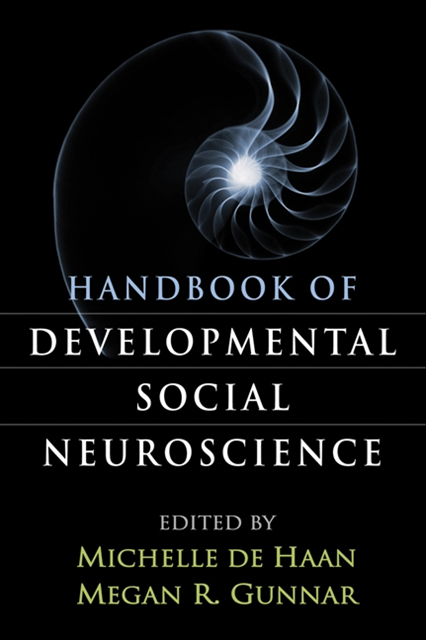
Handbook of Developmental Social Neuroscience
Av Megan R. Gunnar, Michelle de Haan
E-bok, 2011
1989 kr
Lägg i varukorg
Recent years have seen an explosion of research into the physiological and neural bases of social behavior. This state-of-the science handbook is unique in approaching the topic from a developmental perspective. Exploring the dynamic relationship between biology and social behavior from infancy …
Cognitive Neuroscience of Development
Av Michelle de Haan, Mark H. Johnson
Inbunden, 2002
2450 kr
Lägg i varukorg
How are the experiences of childhood incorporated into the structures of the developing brain, and how do these changes in the brain influence behaviour? This is one of the many questions motivating research in the relatively new field of developmental cognitive neuroscience. This book provides an …
Infant EEG and Event-Related Potentials
Inbunden, 2007
2450 kr
Lägg i varukorg
Infancy is a time of rapid growth, when brain plasticity is at a maximum. Event-related potentials (ERPs) are one of the few methods that can easily and safely be used to study this process, and have led to exciting discoveries about human brain functioning and the neural basis of cognition. Over …
Handbook of Developmental Social Neuroscience
Av Michelle de Haan, Megan R. Gunnar
Inbunden, 2009
1050 kr
Tillfälligt slut
Recent years have seen an explosion of research into the physiological and neural bases of social behavior. This state-of-the science handbook is unique in approaching the topic from a developmental perspective. Exploring the dynamic relationship between biology and social behavior from infancy …