Michelle Ephraim – författare
Visar alla böcker från författaren Michelle Ephraim. Handla med fri frakt och snabb leverans.
6 produkter
6 produkter
E-bok
Engelska, 201571 kr
Läs direkt efter köp
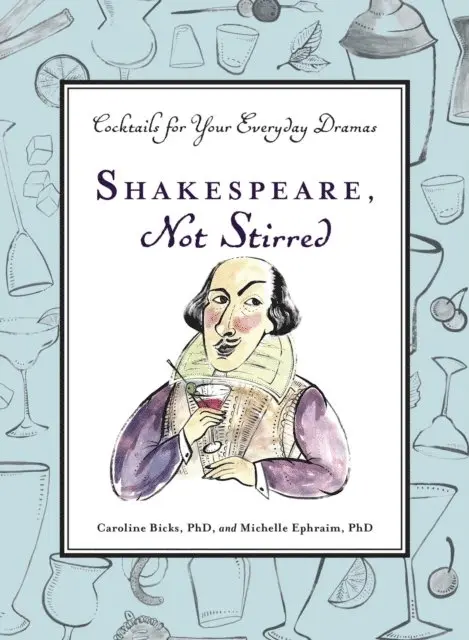
In Shakespeare, Not Stirred, two professors mix equal parts booze and Bard to help you through your everyday dramas. It’s like having Shakespeare right there in your living room, downing a great drink and putting your crappy day in perspective. So get out your cocktail shaker and lend him your ears. Each original cocktail and hors d’oeuvre recipe connects Shakespeare’s characters to life’s daily predicaments: • Drown your sorrows after a workplace betrayal with Othello’s Green-Eyed Monster • Distract yourself from domestic drama with Kate’s Shrew-driver or Cleopatra’s Flings in a Blanket • Recapture your youth with Puck’s Magic ’Shrooms • Mark a romantic occasion with Beatrice and Benedick’s Much Ado About Frothing Featuring classic images from the Folger Shakespeare Library (hilariously doctored to feature some hard-partying Shakespearean protagonists) and Mini-Bards you can raid for extra context and commentary, Shakespeare, Not Stirred is a completely intoxicating experience.From the Hardcover edition.
Inbunden, Engelska, 2008
2 721 kr
Skickas inom 10-15 vardagar
The first book-length examination of Jewish women in Renaissance drama, this study explores fictional representations of the female Jew in academic, private and public stage performances during Queen Elizabeth I's reign; it links lesser-known dramatic adaptations of the biblical Rebecca, Deborah, and Esther with the Jewish daughters made famous by Christopher Marlowe and William Shakespeare on the popular stage. Drawing upon original research on early modern sermons and biblical commentaries, Michelle Ephraim here shows the cultural significance of biblical plays that have received scant critical attention and offers a new context with which to understand Shakespeare's and Marlowe's fascination with the Jewish daughter. Protestant playwrights often figured Elizabeth through Jewish women from the Hebrew scripture in order to legitimate her religious authenticity. Ephraim argues that through the figure of the Jewess, playwrights not only stake a claim to the Old Testament but call attention to the process of reading and interpreting the Jewish bible; their typological interpretations challenge and appropriate Catholic and Jewish exegeses. The plays convey the Reformists' desire for propriety over the Hebrew scripture as a "prisca veritas," the pure word of God as opposed to that of corrupt Church authority. Yet these literary representations of the Jewess, which draw from multiple and conflicting exegetical traditions, also demonstrate the elusive quality of the Hebrew text. This book establishes the relationship between Elizabeth and dramatic representations of the Jewish woman: to "play" the Jewess is to engage in an interpretive "play" that both celebrates and interrogates the religious ideology of Elizabeth's emerging Protestant nation. Ephraim approaches the relationship between scripture and drama from a historicist perspective, complicating our understanding of the specific intersections between the Jewess in Elizabethan drama, biblical commentaries, political discourse, and popular culture. This study expands the growing field of Jewish studies in the Renaissance and contributes also to critical work on Elizabeth herself, whose influence on literary texts many scholars have established.
Häftad, Engelska, 2016
902 kr
Skickas inom 10-15 vardagar
The first book-length examination of Jewish women in Renaissance drama, this study explores fictional representations of the female Jew in academic, private and public stage performances during Queen Elizabeth I's reign; it links lesser-known dramatic adaptations of the biblical Rebecca, Deborah, and Esther with the Jewish daughters made famous by Christopher Marlowe and William Shakespeare on the popular stage. Drawing upon original research on early modern sermons and biblical commentaries, Michelle Ephraim here shows the cultural significance of biblical plays that have received scant critical attention and offers a new context with which to understand Shakespeare's and Marlowe's fascination with the Jewish daughter. Protestant playwrights often figured Elizabeth through Jewish women from the Hebrew scripture in order to legitimate her religious authenticity. Ephraim argues that through the figure of the Jewess, playwrights not only stake a claim to the Old Testament but call attention to the process of reading and interpreting the Jewish bible; their typological interpretations challenge and appropriate Catholic and Jewish exegeses. The plays convey the Reformists' desire for propriety over the Hebrew scripture as a "prisca veritas," the pure word of God as opposed to that of corrupt Church authority. Yet these literary representations of the Jewess, which draw from multiple and conflicting exegetical traditions, also demonstrate the elusive quality of the Hebrew text. This book establishes the relationship between Elizabeth and dramatic representations of the Jewish woman: to "play" the Jewess is to engage in an interpretive "play" that both celebrates and interrogates the religious ideology of Elizabeth's emerging Protestant nation. Ephraim approaches the relationship between scripture and drama from a historicist perspective, complicating our understanding of the specific intersections between the Jewess in Elizabethan drama, biblical commentaries, political discourse, and popular culture. This study expands the growing field of Jewish studies in the Renaissance and contributes also to critical work on Elizabeth herself, whose influence on literary texts many scholars have established.
E-bok
Engelska, 20161 045 kr
Läs direkt efter köp
The first book-length examination of Jewish women in Renaissance drama, this study explores fictional representations of the female Jew in academic, private and public stage performances during Queen Elizabeth I''s reign; it links lesser-known dramatic adaptations of the biblical Rebecca, Deborah, and Esther with the Jewish daughters made famous by Christopher Marlowe and William Shakespeare on the popular stage. Drawing upon original research on early modern sermons and biblical commentaries, Michelle Ephraim here shows the cultural significance of biblical plays that have received scant critical attention and offers a new context with which to understand Shakespeare''s and Marlowe''s fascination with the Jewish daughter. Protestant playwrights often figured Elizabeth through Jewish women from the Hebrew scripture in order to legitimate her religious authenticity. Ephraim argues that through the figure of the Jewess, playwrights not only stake a claim to the Old Testament but call attention to the process of reading and interpreting the Jewish bible; their typological interpretations challenge and appropriate Catholic and Jewish exegeses. The plays convey the Reformists'' desire for propriety over the Hebrew scripture as a "prisca veritas," the pure word of God as opposed to that of corrupt Church authority. Yet these literary representations of the Jewess, which draw from multiple and conflicting exegetical traditions, also demonstrate the elusive quality of the Hebrew text. This book establishes the relationship between Elizabeth and dramatic representations of the Jewish woman: to "play" the Jewess is to engage in an interpretive "play" that both celebrates and interrogates the religious ideology of Elizabeth''s emerging Protestant nation. Ephraim approaches the relationship between scripture and drama from a historicist perspective, complicating our understanding of the specific intersections between the Jewess in Elizabethan drama, biblical commentaries, political discourse, and popular culture. This study expands the growing field of Jewish studies in the Renaissance and contributes also to critical work on Elizabeth herself, whose influence on literary texts many scholars have established.
E-bok
PDF, Engelska, 20161 045 kr
Läs direkt efter köp
The first book-length examination of Jewish women in Renaissance drama, this study explores fictional representations of the female Jew in academic, private and public stage performances during Queen Elizabeth I''s reign; it links lesser-known dramatic adaptations of the biblical Rebecca, Deborah, and Esther with the Jewish daughters made famous by Christopher Marlowe and William Shakespeare on the popular stage. Drawing upon original research on early modern sermons and biblical commentaries, Michelle Ephraim here shows the cultural significance of biblical plays that have received scant critical attention and offers a new context with which to understand Shakespeare''s and Marlowe''s fascination with the Jewish daughter. Protestant playwrights often figured Elizabeth through Jewish women from the Hebrew scripture in order to legitimate her religious authenticity. Ephraim argues that through the figure of the Jewess, playwrights not only stake a claim to the Old Testament but call attention to the process of reading and interpreting the Jewish bible; their typological interpretations challenge and appropriate Catholic and Jewish exegeses. The plays convey the Reformists'' desire for propriety over the Hebrew scripture as a "prisca veritas," the pure word of God as opposed to that of corrupt Church authority. Yet these literary representations of the Jewess, which draw from multiple and conflicting exegetical traditions, also demonstrate the elusive quality of the Hebrew text. This book establishes the relationship between Elizabeth and dramatic representations of the Jewish woman: to "play" the Jewess is to engage in an interpretive "play" that both celebrates and interrogates the religious ideology of Elizabeth''s emerging Protestant nation. Ephraim approaches the relationship between scripture and drama from a historicist perspective, complicating our understanding of the specific intersections between the Jewess in Elizabethan drama, biblical commentaries, political discourse, and popular culture. This study expands the growing field of Jewish studies in the Renaissance and contributes also to critical work on Elizabeth herself, whose influence on literary texts many scholars have established.
Häftad, Engelska, 2024
250 kr
Skickas inom 5-8 vardagar
At twenty-three, Michelle Ephraim was failing at everything. The only child of reclusive Holocaust-survivor parents who were dismayed by her literary studies, she found herself dumped by her boyfriend and bombing out of graduate school. Then, one night, she crashed a Shakespeare recitation party. Loopy from vodka and never having read a single line of Shakespeare, she was transfixed. Shakespeare, she decided, was the lifeline she needed. Green World is the hilarious and heartbreaking story of Ephraim’s quest to become a Shakespeare scholar and to find community and home. As she studies Shakespeare, Ephraim’s world uncannily begins to mirror the story of the Jewish daughter in The Merchant of Venice, and she finds herself in a Green World, an idyllic place where Shakespeare’s heroines escape their family trauma. Green World reckons with global, historical, and personal tragedy and shows how literature—comic and tragic—can help us brave every kind of anguish.