
Mihas Elena Mihas – författare
Visar alla böcker från författaren Mihas Elena Mihas. Handla med fri frakt och snabb leverans.
2 produkter
2 produkter
E-bok
PDF, Engelska, 20171 434 kr
Läs direkt efter köp
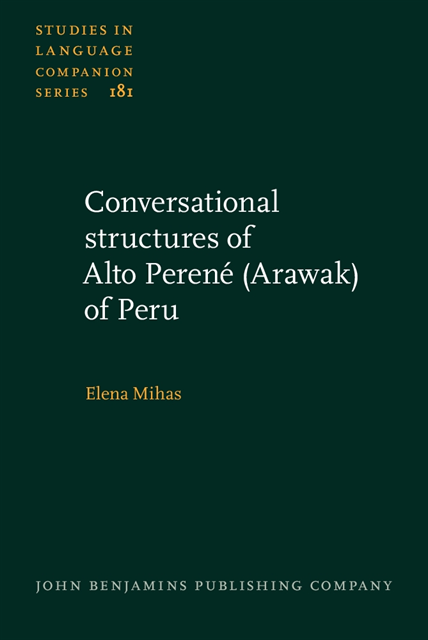
Drawing on extensive fieldwork in the research community, the book is a focused exploration of discourse patterns of Alto Perené Arawak, with emphasis on conversational structures. The book’s methodological scaffold is based on proposals and insights from multiple research fields, such as comparative conversation analysis, sociology, interactional linguistics, documentary linguistics, anthropological linguistics, and prosodic typology. The interactional patterns of a small Arawak language of Peru are shown to share the common infrastructure reported in the organization of conversation across other languages and cultures. Yet the analysis demonstrates a variety of unique nuances in the organization of interactional behavior of Alto Perené Arawak participants. The peculiarities observed are attributed to the language-specific semiotic resources and participants’ orientation to the local cultural norms. The book’s structured examination of conversational data of a small indigenous language of South America is anticipated to be of utility to linguistic research on understudied non-Western languages.
E-bok
PDF, Engelska, 20131 304 kr
Läs direkt efter köp
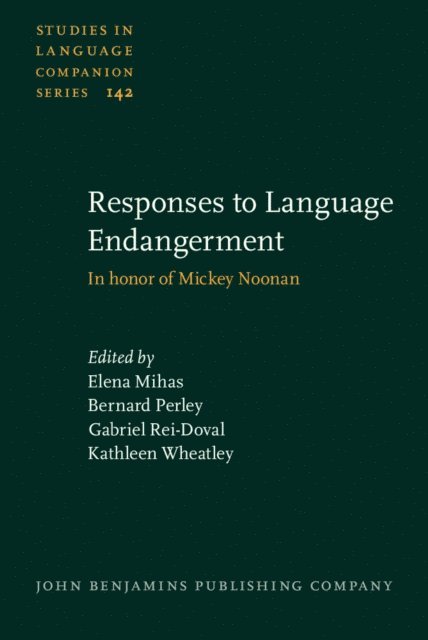
This volume further complicates and advances the contemporary perspective on language endangerment by examining the outcomes of the most commonly cited responses to language endangerment, i.e. language documentation, language revitalization, and training. The present collection takes stock of many complex and pressing issues, such as the assessment of the degree of language endangerment, the contribution of linguistic scholarship to language revitalization programs, the creation of successful language reclamation programs, the emergence of languages that arise as a result of revitalization efforts after interrupted transmission, the ethics of fieldwork, and the training of field linguists and language educators. The volume’s case studies provide detailed personal accounts of fieldworkers and language activists who are grappling with issues of language documentation and revitalization in the concrete physical and socio-cultural settings of native speaker communities in different regions of the world.