Miklos Molnar – författare
Visar alla böcker från författaren Miklos Molnar. Handla med fri frakt och snabb leverans.
10 produkter
10 produkter
Inbunden, Engelska, 2019
2 244 kr
Skickas inom 10-15 vardagar
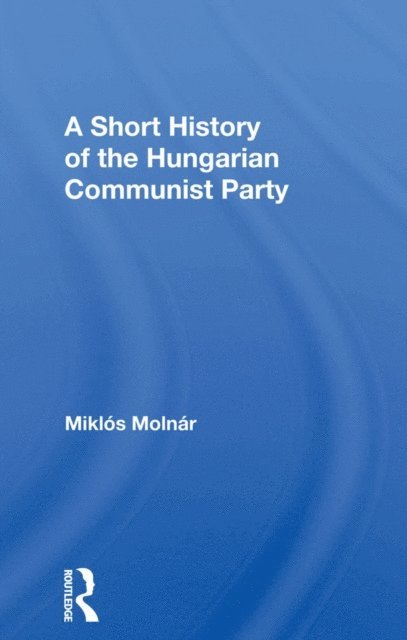
In spite of its small size, the Hungarian Communist party (HCP), founded in the fall of 1918, has played an important role both in Hungary's national history and in the international communist movement. Hungary, which was the only soviet republic other than the ephemeral Bavarian soviet republic to exist outside the USSR, lasted five months during the critical period of the Paris Peace Conference. The "veterans" of the Hungarian soviet republic, like Bela Kun, Georg Lukacs, and Eugen Varga, later held important posts in the Comintern and in the international Communist press. In the Stalinist era, the HCP distinguished itself by excessive zeal in the application of "integral Stalinism" in foreign policy (e.g., anti-Titoism), the economy, and political life (e.g., the Rajk and Kadar trials). However, the 1956 revolution was engineered by the revisionist communist intelligentsia and by such revisionist party leaders as Imre Nagy. Finally, in spite of its repressive role after the revolution, in the 1970s under Janos Kadar the HCP introduced a new system of "liberalism" and economic reform.
Häftad, Engelska, 2021
656 kr
Skickas inom 10-15 vardagar
In spite of its small size, the Hungarian Communist party (HCP), founded in the fall of 1918, has played an important role both in Hungary's national history and in the international communist movement. Hungary, which was the only soviet republic other than the ephemeral Bavarian soviet republic to exist outside the USSR, lasted five months during the critical period of the Paris Peace Conference. The "veterans" of the Hungarian soviet republic, like Bela Kun, Georg Lukacs, and Eugen Varga, later held important posts in the Comintern and in the international Communist press. In the Stalinist era, the HCP distinguished itself by excessive zeal in the application of "integral Stalinism" in foreign policy (e.g., anti-Titoism), the economy, and political life (e.g., the Rajk and Kadar trials). However, the 1956 revolution was engineered by the revisionist communist intelligentsia and by such revisionist party leaders as Imre Nagy. Finally, in spite of its repressive role after the revolution, in the 1970s under Janos Kadar the HCP introduced a new system of "liberalism" and economic reform.
Inbunden, Engelska, 1992
1 427 kr
Skickas inom 10-15 vardagar
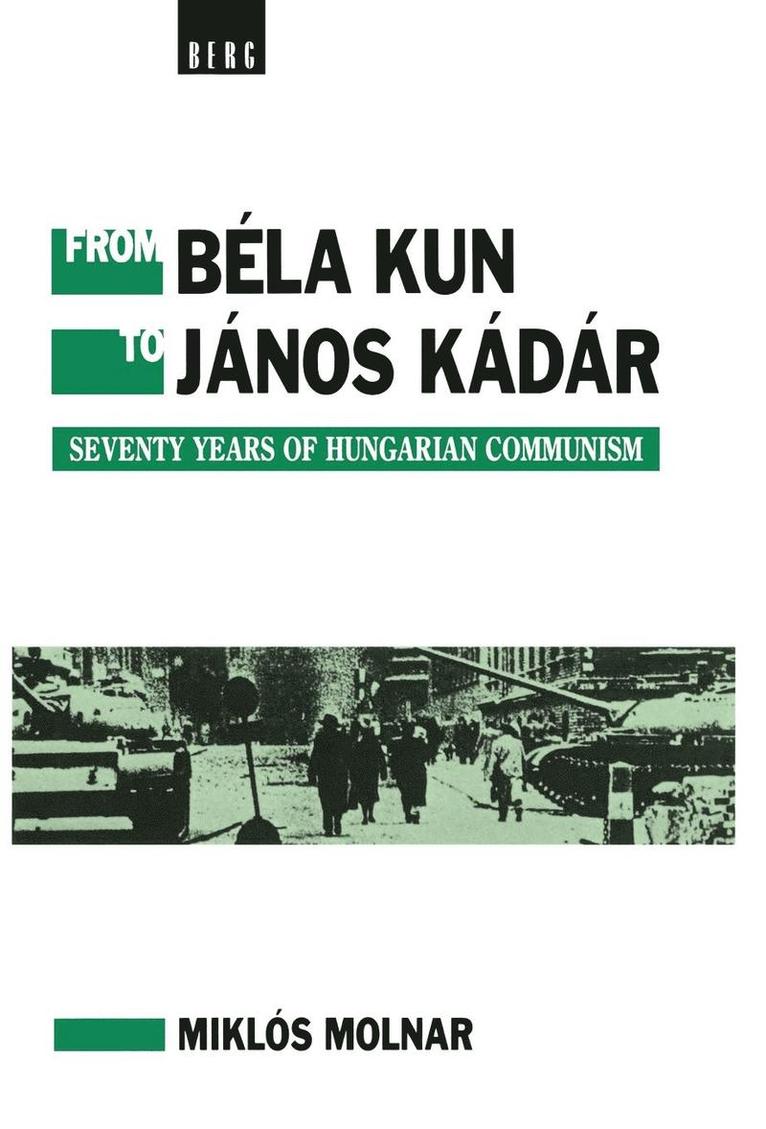
An in-depth analysis of the changes in the Hungarian Communist Party, the difficulties it experienced during the early stages, its development and internal structure, as well as its relationship with Moscow and the Komintern. It also treats of the well-known personalities of the party, including Bela Kun, Georg Lucacs, Matyas Rakosi, Laszlo Rajk, Imre Nagy and Janos Kadar. The translation also features a specially written preface, which up-dates events to 1989, including the death of Janos Kadar and the effects of "glasnost".
E-bok
PDF, Engelska, 2019752 kr
Läs direkt efter köp
In spite of its small size, the Hungarian Communist party (HCP), founded in the fall of 1918, has played an important role both in Hungary''s national history and in the international communist movement. Hungary, which was the only soviet republic other than the ephemeral Bavarian soviet republic to exist outside the USSR, lasted five months during the critical period of the Paris Peace Conference. The "veterans" of the Hungarian soviet republic, like Bela Kun, Georg Lukacs, and Eugen Varga, later held important posts in the Comintern and in the international Communist press. In the Stalinist era, the HCP distinguished itself by excessive zeal in the application of "integral Stalinism" in foreign policy (e.g., anti-Titoism), the economy, and political life (e.g., the Rajk and Kadar trials). However, the 1956 revolution was engineered by the revisionist communist intelligentsia and by such revisionist party leaders as Imre Nagy. Finally, in spite of its repressive role after the revolution, in the 1970s under Janos Kadar the HCP introduced a new system of "liberalism" and economic reform.
E-bok
Engelska, 2019752 kr
Läs direkt efter köp
In spite of its small size, the Hungarian Communist party (HCP), founded in the fall of 1918, has played an important role both in Hungary''s national history and in the international communist movement. Hungary, which was the only soviet republic other than the ephemeral Bavarian soviet republic to exist outside the USSR, lasted five months during the critical period of the Paris Peace Conference. The "veterans" of the Hungarian soviet republic, like Bela Kun, Georg Lukacs, and Eugen Varga, later held important posts in the Comintern and in the international Communist press. In the Stalinist era, the HCP distinguished itself by excessive zeal in the application of "integral Stalinism" in foreign policy (e.g., anti-Titoism), the economy, and political life (e.g., the Rajk and Kadar trials). However, the 1956 revolution was engineered by the revisionist communist intelligentsia and by such revisionist party leaders as Imre Nagy. Finally, in spite of its repressive role after the revolution, in the 1970s under Janos Kadar the HCP introduced a new system of "liberalism" and economic reform.
E-bok
PDF, Engelska, 2001378 kr
Läs direkt efter köp
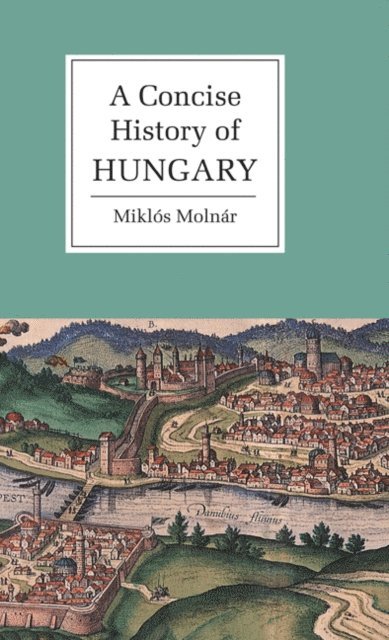
This book offers a comprehensive thousand-year history of the land, people, society, culture and economy of Hungary, from its nebulous origins in the Ural Mountains to the elections of 1988. It tells above all the thrilling story of a people which became a great power in the region and then fought against - and was invaded by - Ottomans, Germans and Soviets. The Hungarian people preserved nevertheless a continuous individuality through its Ural-born language and a specifically Hungaro-European culture. Dominated from the sixteenth century by the Habsburgs, while ruling its own national minorities, Hungary was deprived of two-thirds of its lands and peoples through successive treaties which followed the two World Wars, after which it fell under Soviet domination for nearly fifty years. Free and independent since 1990, Hungary continues to seek its rightful position in Europe.
E-bok
Engelska, 2001378 kr
Läs direkt efter köp
This book offers a comprehensive thousand-year history of the land, people, society, culture and economy of Hungary, from its nebulous origins in the Ural Mountains to the elections of 1988. It tells above all the thrilling story of a people which became a great power in the region and then fought against - and was invaded by - Ottomans, Germans and Soviets. The Hungarian people preserved nevertheless a continuous individuality through its Ural-born language and a specifically Hungaro-European culture. Dominated from the sixteenth century by the Habsburgs, while ruling its own national minorities, Hungary was deprived of two-thirds of its lands and peoples through successive treaties which followed the two World Wars, after which it fell under Soviet domination for nearly fifty years. Free and independent since 1990, Hungary continues to seek its rightful position in Europe.
Häftad, Svenska, 2016
927 kr
Skickas inom 5-8 vardagar
Handboken behandlar dimensionering av murverk enligt SS-EN 1996: Eurokod 6 - Dimensionering av murverkskonstruktioner. Grundläggande regler finns i SS-EN 1996 - 1-1. Reglerna avser dels oarmerade och dels armerade konstruktioner samt såväl slak- som spännarmerade konstruktioner. Ett viktigt dokument vid tillämpning av eurokoderna i är respektive lands nationella bilaga.Innehållet i den nationella bilagan fastslås för svensk del av Boverket och kungörs som en del i "Boverkets författningssamling", med beteckningen EKS.
Häftad, Svenska, 2018
726 kr
Skickas inom 5-8 vardagar
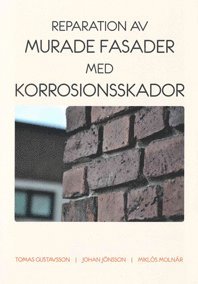
Mellan åren 1950–1975 var det vanligt att murade fasader försågs med icke korrosionsskyddad armering och förankring. Detta har lett till att det idag finns ett stort antal fasader med allvarliga skador. Handboken ger inblick i orsaker och bakomliggande fenomen till armeringskorrosion i murade fasader och ger praktisk hjälp för att på ett tekniskt och gestaltningsmässigt hållbart sätt angripa problemet. Skisser och bilder från praktisk verksamhet illustrerar skador i murar, reparationsmetoder och vanliga missgrepp i reparationsarbetet. Boken avslutas med ett antal praktikfall och förslag till ytterligare informationskällor.
Häftad, Svenska, 2025
889 kr
Skickas inom 5-8 vardagar
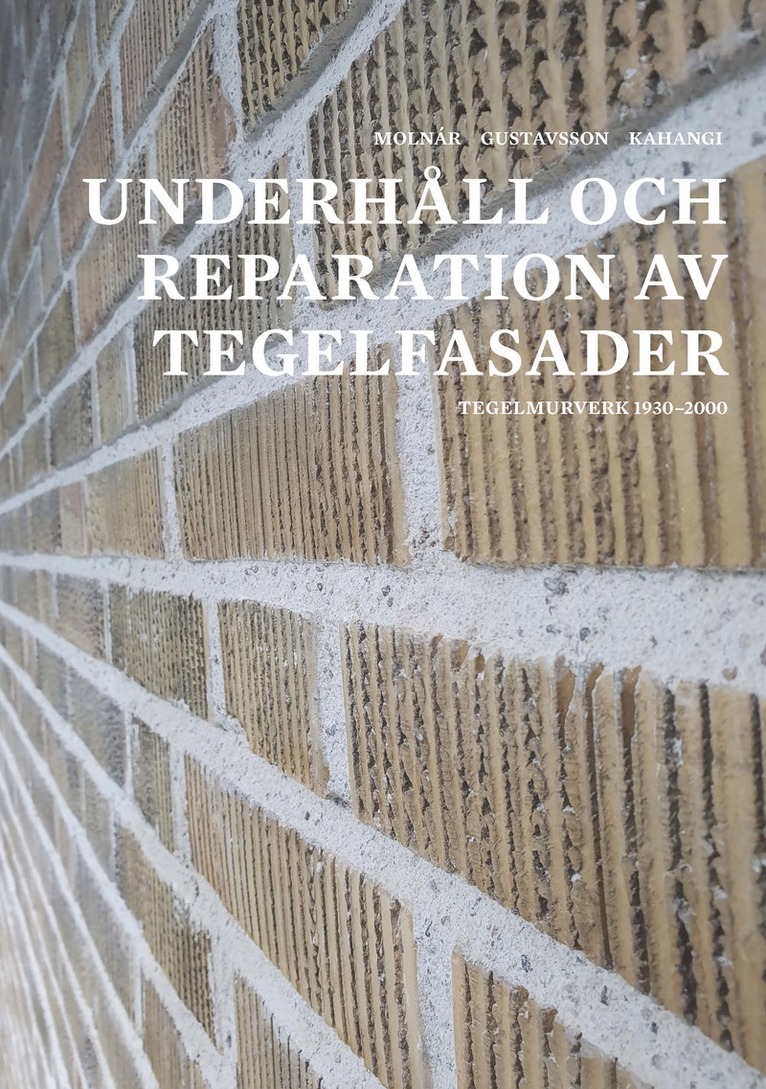
Tegelfasader utgör ett vanligt inslag i den svenska bebyggelsen, speciellt på större orter. En viktig anledning till en bred spridning av tegelbyggandet var ett antal förödande stadsbränder under 1800-talet. Krav infördes på att i större tätorter uppföra fasader i icke brännbara material. Möjligheter till en varierad gestaltning, lång livslängd och värdigt åldrande är andra faktorer som därefter ytterligare har gynnat tegelbyggandet. Det finns idag stora värden i byggnadsbeståndet med tegelfasader. I en tid när vi snabbt vill ställa om till ett mer hållbart samhälle, utgör tillvaratagande av befintliga byggnader ett effektivt alternativ. Genom rationellt underhåll har tegelfasader unika förutsättningar att fungera bra i flera hundra år. Tegelbyggnader kan också förhållandevis lätt anpassas till nya behov. Vi som skrivit handboken har alla bakgrund som forskare inom murverksområdet vid Lunds tekniska högskola, Avdelningen för konstruktionsteknik. Två av oss arbetar även som byggkonsulter med inriktning på murat byggande. Handboken har tagits fram med stöd från Energimyndighetens forskningsprogram E2B2 samt från ett antal samhållsbyggnadsaktörer – Fasadgruppen AB, branschorganisationen Mur och Putsföretagen, Lunds Kommuns Fastighets AB, Stockholms Kooperativa Bostadsförening, Brf Ljungelden och Brf Vårregnet. Speciellt tack riktas till personer som aktivt har delat med sig av sina erfarenheter och sin kompetens – Anders Planensten, Anders Terborn, Carolina Larsen, Helena Bülow-Hübe, Joakim Strömberg, Johan Onno, Jørgen Nymark Klavsen, Jörn Andersson, Martin Gunder, Martin Lindholm, Niklas Martinsson, Paula Wahlgren, Peter Mörck, Thomas Ström, Tommy Bisgaard.