Miles Kahler – författare
Visar alla böcker från författaren Miles Kahler. Handla med fri frakt och snabb leverans.
22 produkter
Regionalism and Rivalry
Japan and the U.S. in Pacific Asia
Av Miles Kahler, Jeffrey A. Frankel
E-bok, 2007
2224 kr
Lägg i varukorg
As Japan''s newfound economic power leads to increased political power, there is concern that Japan may be turning East Asia into a regional economic bloc to rival the U.S. and Europe. In Regionalism and Rivalry , leading economists and political scientists address this concern by looking at three …
Liberalization and Foreign Policy
Av Miles Kahler
Inbunden, 1997
1194 kr
Lägg i varukorg
Taking as its subject the global wave of political liberalization that has arisen since the mid-1970s and the trend toward liberal economic policies in the 1980s. This book discusses how the foreign policy effects of liberalization support new democratic regimes and help launch economic reforms.
Territoriality and Conflict in an Era of Globalization
Av Miles Kahler, Barbara F. Walter
Häftad, 2006
667 kr
Lägg i varukorg
Predictions that globalization would undermine territorial attachments and weaken the sources of territorial conflict have not been realized in recent decades. Globalization may have produced changes in territoriality and the functions of borders, but it has not eliminated them. The contributors to …
Territoriality and Conflict in an Era of Globalization
Av Miles Kahler, Barbara F. Walter
Inbunden, 2006
1807 kr
Lägg i varukorg
Predictions that globalization would undermine territorial attachments and weaken the sources of territorial conflict have not been realized in recent decades. Globalization may have produced changes in territoriality and the functions of borders, but it has not eliminated them. The contributors to …
Governance in a Global Economy
Political Authority in Transition
Av Miles Kahler, David A. Lake
Häftad, 2003
1100 kr
Lägg i varukorg
Critics of globalization claim that economic integration drains political authority from states: devolving authority to newly empowered regions, delegating it to supranational organizations, and transferring it to multinational firms and nongovernmental organizations. Globalization is also attacked …
Decolonization in Britain and France
The Domestic Consequences of International Relations
Av Miles Kahler
Häftad, 2014
1358 kr
Lägg i varukorg
Professor Kahler focuses on organizations below the state, investigating party competition and sensitivity to political change produced by the characteristics of commercial firms. In addition, he explores transmission of external shocks to the domestic polity by the state itself and the domestic …
Decolonization in Britain and France
The Domestic Consequences of International Relations
Av Miles Kahler
Inbunden, 2016
3157 kr
Lägg i varukorg
Professor Kahler focuses on organizations below the state, investigating party competition and sensitivity to political change produced by the characteristics of commercial firms. In addition, he explores transmission of external shocks to the domestic polity by the state itself and the domestic …
Capital Flows and Financial Crises
Av Miles Kahler
Inbunden, 1998
1698 kr
Lägg i varukorg
Capital flows to the developing economies have long displayed a boom-and-bust pattern. Rarely has the cycle turned as abruptly as it did in the 1990s, however: surges in lending were followed by the Mexican peso crisis of 1994-95 and the sudden collapse of currencies in Asia in 1997. This volume …
Networked Politics
Agency, Power, and Governance
Av Miles Kahler
Inbunden, 2009
1649 kr
Lägg i varukorg
The concept of network has emerged as an intellectual centerpiece for our era. Network analysis also occupies a growing place in many of the social sciences. In international relations, however, network has too often remained a metaphor rather than a powerful theoretical perspective. In Networked …
Politics in the New Hard Times
The Great Recession in Comparative Perspective
Av Miles Kahler, David A. Lake
Inbunden, 2013
1698 kr
Lägg i varukorg
The Great Recession and its aftershocks, including the Eurozone banking and debt crisis, add up to the worst global economic crisis since the Great Depression of the 1930s. Although economic explanations for the Great Recession have proliferated, the political causes and consequences of the crisis …
Networked Politics
Agency, Power, and Governance
Av Miles Kahler
Häftad, 2009
389 kr
Lägg i varukorg
The concept of network has emerged as an intellectual centerpiece for our era. Network analysis also occupies a growing place in many of the social sciences. In international relations, however, network has too often remained a metaphor rather than a powerful theoretical perspective. In Networked …
Politics in the New Hard Times
The Great Recession in Comparative Perspective
Av Miles Kahler, David A. Lake
Häftad, 2013
503 kr
Lägg i varukorg
The Great Recession and its aftershocks, including the Eurozone banking and debt crisis, add up to the worst global economic crisis since the Great Depression of the 1930s. Although economic explanations for the Great Recession have proliferated, the political causes and consequences of the crisis …
Capital Flows and Financial Crises
Av Miles Kahler
Häftad, 1998
590 kr
Lägg i varukorg
Capital flows to the developing economies have long displayed a boom-and-bust pattern. Rarely has the cycle turned as abruptly as it did in the 1990s, however: surges in lending were followed by the Mexican peso crisis of 1994-95 and the sudden collapse of currencies in Asia in 1997. This volume …
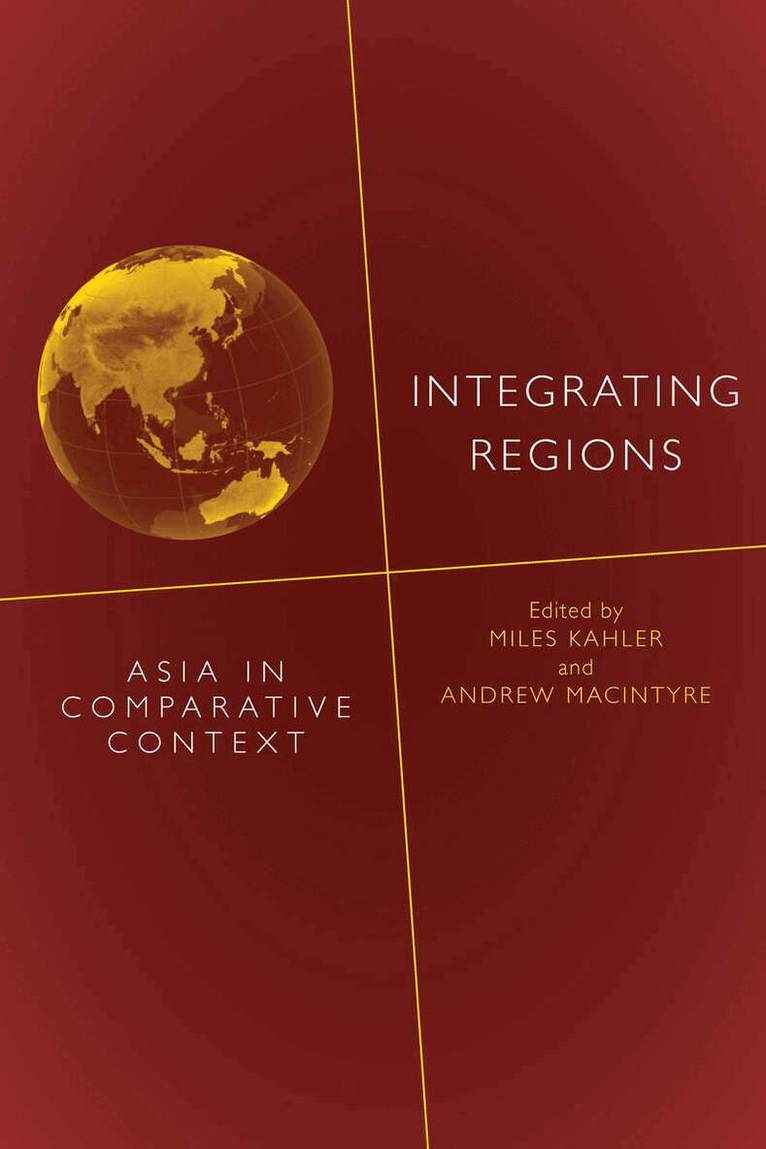
Integrating Regions
Asia in Comparative Context
Av Miles Kahler, Andrew MacIntyre
Inbunden, 2013
904 kr
Lägg i varukorg
The proliferation of regional institutions and initiatives in Asia over the past decade is unmatched in any other region of the world. The authors in this collection explore the distinctive features of these institutions by comparing them for the first time to the experience of other regions; from …
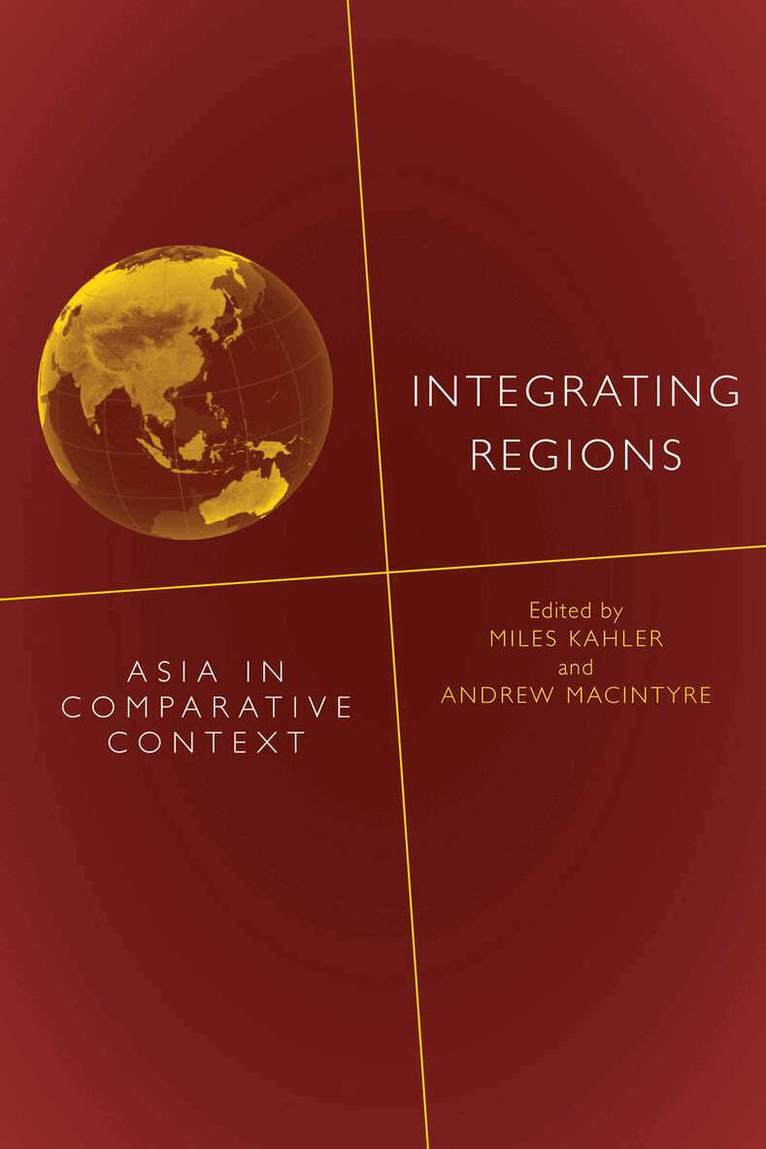
Integrating Regions
Asia in Comparative Context
Av Miles Kahler, Andrew MacIntyre
E-bok, 2013
1039 kr
Lägg i varukorg
The proliferation of regional institutions and initiatives in Asia over the past decade is unmatched in any other region of the world. The authors in this collection explore the distinctive features of these institutions by comparing them for the first time to the experience of other regions; from …
International Institutions and the Political Economy of Integration
Av Miles Kahler
Häftad, 1995
284 kr
Lägg i varukorg
Dynamic changes in international institutions have been a striking feature of international politics in the post-cold war world. The General Agreement on Tariffs and Trade (GATT) has been transformed into the Word Trade Organization, the International Monetary Fund (IMF) and the World Bank have …
International Institutions and the Political Economy of Integration
Av Miles Kahler
E-bok, 1995
296 kr
Lägg i varukorg
Dynamic changes in international institutions have been a striking feature of international politics in the post-cold war world. The General Agreement on Tariffs and Trade (GATT) has been transformed into the Word Trade Organization, the International Monetary Fund (IMF) and the World Bank have …
Decolonization in Britain and France
The Domestic Consequences of International Relations
Av Miles Kahler
E-bok, 2014
1006 kr
Lägg i varukorg
Professor Kahler focuses on organizations below the state, investigating party competition and sensitivity to political change produced by the characteristics of commercial firms. In addition, he explores transmission of external shocks to the domestic polity by the state itself and the domestic …
Regionalism and Rivalry
Japan and the U.S. in Pacific Asia
Av Jeffrey A. Frankel, Miles Kahler
Inbunden, 1994
977 kr
Tillfälligt slut
As Japan's newfound economic power leads to increased political power, there is concern that Japan may be turning East Asia into a regional economic bloc to rival the US and Europe. In "Regionalism and Rivalry", economists and political scientists address this concern by looking at three central …
Liberalization and Foreign Policy
Av Miles Kahler
Häftad, 1997
304 kr
Tillfälligt slut
Takes as its subject the global wave of political liberalization that has arisen since the mid-1970s and the trend toward liberal economic policies in the 1980s. The book discusses how the foreign policy effects of liberalization support new democratic regimes and help launch economic reforms.
Legalization and World Politics
Special Issue of International Organization
Av Judith L. Goldstein, Miles Kahler m. fl.
Häftad, 2001
121 kr
Tillfälligt slut