Ming-Hui Huang – författare
Visar alla böcker från författaren Ming-Hui Huang. Handla med fri frakt och snabb leverans.
5 produkter
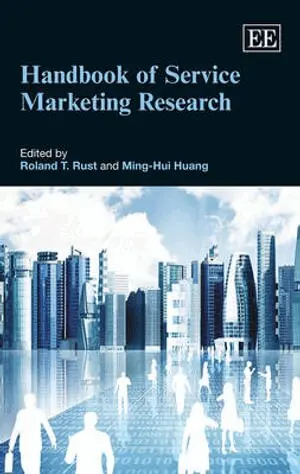
Handbook of Service Marketing Research
Av Roland T. Rust, Ming-Hui Huang
Inbunden, 2014
4049 kr
Lägg i varukorg
The Handbook of Service Marketing Research brings together an all-star team of leading researchers in service marketing to explore many of the hottest topics in service marketing today.Cutting-edge topics include: customer relationships and loyalty, customer-centered metrics, managing customer …
Handbook of Service Marketing Research
Av Ming-Hui Huang, Roland T. Rust
E-bok, 2014
737 kr
Lägg i varukorg
The Handbook of Service Marketing Research brings together an all-star team of leading researchers in service marketing to explore many of the hottest topics in service marketing today. Cutting-edge topics include: customer relationships and loyalty, customer-centered metrics, managing customer …
Handbook of Service Marketing Research
Av Roland T. Rust, Ming-Hui Huang
Häftad, 2015
828 kr
Lägg i varukorg
The Handbook of Service Marketing Research brings together an all-star team of leading researchers in service marketing to explore many of the hottest topics in service marketing today.Cutting-edge topics include: customer relationships and loyalty, customer-centered metrics, managing customer …
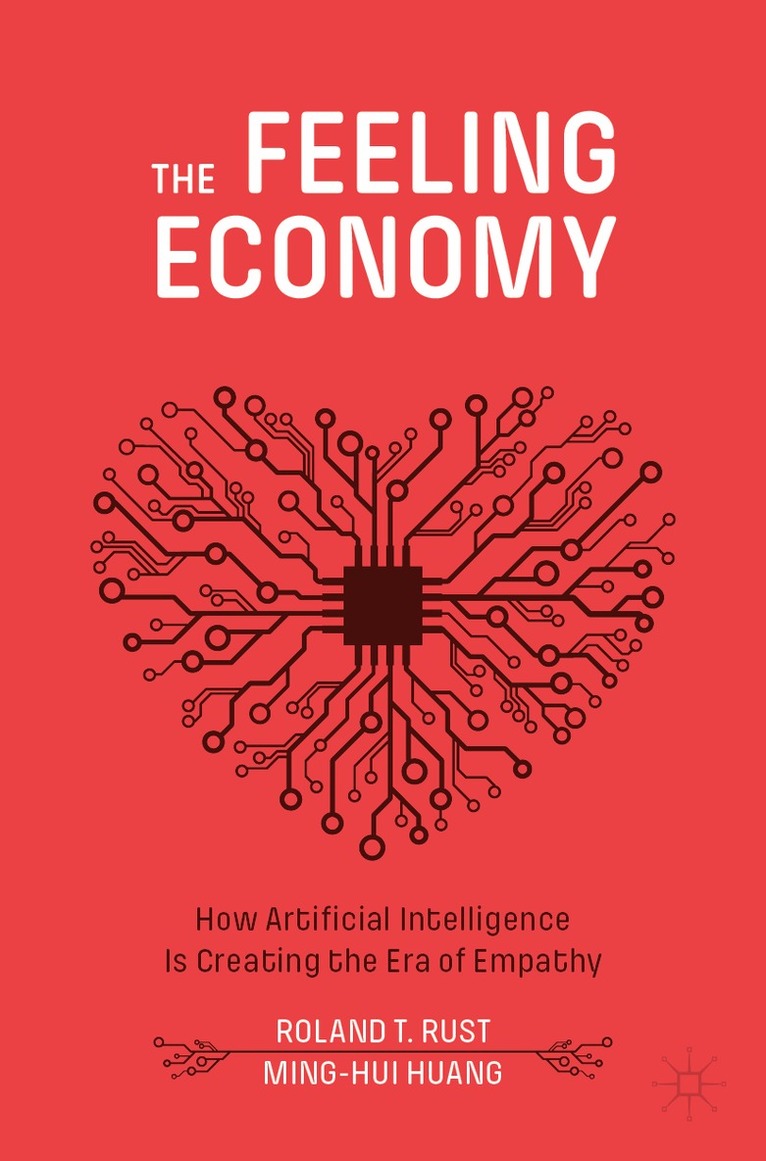
Feeling Economy
How Artificial Intelligence Is Creating the Era of Empathy
Av Roland T. Rust, Ming-Hui Huang
Häftad, 2021
366 kr
Lägg i varukorg
As machines are trained to “think,” many tasks that previously required human intelligence are becoming automated through artificial intelligence. However, it is more difficult to automate emotional intelligence, and this is where the human worker’s competitive advantage over machines currently …
Feeling Economy
How Artificial Intelligence Is Creating the Era of Empathy
Av Ming-Hui Huang, Roland T. Rust
E-bok, 2021
493 kr
Lägg i varukorg
As machines are trained to “think,” many tasks that previously required human intelligence are becoming automated through artificial intelligence. However, it is more difficult to automate emotional intelligence, and this is where the human worker’s competitive advantage over machines currently …