Mira Locher – författare
Visar alla böcker från författaren Mira Locher. Handla med fri frakt och snabb leverans.
9 produkter
9 produkter
Häftad, Engelska, 2027
226 kr
Kommande
"We do not live only with clear-cut forms; rather, we exist in a world of forms that are often indistinct and vague." —Takashi Sugimoto, architect and James Beard Award-winning authorSuper Potato Design presents the work of internationally-renowned Japanese designer Takashi Sugimoto. After studying metal sculpture at Tokyo University of Fine Arts, Sugimoto began his career designing a series of bars and restaurants including the iconic Radio Bar that became a favorite hangout for designers like Issey Miyake, Ikko Tanaka, Yohji Yamamoto and Tadao Ando. He was soon recruited to design retail spaces including the original Muji "no-brand" shops along with hotels, tea ceremony spaces and wedding chapels.Super Potato's striking interiors have totally revolutionized Japanese design through the use of exposed concrete surfaces, rough-hewn timber and unevenly cut stone juxtaposed with salvaged metal and repurposed objects to create a sense of power and timelessness. The design vocabulary created by Sugimoto is universally imitated today (in Japan and throughout the world). It is what we now think of as "modern Japanese design," although Sugimoto's own work has never been surpassed.Super Potato Design presents 40 of Sugimoto's most important projects in 320 full-color photographs by Yoshio Shiratori, who has worked with the designer since the beginning. Author and architect Mira Locher introduces Sugimoto's work and provides a thorough description for each project. A foreword by Tadao Ando and discussions with architect Kiyoshi Sey Takeyama and graphic designer Kenya Hara explore the direction of Japanese design today. A list of Super Potato's complete works rounds off this fascinating book.
E-bok
Engelska, 2012490 kr
Läs direkt efter köp
Super Potato Design is the first full-length book to present the work and conceptual ideas of the internationally renowned Japanese design firm Super Potato, founded by Takashi Sugimoto. Super Potato''s powerful designs for the interiors of restaurants, shops and hotels, as well as Takashi Sugimoto''s designs for tea ceremony spaces and utensils, are richly complex compositions of materials which create simple, strong spaces. Using traditional Japanese building materials such as bamboo, wood, and stone, but crating original yet timeless spaces, Super Potato''s designs avoid specific stylistic characterizations and short-lived fashion. By finding contemporary expression for important concepts present in traditional Japan and combining materials in unexpected ways to create exciting spaces, Super Potato''s work has had a significant impact on interior design in Japan and throughout Asia. Super Potato Design is generously illustrated with 320 full-color photographs by the respected Japanese photographer Yoshio Shiratori, who has recorded Super Potatos projects since the firm''s conception in 1973. Architect and Japan scholar Mira Locher introduces the ideas and influences of Takashi Sugimoto, the founder and principle designer of Super Potato, and provides a thorough explanation of each project. Architectural drawings further describe the projects. A forward by Tadao Anso, interviews between Takashi Sugimoto and architect Kiyoshi Sey Takeyama, and also graphic designer Kenya Hara, explore the ideas relevant to Japanese designers today. A list of the Complete Works of Super Potato rounds off the book.
E-bok
Engelska, 2012292 kr
Läs direkt efter köp
By examining the Japanese history of buildings and building designs from prehistory to modern day, lovers of Japan will develop a deeper understanding and appreciation of this island country.Simplicity, sensitivity to the natural environment, and the use of natural materials are the hallmarks of Japanese architecture. The Art of Japanese Architecture provides a broad overview of traditional Japanese architecture in its historical and cultural context. It begins with a discussion of prehistoric dwellings and concludes with a description of modern Japanese buildings. Important historical influences and trends—notably the introduction of Buddhist culture from Korea and China, the development of feudalism, and the influence of modern Western styles of building—are all discussed in detail as facets of Japanese design.Through all of these changes, a restrained architectural tradition developed in marked contrast to an exuberant tradition characterized by monumentality and the use of bold colors. The book provides tremendous insights into the dynamic nature of Japanese architecture and how it reflects an underlying diversity within Japanese culture.The book is profusely illustrated with over 370 color photographs, woodblock prints, maps, diagrams, and specially commissioned watercolors.
E-bok
Engelska, 2012373 kr
Läs direkt efter köp
"Locher''s stunning presentation highlights 37 master gardens in Japan and abroad (including in the U.S.) that embody a transcendent marriage between the primal elements of nature and metaphysics. … With 320 color photos and designs, Locher captures the mystery and mastery of Masuno''s work.--Publishers Weekly""Literacy is not the only skill needed to write a decent book, just as the ability to stick plants in the ground is not the only skill needed to make a decent garden. Zen Gardens gives a glimpse of the knowledge and dedication required to create a Japanese garden. Enthusiastic amateur garden designers should be forced to read it--particularly the description of this Zen Buddhist priest''s work at the Canadian Museum of Civilisation in Ottawa.""--Financial Times""Zen Gardens endorses a spiritual approach to the process of garden design, whereby the design and its inherent aesthetic qualities are allowed to grow from the place, rather than being imposed on it. Illustrated with more than 400 drawings and colour photographs, this book is a wonderful source of inspiration for creating beautiful, contemplative landscapes.""--Garden Design Journal""Even just a quick riffle through the pages of Zen Gardens: The Complete Works of Shunmyo Masuno can cause a healthy lowering of one''s blood pressure. Seeing such tranquil spaces in our generally chaotic world offers an escape to an oasis of serenity, or what Shunmyo Masuno himself calls an ""unmoving truth."" … Author Mira Locher, an architect and professor based in the United States and Japan, is an excellent guide to this tour of Masuno''s work, explaining key elements of Zen and Japanese design and the complexity of such calm splendor. … Zen Gardens: The Complete Works of Shunmyo Masuno is surely best approached just as one would enter a Masuno garden--with a sense of quiet, curious wonder at how man and nature can sometimes meet as one.""--ForeWord Reviews"
E-bok
Engelska, 2020322 kr
Läs direkt efter köp
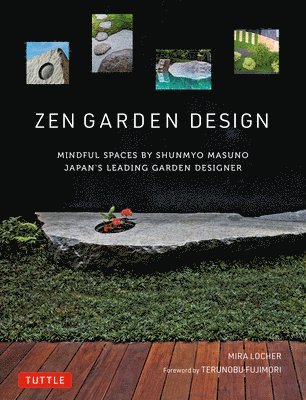
Zen Buddhist priest Shunmyo Masuno understands that today''s busy world leaves little time or space for self-reflection, but that a garden—even in the most urban of spaces—can provide some respite. In his words, "The garden is a special spiritual place where the mind dwells." With this in mind, Masuno has designed scores of spectacular Japanese gardens and landscapes with the aim of helping people achieve a balanced life in the 21st century.This book explores Masuno''s design process and ideas, which are integral to his daily Zen training and teachings. It features 15 unique gardens and contemplative landscapes completed in six countries over as many years—all thoughtfully described and documented in full-color photos and drawings. Readers will also find insights on Masuno''s philosophy of garden design and a conversation between the designer and famed architect Terunobu Fujimori.Zen Garden Design provides an in-depth examination of Masuno''s gardens and landscapes—not just as beautiful spaces, but as places for meditation and contemplation.
Inbunden, Engelska, 2012
366 kr
Skickas
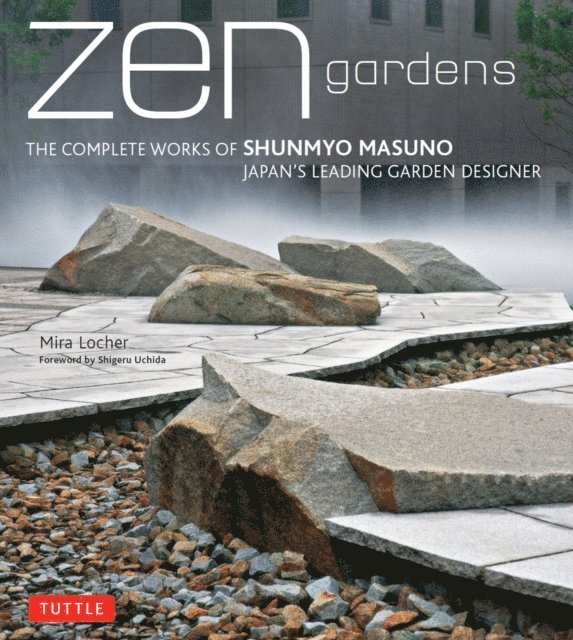
Shunmyo Masuno, Japan's leading garden designer, is at once Japan's most highly acclaimed landscape architect and an 18th-generation Zen Buddhist priest, presiding over daily ceremonies at the Kenkoji Temple in Yokohama. He is celebrated for his unique ability to blend strikingly contemporary elements with the traditional design vernacular. He has worked in ultramodern urban hotels and some of Japan's most famous classic gardens. In each project, his work as a designer of landscape architecture is inseparable from his Buddhist practice. Each becomes a Zen garden, "a special spiritual place where the mind dwells."This beautiful book, illustrated with more than 400 drawings and color photographs, is the first complete retrospective of Masuno's work to be published in English. It presents 37 major gardens around the world in a wide variety of types and settings: traditional and contemporary, urban and rural, public spaces and private residences, and including temple, office, hotel and campus venues. Masuno achieved fame for his work in Japan, but he is becoming increasingly known internationally, and in 2011 completed his first commission in the United States which is shown here.Zen Gardens, divided into three chapters, covers: "Traditional Zen Gardens," "Contemporary Zen Gardens" and "Zen Gardens outside Japan." Each Zen garden design is described and analyzed by author Mira Locher, herself an architect and a scholar well versed in Japanese culture.Celebrating the accomplishments of an influential, world-class designer, Zen Gardens also serves as something of a master class in Japanese garden design and appreciation: how to perceive a Japanese garden, how to understand one, even how to make one yourself. Like one of Masuno's gardens, the book can be a place for contemplation and mindful repose.
Häftad, Engelska, 2015
259 kr
Skickas
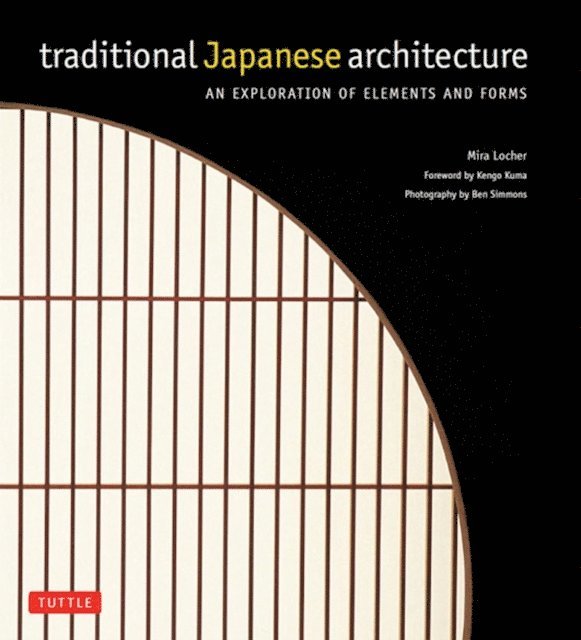
Thick thatched roofs and rough mud plaster walls. An intricately carved wood transom and a precisely woven tatami mat—each element of traditional Japanese architecture tells a story.In Japanese Architecture, author Mira Locher explores how each of these stories encompasses the particular development, construction, function and symbolism inherent in historic architectural elements. From roofs, walls and floors to door pulls and kettle hangers, Japanese Architecture situates these elements firmly within the natural environment and traditional Japanese culture.Japanese architecture developed with influences from abroad and particular socio-political situations at home. The resulting forms and construction materials—soaring roofs with long eaves, heavy timber structures of stout columns supporting thick beams, mud plaster walls flecked with straw and sand and the refined paper-covered lattice shoji screen—are recognizable as being of distinctly Japanese design. These constructed forms, designed with strong connections to the surrounding environment, utilize natural construction materials in ways that are both practical and inventive. This fascinating architecture book provides a comprehensive perspective of traditional Japanese architecture, relating the historical development and context of buildings and the Japanese garden while examining the stories of the individual architectural elements, from foundation to roof.
Inbunden, Engelska, 2020
201 kr
Skickas
Zen Buddhist priest Shunmyo Masuno understands that today's busy world leaves little time or space for self-reflection, but that a garden—even in the most urban of spaces—can provide some respite. In his words, "The garden is a special spiritual place where the mind dwells." With this in mind, Masuno has designed scores of spectacular Japanese gardens and landscapes with the aim of helping people achieve a balanced life in the 21st century.This book explores Masuno's design process and ideas, which are integral to his daily Zen training and teachings. It features 15 unique gardens and contemplative landscapes completed in six countries over as many years—all thoughtfully described and documented in full-color photos and drawings. Readers will also find insights on Masuno's philosophy of garden design and a conversation between the designer and famed architect Terunobu Fujimori.Zen Garden Design provides an in-depth examination of Masuno's gardens and landscapes—not just as beautiful spaces, but as places for meditation and contemplation.
Häftad, Engelska, 2023
374 kr
Skickas inom 7-10 vardagar
"We do not live only with clear-cut forms;rather, we exist in a world of forms that are often indistinct and vague." —Takashi Sugimoto, architect and James Beard Award-winning authorSuper Potato Design presents the work of internationally-renowned Japanese designer Takashi Sugimoto. After studying metal sculpture at Tokyo University of Fine Arts, Sugimoto began his career designing a series of bars and restaurants including the iconic Radio Bar that became a favorite hangout for designers like Issey Miyake, Ikko Tanaka, Yohji Yamamoto and Tadao Ando. He was soon recruited to design retail spaces including the original Muji "no-brand" shops along with hotels, tea ceremony spaces and wedding chapels.Super Potato's striking interiors have totally revolutionized Japanese design through the use of exposed concrete surfaces, rough-hewn timber and unevenly cut stone juxtaposed with salvaged metal and repurposed objects to create a sense of power and timelessness. The design vocabulary created by Sugimoto is universally imitated today (in Japan and throughout the world). It is what we now think of as "modern Japanese design"—although Sugimoto's own work has never been surpassed.Super Potato Design presents 40 of Sugimoto's most important projects in 320 full-color photographs by Yoshio Shiratori, who has worked with the designer since the beginning. Author and architect Mira Locher introduces Sugimoto's work and provides a thorough description for each project. A foreword by Tadao Ando and discussions with architect Kiyoshi Sey Takeyama and graphic designer Kenya Hara explore the direction of Japanese design today. A list of Super Potato's complete works rounds off this fascinating book.