Mira Wilkins - Böcker
Visar alla böcker från författaren Mira Wilkins. Handla med fri frakt och snabb leverans.
9 produkter
9 produkter
2 014 kr
Skickas inom 3-6 vardagar
Free-standing companies are a special type of multinational enterprise that proliferated in the late nineteenth and early twentieth centuries; some persisted into later years; few remain today. Many were headquartered in the United Kingdom, but important free-standing companies had headquarters in the other capital-rich nations. This book explores the history of the free-standing company, the theoretical implications of the concept, comparisons with the `American model' multinational enterprise, the validity of the concept, and its contribution to the understanding of modern economic history. Leading international scholars - economists and historians - provide evidence on and analysis of the operations of free-standing companies in different parts of the world. This is the first book on the much-discussed topic of free-standing companies. The volume will provide a rich quarry for those interested in world economic history, regional and national economic histories, in the spread of international business, and in the different forms that multinational enterprises take through time.
2 575 kr
Skickas inom 10-15 vardagar
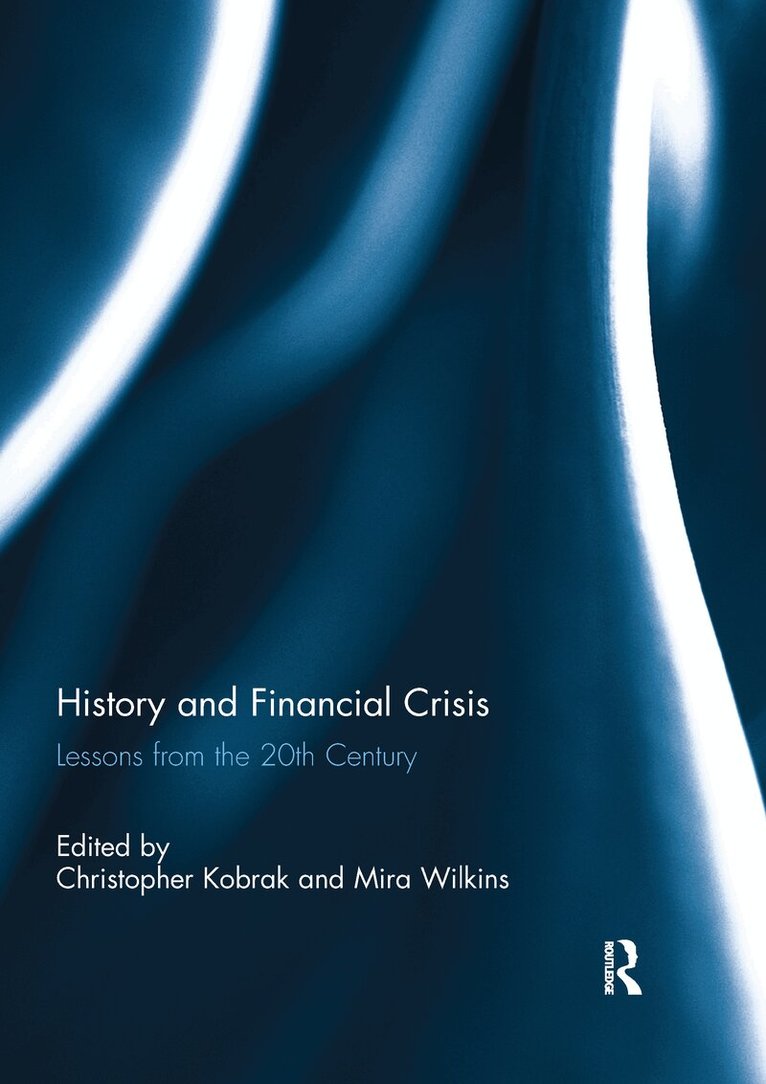
One striking weaknesses of our financial architecture, which helped bring on and perhaps deepen the Panic of 2008, is an inadequate appreciation of the past. Information about how the system functioned and the reliability of organizations and institutional controls were drawn from a relatively narrow group of recent examples. History and Financial Crisis: Lessons from the 20th Century is an attempt to broaden the range of historical sources used by policy makers to understand and treat financial crises. Many recent discussions of the 2008 panic and the economic turmoil have found the situation to either be unprecedented or greatly similar to that of 1931. However, the book's wide range of contributors suggest that the economic crisis of 2008 cannot be categorised in this way.This book was originally published as a special issue of Business History.
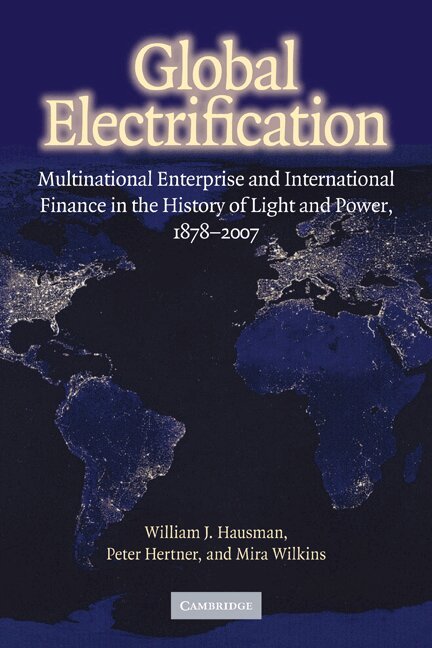
Global Electrification
Multinational Enterprise and International Finance in the History of Light and Power, 1878-2007
Häftad, Engelska, 2011
604 kr
Skickas inom 7-10 vardagar
This book examines how multinational enterprises and international finance influenced the course of electrification around the world. Multinational enterprises played a crucial role in the spread of electric light and power from the 1870s through the first three decades of the twentieth century. However, their role did not persist, and by 1978 multinational enterprises in this sector had all but disappeared, replaced by electrical utility providers with national business structures. Yet, in recent years, there has been a vigorous revival. This book, a co-operative effort by the three authors and a group of experts from many countries, offers an analysis of the history of multinational enterprise. The authors take an integrated approach, not simply comparing national electrification experiences, but supplying a truly global account.
Global Electrification
Multinational Enterprise and International Finance in the History of Light and Power, 1878-2007
Inbunden, Engelska, 2008
807 kr
Skickas inom 7-10 vardagar
This book examines how multinational enterprises and international finance influenced the course of electrification around the world. Multinational enterprises played a crucial role in the spread of electric light and power from the 1870s through the first three decades of the twentieth century. However, their role did not persist, and by 1978 multinational enterprises in this sector had all but disappeared, replaced by electrical utility providers with national business structures. Yet, in recent years, there has been a vigorous revival. This book, a co-operative effort by the three authors and a group of experts from many countries, offers an analysis of the history of multinational enterprise. The authors take an integrated approach, not simply comparing national electrification experiences, but supplying a truly global account.
Del 43 - Harvard Studies in Business History
History of Foreign Investment in the United States, 1914–1945
Inbunden, Engelska, 2004
1 281 kr
Skickas inom 7-10 vardagar
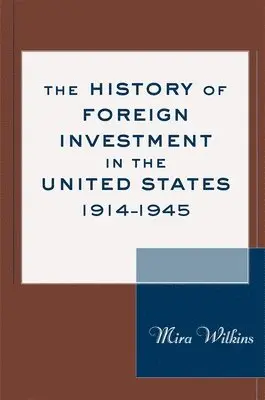
Mira Wilkins, the foremost authority on foreign investment in the United States, continues her magisterial history in a work covering the critical years 1914–1945.Wilkins includes all long-term inward foreign investments, both portfolio (by individuals and institutions) and direct (by multinationals), across such enterprises as chemicals and pharmaceuticals, textiles, insurance, banks and mortgage providers, other service sector companies, and mining and oil industries. She traces the complex course of inward investments, presents the experiences of the investors, and examines the political and economic conditions, particularly the range of public policies, that affected foreign investments. She also offers valuable discussions on the intricate cross-investments of inward and outward involvements and the legal precedents that had long-term consequences on foreign investment.At the start of World War I, the United States was a debtor nation. By the end of World War II, it was a creditor nation with the strongest economy in the world. Integrating economic, business, technological, legal, and diplomatic history, this comprehensive study is essential to understanding the internationalization of the American economy, as well as broader global trends.
Del 41 - Harvard Studies in Business History
History of Foreign Investment in the United States to 1914
Inbunden, Engelska, 1989
953 kr
Skickas inom 7-10 vardagar
From the colonial era to 1914, America was a debtor nation in international accounts—owing more to foreigners than foreigners owed to us. By 1914 it was the world’s largest debtor nation. Mira Wilkins provides the first complete history of foreign investment in the United States during that period. The book shows why the United States was attractive to foreign investors and traces the changing role of foreign capital in the nation’s development, covering both portfolio and direct investment. The immense new wave of foreign investment in the United States today, and our return to the status of a debtor nation—once again the world’s largest debtor nation—makes this strong exposition far more than just historically interesting.Wilkins reviews foreign portfolio investments in government securities (federal, state, and local) and in corporate stocks and bonds, as well as foreign direct investments in land and real estate, manufacturing plants, and even such service-sector activities as accounting, insurance, banking, and mortgage lending. She finds that between 1776 and 1875, public-sector securities (principally federal and state securities) drew in the most long-term foreign investment, whereas from 1875 to 1914 the private sector was the main attraction. The construction of the American railroad system called on vast portfolio investments from abroad; there was also sizable direct investment in mining, cattle ranching, the oil industry, the chemical industry, flour production, and breweries, as well as the production of rayon, thread, and even submarines. In addition, there were foreign stakes in making automobile and electrical and nonelectrical machinery. America became the leading industrial country of the world at the very time when it was a debtor nation in world accounts.
821 kr
Skickas inom 7-10 vardagar
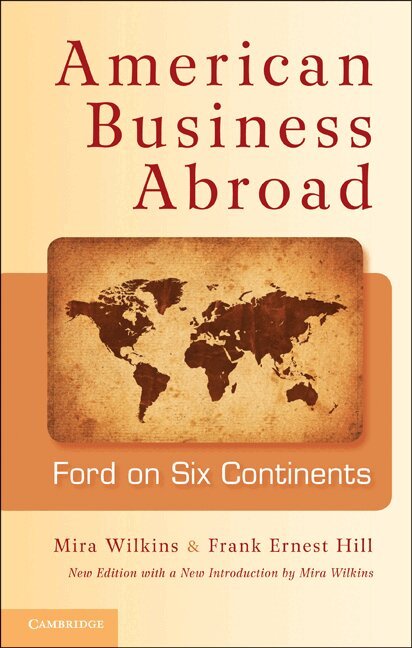
American Business Abroad: Ford on Six Continents documents the first sixty years of Ford Motor Company's international expansion. Ford Motor Company introduced Americans to the first affordable car. Based on Ford's extraordinary company archives, this book traces the company's rise as a multinational enterprise. Following the export of the sixth car produced by the company, Ford opened its first plant abroad in its second year of business and quickly expanded around the world, building a business that by the mid 1920s spanned six continents. It faced wars, nationalism, numerous government restrictions and all the perils of operating across borders. First published in 1964, this book has lasting value in reminding readers of the long and uneven path of globalization. This new edition includes a new introduction by the author examining the impact and legacy of the study. It remains a major contribution to global economic history. In addition, Ford's history offers useful lessons today for both participants in the global economy and students of international business.
526 kr
Skickas inom 7-10 vardagar
American Business Abroad: Ford on Six Continents documents the first sixty years of Ford Motor Company's international expansion. Ford Motor Company introduced Americans to the first affordable car. Based on Ford's extraordinary company archives, this book traces the company's rise as a multinational enterprise. Following the export of the sixth car produced by the company, Ford opened its first plant abroad in its second year of business and quickly expanded around the world, building a business that by the mid 1920s spanned six continents. It faced wars, nationalism, numerous government restrictions and all the perils of operating across borders. First published in 1964, this book has lasting value in reminding readers of the long and uneven path of globalization. This new edition includes a new introduction by the author examining the impact and legacy of the study. It remains a major contribution to global economic history. In addition, Ford's history offers useful lessons today for both participants in the global economy and students of international business.
815 kr
Skickas inom 10-15 vardagar
One striking weaknesses of our financial architecture, which helped bring on and perhaps deepen the Panic of 2008, is an inadequate appreciation of the past. Information about how the system functioned and the reliability of organizations and institutional controls were drawn from a relatively narrow group of recent examples. History and Financial Crisis: Lessons from the 20th Century is an attempt to broaden the range of historical sources used by policy makers to understand and treat financial crises. Many recent discussions of the 2008 panic and the economic turmoil have found the situation to either be unprecedented or greatly similar to that of 1931. However, the book's wide range of contributors suggest that the economic crisis of 2008 cannot be categorised in this way.This book was originally published as a special issue of Business History.