Miranda Melcher - Böcker
Visar alla böcker från författaren Miranda Melcher. Handla med fri frakt och snabb leverans.
4 produkter
4 produkter
Securing Peace in Angola and Mozambique
The Importance of Specificity in Peace Treaties
Inbunden, Engelska, 2024
1 209 kr
Skickas inom 10-15 vardagar
This book helps explain how and why there are such diverging outcomes of UN peace negotiations and treaties through a detailed examination of peace processes in the Angolan and Mozambican civil wars. Does it really matter what's written on page 36, protocol V, section III, point 5 of a UN-endorsed peace treaty? Dr. Miranda Ruwart Melcher shows that seemingly small details - such as who wears suits, who has toothbrushes, and how specific words are translated between French and English - can and have delayed peace or contributed to restarting wars. Dr. Melcher uses unique primary source data, including interviews with key actors who have participated in peace treaty negotiations, as well as thousands of previously newly opened UN documents. She argues that treaty specificity is an undervalued - but important - factor in researching the success or failure of peace processes. The book offers new insights and policy recommendations for key details whose presence or absence can have a significant impact on how peace processes unfold.
Securing Peace in Angola and Mozambique
The Importance of Specificity in Peace Treaties
Häftad, Engelska, 2025
394 kr
Skickas inom 10-15 vardagar
This book helps explain how and why there are such diverging outcomes of UN peace negotiations and treaties through a detailed examination of peace processes in the Angolan and Mozambican civil wars. Does it really matter what's written on page 36, protocol V, section III, point 5 of a UN-endorsed peace treaty? Dr. Miranda Ruwart Melcher shows that seemingly small details - such as who wears suits, who has toothbrushes, and how specific words are translated between French and English - can and have delayed peace or contributed to restarting wars. Dr. Melcher uses unique primary source data, including interviews with key actors who have participated in peace treaty negotiations, as well as thousands of previously newly opened UN documents. She argues that treaty specificity is an undervalued - but important - factor in researching the success or failure of peace processes. The book offers new insights and policy recommendations for key details whose presence or absence can have a significant impact on how peace processes unfold.
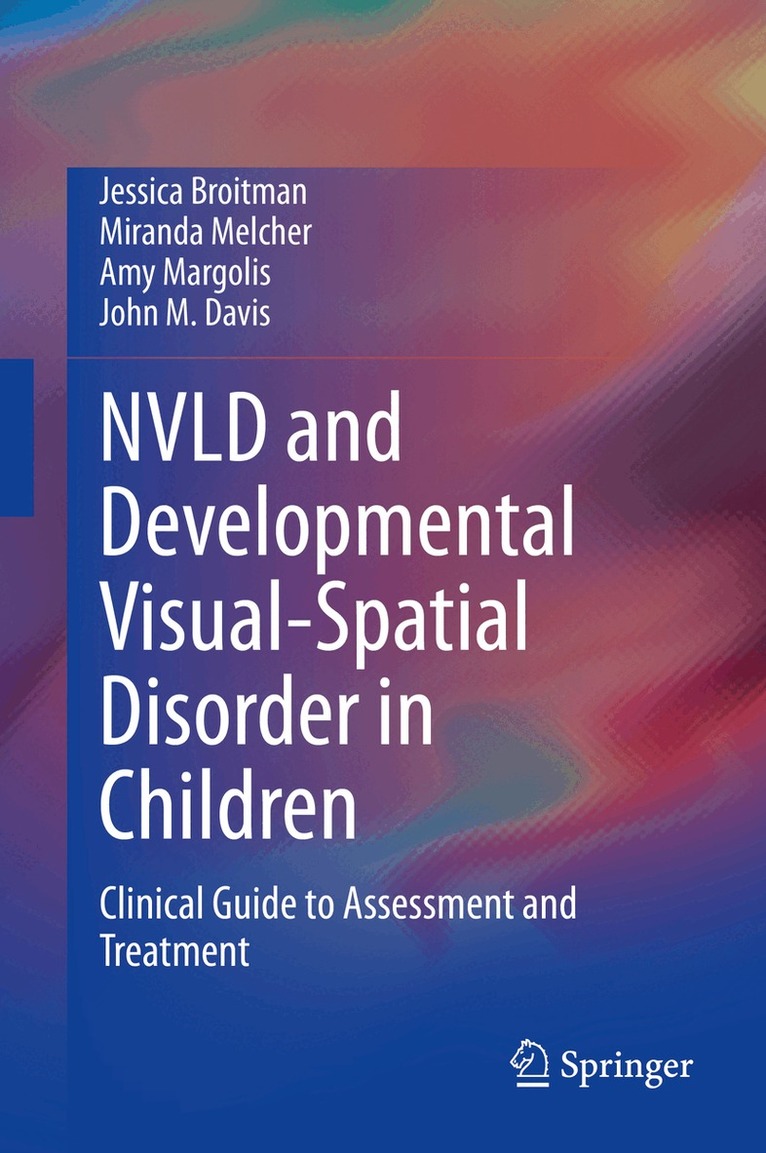
NVLD and Developmental Visual-Spatial Disorder in Children
Clinical Guide to Assessment and Treatment
Inbunden, Engelska, 2020
1 434 kr
Skickas inom 10-15 vardagar
This unique volume explores issues related to working with children who have nonverbal learning disability (NVLD). It examines how a child’s psychology – thoughts, feelings, beliefs – affects his or her functioning and learning. In addition, the book addresses how a child’s experiences are processed through individual personality, psychology, culture, environment and economic circumstances, and family dynamics. Using these psychological organizing principles, the book describes how to work most effectively with young patients with NVLD. It offers a new model and definition for understanding NVLD, emphasizing its core deficit of visual-spatial processing.In addition, this book addresses efforts to rename NVLD to developmental visual-spatial disorder (DVSD). It describes the 11 possible subtypes as including a primary deficit in visual-spatial processes and impairment in several additional functional domains, including executive functioning, social/emotional deficits, academic achievement, and motor coordination. The book highlights the need for psychologically minded treatment and provides specific intervention guidelines. It details how to conduct the intake process and create a treatment plan and team and offers practical suggestions for working with a patient’s family members. In addition, the book addresses the importance of working with a consistent psychological theory, such as control mastery theory (CMT). It describes the Brooklyn Learning Center Model for treating NVLD and offers guidelines for interventions to support patients academically. The book provides a comprehensive approach to the neuropsychological assessment of NVLD as well as examples of visual-spatial, sensory perception, executive functioning, academics, social/emotional deficits and motor coordination interventions, and all forms used to gather information from patients.Key areas of coverage include:Definition of nonverbal learning disability (NVLD).Efforts toward inclusion in the Diagnostic and Statistical Manual (DSM) and for renaming it to a developmental visual-spatial disorder (DVSD)Guide to general diagnostic testing and assessment.Developing a treatment plan and team for NVLD patients.NVLD therapy and tutoring priorities.NVLD and Developmental Visual-Spatial Disorder in Children is an essential reference for clinicians, therapists, and other professionals as well as researchers, professors, and graduate students in school and clinical child psychology, special education, speech-language therapy, developmental psychology, pediatrics, social work as well as all interrelated disciplines.
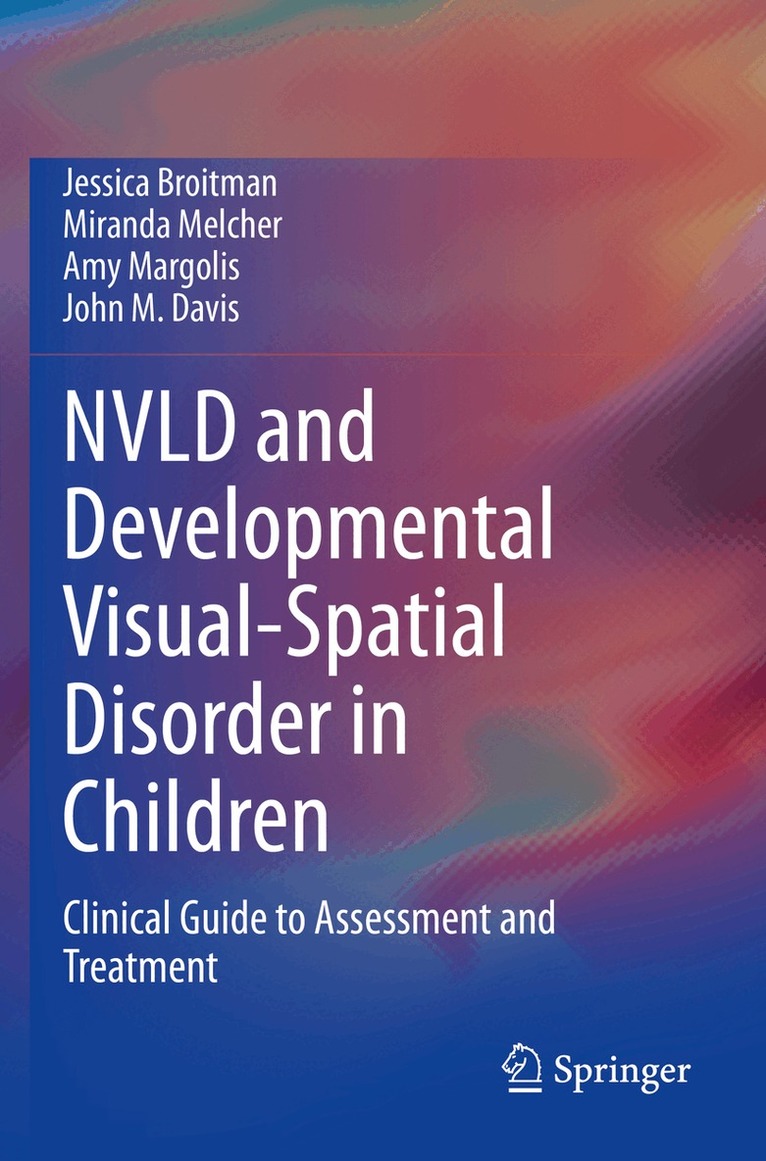
NVLD and Developmental Visual-Spatial Disorder in Children
Clinical Guide to Assessment and Treatment
Häftad, Engelska, 2021
1 105 kr
Skickas inom 10-15 vardagar
This unique volume explores issues related to working with children who have nonverbal learning disability (NVLD). It examines how a child’s psychology – thoughts, feelings, beliefs – affects his or her functioning and learning. In addition, the book addresses how a child’s experiences are processed through individual personality, psychology, culture, environment and economic circumstances, and family dynamics. Using these psychological organizing principles, the book describes how to work most effectively with young patients with NVLD. It offers a new model and definition for understanding NVLD, emphasizing its core deficit of visual-spatial processing.In addition, this book addresses efforts to rename NVLD to developmental visual-spatial disorder (DVSD). It describes the 11 possible subtypes as including a primary deficit in visual-spatial processes and impairment in several additional functional domains, including executive functioning, social/emotional deficits, academic achievement, and motor coordination. The book highlights the need for psychologically minded treatment and provides specific intervention guidelines. It details how to conduct the intake process and create a treatment plan and team and offers practical suggestions for working with a patient’s family members. In addition, the book addresses the importance of working with a consistent psychological theory, such as control mastery theory (CMT). It describes the Brooklyn Learning Center Model for treating NVLD and offers guidelines for interventions to support patients academically. The book provides a comprehensive approach to the neuropsychological assessment of NVLD as well as examples of visual-spatial, sensory perception, executive functioning, academics, social/emotional deficits and motor coordination interventions, and all forms used to gather information from patients.Key areas of coverage include:Definition of nonverbal learning disability (NVLD).Efforts toward inclusion in the Diagnostic and Statistical Manual (DSM) and for renaming it to a developmental visual-spatial disorder (DVSD)Guide to general diagnostic testing and assessment.Developing a treatment plan and team for NVLD patients.NVLD therapy and tutoring priorities.NVLD and Developmental Visual-Spatial Disorder in Children is an essential reference for clinicians, therapists, and other professionals as well as researchers, professors, and graduate students in school and clinical child psychology, special education, speech-language therapy, developmental psychology, pediatrics, social work as well as all interrelated disciplines.