Miroslav Jelinek – författare
Visar alla böcker från författaren Miroslav Jelinek. Handla med fri frakt och snabb leverans.
8 produkter
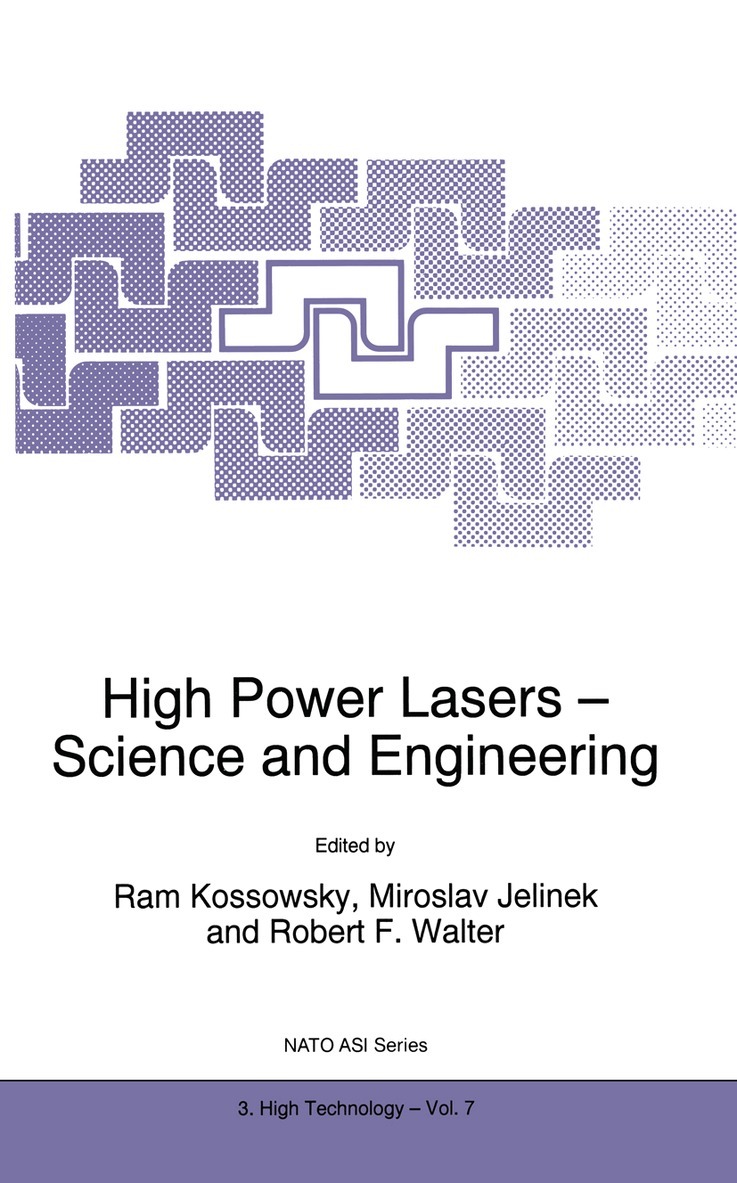
High Power Lasers - Science and Engineering
Av R. Kossowsky, Miroslav Jelinek m. fl.
Inbunden, 1996
3279 kr
Lägg i varukorg
In the 30 years since the invention of the CO2 gas laser, the major design issue has shifted from how to obtain the desired power level to how to achieve reliable operation. At the same time, the opening of many laser development facilities in the former Soviet Union has allowed their achievements …
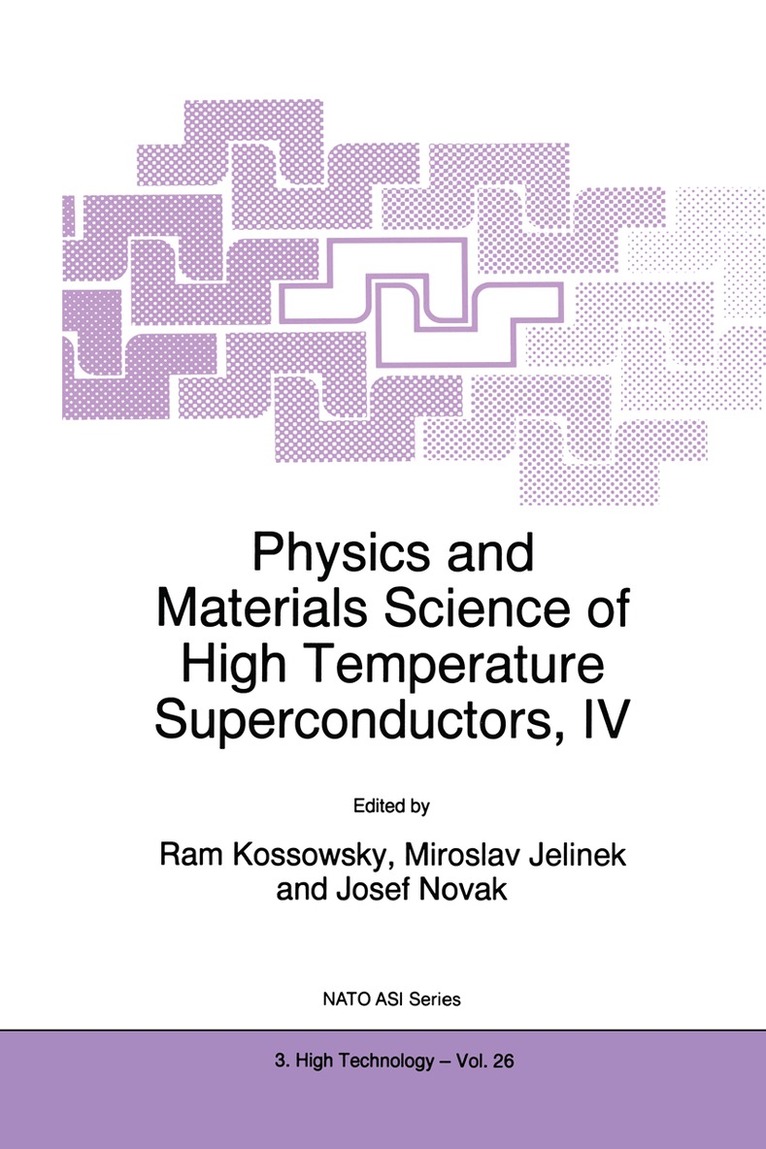
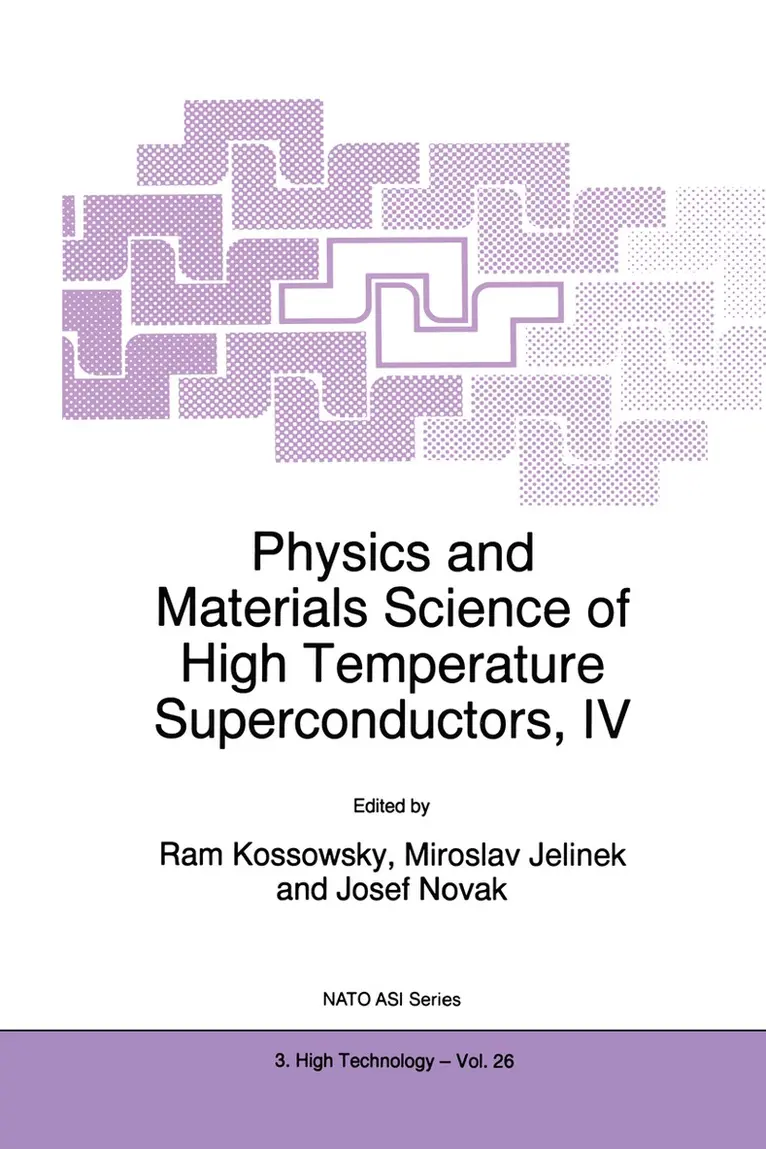
Physics and Materials Science of High Temperature Superconductors, IV
Av R. Kossowsky, Miroslav Jelinek m. fl.
Inbunden, 1997
2188 kr
Lägg i varukorg
Five questions dominated the ARW on Physics and Materials Science of High Temperature Superconductors, of which this book forms the permanent record. Briefly, these are: (i) How close are we to a unified theory? The consensus is that we are not. (ii) Flux pinning: can it be achieved in bulk …
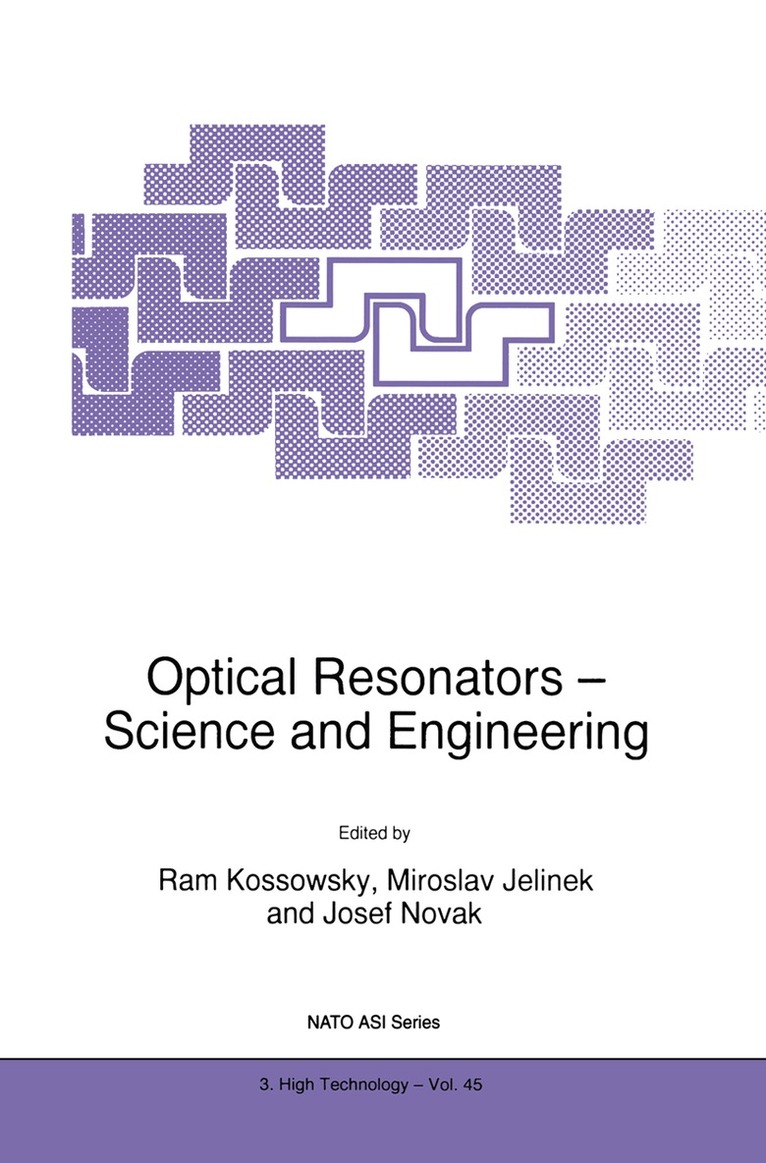
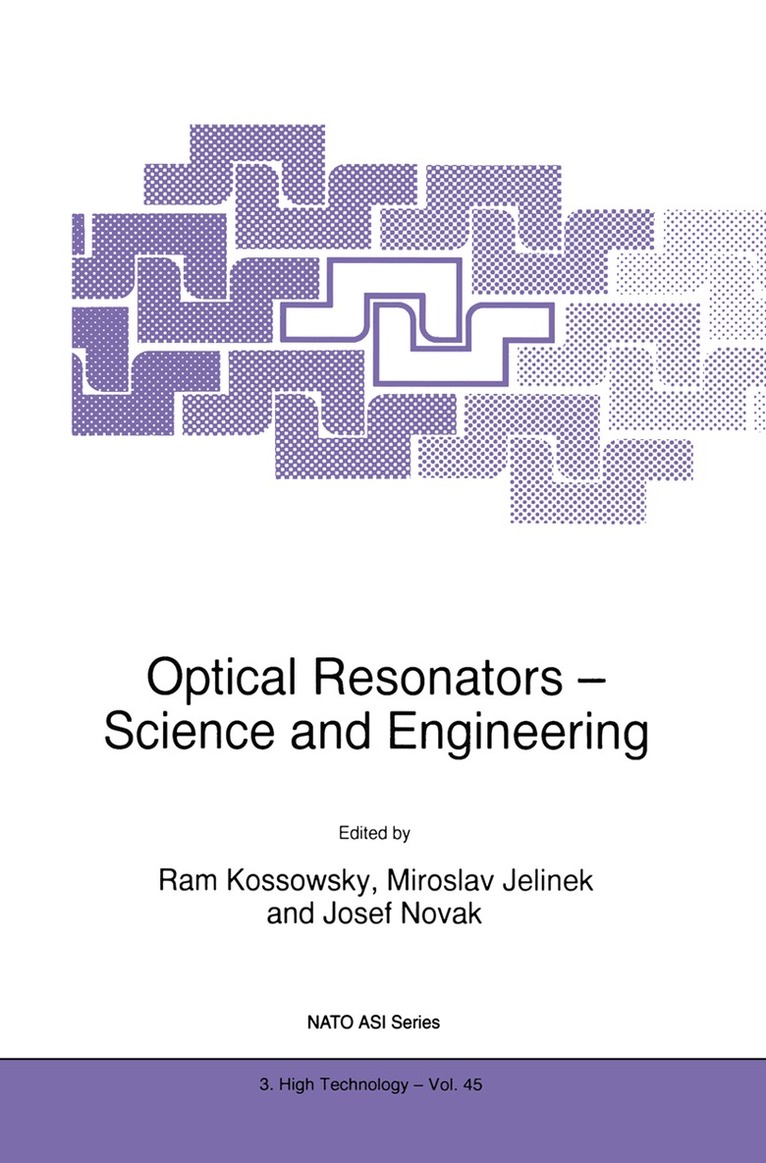
Optical Resonators — Science and Engineering
Av R. Kossowsky, Miroslav Jelinek m. fl.
Inbunden, 1998
2188 kr
Lägg i varukorg
This book contains most, but regrettably not all, the papers that were presented at The Advanced Research Workshop, held July 1-5, 1997, at Smolenice Castle, Slovak Republic. The problem of angular divergence is of great importance in quantum electronics: low divergence is required not only in most …
High Power Lasers - Science and Engineering
Av R. Kossowsky, Miroslav Jelinek m. fl.
Häftad, 2010
3279 kr
Lägg i varukorg
In the thirty years since the invention of the CO2 gas laser, the major design issue has shifted from how to obtain the desired power level to how to achieve reliable operation. At the same time, the opening of many laser development facilities in the Former Soviet Union has allowed their …
Optical Resonators — Science and Engineering
Av R. Kossowsky, Miroslav Jelinek m. fl.
Häftad, 2010
2188 kr
Lägg i varukorg
This book contains most, but regrettably not all, the papers that were presented at The Advanced Research Workshop, held July 1-5, 1997, at Smolenice Castle, Slovak Republic. The problem of angular divergence is of great importance in quantum electronics: low divergence is required not only in most …
Physics and Materials Science of High Temperature Superconductors, IV
Av R. Kossowsky, Miroslav Jelinek m. fl.
Häftad, 2012
2188 kr
Lägg i varukorg
Five questions dominated the ARW on Physics and Materials Science of High Temperature Superconductors, of which this book forms the permanent record. Briefly, these are: (i) How close are we to a unified theory? The consensus is that we are not. (ii) Flux pinning: can it be achieved in bulk …
Physics and Materials Science of High Temperature Superconductors, IV
Av Josef Novak, Miroslav Jelinek m. fl.
E-bok, 2012
2925 kr
Lägg i varukorg
Five questions dominated the ARW on Physics and Materials Science of High Temperature Superconductors , of which this book forms the permanent record. Briefly, these are: (i) How close are we to a unified theory? The consensus is that we are not. (ii) Flux pinning: can it be achieved in bulk …
High Power Lasers - Science and Engineering
Av Robert F. Walter, Miroslav Jelinek m. fl.
E-bok, 2013
4066 kr
Lägg i varukorg
In the thirty years since the invention of the CO 2 gas laser, the major design issue has shifted from how to obtain the desired power level to how to achieve reliable operation. At the same time, the opening of many laser development facilities in the Former Soviet Union has allowed their …