Josef Novák – författare
Visar alla böcker från författaren Josef Novák. Handla med fri frakt och snabb leverans.
11 produkter
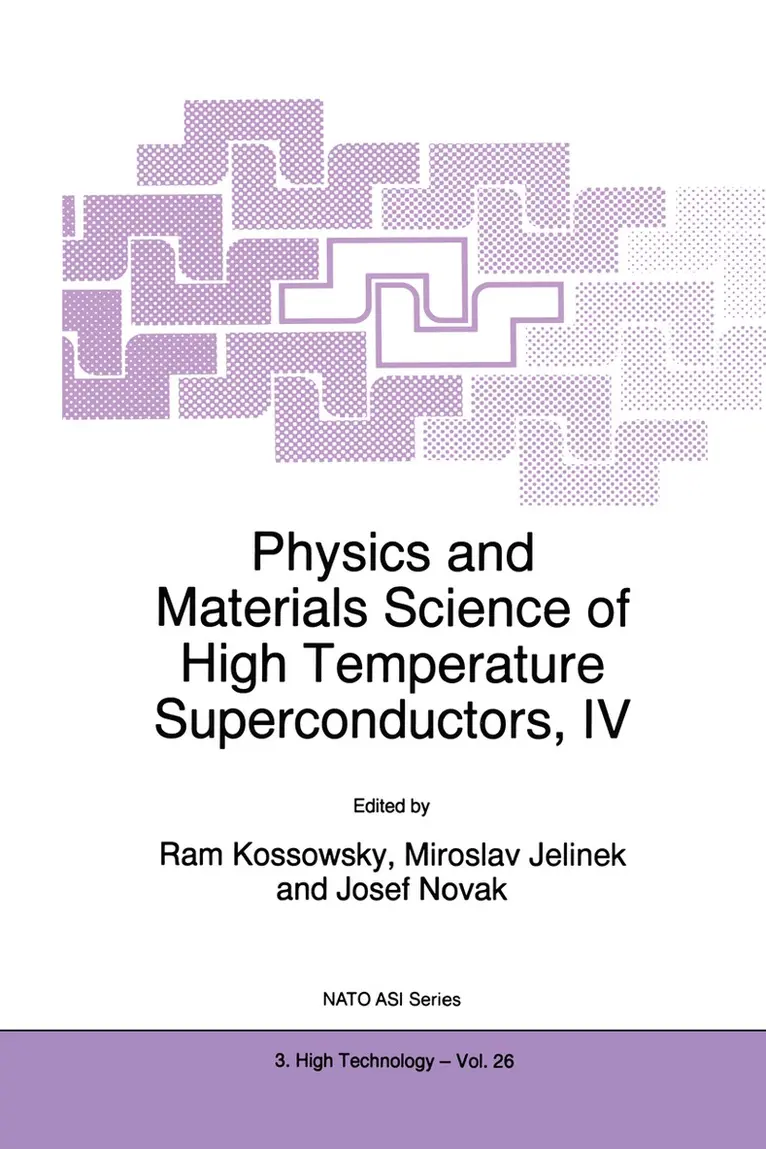
Physics and Materials Science of High Temperature Superconductors, IV
Av R. Kossowsky, Miroslav Jelinek m. fl.
Inbunden, 1997
2188 kr
Lägg i varukorg
Five questions dominated the ARW on Physics and Materials Science of High Temperature Superconductors, of which this book forms the permanent record. Briefly, these are: (i) How close are we to a unified theory? The consensus is that we are not. (ii) Flux pinning: can it be achieved in bulk …
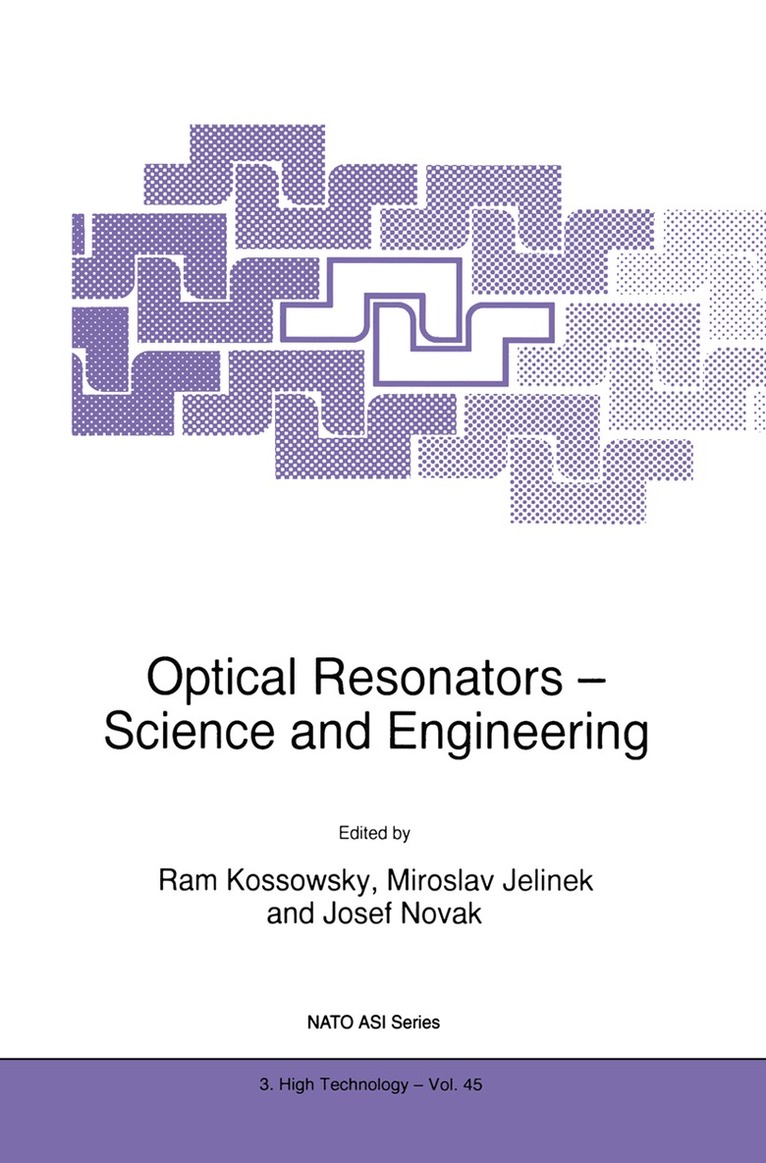
Optical Resonators — Science and Engineering
Av R. Kossowsky, Miroslav Jelinek m. fl.
Inbunden, 1998
2188 kr
Lägg i varukorg
This book contains most, but regrettably not all, the papers that were presented at The Advanced Research Workshop, held July 1-5, 1997, at Smolenice Castle, Slovak Republic. The problem of angular divergence is of great importance in quantum electronics: low divergence is required not only in most …
Heterostructure Epitaxy and Devices - HEAD’97
Inbunden, 1998
2188 kr
Lägg i varukorg
Novel microelectronic and optoelectronic devices are based on semiconductor heterostructures. The present book discusses various questions related to the use of new materials, such as compound semiconductors based on high band-gap nitrides and low band-gap antimonides, and new procedures, such as …
Heterostructure Epitaxy and Devices - HEAD’97
Häftad, 1998
2188 kr
Lägg i varukorg
The Workshop Heterostructure Epitaxy and Devices HEAD'97 was held from October 12 to 16, 1997 at Smolenice Castle, the House of Scientists of the Slovak Academy of Sciences and was co-organized by the Institute of Electrical Engineering, Slovak Academy of Sciences, Bratislava and the Institute of …
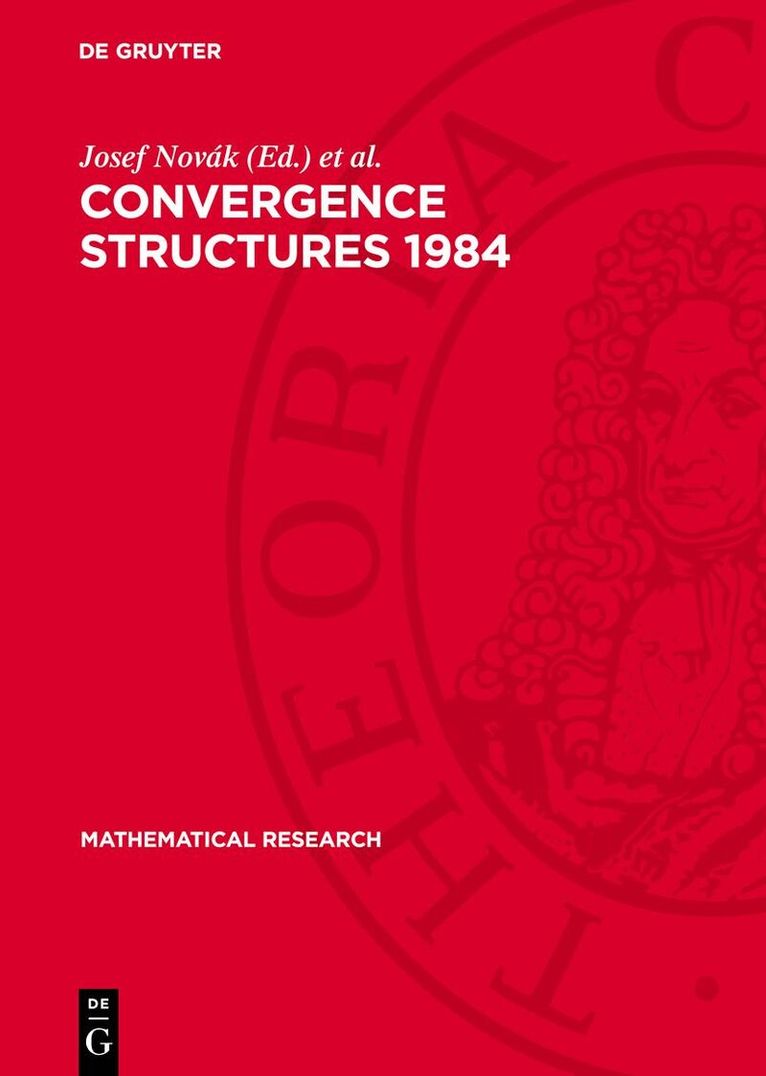
Convergence Structures 1984
Proceedings of the Conference on Convergence held in Bechyne (Czechoslovakia) September 24–28, 1984
Av Josef Novák, Werner Gähler m. fl.
Inbunden, 1985
2012 kr
Lägg i varukorg
No detailed description available for "Convergence Structures 1984".
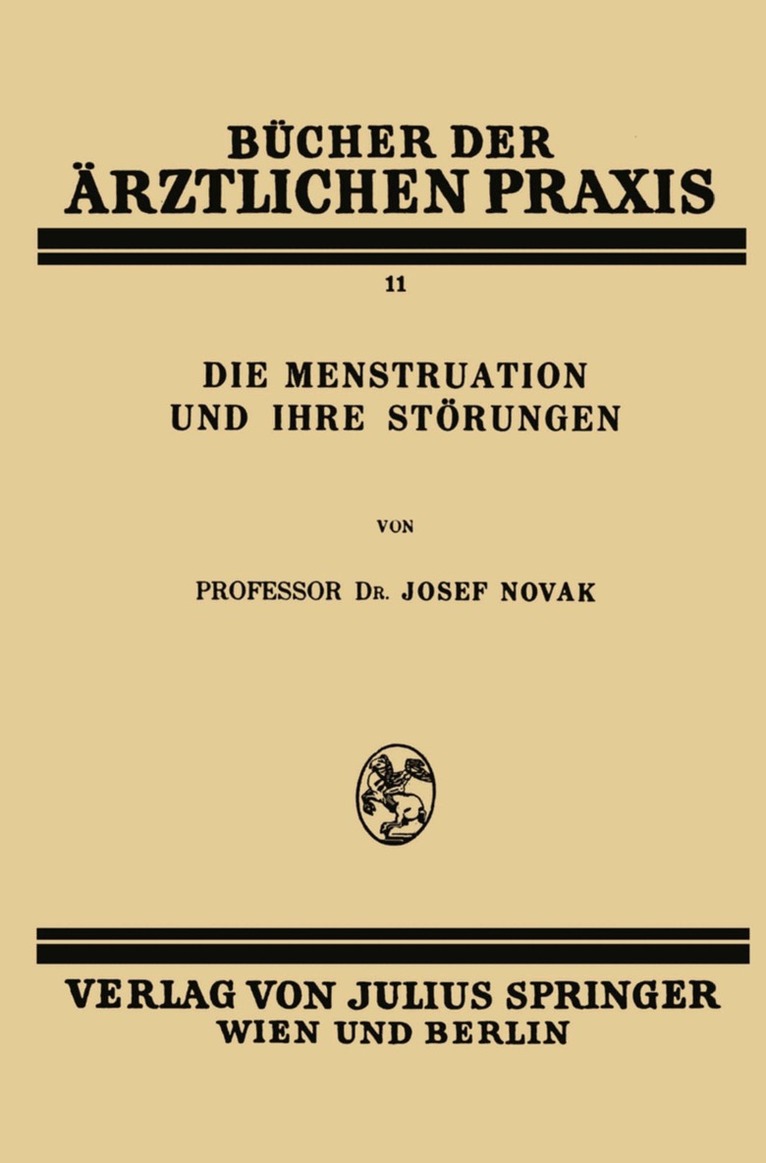
Die Menstruation und ihre Störungen
Av Josef Novak
Häftad, 1928
583 kr
Lägg i varukorg
Dieser Buchtitel ist Teil des Digitalisierungsprojekts Springer Book Archives mit Publikationen, die seit den Anfängen des Verlags von 1842 erschienen sind. Der Verlag stellt mit diesem Archiv Quellen für die historische wie auch die disziplingeschichtliche Forschung zur Verfügung, die jeweils im …
Die Menstruation und ihre Störungen
Av Josef Novak
E-bok, 2013
591 kr
Lägg i varukorg
Dieser Buchtitel ist Teil des Digitalisierungsprojekts Springer Book Archives mit Publikationen, die seit den Anfängen des Verlags von 1842 erschienen sind. Der Verlag stellt mit diesem Archiv Quellen für die historische wie auch die disziplingeschichtliche Forschung zur Verfügung, die jeweils im …
Optical Resonators — Science and Engineering
Av R. Kossowsky, Miroslav Jelinek m. fl.
Häftad, 2010
2188 kr
Lägg i varukorg
This book contains most, but regrettably not all, the papers that were presented at The Advanced Research Workshop, held July 1-5, 1997, at Smolenice Castle, Slovak Republic. The problem of angular divergence is of great importance in quantum electronics: low divergence is required not only in most …
Physics and Materials Science of High Temperature Superconductors, IV
Av R. Kossowsky, Miroslav Jelinek m. fl.
Häftad, 2012
2188 kr
Lägg i varukorg
Five questions dominated the ARW on Physics and Materials Science of High Temperature Superconductors, of which this book forms the permanent record. Briefly, these are: (i) How close are we to a unified theory? The consensus is that we are not. (ii) Flux pinning: can it be achieved in bulk …
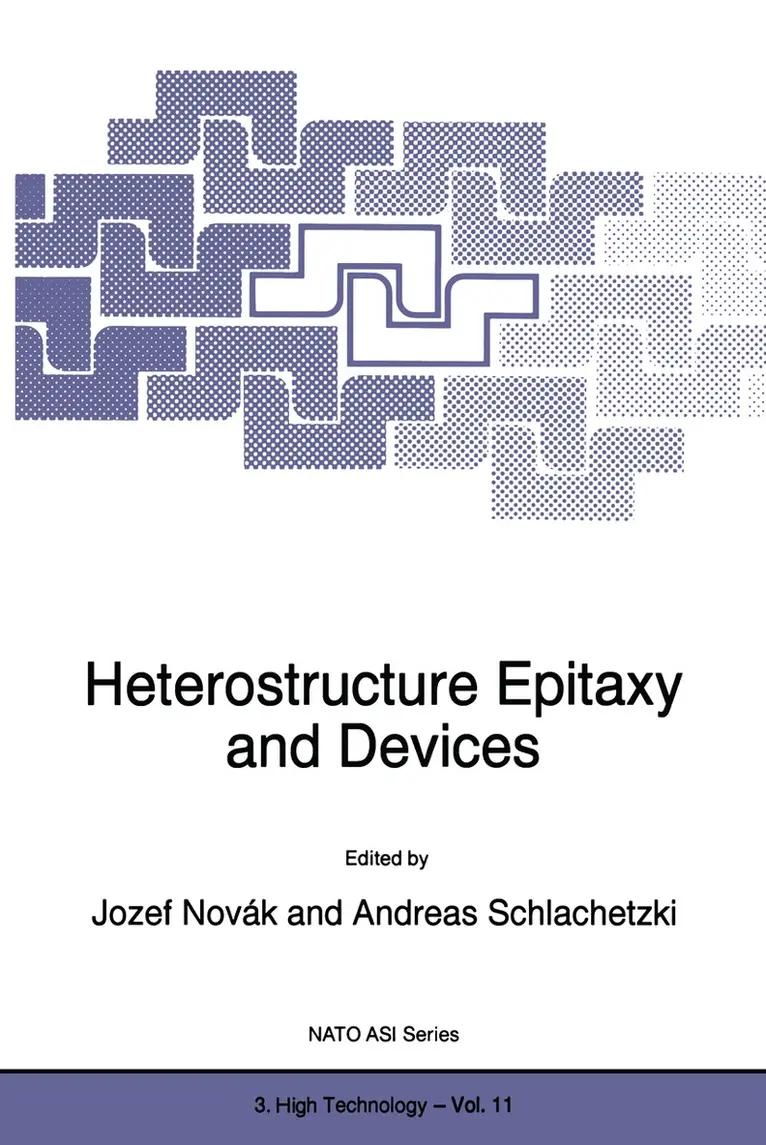
Heterostructure Epitaxy and Devices
Av Josef Novák, A. Schlachetzki
Häftad, 2014
551 kr
Lägg i varukorg
From October 15 to 19, 1995 a Workshop on Hetero- structureEpitaxyandDeviceswasheldatSmoleniceCastlenear Slovakia'scapital Bratislava. The intention ofthisWorkshop was toestablishandstrengthentiesbetweenscientistsoftheformerly Socialist East and Middle-European states with their colleagues …
Physics and Materials Science of High Temperature Superconductors, IV
Av Josef Novak, Miroslav Jelinek m. fl.
E-bok, 2012
2925 kr
Lägg i varukorg
Five questions dominated the ARW on Physics and Materials Science of High Temperature Superconductors , of which this book forms the permanent record. Briefly, these are: (i) How close are we to a unified theory? The consensus is that we are not. (ii) Flux pinning: can it be achieved in bulk …