Miroslaw Skwiot - Böcker
Visar alla böcker från författaren Miroslaw Skwiot. Handla med fri frakt och snabb leverans.
3 produkter
3 produkter
432 kr
Tillfälligt slut
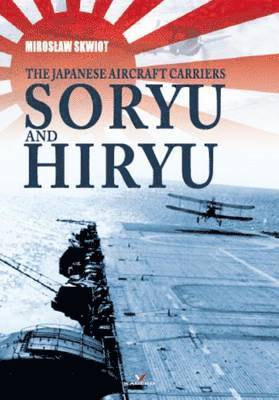
Soryu meaning "Blue (or Green) Dragon") was an aircraft carrier built for the Imperial Japanese Navy (IJN) during the mid-1930s. A sister ship, Hiryū, was intended to follow Sōryū, but Hiryū 's design was heavily modified and she is often considered to be a separate class.Their aircraft supported the Japanese invasion of French Indochina in mid-1940. During the first month of the Pacific War, they took part in the attack on Pearl Harbor and the Battle of Wake Island and then supported the conquest of the Dutch East Indies in January 1942. The following month, their aircraft bombed Darwin, Australia, and continued to assist in the Dutch East Indies campaign. In April, Hiryū's aircraft helped sink two British heavy cruisers and several merchant ships during the Indian Ocean raid.Hiryū was the second aircraft carrier included in “The Second Naval Armaments Supplement Program” of 1934. Originally both carriers were supposed to be sister vessels, but the number of design modifications introduced during the construction of Sōryū resulted in many differences between the two. According to the original plans Hiryū was to be completed a year after Sōryū, but her construction (similarly to her predecessor) suffered delays caused by two key factors. The first one was the implementation of the lessons learned during the reconstruction of Kaga, which was going on simultaneously with Hiryū’s construction. Then there was new data available from the early service days of Sōryū, which exposed some of the design’s drawbacks and weaknesses. The number of issues popping up “along the way” was further increased by the Fourth Fleet Incident and by Japan’s withdrawal from the previously signed naval treaties. Considering all those issues, it is not hard to imagine the inevitable impact they had on Hiryū’s original design and construction schedule. The greatest source of delays was undoubtedly the aftermath of the Fourth Fleet Incident, which forced the Navy Aviation Bureau to introduce changes in the design of the second carrier. After the new requirements had been implemented, Hiryū’s final design (known as the ��Basic Project G-10”) finally emerged.
510 kr
Tillfälligt slut
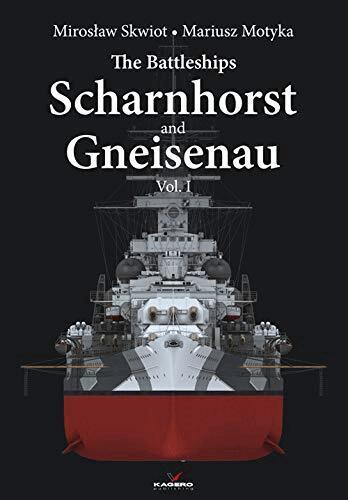
The battleships of the Kriegsmarine are only four vessels in total, which they managed to put into operational service in 1935-1941. The first two of those, Scharnhorst and Gneisenau, did not make as spectacular combat career as the other two. So far, no extensive memories of seamen sailing them have appeared, because their career practically boiled down to staying in a port, dock or roadstead until they sank or the hostilities ended. The current publication is a form of compromise between combat operations, shortened in it to a necessary minimum, in the case of Scharnhorst, and a broader description of use of thewreck of Gneisenau after the war, and a photo albumthat represents life on the ship.
509 kr
Tillfälligt slut
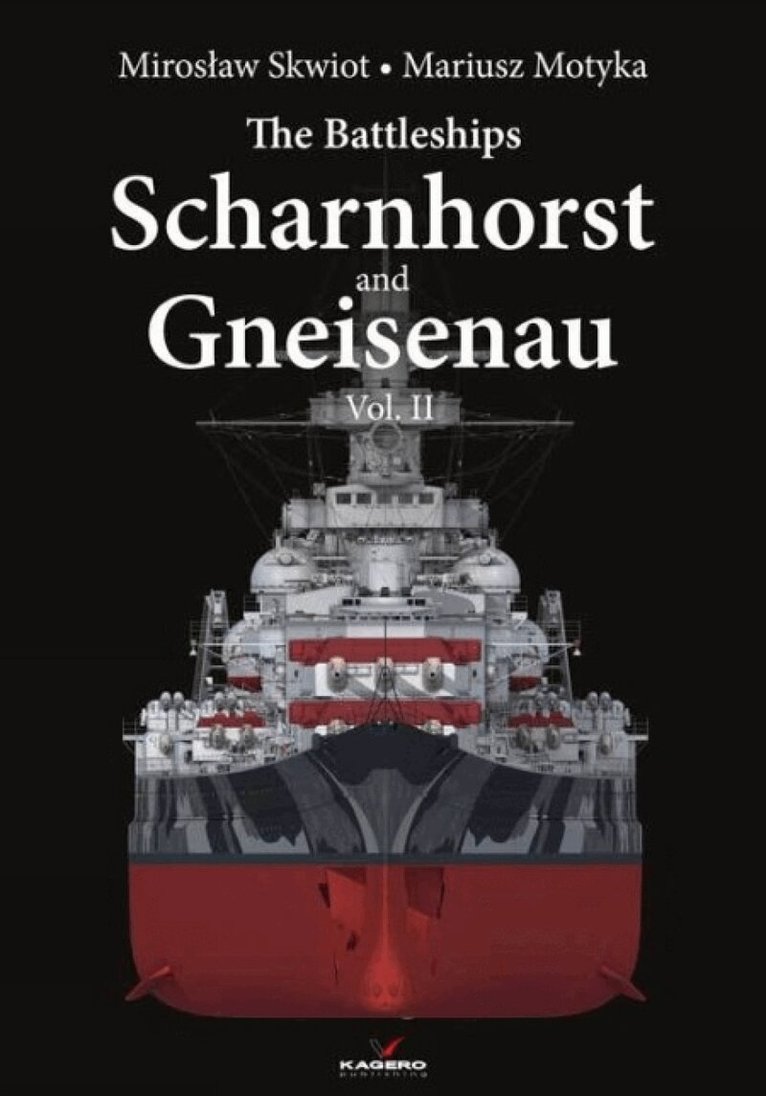
The Kriegsmarine battleships, were in fact only four vessels, introduced during 1935–1941. The first two, Scharnhorst and Gneisenau, were ready before the war and two others, Bismarck and Tirpitz, were commissioned into the fleet after it had begun. That was the biggest achievement in the arming of the German navy conducted by Hitler. Interestingly, all these ships served just a few months, from February to May 1941. In the meantime, Scharnhorst and Gneisenau were stationed in Brest, France; Bismarck was getting ready for raids on the Atlantic; and Tirpitz was finishing her sea trials and getting ready for commissioning. Scharnhorst and Gneisenau had already been through a baptism of fire, which ended with a little victory on the British sea routes. However, staying on the French coast, they constantly were under the threat of air-strikes. The career of Bismarck ended with her sinking though she had successfully attacked British convoys beforehand. As the consequence of that defeat, the German network of sources on the Atlantic was destroyed. From that moment, raids by heavy German battleships became almost impossible to carry out, and they suffered from the ever-expanding control of the Atlantic by the Allies. Despite this, Scharnhorst and Gneisenau escaped to Germany via the English Channel. This extensively illustrated volume captures the detail of these two Kriegsmarine battleships.