Mitchel Resnick – författare
Visar alla böcker från författaren Mitchel Resnick. Handla med fri frakt och snabb leverans.
11 produkter
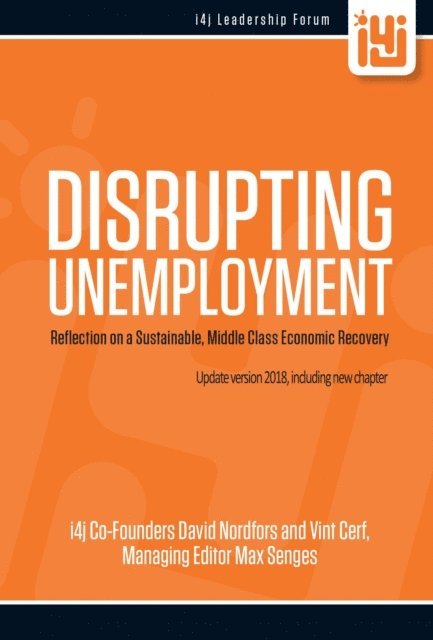
Disrupting Unemployment
Av Vint Cerf, Sven Otto Littorin m. fl.
E-bok, 2018
155 kr
Lägg i varukorg
Innovation disrupts things. Can it disrupt unemployment? Internet co-inventor Vint Cerf and David Nordfors, co-founders of i4j Innovation for Jobs, say IT and artificial intelligence should be seen as tools for tailoring meaningful new jobs for workers. In this groundbreaking book they present …
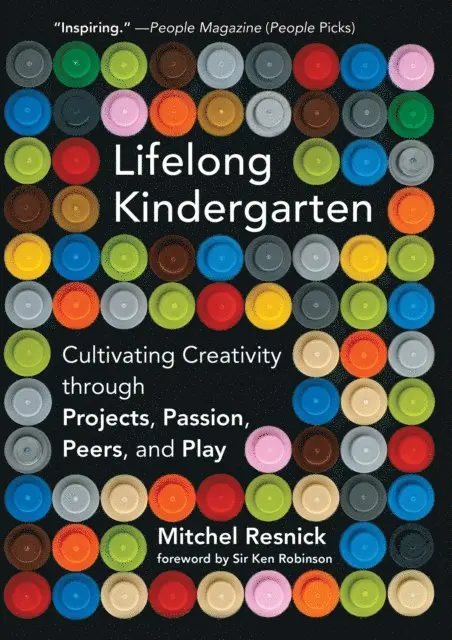
Lifelong Kindergarten
E-bok, 2017
234 kr
Lägg i varukorg
How lessons from kindergarten can help everyone develop the creative thinking skills needed to thrive in today''s society. In kindergartens these days, children spend more time with math worksheets and phonics flashcards than building blocks and finger paint. Kindergarten is becoming more like the …
Lifelong Kindergarten
Cultivating Creativity through Projects, Passion, Peers, and Play
Häftad, 2018
191 kr
Lägg i varukorg
How lessons from kindergarten can help everyone develop the creative thinking skills needed to thrive in today's society. In kindergartens these days, children spend more time with math worksheets and phonics flashcards than building blocks and finger paint. Kindergarten is becoming more like the …
Turtles, Termites, and Traffic Jams
Explorations in Massively Parallel Microworlds
Häftad, 1997
524 kr
Lägg i varukorg
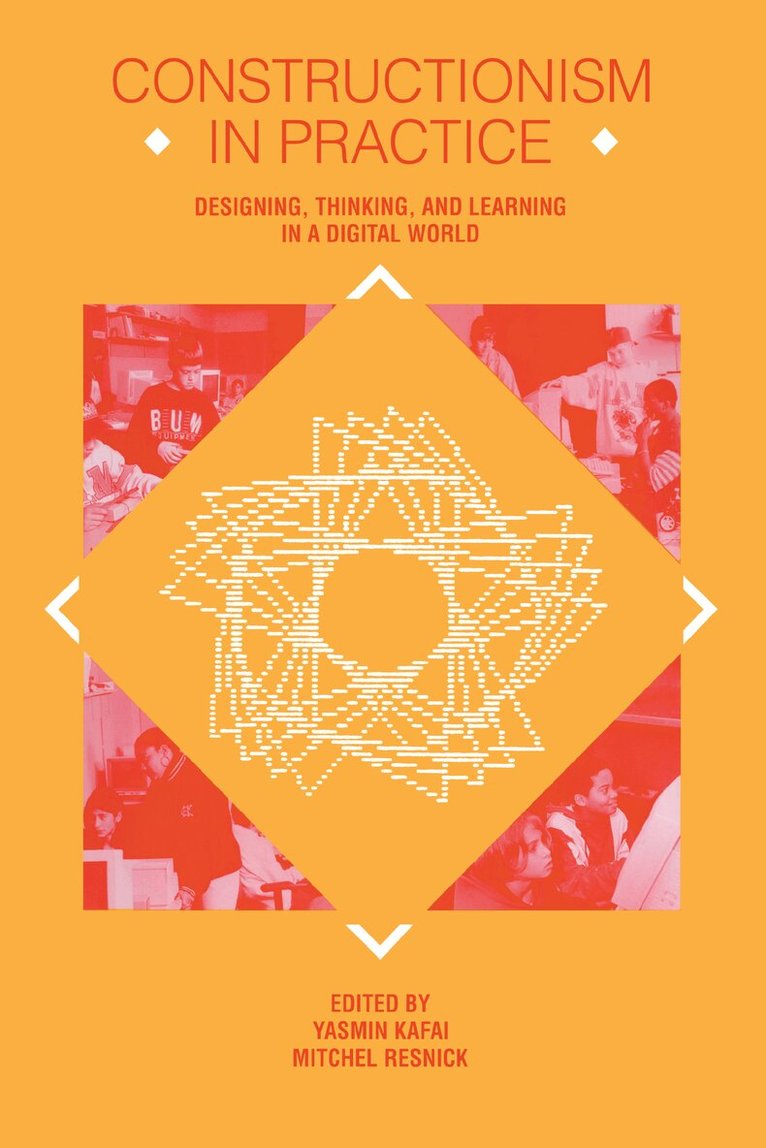
Constructionism in Practice
Designing, Thinking, and Learning in A Digital World
Av Yasmin B. Kafai, Mitchel Resnick
Inbunden, 1996
2441 kr
Lägg i varukorg
The digital revolution necessitates, but also makes possible, radical changes in how and what we learn. This book describes a set of innovative educational research projects at the MIT Media Laboratory, illustrating how new computational technologies can transform our conceptions of learning, …
Constructionism in Practice
Designing, Thinking, and Learning in A Digital World
Av Yasmin B. Kafai, Mitchel Resnick
Häftad, 1996
927 kr
Lägg i varukorg
The digital revolution necessitates, but also makes possible, radical changes in how and what we learn. This book describes a set of innovative educational research projects at the MIT Media Laboratory, illustrating how new computational technologies can transform our conceptions of learning, …
Constructionism in Practice
Designing, Thinking, and Learning in A Digital World
Av Mitchel Resnick, Yasmin B. Kafai
E-bok, 2012
976 kr
Lägg i varukorg
The digital revolution necessitates, but also makes possible, radical changes in how and what we learn. This book describes a set of innovative educational research projects at the MIT Media Laboratory, illustrating how new computational technologies can transform our conceptions of learning, …
Constructionism in Practice
Designing, Thinking, and Learning in A Digital World
Av Mitchel Resnick, Yasmin B. Kafai
E-bok, 2012
976 kr
Lägg i varukorg
The digital revolution necessitates, but also makes possible, radical changes in how and what we learn. This book describes a set of innovative educational research projects at the MIT Media Laboratory, illustrating how new computational technologies can transform our conceptions of learning, …
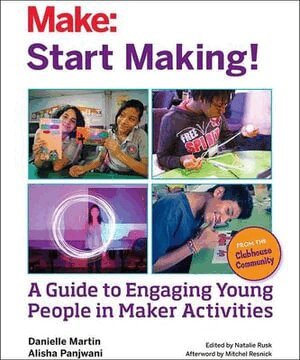
Start Making
Av Museum Martin, Alisha Panjwani m. fl.
Häftad, 2016
184 kr
Lägg i varukorg
Start Making! is a program developed by the Clubhouse Network to engage young people all over the world in Maker-inspired activities. With this guide, you will discover how to plan and coordinate Start Making! projects in your home, school, library, community center, after-school club, or …
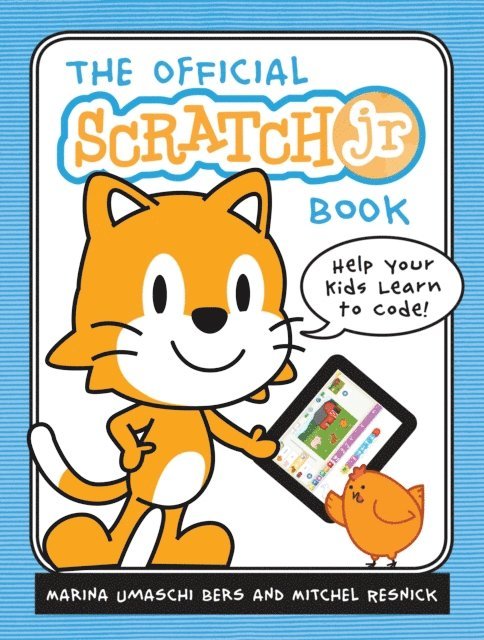
Official ScratchJr Book
Help Your Kids Learn to Code
Av Mitchel Resnick, Marina Umaschi Bers
E-bok, 2015
193 kr
Lägg i varukorg
ScratchJr is a free, introductory computer programming language that runs on iPads, Android tablets, Amazon tablets, and Chromebooks. Inspired by Scratch, the wildly popular programming language used by millions of children worldwide, ScratchJr helps even younger kids create their own playful …
Lifelong Kindergarten
Cultivating Creativity through Projects, Passion, Peers, and Play
E-bok, 2018
68 kr
Lägg i varukorg
How lessons from kindergarten can help everyone develop the creative thinking skills needed to thrive in today''s society.In kindergartens these days, children spend more time with math worksheets and phonics flashcards than building blocks and finger paint. Kindergarten is becoming more like the …