Mogens Herman Hansen – författare
Visar alla böcker från författaren . Handla med fri frakt och snabb leverans.
13 produkter
13 produkter
E-bok
PDF, Engelska, 20045 133 kr
Läs direkt efter köp
This is the first ever documented study of the 1,035 identifiable Greek city states (poleis) of the Archaic and Classical periods (c.650-325 BC). Previous studies of the Greek polis have focused on Athens and Sparta, and the result has been a view of Greek society dominated by Sophokles'', Plato''s, and Demosthenes'' view of what the polis was. This study includes descriptions of Athens and Sparta, but its main purpose is to explore thehistory and organization of the thousand other city states.The main part of the book is a regionally organized inventory of all identifiable poleis covering the Greek world from Spain to the Caucasus and from the Crimea to Libya. This inventory is the work of 47 specialists, and is divided into 46 chapters, each covering a region. Each chapter contains an account of the region, a list of second-order settlements, and an alphabetically ordered description of the poleis. This description covers such topics as polis status,territory, settlement pattern, urban centre, city walls and monumental architecture, population, military strength, constitution, alliance membership, colonization, coinage, and Panhellenic victors.The first part of the book is a description of the method and principles applied in the construction of the inventory and an analysis of some of the results to be obtained by a comparative study of the 1,035 poleis included in it. The ancient Greek concept of polis is distinguished from the modern term `city state'', which historians use to cover many other historic civilizations, from ancient Sumeria to the West African cultures absorbed by the nineteenth-century colonializingpowers. The focus of this project is what the Greeks themselves considered a polis to be.
E-bok
PDF, Engelska, 2006408 kr
Läs direkt efter köp
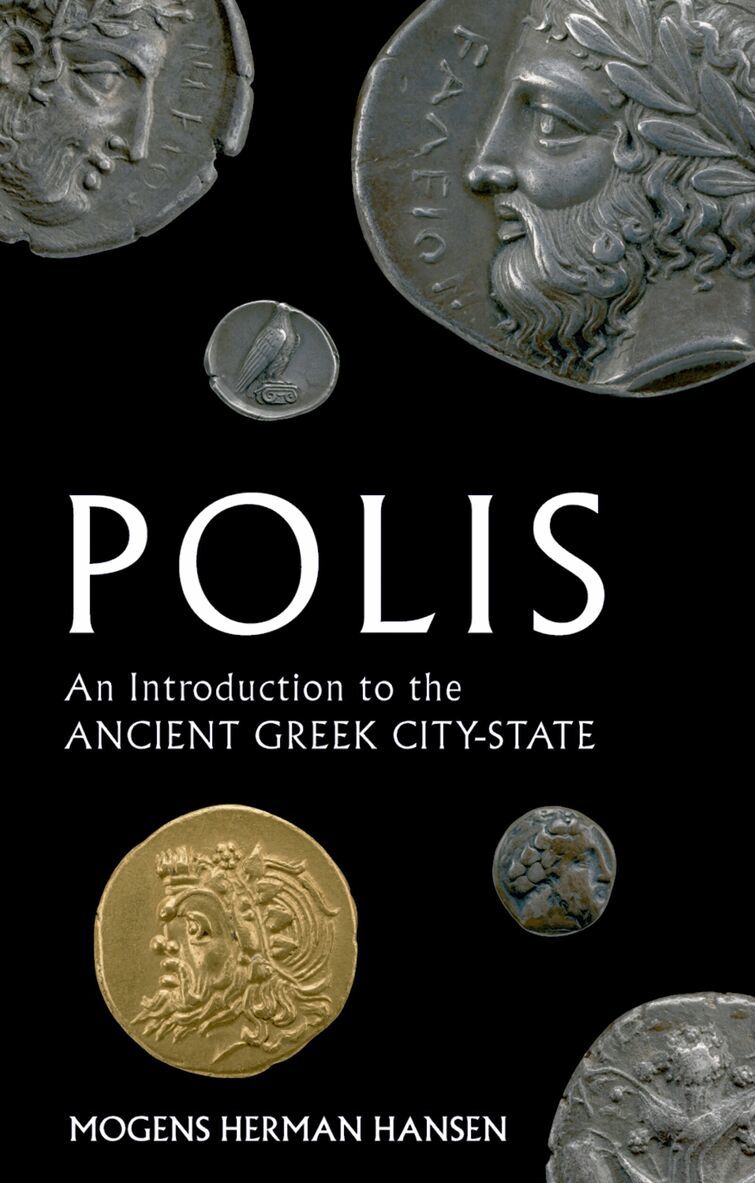
From antiquity until the nineteenth century, there have been two types of state: macro-states, each dotted with a number of cities, and regions broken up into city-states, each consisting of an urban centre and its hinterland. A region settled with interacting city-states constituted a city-state culture and Polis opens with a description of the concepts of city, state, city-state, and city-state culture, and a survey of the 37 city-state cultures so faridentified.Mogens Herman Hansen provides a thoroughly accessible introduction to the polis (plural: poleis), or ancient Greek city-state, which represents by far the largest of all city-state cultures. He addresses such topics as the emergence of the polis, its size and population, and its political organization, ranging from famous poleis such as Athens and Sparta through more than 1,000 known examples.
Inbunden, Engelska, 2004
8 032 kr
Skickas inom 7-10 vardagar
This is the first ever documented study of the 1,035 identifiable Greek city states (poleis) of the Archaic and Classical periods (c.650-325 BC). Previous studies of the Greek polis have focused on Athens and Sparta, and the result has been a view of Greek society dominated by Sophokles', Plato's, and Demosthenes' view of what the polis was. This study includes descriptions of Athens and Sparta, but its main purpose is to explore the history and organization of the thousand other city states. The main part of the book is a regionally organized inventory of all identifiable poleis covering the Greek world from Spain to the Caucasus and from the Crimea to Libya. This inventory is the work of 47 specialists, and is divided into 46 chapters, each covering a region. Each chapter contains an account of the region, a list of second-order settlements, and an alphabetically ordered description of the poleis. This description covers such topics as polis status, territory, settlement pattern, urban centre, city walls and monumental architecture, population, military strength, constitution, alliance membership, colonization, coinage, and Panhellenic victors.The first part of the book is a description of the method and principles applied in the construction of the inventory and an analysis of some of the results to be obtained by a comparative study of the 1,035 poleis included in it. The ancient Greek concept of polis is distinguished from the modern term `city state', which historians use to cover many other historic civilizations, from ancient Sumeria to the West African cultures absorbed by the nineteenth-century colonializing powers. The focus of this project is what the Greeks themselves considered a polis to be.
Inbunden, Engelska, 2006
1 500 kr
Skickas inom 5-8 vardagar
From antiquity until the nineteenth century, there have been two types of state: macro-states, each dotted with a number of cities, and regions broken up into city-states, each consisting of an urban centre and its hinterland. A region settled with interacting city-states constituted a city-state culture and Polis opens with a description of the concepts of city, state, city-state, and city-state culture, and a survey of the 37 city-state cultures so far identified. Mogens Herman Hansen provides a thoroughly accessible introduction to the polis (plural: poleis), or ancient Greek city-state, which represents by far the largest of all city-state cultures. He addresses such topics as the emergence of the polis, its size and population, and its political organization, ranging from famous poleis such as Athens and Sparta through more than 1,000 known examples.
Häftad, Engelska, 2006
510 kr
Skickas inom 5-8 vardagar
From antiquity until the nineteenth century, there have been two types of state: macro-states, each dotted with a number of cities, and regions broken up into city-states, each consisting of an urban centre and its hinterland. A region settled with interacting city-states constituted a city-state culture and Polis opens with a description of the concepts of city, state, city-state, and city-state culture, and a survey of the 37 city-state cultures so far identified. Mogens Herman Hansen provides a thoroughly accessible introduction to the polis (plural: poleis), or ancient Greek city-state, which represents by far the largest of all city-state cultures. He addresses such topics as the emergence of the polis, its size and population, and its political organization, ranging from famous poleis such as Athens and Sparta through more than 1,000 known examples.
Häftad, Engelska, 1999
285 kr
Skickas inom 10-15 vardagar
The Athenian democracy of the fifth and fourth centuries B.C. is the most famous and perhaps the most nearly perfect example of direct democracy. Covering the period 403-322 B.C., Mogens Herman Hansen focuses on the crucial last thirty years, which coincided with the political career of Demosthenes. Hansen distinguishes between the city's seven political institutions: the Assembly, the nomothetai, the People's Court, the boards of magistrates, the Council of Five Hundred, the Areopagos, and ho boulomenos. He discusses how Athenians conceived liberty both as the ability to participate in the decision-making process and as the right to live without oppression from the state or other citizens.
Häftad, Engelska, 1998
522 kr
Skickas inom 10-15 vardagar
This history of Athenian democracy covers the period 403-322 BC, and focuses in particular on the crucial last thirty years which coincided with the political career of Demosthenes and ended with his suicide in 322. It examines Athenian democracy both as a political system and as an ideology. In describing the former it distinguishes between the three major decision-making organs (the Assembly,the Legislators and the People's Courts) and the magistrates who were responsible for preparing the agenda for the legislature and also for carrying its decisions into effect. In discussing Athenian democratic ideology, the book also makes the important distinction between the ideals held by the democrats themselves and those imputed to them by the critics of democracy. The Athenians conceived of liberty both as the ability to participate in the decision-making process, and as the privilege to live without oppression from state or other citizens. Equality was not considered as an equality of nature, but as one of opportunity.
E-bok
PDF, Tyska, 20141 184 kr
Läs direkt efter köp
Keine ausführliche Beschreibung für "Die Athenische Demokratie im Zeitalter des Demosthenes" verfügbar.
E-bok
PDF, Engelska, 2015713 kr
Läs direkt efter köp
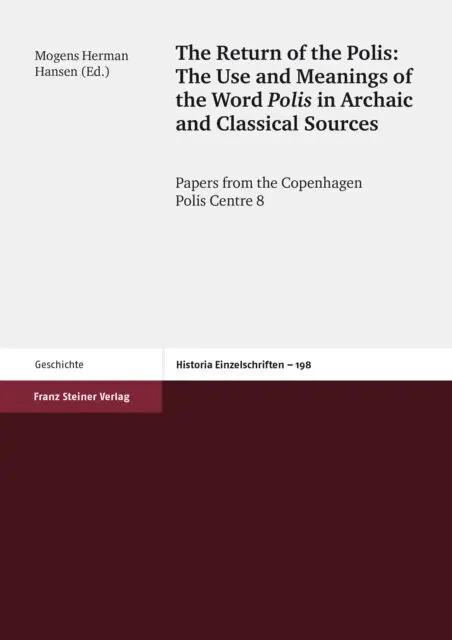
Polis, in plural poleis, is the word the ancient Greeks used to describe their principal type of state and community and the most common of all nouns in ancient Greek. In Archaic and Classical sources there are over 11,000 attestations of the word, and they show that it was used in two different senses: (1) town (sometimes including the hinterland) and (2) state (sometimes including the territory). Often it carries both senses simultaneously and denotes both the state and its urban centre. The Copenhagen Polis Centre (1993 2005) conducted a number of investigations into the use and meanings of the term polis in all Archaic and Classical sources to find out what the Greeks thought a polis was. The present volume is a thoroughly revised and updated comprehensive publication of all these studies, to which four new studies have been added. They show that the two different meanings of the word polis are connected through their reference: with very few exceptions every polis town was the urban centre of a polis state, and conversely: virtually every polis state had an urban centre called a polis in the sense of town.
E-bok
PDF, Engelska, 2017446 kr
Läs direkt efter köp
Contents:F. de Polignac: Repenser la "e;cite"e;? Rituels et societe en Grece archaique M. H. Hansen: The "e;Autonomous City-State"e;. Ancient Fact or Modern Fiction? M. H. Hansen: Kome. A Study in How the Greeks Designated and Classified Settlements which were not Poleis T. H. Nielsen: Was Eutaia a Polis? A Note on Xenophon's Use of the Term Polis in the Hellenika P. Flensted-Jensen: The Bottiaians and their Poleis S. G. Miller: Old Metroon and Old Bouleuterion in the Classical Agora of Athens T. L. Shear, Jr.: Bouleuterion, Metroon and the Archives at Athens A. Avram: Poleis und Nicht-Poleis im Ersten und Zweiten Attischen Seebund W. Burkert: Greek Poleis and Civic Cults. Some Further Thoughts L. Rubinstein: Pausanias as a Source for the Classical Greek Polis
Häftad, Danska, 2008
299 kr
Skickas inom 11-20 vardagar
Inbunden, Engelska, 2013
380 kr
Skickas inom 11-20 vardagar
Häftad, Engelska, 2004
365 kr
Skickas inom 11-20 vardagar
Den oldgræske bystatskultur