Mogens Laerke – författare
Visar alla böcker från författaren Mogens Laerke. Handla med fri frakt och snabb leverans.
13 produkter
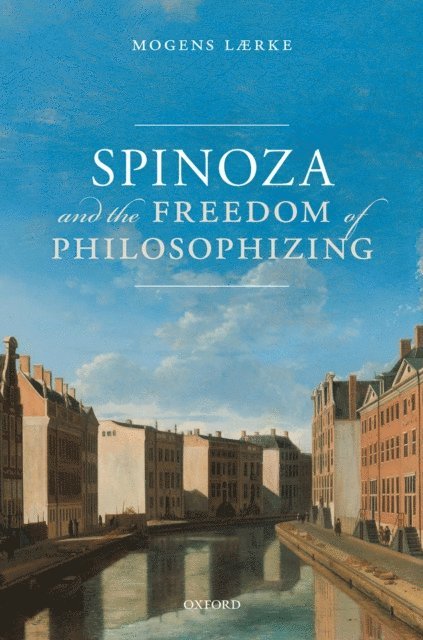
Spinoza and the Freedom of Philosophizing
E-bok, 2021
1489 kr
Lägg i varukorg
Spinoza and the Freedom of Philosophizing is a study of freedom of speech, good government, civic responsibility, public education, and the foundations of religion and society, as seen through the eyes of seventeenth-century Dutch philosopher Spinoza. During the Golden Age of the Dutch Republic, a …
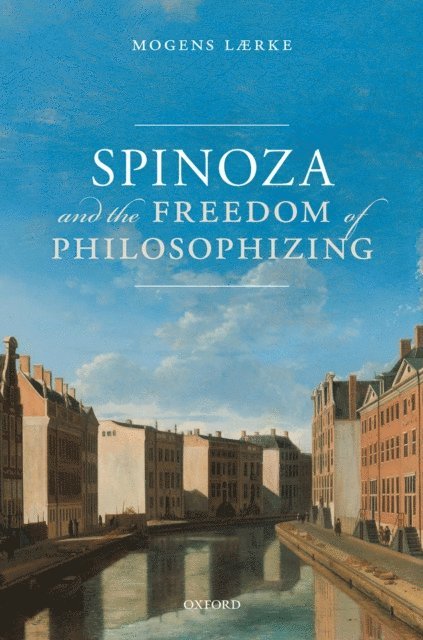
Spinoza and the Freedom of Philosophizing
E-bok, 2021
1489 kr
Lägg i varukorg
Spinoza and the Freedom of Philosophizing is a study of freedom of speech, good government, civic responsibility, public education, and the foundations of religion and society, as seen through the eyes of seventeenth-century Dutch philosopher Spinoza. During the Golden Age of the Dutch Republic, a …
Spinoza and the Freedom of Philosophizing
Av Mogens Lærke
Inbunden, 2021
1754 kr
Lägg i varukorg
Spinoza and the Freedom of Philosophizing is a study of freedom of speech, good government, civic responsibility, public education, and the foundations of religion and society, as seen through the eyes of seventeenth-century Dutch philosopher Spinoza. During the Golden Age of the Dutch Republic, a …
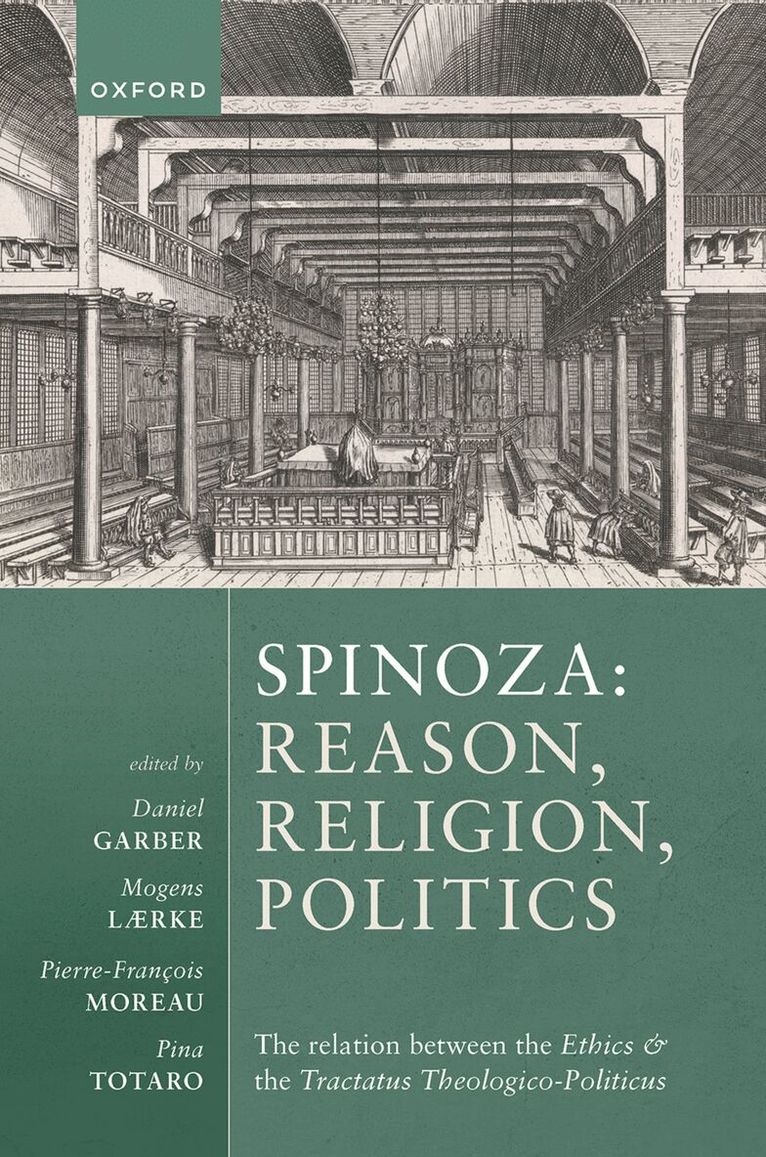
Spinoza: Reason, Religion, Politics
The relation between the Ethics and the Tractatus Theologico-Politicus
Av Daniel Garber, Mogens Lærke
Inbunden, 2024
1682 kr
Lägg i varukorg
At his death, Spinoza left two major works, very different from one another. The first is the Ethics, rigorously set out in geometrical terms, with definitions, axioms, and theorems. In the Ethics, Spinoza takes the reader down the path of reason to an ultimate beatitude, a rational salvation, a …
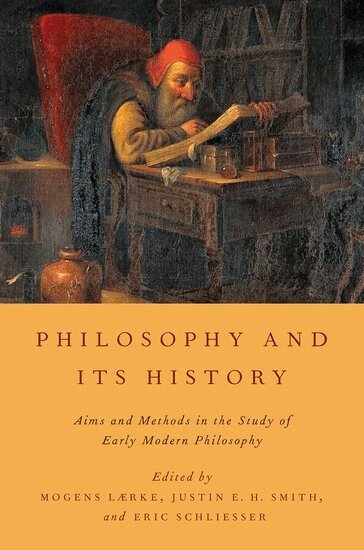
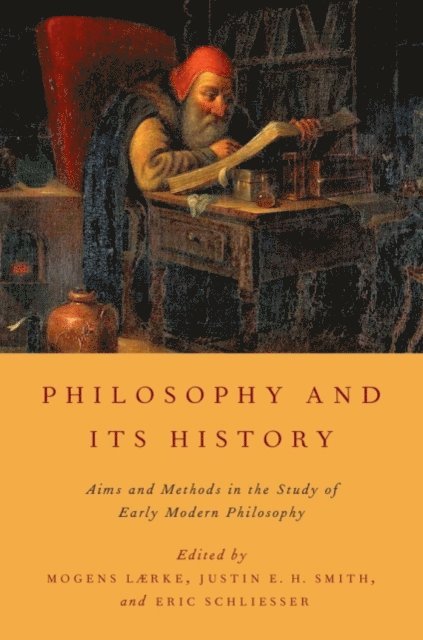
Philosophy and Its History
Aims and Methods in the Study of Early Modern Philosophy
Inbunden, 2013
2189 kr
Lägg i varukorg
This volume collects contributions from leading scholars of early modern philosophy from a wide variety of philosophical and geographic backgrounds. The distinguished contributors offer very different, competing approaches to the history of philosophy.Many chapters articulate new, detailed methods …
Philosophy and Its History
Aims and Methods in the Study of Early Modern Philosophy
Av Eric Schliesser, Justin E. H. Smith m. fl.
E-bok, 2013
603 kr
Lägg i varukorg
This volume collects contributions from leading scholars of early modern philosophy from a wide variety of philosophical and geographic backgrounds. The distinguished contributors offer very different, competing approaches to the history of philosophy. Many chapters articulate new, detailed methods …
Philosophy and Its History
Aims and Methods in the Study of Early Modern Philosophy
Av Mogens Laerke, Justin E. H. Smith m. fl.
Häftad, 2013
860 kr
Lägg i varukorg
This volume collects contributions from leading scholars of early modern philosophy from a wide variety of philosophical and geographic backgrounds. The distinguished contributors offer very different, competing approaches to the history of philosophy.Many chapters articulate new, detailed methods …
Historiographies of Philosophy 1800-1950
E-bok, 2023
746 kr
Lägg i varukorg
This volume discusses ways in which the history of philosophy has been written, from 1800 to 1950, and how it has been informed and guided by institutional, cultural, political, philosophical, and non-philosophical factors. Since its inception as a discipline, histories of philosophy have been …
Historiographies of Philosophy 1800-1950
E-bok, 2023
762 kr
Lägg i varukorg
This volume discusses ways in which the history of philosophy has been written, from 1800 to 1950, and how it has been informed and guided by institutional, cultural, political, philosophical, and non-philosophical factors. Since its inception as a discipline, histories of philosophy have been …
Historiographies of Philosophy 1800–1950
Inbunden, 2023
2512 kr
Lägg i varukorg
This volume discusses ways in which the history of philosophy has been written, from 1800 to 1950, and how it has been informed and guided by institutional, cultural, political, philosophical, and non-philosophical factors. Since its inception as a discipline, histories of philosophy have been …
Historiographies of Philosophy 1800–1950
Häftad, 2024
648 kr
Lägg i varukorg
This volume discusses ways in which the history of philosophy has been written, from 1800 to 1950, and how it has been informed and guided by institutional, cultural, political, philosophical, and non-philosophical factors. Since its inception as a discipline, histories of philosophy have been …
Philosophy of the Young Leibniz
Av David Snyder, Mogens Laerke m. fl.
E-bok, 2014
471 kr
Lägg i varukorg
The volume gathers a selection of nineteen contributions from an international conference on the seventeenth-century philosopher G. W. Leibniz held at Rice University in Houston. It focuses on the writings by the young Leibniz on a variety of subjects such as mathematics, physics, metaphysics, …
Use of Censorship in the Enlightenment
Inbunden, 2009
2786 kr
Lägg i varukorg
The ambition is of this volume to study the role censorship played in the intellectual culture of the seventeenth and eighteenth centuries, how it was implemented, and how it affected the development philosophy and literary writing. It contains contributions by intellectual historians, philosophers …