Mohammed Ouassaid – författare
Visar alla böcker från författaren Mohammed Ouassaid. Handla med fri frakt och snabb leverans.
5 produkter
5 produkter
Del 434 - Studies in Systems, Decision and Control
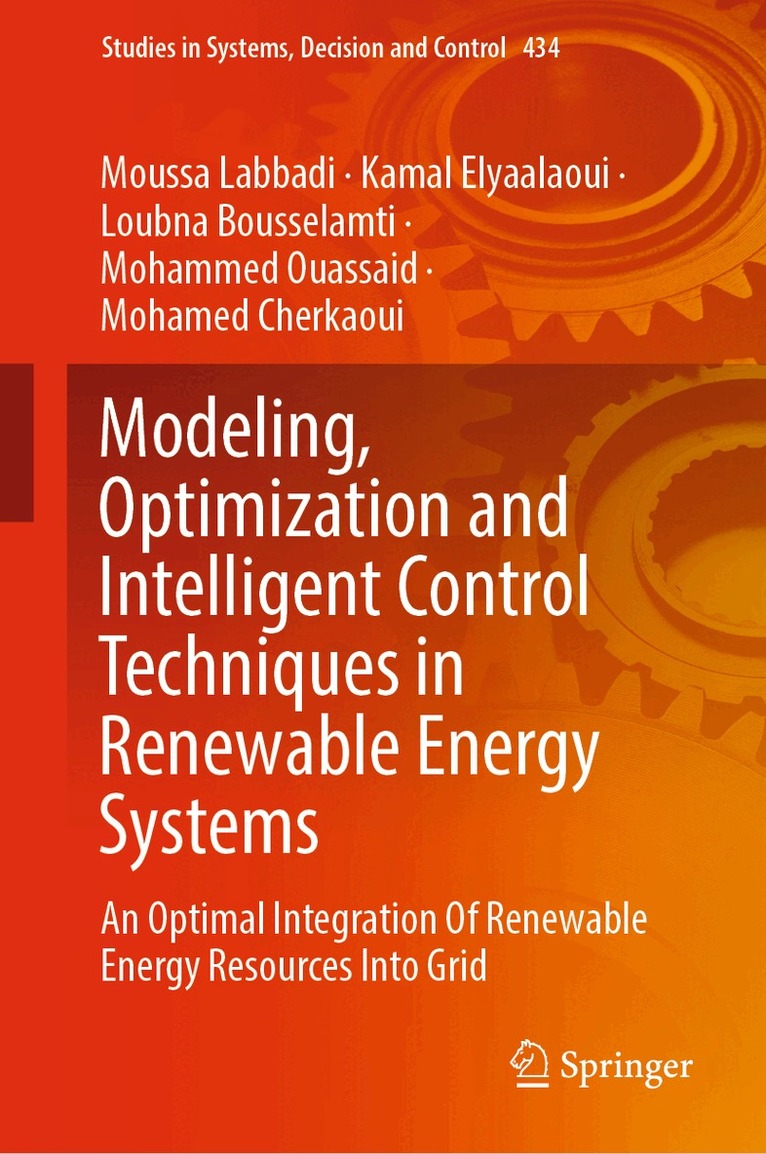
Modeling, Optimization and Intelligent Control Techniques in Renewable Energy Systems
An Optimal Integration Of Renewable Energy Resources Into Grid
Inbunden, Engelska, 2022
1 416 kr
Skickas inom 10-15 vardagar
This book consists of two parts. The first part studies selected recent developed strategies of control and management for renewable energy resources. The strategies of control are tested in the presence of unbalance power, voltage faults, frequency deviation, wind speed variation and parametric uncertainties. The second part is especially focused on study of hybrid photovoltaic (PV)-Concentrated solar power (CSP) coupled to a thermal storage system. It gathers a set of chapters covering recent survey literature, modelling and optimization of hybrid PV-CSP power plants. In this part, a detailed model of hybrid PV-CSP with thermal storage system is presented and smart optimization techniques like particle swarm optimization (PSO) and genetic algorithm (GA) are also described and used to optimally design the hybrid PV-CSP renewable energy system. The book would be interesting to most academic undergraduate, postgraduates, researchers on renewable energy systems in terms of modeling, optimization and control, as well as the satisfaction of grid code requirements. Also, it provides an excellent background to renewable energy sources, it is an excellent choice for energy engineers, researchers, system operators, and graduate students. This book can used as a good reference for the academic research on the smart grid, power control, integration of renewable energy sources, and related to this or used in Ph.D study of control, optimisation, management problems and their application in field engineering.
E-bok
Engelska, 20221 672 kr
Läs direkt efter köp
This book consists of two parts. The first part studies selected recent developed strategies of control and management for renewable energy resources. The strategies of control are tested in the presence of unbalance power, voltage faults, frequency deviation, wind speed variation and parametric uncertainties. The second part is especially focused on study of hybrid photovoltaic (PV)-Concentrated solar power (CSP) coupled to a thermal storage system. It gathers a set of chapters covering recent survey literature, modelling and optimization of hybrid PV-CSP power plants. In this part, a detailed model of hybrid PV-CSP with thermal storage system is presented and smart optimization techniques like particle swarm optimization (PSO) and genetic algorithm (GA) are also described and used to optimally design the hybrid PV-CSP renewable energy system. The book would be interesting to most academic undergraduate, postgraduates, researchers on renewable energy systems in terms of modeling, optimization and control, as well as the satisfaction of grid code requirements. Also, it provides an excellent background to renewable energy sources, it is an excellent choice for energy engineers, researchers, system operators, and graduate students. This book can used as a good reference for the academic research on the smart grid, power control, integration of renewable energy sources, and related to this or used in Ph.D study of control, optimisation, management problems and their application in field engineering.
Del 434 - Studies in Systems, Decision and Control
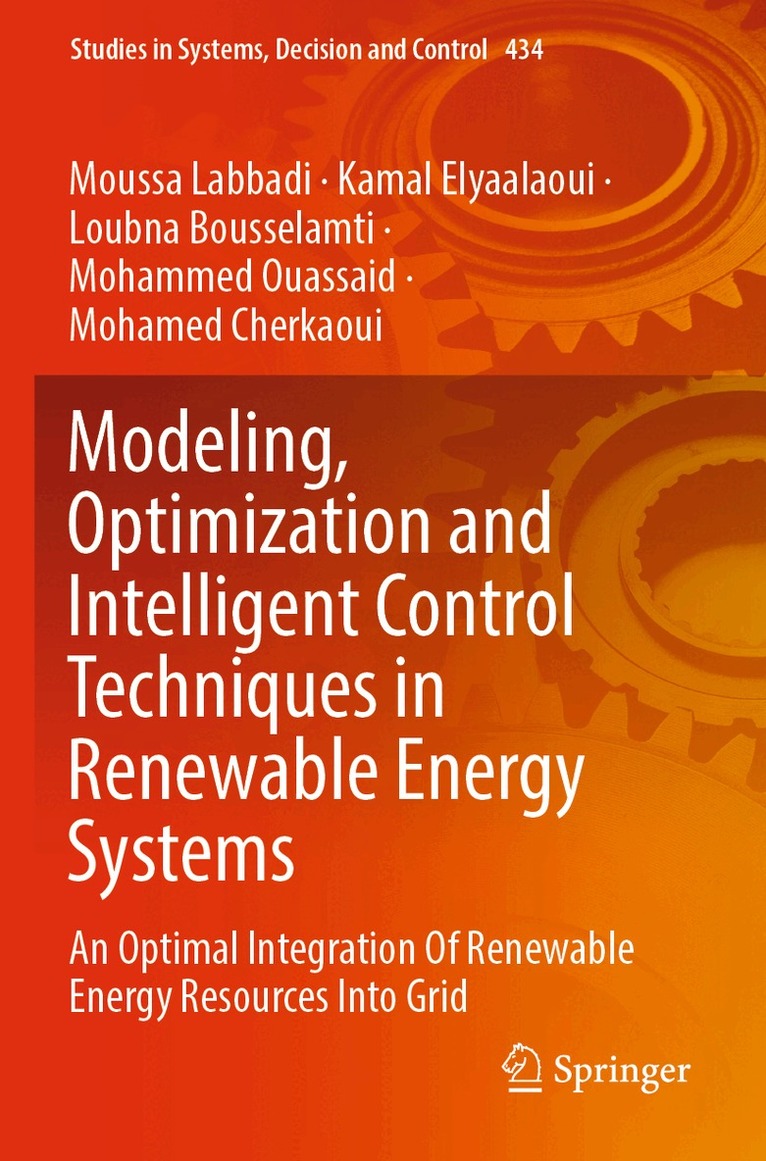
Modeling, Optimization and Intelligent Control Techniques in Renewable Energy Systems
An Optimal Integration Of Renewable Energy Resources Into Grid
Häftad, Engelska, 2023
1 416 kr
Skickas inom 10-15 vardagar
This book consists of two parts. The first part studies selected recent developed strategies of control and management for renewable energy resources. The strategies of control are tested in the presence of unbalance power, voltage faults, frequency deviation, wind speed variation and parametric uncertainties. The second part is especially focused on study of hybrid photovoltaic (PV)-Concentrated solar power (CSP) coupled to a thermal storage system. It gathers a set of chapters covering recent survey literature, modelling and optimization of hybrid PV-CSP power plants. In this part, a detailed model of hybrid PV-CSP with thermal storage system is presented and smart optimization techniques like particle swarm optimization (PSO) and genetic algorithm (GA) are also described and used to optimally design the hybrid PV-CSP renewable energy system. The book would be interesting to most academic undergraduate, postgraduates, researchers on renewable energy systems in terms of modeling, optimization and control, as well as the satisfaction of grid code requirements. Also, it provides an excellent background to renewable energy sources, it is an excellent choice for energy engineers, researchers, system operators, and graduate students. This book can used as a good reference for the academic research on the smart grid, power control, integration of renewable energy sources, and related to this or used in Ph.D study of control, optimisation, management problems and their application in field engineering.
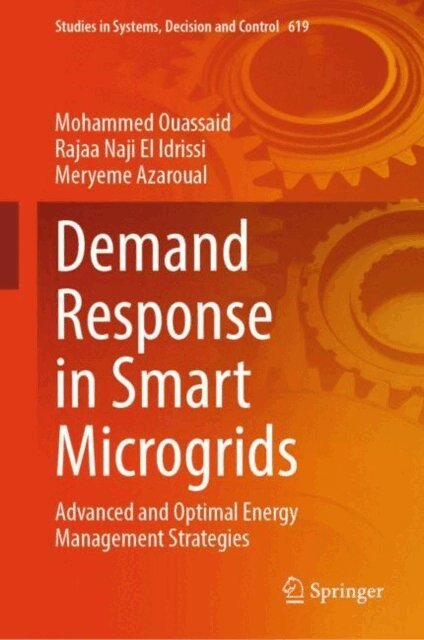
Del 619 - Studies in Systems, Decision and Control
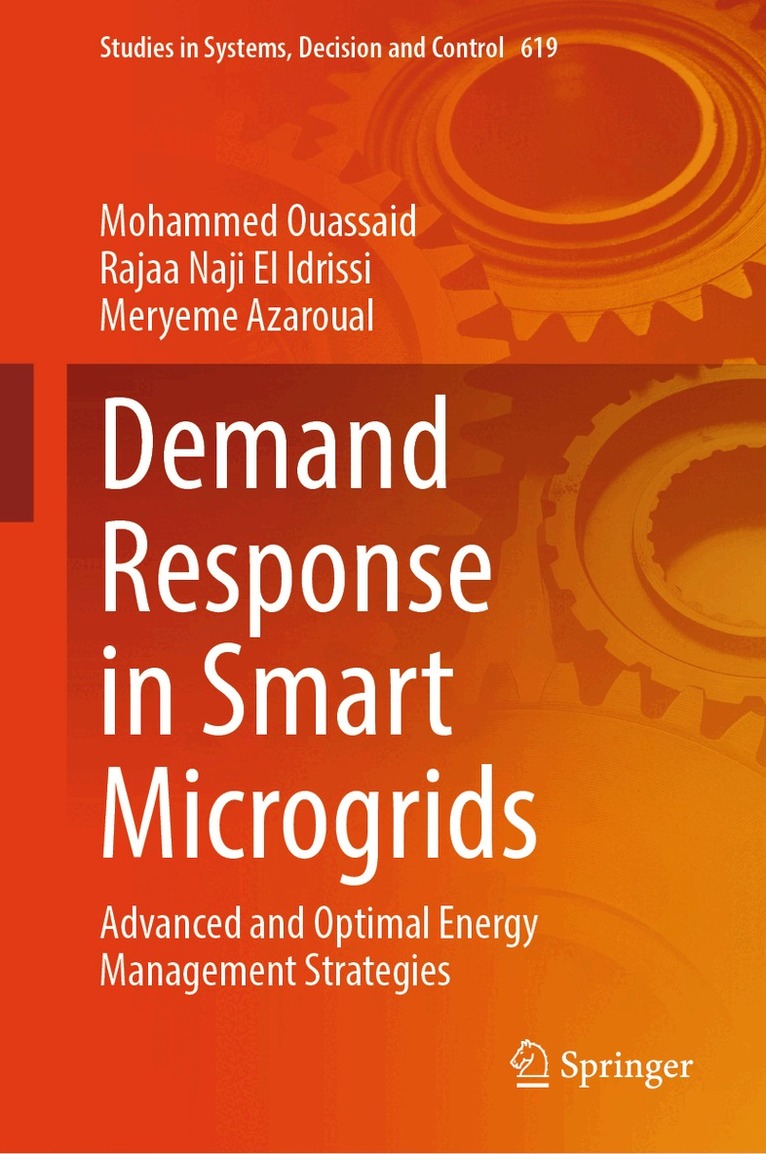
Demand Response in Smart Microgrids
Advanced and Optimal Energy Management Strategies
Inbunden, Engelska, 2025
1 741 kr
Skickas inom 10-15 vardagar
This book covers the optimization of the energy flow management of a grid-tied photovoltaic-wind-battery energy storage system and the development of demand response algorithms for a single customer at the lowest level and extended it to a large community of participants at the highest level. Hence, this book consists of two parts. The first part is devoted to the design of energy management strategies for a residential PV-WT system, while considering time of use and feed in tariff schemes. Further, the developed management algorithms mitigate the greenhouse gas emissions. Additionally, a closed-loop control based-model predictive control scheme, to forecast the system behavior and deal with renewable energy resources and load disturbances, is elaborated. The second part is dedicated to developing effective demand side management techniques and cooperative energy scheduling in the framework of collective smart-buildings. Cooperative energy scheduling programs are designed while considering three objectives: minimizing peak load, minimizing electricity cost, and avoiding the occurrence of rebound peaks. Optimal consumption decisions are examined in residential, commercial, and industrial areas. Besides, the impact of electric vehicle charging methods is investigated for different EV penetration levels. Also, a game theory approach for energy consumption scheduling of a community of smart microgrids is built. In summary, this book successfully establishes the important synergy between microgrid energy management and demand response at the level of a smart home and an aggregated building community. The above aspects are illustrated in this book in 12 chapters. The scope is broad. This book chapters are very effective in theoretical analysis and design of optimization algorithms in the realm of smart grids. This book is intended to provide advanced undergraduate, graduate students, engineers, researchers on energy management within smart homes and clustered buildings, with a comprehensive understanding of various methods and designed algorithms. These strategies and algorithms aim to deal with defies ranging from augmented adoption of microgrids to the introduction of demand response approaches, to enhance the grid viability and resilience.
E-bok
Engelska, 20252 130 kr
Läs direkt efter köp
This book covers the optimization of the energy flow management of a grid-tied photovoltaic-wind-battery energy storage system and the development of demand response algorithms for a single customer at the lowest level and extended it to a large community of participants at the highest level. Hence, this book consists of two parts. The first part is devoted to the design of energy management strategies for a residential PV-WT system, while considering time of use and feed in tariff schemes. Further, the developed management algorithms mitigate the greenhouse gas emissions. Additionally, a closed-loop control based-model predictive control scheme, to forecast the system behavior and deal with renewable energy resources and load disturbances, is elaborated. The second part is dedicated to developing e?ective demand side management techniques and cooperative energy scheduling in the framework of collective smart-buildings. Cooperative energy scheduling programs are designed while considering three objectives: minimizing peak load, minimizing electricity cost, and avoiding the occurrence of rebound peaks. Optimal consumption decisions are examined in residential, commercial, and industrial areas. Besides, the impact of electric vehicle charging methods is investigated for di?erent EV penetration levels. Also, a game theory approach for energy consumption scheduling of a community of smart microgrids is built. In summary, this book successfully establishes the important synergy between microgrid energy management and demand response at the level of a smart home and an aggregated building community. The above aspects are illustrated in this book in 12 chapters. The scope is broad. This book chapters are very effective in theoretical analysis and design of optimization algorithms in the realm of smart grids. This book is intended to provide advanced undergraduate, graduate students, engineers, researchers on energy management within smart homes and clustered buildings, with a comprehensive understanding of various methods and designed algorithms. These strategies and algorithms aim to deal with defies ranging from augmented adoption of microgrids to the introduction of demand response approaches, to enhance the grid viability and resilience.