Molly H. Bassett – författare
Visar alla böcker från författaren Molly H. Bassett. Handla med fri frakt och snabb leverans.
6 produkter
6 produkter
2 203 kr
Skickas inom 10-15 vardagar
In popular imagination, saints exhibit the best characteristics of humanity, universally recognizable but condensed and embodied in an individual. Recent scholarship has asked an array of questions concerning the historical and social contexts of sainthood, and opened new approaches to its study. What happens when the category of sainthood is interrogated and inflected by the problematic category of race? Sainthood and Race: Marked Flesh, Holy Flesh explores this complicated relationship by examining two distinct characteristics of the saint’s body: the historicized, marked flesh and the universal, holy flesh. The essays in this volume comment on this tension between particularity and universality by combining both theoretical and ethnographic studies of saints and race across a wide range of subjects within the humanities. Additionally, the book’s group of emerging and established religion scholars enhances this discussion of sainthood and race by integrating topics such as gender, community, and colonialism across a variety of historical, geographical, and religious contexts. This volume raises provocative questions for scholars and students interested in the intersection of religion and race today.
722 kr
Skickas inom 10-15 vardagar
In popular imagination, saints exhibit the best characteristics of humanity, universally recognizable but condensed and embodied in an individual. Recent scholarship has asked an array of questions concerning the historical and social contexts of sainthood, and opened new approaches to its study. What happens when the category of sainthood is interrogated and inflected by the problematic category of race? Sainthood and Race: Marked Flesh, Holy Flesh explores this complicated relationship by examining two distinct characteristics of the saint’s body: the historicized, marked flesh and the universal, holy flesh. The essays in this volume comment on this tension between particularity and universality by combining both theoretical and ethnographic studies of saints and race across a wide range of subjects within the humanities. Additionally, the book’s group of emerging and established religion scholars enhances this discussion of sainthood and race by integrating topics such as gender, community, and colonialism across a variety of historical, geographical, and religious contexts. This volume raises provocative questions for scholars and students interested in the intersection of religion and race today.
367 kr
Skickas inom 5-8 vardagar
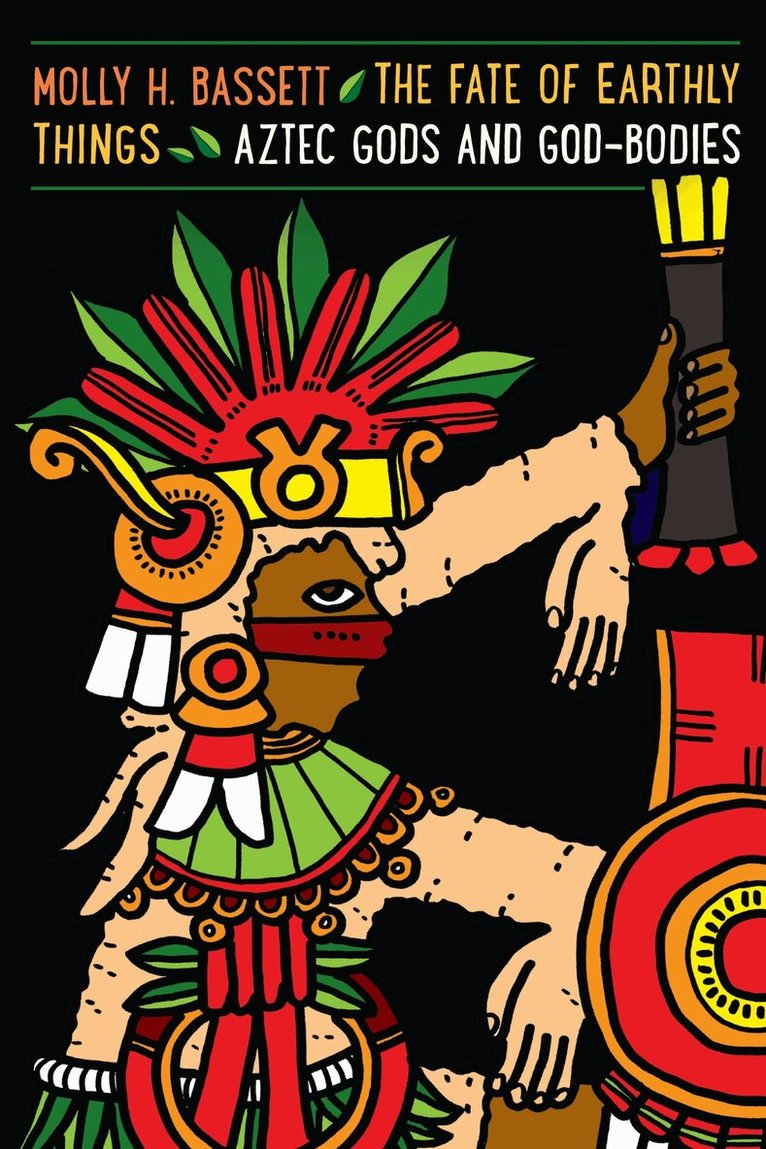
Following their first contact in 1519, accounts of Aztecs identifying Spaniards as gods proliferated. But what exactly did the Aztecs mean by a “god” (teotl), and how could human beings become gods or take on godlike properties? This sophisticated, interdisciplinary study analyzes three concepts that are foundational to Aztec religion-teotl (god), teixiptla (localized embodiment of a god), and tlaquimilolli (sacred bundles containing precious objects)-to shed new light on the Aztec understanding of how spiritual beings take on form and agency in the material world.In The Fate of Earthly Things, Molly Bassett draws on ethnographic fieldwork, linguistic analyses, visual culture, and ritual studies to explore what ritual practices such as human sacrifice and the manufacture of deity embodiments (including humans who became gods), material effigies, and sacred bundles meant to the Aztecs. She analyzes the Aztec belief that wearing the flayed skin of a sacrificial victim during a sacred rite could transform a priest into an embodiment of a god or goddess, as well as how figurines and sacred bundles could become localized embodiments of gods. Without arguing for unbroken continuity between the Aztecs and modern speakers of Nahuatl, Bassett also describes contemporary rituals in which indigenous Mexicans who preserve costumbres (traditions) incorporate totiotzin (gods) made from paper into their daily lives. This research allows us to understand a religious imagination that found life in death and believed that deity embodiments became animate through the ritual binding of blood, skin, and bone.
535 kr
Kommande
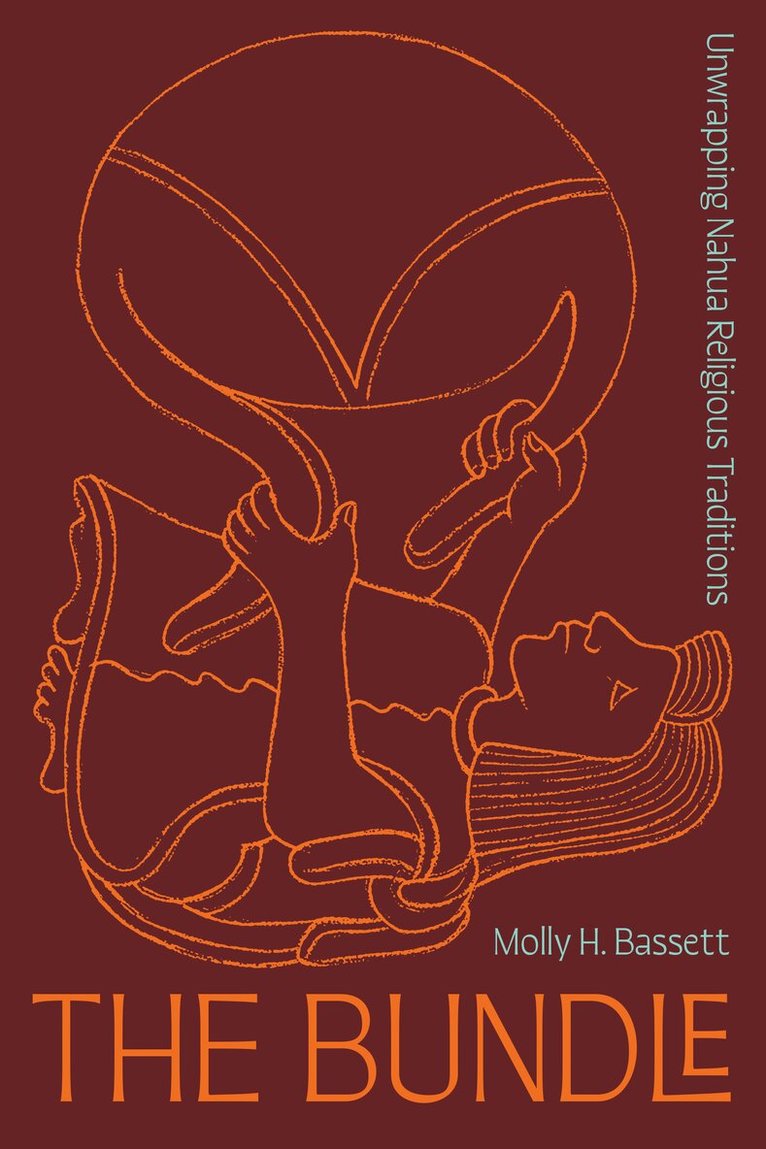
An examination of the importance of Nahua sacred bundles, emphasizing their impact on power dynamics, language, and culture in the Nahua religious tradition.The Bundle is a deep scholarly meditation on tlaquimilolli, key religious objects of Mexico's Indigenous Nahua, formerly "Aztec," people. These sacred bundles, depicted across Nahua iconography, contained objects associated with the gods and their deeds and were believed to be their embodiments. Drawing on Indigenous sources, Molly Bassett tells the story of the tlaquimilolli's origins and significance, critically examines previous interpretations, and argues that the form of the tlaquimilolli—not just their contents—is a key to understanding Nahua cosmology.Bassett turns to Indigenous scholarhip to interrogate and "unwrap" accepted narratives, taking the sacred bundle itself as a model for theorizing the world. She attends to tlaquimilolli in the context of glyphs and poetry, ritual and ordinary activity, and ceremonial structures. In revealing ways, the material properties of tlaquimilolli were reflected in the architecture of major temples and key cities, like Tenochtitlan. Bundling was also closely entwined with relationships between caretakers and their dependents. These prosaic attachments cast both sacred objects and Nahua sociability in new light, challenging existing interpretations of Nahua religious traditions.
1 093 kr
Skickas inom 5-8 vardagar
Indigenous Religious Traditions in Five Minutes aims to answer many of the questions that come to mind when we think about the religious lives of Native and Indigenous peoples of the world. Scholars from many fields answer dozens of questions about a wide variety of specific Indigenous religious traditions and an array of the ideas, practices, and beliefs many people associate with them. Do Native peoples have creator Gods? What is shamanism? Why are there so many spellings of voodoo? Is Paganism considered an Indigenous religious tradition? We also interrogate the concept of Indigenous religious traditions, by asking what the phrase means in relation to the larger fields of Native American and Indigenous Studies and Religious Studies, whether all religions were at some point indigenous, and what the value of studying Indigenous religious traditions is today. Specialists respond to questions like these and many others in easily accessible language and provide references for further exploration, making this volume useful for personal study or classroom use.
399 kr
Skickas inom 5-8 vardagar
Indigenous Religious Traditions in Five Minutes aims to answer many of the questions that come to mind when we think about the religious lives of Native and Indigenous peoples of the world. Scholars from many fields answer dozens of questions about a wide variety of specific Indigenous religious traditions and an array of the ideas, practices, and beliefs many people associate with them. Do Native peoples have creator Gods? What is shamanism? Why are there so many spellings of voodoo? Is Paganism considered an Indigenous religious tradition? We also interrogate the concept of Indigenous religious traditions, by asking what the phrase means in relation to the larger fields of Native American and Indigenous Studies and Religious Studies, whether all religions were at some point indigenous, and what the value of studying Indigenous religious traditions is today. Specialists respond to questions like these and many others in easily accessible language and provide references for further exploration, making this volume useful for personal study or classroom use.