Monica Casper - Böcker
Visar alla böcker från författaren Monica Casper. Handla med fri frakt och snabb leverans.
6 produkter
6 produkter
2 705 kr
Skickas inom 10-15 vardagar
This college-level handbook offers a comprehensive and accessible overview of sociological and cultural perspectives on the human body. Organized along the lines of a standard anatomical textbook delineated by body parts and processes, this volume subverts the expected content in favor of providing tools for social and cultural analysis. Students will learn about the human body in its social, cultural, and political contexts, with emphasis on multiple, contested meanings of the body, body parts, and systems. Case studies, examples, and discussion questions are both US-based and international. Advancing critical body studies, the book explicitly discusses bodies in relation to race, class, gender, sexuality, ability, age, health, geography, and citizenship status. The framing is sociological rather than biomedical, attentive to cultural meanings, institutional practices, politics, and social problems. The authors use commonly understood anatomical frames to discuss social, cultural, political, and ethical issues concerning embodiment.
729 kr
Skickas inom 10-15 vardagar
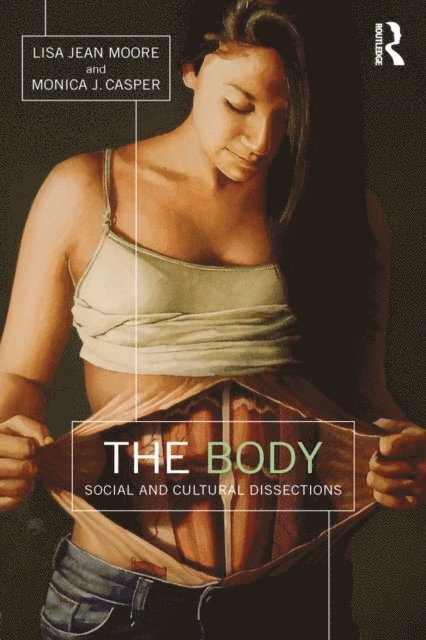
This college-level handbook offers a comprehensive and accessible overview of sociological and cultural perspectives on the human body. Organized along the lines of a standard anatomical textbook delineated by body parts and processes, this volume subverts the expected content in favor of providing tools for social and cultural analysis. Students will learn about the human body in its social, cultural, and political contexts, with emphasis on multiple, contested meanings of the body, body parts, and systems. Case studies, examples, and discussion questions are both US-based and international. Advancing critical body studies, the book explicitly discusses bodies in relation to race, class, gender, sexuality, ability, age, health, geography, and citizenship status. The framing is sociological rather than biomedical, attentive to cultural meanings, institutional practices, politics, and social problems. The authors use commonly understood anatomical frames to discuss social, cultural, political, and ethical issues concerning embodiment.
1 160 kr
Skickas inom 10-15 vardagar
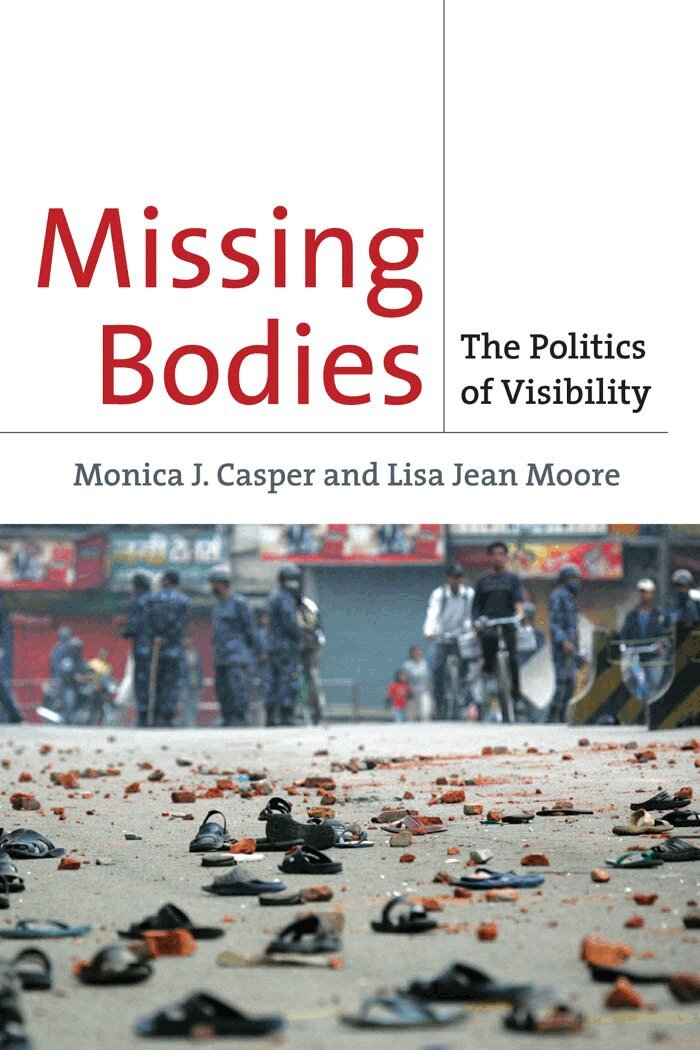
We know more about the physical body—how it begins, how it responds to illness, even how it decomposes—than ever before. Yet not all bodies are created equal, some bodies clearly count more than others, and some bodies are not recognized at all. In Missing Bodies, Monica J. Casper and Lisa Jean Moore explore the surveillance, manipulations, erasures, and visibility of the body in the twenty-first century. The authors examine bodies, both actual and symbolic, in a variety of arenas: pornography, fashion, sports, medicine, photography, cinema, sex work, labor, migration, medical tourism, and war. This new politicsof visibility can lead to the overexposure of some bodies—Lance Armstrong, Jessica Lynch—and to the near invisibility of others—dead Iraqi civilians, illegal immigrants, the victims of HIV/AIDS and "natural" disasters.Missing Bodies presents a call for a new, engaged way of seeing and recovering bodies in a world that routinely, often strategically,obscures or erases them. It poses difficult, even startling questions: Why did it take so long for the United States media to begin telling stories about the "falling bodies" of 9/11? Why has the United States government refused to allow photographs or filming of flag-draped coffins carrying the bodies of soldiers who are dying in Iraq? Why are the bodies of girls and women so relentlessly sexualized? By examining the cultural politics at work in such disappearances and inclusions of the physical body the authors show how the social, medical and economic consequences of visibility can reward or undermine privilege in society.
364 kr
Skickas inom 7-10 vardagar
We know more about the physical body—how it begins, how it responds to illness, even how it decomposes—than ever before. Yet not all bodies are created equal, some bodies clearly count more than others, and some bodies are not recognized at all. In Missing Bodies, Monica J. Casper and Lisa Jean Moore explore the surveillance, manipulations, erasures, and visibility of the body in the twenty-first century. The authors examine bodies, both actual and symbolic, in a variety of arenas: pornography, fashion, sports, medicine, photography, cinema, sex work, labor, migration, medical tourism, and war. This new politicsof visibility can lead to the overexposure of some bodies—Lance Armstrong, Jessica Lynch—and to the near invisibility of others—dead Iraqi civilians, illegal immigrants, the victims of HIV/AIDS and "natural" disasters.Missing Bodies presents a call for a new, engaged way of seeing and recovering bodies in a world that routinely, often strategically,obscures or erases them. It poses difficult, even startling questions: Why did it take so long for the United States media to begin telling stories about the "falling bodies" of 9/11? Why has the United States government refused to allow photographs or filming of flag-draped coffins carrying the bodies of soldiers who are dying in Iraq? Why are the bodies of girls and women so relentlessly sexualized? By examining the cultural politics at work in such disappearances and inclusions of the physical body the authors show how the social, medical and economic consequences of visibility can reward or undermine privilege in society.
Critical Trauma Studies
Understanding Violence, Conflict and Memory in Everyday Life
Häftad, Engelska, 2016
364 kr
Skickas inom 7-10 vardagar
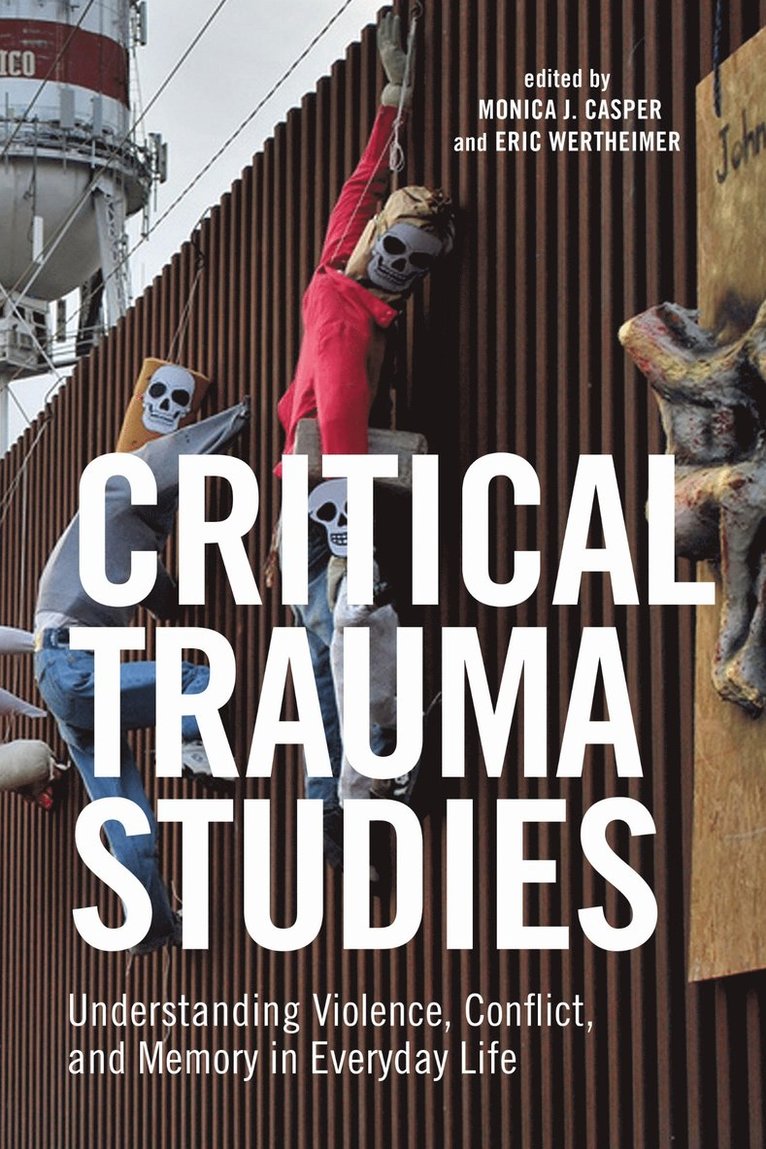
Trauma is a universal human experience. While each person responds differently to trauma, its presence in our lives nonetheless marks a continual thread through human history and prehistory. In Critical Trauma Studies, a diverse group of writers, activists, and scholars of sociology, anthropology, literature, and cultural studies reflects on the study of trauma and how multidisciplinary approaches lend richness and a sense of deeper understanding to this burgeoning field of inquiry. The original essays within this collection cover topics such as female suicide bombers from the Chechen Republic, singing prisoners in Iranian prison camps, sexual assault and survivor advocacy, and families facing the devastation of Hurricane Katrina. As it proceeds, Critical Trauma Studies never loses sight of the way those who study trauma as an academic field, and those who experience, narrate, and remediate trauma as a personal and embodied event, inform one another. Theoretically adventurous and deeply particular, this book aims to advance trauma studies as a discipline that transcends intellectual boundaries, to be mapped but also to be unmoored from conceptual and practical imperatives. Remaining embedded in lived experiences and material realities, Critical Trauma Studies frames the field as both richly unbounded and yet clearly defined, historical, and evidence-based.
Critical Trauma Studies
Understanding Violence, Conflict and Memory in Everyday Life
Inbunden, Engelska, 2016
1 066 kr
Skickas inom 10-15 vardagar
Trauma is a universal human experience. While each person responds differently to trauma, its presence in our lives nonetheless marks a continual thread through human history and prehistory. In Critical Trauma Studies, a diverse group of writers, activists, and scholars of sociology, anthropology, literature, and cultural studies reflects on the study of trauma and how multidisciplinary approaches lend richness and a sense of deeper understanding to this burgeoning field of inquiry. The original essays within this collection cover topics such as female suicide bombers from the Chechen Republic, singing prisoners in Iranian prison camps, sexual assault and survivor advocacy, and families facing the devastation of Hurricane Katrina. As it proceeds, Critical Trauma Studies never loses sight of the way those who study trauma as an academic field, and those who experience, narrate, and remediate trauma as a personal and embodied event, inform one another. Theoretically adventurous and deeply particular, this book aims to advance trauma studies as a discipline that transcends intellectual boundaries, to be mapped but also to be unmoored from conceptual and practical imperatives. Remaining embedded in lived experiences and material realities, Critical Trauma Studies frames the field as both richly unbounded and yet clearly defined, historical, and evidence-based.