Lisa Jean Moore – författare
Visar alla böcker från författaren Lisa Jean Moore. Handla med fri frakt och snabb leverans.
18 produkter
18 produkter
Häftad, Engelska
1 757 kr
Skickas inom 3-6 vardagar
Inbunden, Engelska, 2014
2 770 kr
Skickas inom 10-15 vardagar
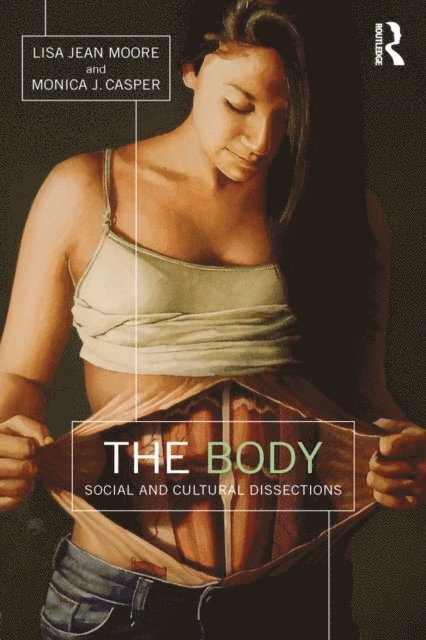
This college-level handbook offers a comprehensive and accessible overview of sociological and cultural perspectives on the human body. Organized along the lines of a standard anatomical textbook delineated by body parts and processes, this volume subverts the expected content in favor of providing tools for social and cultural analysis. Students will learn about the human body in its social, cultural, and political contexts, with emphasis on multiple, contested meanings of the body, body parts, and systems. Case studies, examples, and discussion questions are both US-based and international. Advancing critical body studies, the book explicitly discusses bodies in relation to race, class, gender, sexuality, ability, age, health, geography, and citizenship status. The framing is sociological rather than biomedical, attentive to cultural meanings, institutional practices, politics, and social problems. The authors use commonly understood anatomical frames to discuss social, cultural, political, and ethical issues concerning embodiment.
Häftad, Engelska, 2014
739 kr
Skickas inom 10-15 vardagar
This college-level handbook offers a comprehensive and accessible overview of sociological and cultural perspectives on the human body. Organized along the lines of a standard anatomical textbook delineated by body parts and processes, this volume subverts the expected content in favor of providing tools for social and cultural analysis. Students will learn about the human body in its social, cultural, and political contexts, with emphasis on multiple, contested meanings of the body, body parts, and systems. Case studies, examples, and discussion questions are both US-based and international. Advancing critical body studies, the book explicitly discusses bodies in relation to race, class, gender, sexuality, ability, age, health, geography, and citizenship status. The framing is sociological rather than biomedical, attentive to cultural meanings, institutional practices, politics, and social problems. The authors use commonly understood anatomical frames to discuss social, cultural, political, and ethical issues concerning embodiment.
Inbunden, Engelska, 2002
1 547 kr
Skickas inom 10-15 vardagar
Judith Lorber and Lisa Jean Moore consider the interface between the social institutions of gender and Western medicine in this brief, lively textbook. They offer a distinct feminist viewpoint to analyze issues of power and politics concerning physical illness. SIGNS labeled the first edition 'a rich and imaginative work.' In the extensively revised second edition of this successful text, the authors add chapters on disability and genital surgeries. They also update and expand their discussions of social epidemiology, AIDS, the health professions, PMS, menopause, and feminist health care. For a creative, feminist-oriented alternative to traditional texts on medical sociology, medical anthropology, and the history of medicine, this is an ideal choice.
Häftad, Engelska, 2002
595 kr
Skickas inom 10-15 vardagar
Judith Lorber and Lisa Jean Moore consider the interface between the social institutions of gender and Western medicine in this brief, lively textbook. They offer a distinct feminist viewpoint to analyze issues of power and politics concerning physical illness. SIGNS labeled the first edition 'a rich and imaginative work.' In the extensively revised second edition of this successful text, the authors add chapters on disability and genital surgeries. They also update and expand their discussions of social epidemiology, AIDS, the health professions, PMS, menopause, and feminist health care. For a creative, feminist-oriented alternative to traditional texts on medical sociology, medical anthropology, and the history of medicine, this is an ideal choice.
Inbunden, Engelska, 2009
1 176 kr
Skickas inom 10-15 vardagar
We know more about the physical body—how it begins, how it responds to illness, even how it decomposes—than ever before. Yet not all bodies are created equal, some bodies clearly count more than others, and some bodies are not recognized at all. In Missing Bodies, Monica J. Casper and Lisa Jean Moore explore the surveillance, manipulations, erasures, and visibility of the body in the twenty-first century. The authors examine bodies, both actual and symbolic, in a variety of arenas: pornography, fashion, sports, medicine, photography, cinema, sex work, labor, migration, medical tourism, and war. This new politicsof visibility can lead to the overexposure of some bodies—Lance Armstrong, Jessica Lynch—and to the near invisibility of others—dead Iraqi civilians, illegal immigrants, the victims of HIV/AIDS and "natural" disasters.Missing Bodies presents a call for a new, engaged way of seeing and recovering bodies in a world that routinely, often strategically,obscures or erases them. It poses difficult, even startling questions: Why did it take so long for the United States media to begin telling stories about the "falling bodies" of 9/11? Why has the United States government refused to allow photographs or filming of flag-draped coffins carrying the bodies of soldiers who are dying in Iraq? Why are the bodies of girls and women so relentlessly sexualized? By examining the cultural politics at work in such disappearances and inclusions of the physical body the authors show how the social, medical and economic consequences of visibility can reward or undermine privilege in society.
Häftad, Engelska, 2009
369 kr
Skickas inom 5-8 vardagar
We know more about the physical body—how it begins, how it responds to illness, even how it decomposes—than ever before. Yet not all bodies are created equal, some bodies clearly count more than others, and some bodies are not recognized at all. In Missing Bodies, Monica J. Casper and Lisa Jean Moore explore the surveillance, manipulations, erasures, and visibility of the body in the twenty-first century. The authors examine bodies, both actual and symbolic, in a variety of arenas: pornography, fashion, sports, medicine, photography, cinema, sex work, labor, migration, medical tourism, and war. This new politicsof visibility can lead to the overexposure of some bodies—Lance Armstrong, Jessica Lynch—and to the near invisibility of others—dead Iraqi civilians, illegal immigrants, the victims of HIV/AIDS and "natural" disasters.Missing Bodies presents a call for a new, engaged way of seeing and recovering bodies in a world that routinely, often strategically,obscures or erases them. It poses difficult, even startling questions: Why did it take so long for the United States media to begin telling stories about the "falling bodies" of 9/11? Why has the United States government refused to allow photographs or filming of flag-draped coffins carrying the bodies of soldiers who are dying in Iraq? Why are the bodies of girls and women so relentlessly sexualized? By examining the cultural politics at work in such disappearances and inclusions of the physical body the authors show how the social, medical and economic consequences of visibility can reward or undermine privilege in society.
Inbunden, Engelska, 2007
1 143 kr
Skickas inom 10-15 vardagar
2007 Choice Outstanding Academic TitleWinner of the Passing the Torch Award from the Center for Lesbian and Gay StudiesIt has been called sperm, semen, seed, cum, jizz, spunk, gentlemen's relish, and splooge. But however the "tacky, opaque liquid that comes out of the penis" is described, the very act of defining "sperm" and "semen" depends on your point of view. For Lisa Jean Moore, how sperm comes to be known is based on who defines it (a scientist vs. a defense witness, for example), under what social circumstances it is found (a doctor's office vs. a crime scene), and for what purposes it will be used (in vitro fertilization vs. DNA analysis). Examining semen historically, medically, and culturally, Sperm Counts is a penetrating exploration of its meaning and power.Using a ";follow that sperm" approach, Moore shows how representations of sperm and semen are always in flux, tracing their twisting journeys from male reproductive glands to headline news stories and presidential impeachment trials. Much like the fluid of semen itself can leak onto fabrics and into bodies, its meanings seep into our consciousness over time. Moore's analytic lens yields intriguing observations of how sperm is "spent" and "reabsorbed" as it spurts, swims, and careens through penises, vaginas, test tubes, labs, families, cultures, and politics.Drawn from fifteen years of research, Sperm Counts examines historical and scientific documents, children's "facts of life" books, pornography, the Internet, forensic transcripts and sex worker narratives to explain how semen got so complicated. Among other things, understanding how we produce, represent, deploy and institutionalize semen-biomedically, socially and culturally-provides valuable new perspectives on the changing social position of men and the evolving meanings of masculinity. Ultimately, as Moore reveals, sperm is intimately involved in not only the physical reproduction of males and females, but in how we come to understand ourselves as men and women.
Inbunden, Engelska, 2013
931 kr
Skickas inom 10-15 vardagar
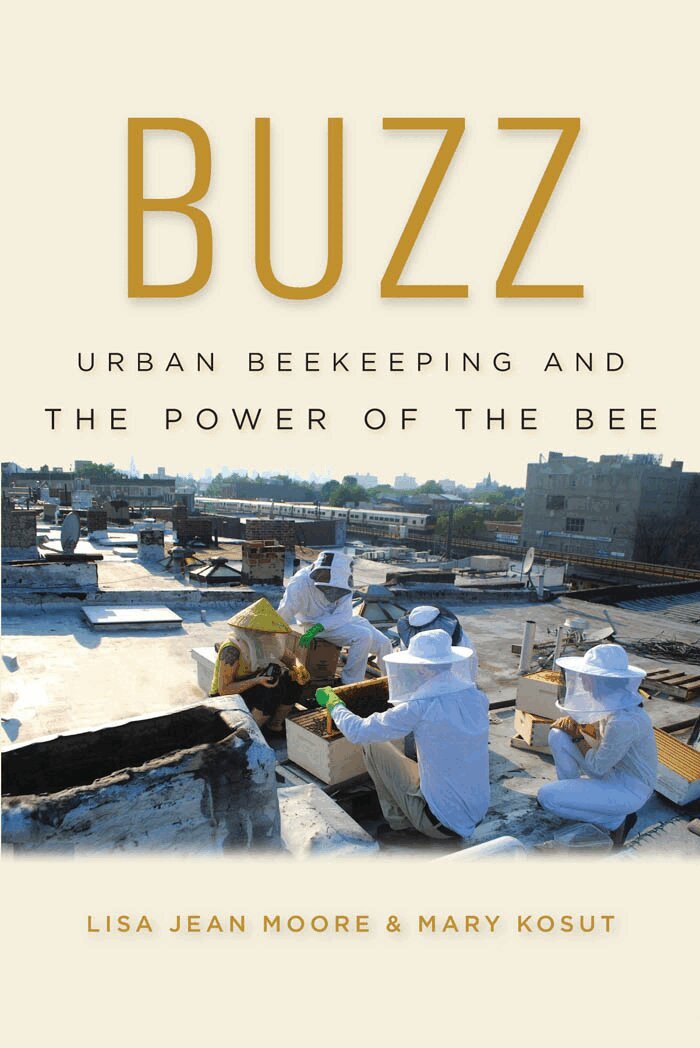
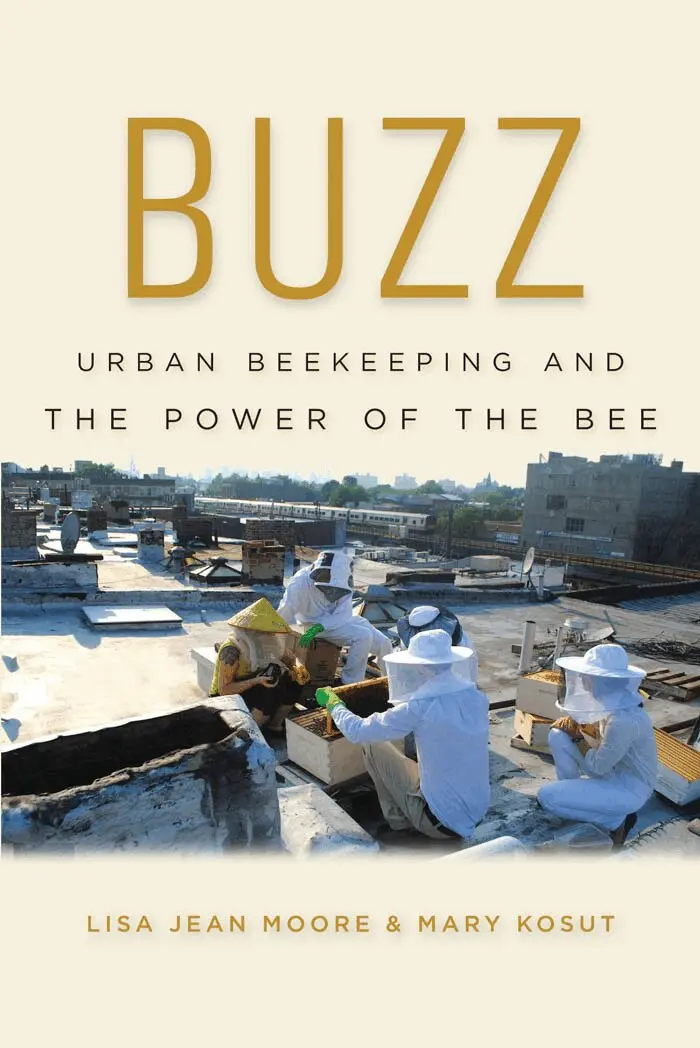
Winner, 2014 Distinguished Scholarship Award presented by the Animals & Society section of the American Sociological AssociationBees are essential for human survival—one-third of all food on American dining tables depends on the labor of bees. Beyond pollination, the very idea of the bee is ubiquitous in our culture: we can feel buzzed; we can create buzz; we have worker bees, drones, and Queen bees; we establish collectives and even have communities that share a hive-mind. In Buzz, authors Lisa Jean Moore and Mary Kosut convincingly argue that the power of bees goes beyond the food cycle, bees are our mascots, our models, and, unlike any other insect, are both feared and revered. In this fascinating account, Moore and Kosut travel into the land of urban beekeeping in New York City, where raising bees has become all the rage. We follow them as they climb up on rooftops, attend beekeeping workshops and honey festivals, and even put on full-body beekeeping suits and open up the hives. In the process, we meet a passionate, dedicated, and eclectic group of urban beekeepers who tend to their brood with an emotional and ecological connection that many find restorative and empowering. Kosut and Moore also interview professional beekeepers and many others who tend to their bees for their all-important production of a food staple: honey. The artisanal food shops that are so popular in Brooklyn are a perfect place to sell not just honey, but all manner of goods: soaps, candles, beeswax, beauty products, and even bee pollen. Buzz also examines media representations of bees, such as children's books, films, and consumer culture, bringing to light the reciprocal way in which the bee and our idea of the bee inform one another. Partly an ethnographic investigation and partly a meditation on the very nature of human/insect relations, Moore and Kosut argue that how we define, visualize, and interact with bees clearly reflects our changing social and ecological landscape, pointing to how we conceive of and create culture, and how, in essence, we create ourselves.
Häftad, Engelska, 2008
345 kr
Skickas inom 5-8 vardagar
2007 Choice Outstanding Academic TitleWinner of the Passing the Torch Award from the Center for Lesbian and Gay StudiesIt has been called sperm, semen, seed, cum, jizz, spunk, gentlemen's relish, and splooge. But however the "tacky, opaque liquid that comes out of the penis" is described, the very act of defining "sperm" and "semen" depends on your point of view. For Lisa Jean Moore, how sperm comes to be known is based on who defines it (a scientist vs. a defense witness, for example), under what social circumstances it is found (a doctor's office vs. a crime scene), and for what purposes it will be used (in vitro fertilization vs. DNA analysis). Examining semen historically, medically, and culturally, Sperm Counts is a penetrating exploration of its meaning and power.Using a ";follow that sperm" approach, Moore shows how representations of sperm and semen are always in flux, tracing their twisting journeys from male reproductive glands to headline news stories and presidential impeachment trials. Much like the fluid of semen itself can leak onto fabrics and into bodies, its meanings seep into our consciousness over time. Moore's analytic lens yields intriguing observations of how sperm is "spent" and "reabsorbed" as it spurts, swims, and careens through penises, vaginas, test tubes, labs, families, cultures, and politics.Drawn from fifteen years of research, Sperm Counts examines historical and scientific documents, children's "facts of life" books, pornography, the Internet, forensic transcripts and sex worker narratives to explain how semen got so complicated. Among other things, understanding how we produce, represent, deploy and institutionalize semen-biomedically, socially and culturally-provides valuable new perspectives on the changing social position of men and the evolving meanings of masculinity. Ultimately, as Moore reveals, sperm is intimately involved in not only the physical reproduction of males and females, but in how we come to understand ourselves as men and women.
Inbunden, Engelska, 2010
972 kr
Skickas inom 10-15 vardagar
An essential collection of readings on cultural, social, and emotional understandings of the bodyPlastic surgery, obesity, anorexia, pregnancy, prescription drugs, disability, piercings, steroids, and sex re-assignment surgery: over the past two decades there have been major changes in the ways we understand, treat, alter, and care for our bodies. The Body Reader is a compelling, cutting-edge, and timely collection that provides a close look at the emergence of the study of the body.From prenatal genetic testing and "manscaping"; to televideo cybersex and the "meth economy," this innovative work digs deep into contemporary lifestyles and current events to cover key concepts and theories about the body. A combination of twenty one classic readings and original essays, the contributors highlight gender, race, class, ability, and sexuality, paying special attention to bodies that are at risk, bodies that challenge norms, and media representations of the body. Ultimately, The Body Reader makes it clear that the body is not neutral—it is the entry point into cultural and structural relationships, emotional and subjective experiences, and the biological realms of flesh and bone.Contributors: Patricia Hill Collins, Karen Dias, H. Hugh Floyd, Jr., Arthur Frank, Sander L. Gilman, Gillian Haddow, Richard Huggins, Matthew Immergut, L:ea Kent, Kristen Karlberg, Steve Kroll-Smith, Mary Kosut, Jarvis Jay Masters, Lisa Jean Moore, Tracey Owens Patton, William J. Peace, Jason Pine, Eric Plemons, Barbara Katz Rothman, Edward Slavishak, Phillip Vannini, and Dennis Waskul.
Häftad, Engelska, 2010
417 kr
Skickas
An essential collection of readings on cultural, social, and emotional understandings of the bodyPlastic surgery, obesity, anorexia, pregnancy, prescription drugs, disability, piercings, steroids, and sex re-assignment surgery: over the past two decades there have been major changes in the ways we understand, treat, alter, and care for our bodies. The Body Reader is a compelling, cutting-edge, and timely collection that provides a close look at the emergence of the study of the body.From prenatal genetic testing and "manscaping"; to televideo cybersex and the "meth economy," this innovative work digs deep into contemporary lifestyles and current events to cover key concepts and theories about the body. A combination of twenty one classic readings and original essays, the contributors highlight gender, race, class, ability, and sexuality, paying special attention to bodies that are at risk, bodies that challenge norms, and media representations of the body. Ultimately, The Body Reader makes it clear that the body is not neutral—it is the entry point into cultural and structural relationships, emotional and subjective experiences, and the biological realms of flesh and bone.Contributors: Patricia Hill Collins, Karen Dias, H. Hugh Floyd, Jr., Arthur Frank, Sander L. Gilman, Gillian Haddow, Richard Huggins, Matthew Immergut, L:ea Kent, Kristen Karlberg, Steve Kroll-Smith, Mary Kosut, Jarvis Jay Masters, Lisa Jean Moore, Tracey Owens Patton, William J. Peace, Jason Pine, Eric Plemons, Barbara Katz Rothman, Edward Slavishak, Phillip Vannini, and Dennis Waskul.
Inbunden, Engelska, 2022
1 007 kr
Skickas inom 10-15 vardagar
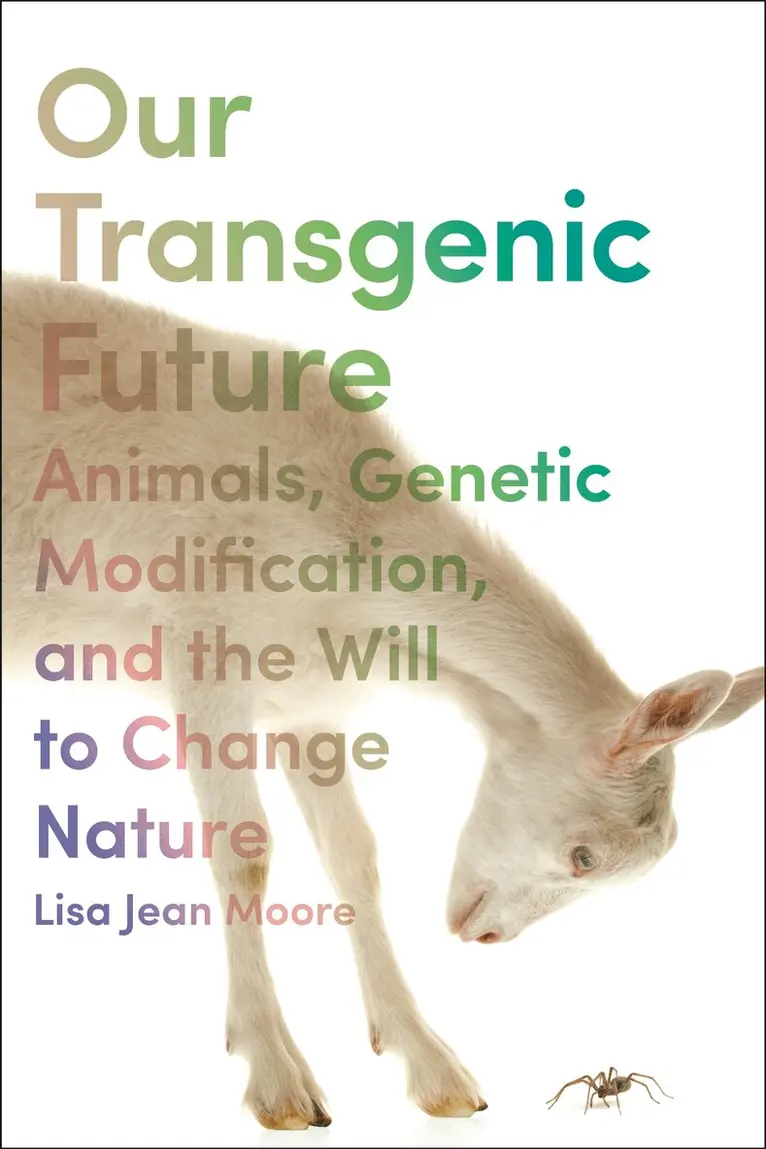
How scientific advances in genetic modification will fundamentally change the natural worldThe process of manipulating the genetic material of one animal to include the DNA of another creates a new transgenic organism. Several animals, notably goats, mice, sheep, and cattle are now genetically modified in this way. In Our Transgenic Future, Lisa Jean Moore wonders what such scientific advances portend. Will the natural world become so modified that it ceases to exist? After turning species into hybrids, can we ever get back to the original, or are they forever lost? Does genetic manipulation make better lives possible, and if so, for whom?Moore centers the story on goats that have been engineered by the US military and civilian scientists using the DNA of spiders. The goat's milk contains a spider-silk protein fiber; it can be spun into ultra-strong fabric that can be used to manufacture lightweight military body armor. Researchers also hope the transgenically produced spider silk will revolutionize medicine with biocompatible medical inserts such as prosthetics and bandages. Based on in-depth research with spiders in Florida and transgenic goats in Utah, Our Transgenic Future focuses on how these spidergoats came into existence, the researchers who maintain them, the funders who have made their lives possible, and how they fit into the larger science of transgenics and synthetics. This book is a fascinating story about the possibilities of science and the likely futures that may come.
Häftad, Engelska, 2022
364 kr
Skickas inom 5-8 vardagar
How scientific advances in genetic modification will fundamentally change the natural worldThe process of manipulating the genetic material of one animal to include the DNA of another creates a new transgenic organism. Several animals, notably goats, mice, sheep, and cattle are now genetically modified in this way. In Our Transgenic Future, Lisa Jean Moore wonders what such scientific advances portend. Will the natural world become so modified that it ceases to exist? After turning species into hybrids, can we ever get back to the original, or are they forever lost? Does genetic manipulation make better lives possible, and if so, for whom?Moore centers the story on goats that have been engineered by the US military and civilian scientists using the DNA of spiders. The goat's milk contains a spider-silk protein fiber; it can be spun into ultra-strong fabric that can be used to manufacture lightweight military body armor. Researchers also hope the transgenically produced spider silk will revolutionize medicine with biocompatible medical inserts such as prosthetics and bandages. Based on in-depth research with spiders in Florida and transgenic goats in Utah, Our Transgenic Future focuses on how these spidergoats came into existence, the researchers who maintain them, the funders who have made their lives possible, and how they fit into the larger science of transgenics and synthetics. This book is a fascinating story about the possibilities of science and the likely futures that may come.
Häftad, Engelska, 2013
367 kr
Skickas inom 5-8 vardagar
Winner, 2014 Distinguished Scholarship Award presented by the Animals & Society section of the American Sociological AssociationBees are essential for human survival—one-third of all food on American dining tables depends on the labor of bees. Beyond pollination, the very idea of the bee is ubiquitous in our culture: we can feel buzzed; we can create buzz; we have worker bees, drones, and Queen bees; we establish collectives and even have communities that share a hive-mind. In Buzz, authors Lisa Jean Moore and Mary Kosut convincingly argue that the power of bees goes beyond the food cycle, bees are our mascots, our models, and, unlike any other insect, are both feared and revered. In this fascinating account, Moore and Kosut travel into the land of urban beekeeping in New York City, where raising bees has become all the rage. We follow them as they climb up on rooftops, attend beekeeping workshops and honey festivals, and even put on full-body beekeeping suits and open up the hives. In the process, we meet a passionate, dedicated, and eclectic group of urban beekeepers who tend to their brood with an emotional and ecological connection that many find restorative and empowering. Kosut and Moore also interview professional beekeepers and many others who tend to their bees for their all-important production of a food staple: honey. The artisanal food shops that are so popular in Brooklyn are a perfect place to sell not just honey, but all manner of goods: soaps, candles, beeswax, beauty products, and even bee pollen. Buzz also examines media representations of bees, such as children's books, films, and consumer culture, bringing to light the reciprocal way in which the bee and our idea of the bee inform one another. Partly an ethnographic investigation and partly a meditation on the very nature of human/insect relations, Moore and Kosut argue that how we define, visualize, and interact with bees clearly reflects our changing social and ecological landscape, pointing to how we conceive of and create culture, and how, in essence, we create ourselves.
Häftad, Engelska, 2018
340 kr
Skickas inom 5-8 vardagar
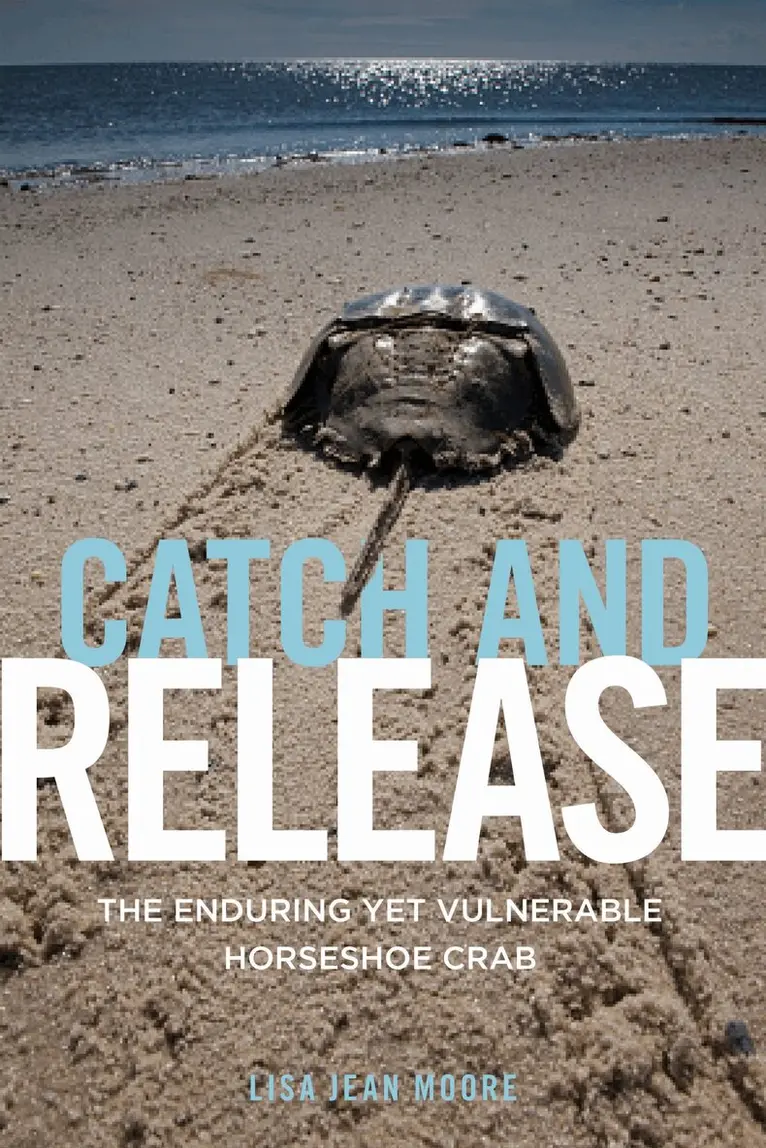
The unexpected and fascinating interspecies relationship between humans and horseshoe crabs.Horseshoe crabs are considered both a prehistoric and indicator species. They have not changed in tens of millions of years and provide useful data to scientists who monitor the health of the environment. From the pharmaceutical industry to paleontologists to the fishing industry, the horseshoe crab has made vast, but largely unknown, contributions to human life and our shared ecosystem. Catch and Release examines how these intersections steer the trajectory of both species' lives, and futures. Based on interviews with conservationists, field biologists, ecologists, and paleontologists over three years of fieldwork on urban beaches, noted ethnographer Lisa Jean Moore shows how humans literally harvest the life out of the horseshoe crabs. We use them as markers for understanding geologic time, collect them for agricultural fertilizer, and eat them as delicacies, capture them as bait, then rescue them for conservation, and categorize them as endangered. The book details the biomedical bleeding of crabs; how they are caught, drained of 40% of their blood, and then released back into their habitat. The model of catch and release is essential. Horseshoe crabs cannot be bred in captivity and can only survive in their own ecosystems. Moore shows how horseshoe crabs are used as an exploitable resource, and are now considered a "vulnerable" species.An investigation of how humans approach animals that are essential for their survival, Catch and Release questions whether humans should have divine, moral, or ethical claims to any living being in their path.
Inbunden, Engelska, 2018
1 076 kr
Skickas inom 10-15 vardagar
The unexpected and fascinating interspecies relationship between humans and horseshoe crabs.Horseshoe crabs are considered both a prehistoric and indicator species. They have not changed in tens of millions of years and provide useful data to scientists who monitor the health of the environment. From the pharmaceutical industry to paleontologists to the fishing industry, the horseshoe crab has made vast, but largely unknown, contributions to human life and our shared ecosystem. Catch and Release examines how these intersections steer the trajectory of both species' lives, and futures. Based on interviews with conservationists, field biologists, ecologists, and paleontologists over three years of fieldwork on urban beaches, noted ethnographer Lisa Jean Moore shows how humans literally harvest the life out of the horseshoe crabs. We use them as markers for understanding geologic time, collect them for agricultural fertilizer, and eat them as delicacies, capture them as bait, then rescue them for conservation, and categorize them as endangered. The book details the biomedical bleeding of crabs; how they are caught, drained of 40% of their blood, and then released back into their habitat. The model of catch and release is essential. Horseshoe crabs cannot be bred in captivity and can only survive in their own ecosystems. Moore shows how horseshoe crabs are used as an exploitable resource, and are now considered a "vulnerable" species.An investigation of how humans approach animals that are essential for their survival, Catch and Release questions whether humans should have divine, moral, or ethical claims to any living being in their path.
Inbunden, Engelska, 2026
225 kr
Skickas inom 5-8 vardagar
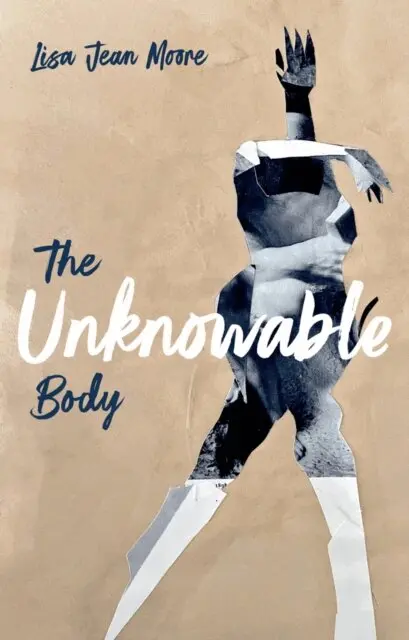
In The Unknowable Body, Lisa Jean Moore explores the profound disconnect between how we experience our bodies and how the medical world interprets them. Drawing on her own journey through DCIS diagnosis, mastectomy, and reconstruction – alongside her family's navigation of her ex-partner's brain tumour – Moore investigates various unsettling dimensions of bodily uncertainty that emerge when illness enters our lives.As scans revealed secrets that human perception failed to, and while navigating a queer family system that didn't fit institutional categories, the author found herself in territory few roadmaps could chart. This book weaves candid humour and poetic personal narrative and analytical vision to examine how bodies resist complete knowing – medically, emotionally, in time, and through gender and identity. It offers new ways of thinking about embodiment in an age of increasing medical surveillance, technological intervention, and economically profitable uncertainty.What began as an investigation into cancer treatment evolved into a deeper exploration of how bodies exceed our frameworks for understanding. Whether through scans that simultaneously reveal and obscure, emotional reverberations that transform family systems, temporal disruptions that fracture our sense of before and after, or gender expectations that shape medical encounters, our bodies remain fundamentally mysterious even as we attempt to make them knowable.This thought-provoking, enriching book isn't just about illness, but about how all bodies exist in states of becoming and evade categories.