Monica Divitini – författare
Visar alla böcker från författaren Monica Divitini. Handla med fri frakt och snabb leverans.
8 produkter
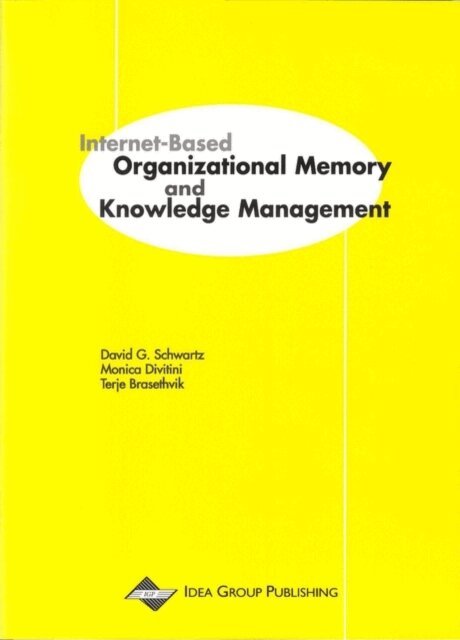
Internet-Based Organizational Memory and Knowledge Management
Av Monica Divitini, Terje Brasethvik m. fl.
E-bok, 1999
1587 kr
Lägg i varukorg
The Internet is quickly moving from a marketing tool in which businesses and organizations promote sales and awareness, to a core element of any information system architecture. The advent of the Internet as a fundamental infrastructure for the delivery of advanced business systems has opened up a …
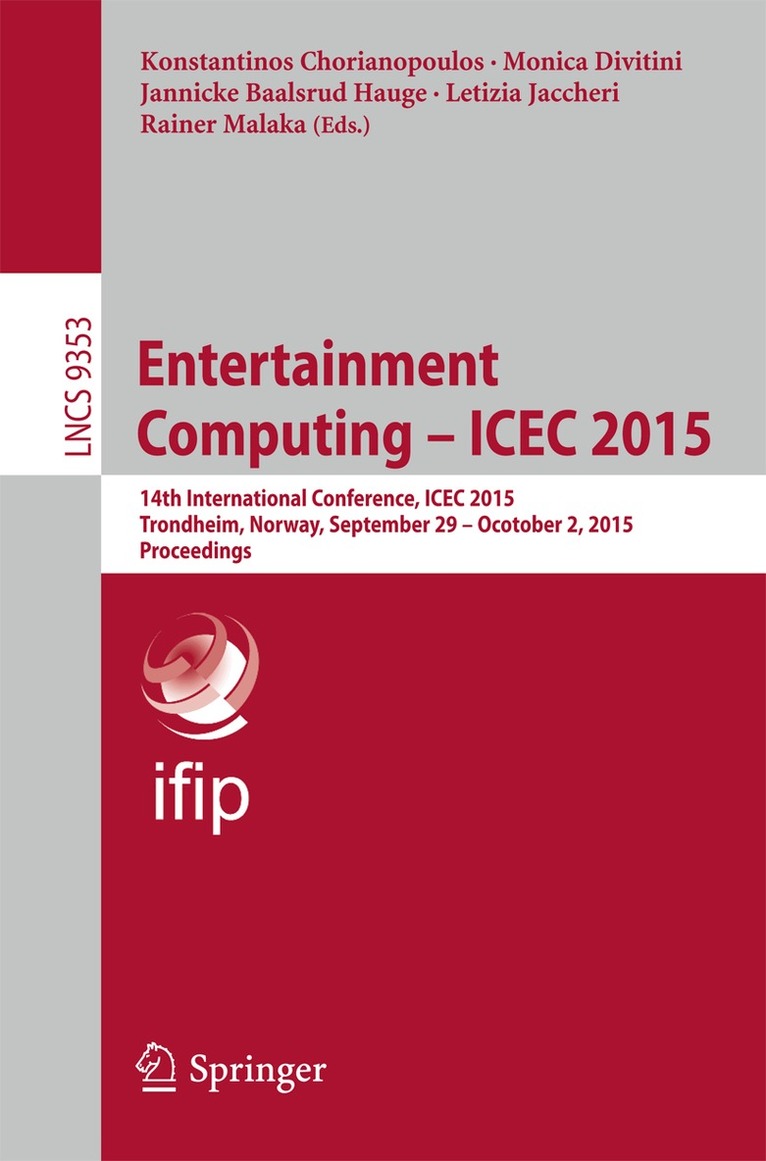
Entertainment Computing - ICEC 2015
14th International Conference, ICEC 2015, Trondheim, Norway, September 29 - Ocotober 2, 2015, Proceedings
Av Konstantinos Chorianopoulos, Monica Divitini m. fl.
Häftad, 2015
568 kr
Lägg i varukorg
This book constitutes the refereed proceedings of the14th International Conference on Entertainment Computing, ICEC 2015, held inTrondheim, Norway, in September/October 2015.The 26 full papers, 6 short papers, 16 posters, 6 demosand 6 workshops/tutorial descriptions presented were carefully …
Entertainment Computing - ICEC 2015
14th International Conference, ICEC 2015, Trondheim, Norway, September 29 - Ocotober 2, 2015, Proceedings
Av Rainer Malaka, Letizia Jaccheri m. fl.
E-bok, 2015
732 kr
Lägg i varukorg
This book constitutes the refereed proceedings of the14th International Conference on Entertainment Computing, ICEC 2015, held inTrondheim, Norway, in September/October 2015. The 26 full papers, 6 short papers, 16 posters, 6 demosand 6 workshops/tutorial descriptions presented were carefully …
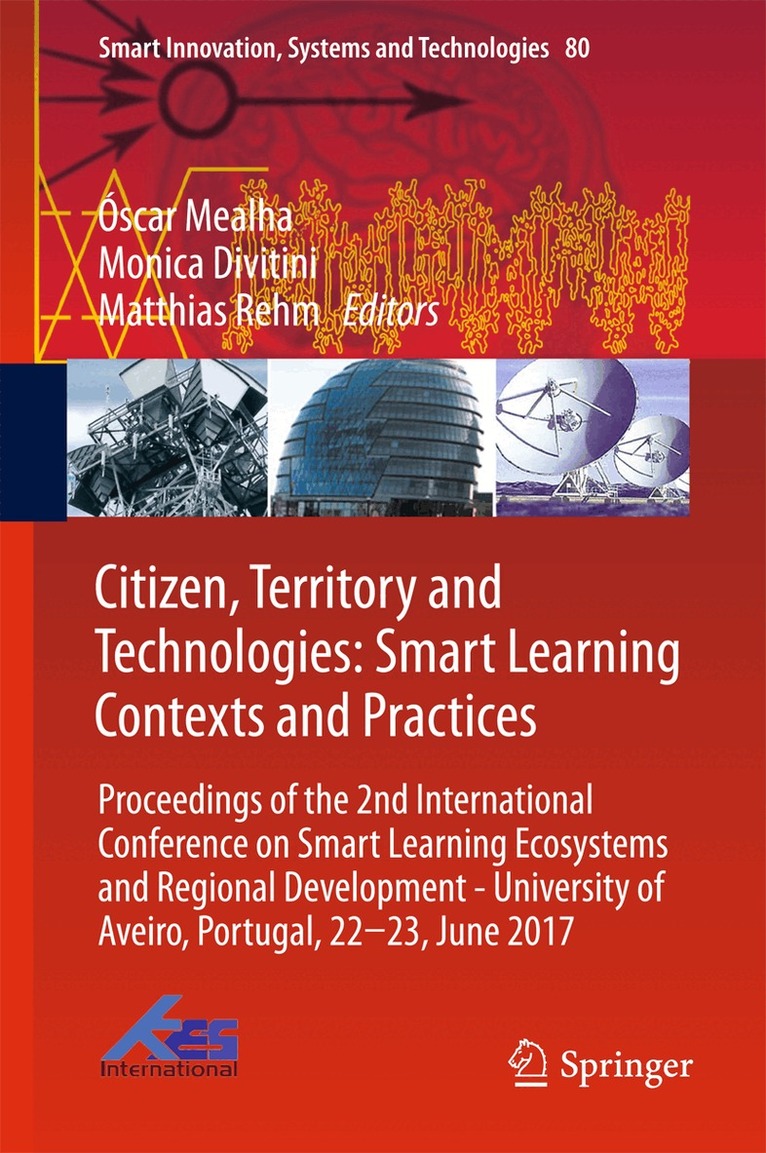
Citizen, Territory and Technologies: Smart Learning Contexts and Practices
Proceedings of the 2nd International Conference on Smart Learning Ecosystems and Regional Development - University of Aveiro, Portugal, 22-23, June 2017
Av Óscar Mealha, Monica Divitini m. fl.
Inbunden, 2017
1641 kr
Lägg i varukorg
This book gathers a selection of the articles accepted for presentation and discussion at the 2nd International Conference on Smart Learning Ecosystems and Regional Developments (SLERD 2017), held 22–23 June What characterizes smart learning ecosystems? What is their role in city and regional …
Citizen, Territory and Technologies: Smart Learning Contexts and Practices
Proceedings of the 2nd International Conference on Smart Learning Ecosystems and Regional Development - University of Aveiro, Portugal, 22-23, June 2017
Av Matthias Rehm, Monica Divitini m. fl.
E-bok, 2017
2127 kr
Lägg i varukorg
This book gathers a selection of the articles accepted for presentation and discussion at the 2nd International Conference on Smart Learning Ecosystems and Regional Developments (SLERD 2017), held 22–23 June What characterizes smart learning ecosystems? What is their role in city and regional …
Citizen, Territory and Technologies: Smart Learning Contexts and Practices
Proceedings of the 2nd International Conference on Smart Learning Ecosystems and Regional Development - University of Aveiro, Portugal, 22-23, June 2017
Av Óscar Mealha, Monica Divitini m. fl.
Häftad, 2018
1690 kr
Lägg i varukorg
This book gathers a selection of the articles accepted for presentation and discussion at the 2nd International Conference on Smart Learning Ecosystems and Regional Developments (SLERD 2017), held 22–23 June What characterizes smart learning ecosystems? What is their role in city and regional …
Ambient Intelligence
First International Joint Conference, AmI 2010, Málaga, Spain, November 10-12, 2010, Proceedings
Av Boris De Ruyter, Reiner Wichert m. fl.
Häftad, 2010
568 kr
Lägg i varukorg
In a world supported by Ambient Intelligence (AmI), various devices embedded in the environment collectively use the distributed information and the intelligence inherent in this interconnected environment. A range of information from sensing and reas- ing technologies is used by distributed …
Ambient Intelligence
First International Joint Conference, AmI 2010, Málaga, Spain, November 10-12, 2010, Proceedings
Av Antonio Mana Gomez, Nikolaos Georgantas m. fl.
E-bok, 2010
755 kr
Lägg i varukorg
In a world supported by Ambient Intelligence (AmI), various devices embedded in the environment collectively use the distributed information and the intelligence inherent in this interconnected environment. A range of information from sensing and reas- ing technologies is used by distributed …