Monica Nordberg – författare
Visar alla böcker från författaren Monica Nordberg. Handla med fri frakt och snabb leverans.
5 produkter
Arbets- och miljömedicin - - en lärobok om hälsa och miljö
Av Christer Edling, Maria Albin m. fl.
Häftad, 2026
5,0 utav 5 stjärnor. Totalt antal röster: (1)
865 kr
Lägg i varukorg
Arbets- och miljömedicin behandlar aktuella frågor och ger förslag på hantering av miljömedicinska ärenden och åtgärder för en bättre arbetsmiljö. Boken beskriver området arbets- och miljömedicin samt företagshälsovård, med särskilt fokus på epidemiologi och toxikologi som grund för riskbedömning …
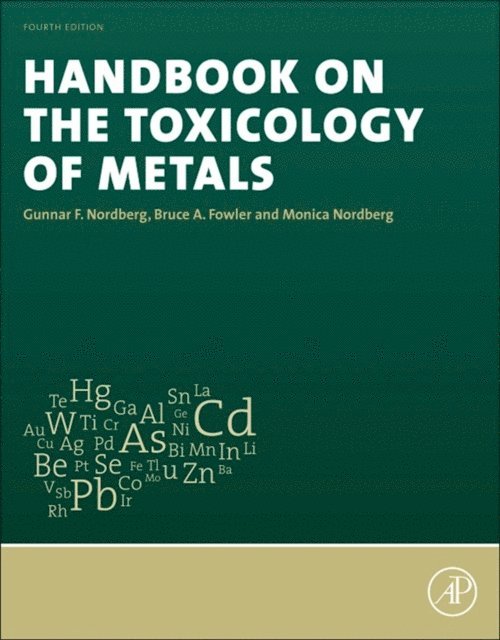
Handbook on the Toxicology of Metals
Av Monica Nordberg, Bruce A. Fowler m. fl.
E-bok, 2014
4626 kr
Lägg i varukorg
Handbook on the Toxicology of Metals, Fourth Edition bridges the gap between established knowledgebase and new advances in metal toxicology to provide one essential reference for all those involved in the field. This book provides comprehensive coverage of basic toxicological data, emphasizing …
Handbook on the Toxicology of Metals
Av Gunnar F. Nordberg, Bruce A. Fowler m. fl.
Inbunden, 2014
4287 kr
Lägg i varukorg
Handbook on the Toxicology of Metals, Fourth Edition bridges the gap between established knowledgebase and new advances in metal toxicology to provide one essential reference for all those involved in the field. This book provides comprehensive coverage of basic toxicological data, emphasizing …
Concepts in Toxicology
Av John H Duffus, Douglas M Templeton m. fl.
Inbunden, 2009
931 kr
Lägg i varukorg
Toxicology has never been more important. Advances in chemistry and technology offering improvements in the quality of human life become ever more rapid, bringing with them the potential for new toxicity hazards. This has led to legislation requiring toxicity testing and risk assessment for all …
Concepts in Toxicology
Av Monica Nordberg, Douglas M Templeton m. fl.
E-bok, 2009
839 kr
Lägg i varukorg
Toxicology has never been more important. Advances in chemistry and technology offering improvements in the quality of human life become ever more rapid, bringing with them the potential for new toxicity hazards. This has led to legislation requiring toxicity testing and risk assessment for all …