Monica Palmirani – författare
Visar alla böcker från författaren Monica Palmirani. Handla med fri frakt och snabb leverans.
15 produkter
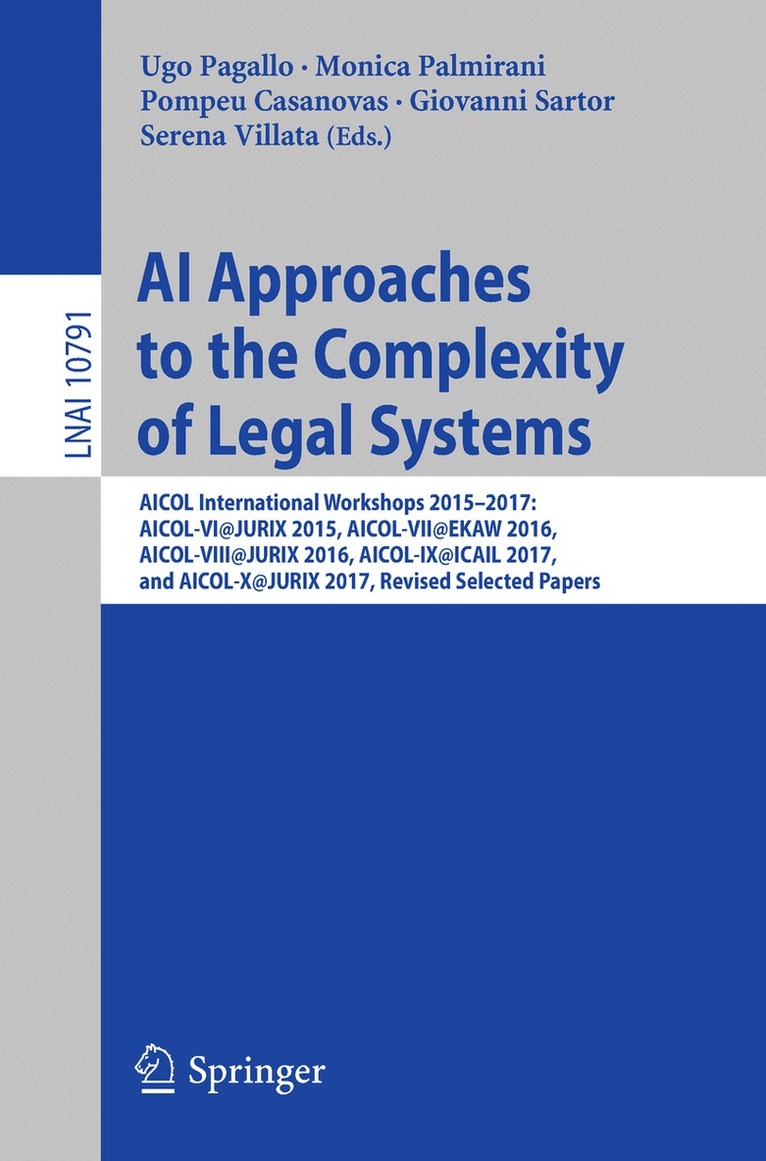
AI Approaches to the Complexity of Legal Systems
AICOL International Workshops 2015-2017: AICOL-VI@JURIX 2015, AICOL-VII@EKAW 2016, AICOL-VIII@JURIX 2016, AICOL-IX@ICAIL 2017, and AICOL-X@JURIX 2017, Revised Selected Papers
Av Ugo Pagallo, Monica Palmirani m. fl.
Häftad, 2018
926 kr
Lägg i varukorg
This book includes revised selected papers from five International Workshops on Artificial Intelligence Approaches to the Complexity of Legal Systems, AICOL VI to AICOL X, held during 2015-2017: AICOL VI in Braga, Portugal, in December 2015 as part of JURIX 2015; AICOL VII at EKAW 2016 in Bologna, …
AI Approaches to the Complexity of Legal Systems
AICOL International Workshops 2015-2017: AICOL-VI@JURIX 2015, AICOL-VII@EKAW 2016, AICOL-VIII@JURIX 2016, AICOL-IX@ICAIL 2017, and AICOL-X@JURIX 2017, Revised Selected Papers
Av Serena Villata, Giovanni Sartor m. fl.
E-bok, 2018
1175 kr
Lägg i varukorg
This book includes revised selected papers from five International Workshops on Artificial Intelligence Approaches to the Complexity of Legal Systems, AICOL VI to AICOL X, held during 2015-2017: AICOL VI in Braga, Portugal, in December 2015 as part of JURIX 2015; AICOL VII at EKAW 2016 in Bologna, …
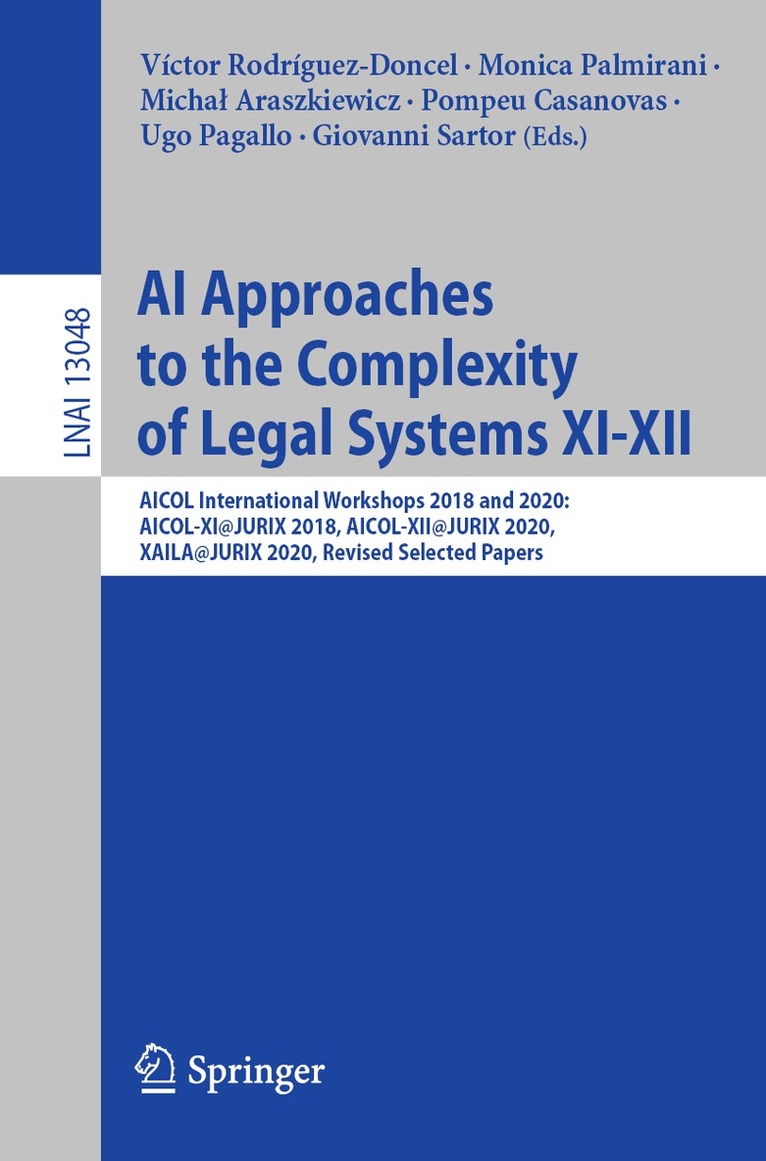
AI Approaches to the Complexity of Legal Systems XI-XII
AICOL International Workshops 2018 and 2020: AICOL-XI@JURIX 2018, AICOL-XII@JURIX 2020, XAILA@JURIX 2020, Revised Selected Papers
Av Víctor Rodríguez-Doncel, Monica Palmirani m. fl.
Häftad, 2021
904 kr
Lägg i varukorg
This book includes revised selected papers from the International Workshops on AI Approaches to the Complexity of Legal Systems, AICOL-XI@JURIX2018, held in Groningen, The Netherlands, on December 12, 2018; AICOL-XII@JURIX 2020, held in Brno, Czechia, on December 9, 2020; XAILA@JURIX 2020, held in …
AI Approaches to the Complexity of Legal Systems XI-XII
AICOL International Workshops 2018 and 2020: AICOL-XI@JURIX 2018, AICOL-XII@JURIX 2020, XAILA@JURIX 2020, Revised Selected Papers
Av Giovanni Sartor, Ugo Pagallo m. fl.
E-bok, 2021
1175 kr
Lägg i varukorg
This book includes revised selected papers from the International Workshops on AI Approaches to the Complexity of Legal Systems, AICOL-XI@JURIX2018, held in Groningen, The Netherlands, on December 12, 2018; AICOL-XII@JURIX 2020, held in Brno, Czechia, on December 9, 2020; XAILA@JURIX 2020, held in …
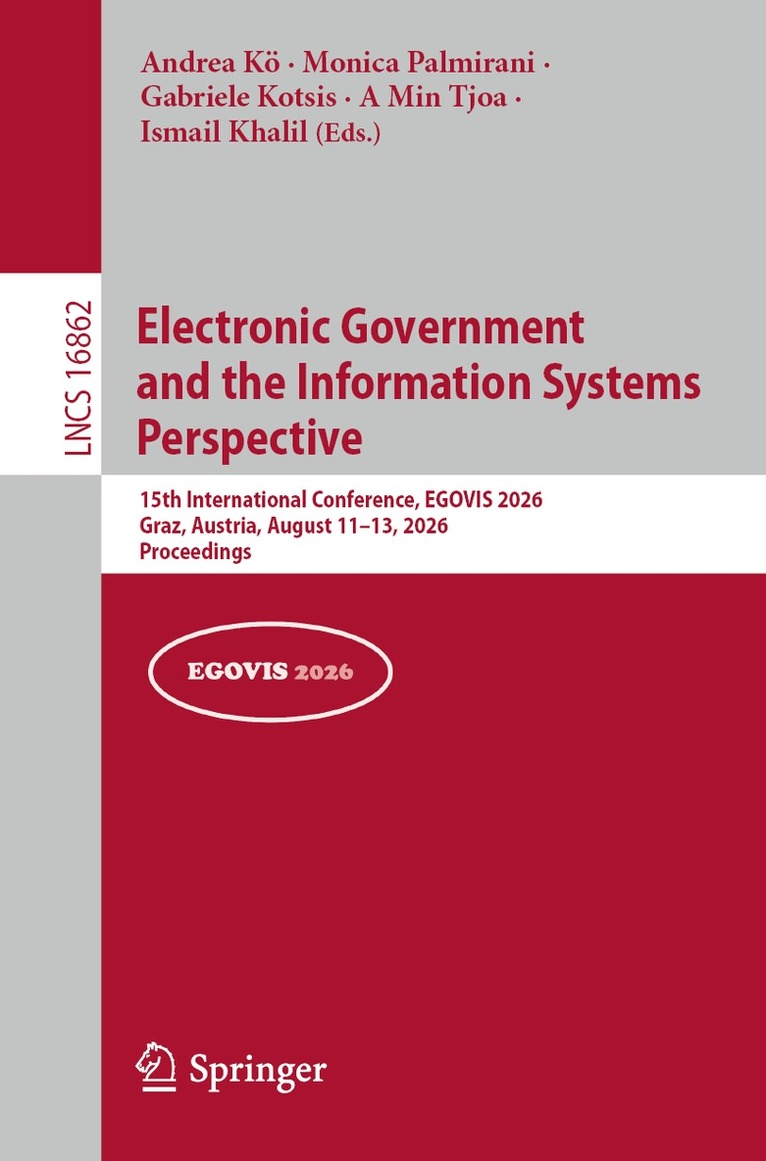
Electronic Government and the Information Systems Perspective
15th International Conference, EGOVIS 2026, Graz, Austria, August 11–13, 2026, Proceedings
Av Andrea Kö, Monica Palmirani m. fl.
Häftad, 2026
667 kr
Kommande
This book constitutes the proceedings of the 15th International Conference on Electronic Government and the Information Systems Perspective, EGOVIS 2026, held in Graz, Austria, during August 11–13, 2026, Proceedings,The 10 full and 5 short papers included in the proceedings were carefully reviewed …
Electronic Government and the Information Systems Perspective
15th International Conference, EGOVIS 2026, Graz, Austria, August 11-13, 2026, Proceedings
Av Ismail Khalil, A Min Tjoa m. fl.
E-bok, 2026
815 kr
Lägg i varukorg
This book constitutes the proceedings of the 15th International Conference on Electronic Government and the Information Systems Perspective, EGOVIS 2026, held in Graz, Austria, during August 11–13, 2026, Proceedings,The 10 full and 5 short papers included in the proceedings were carefully reviewed …
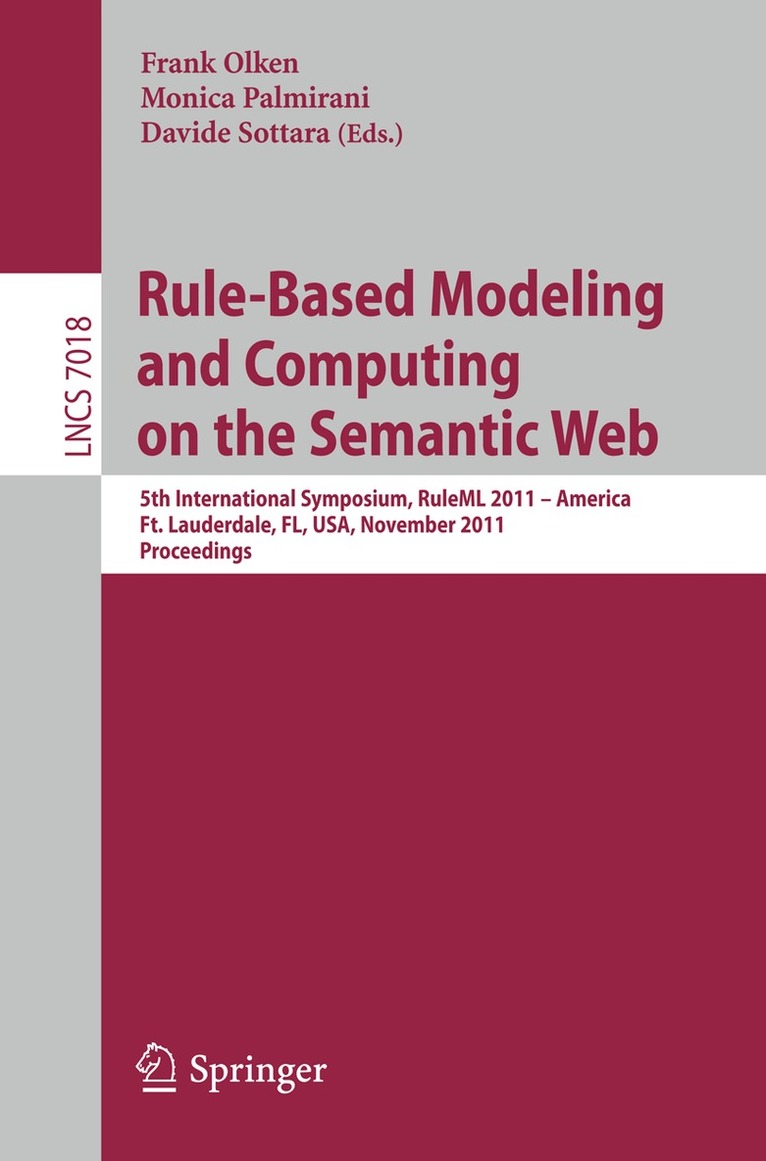
Rule-Based Modeling and Computing on the Semantic Web
5th International Symposium, RuleML 2011 - America, Ft. Lauderdale, FL, USA, November 3-5, 2011, Proceedings
Av Monica Palmirani, Davide Sottara
Häftad, 2011
568 kr
Lägg i varukorg
This book constitutes the refereed proceedings of the International RuleML Symposium, RuleML 2011-America, held in Fort Lauderdale, FL, USA, in November 2011 - collocated with the 22nd International Joint Conference on Artificial Intelligence, IJCAI 2011. It is the second of two RuleML events that …
Rule-Based Modeling and Computing on the Semantic Web
5th International Symposium, RuleML 2011 - America, Ft. Lauderdale, FL, USA, November 3-5, 2011, Proceedings
Av Davide Sottara, Monica Palmirani
E-bok, 2011
739 kr
Lägg i varukorg
This book constitutes the refereed proceedings of the International RuleML Symposium, RuleML 2011-America, held in Fort Lauderdale, FL, USA, in November 2011 - collocated with the 22nd International Joint Conference on Artificial Intelligence, IJCAI 2011. It is the second of two RuleML events that …
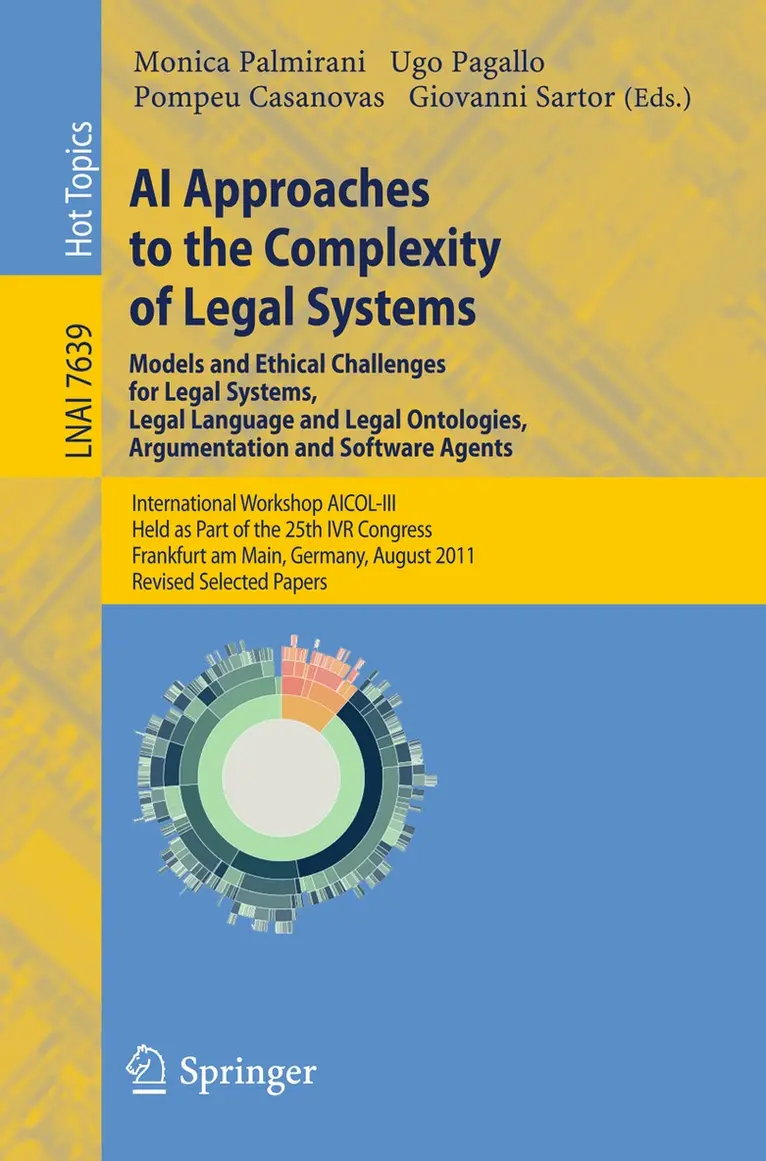
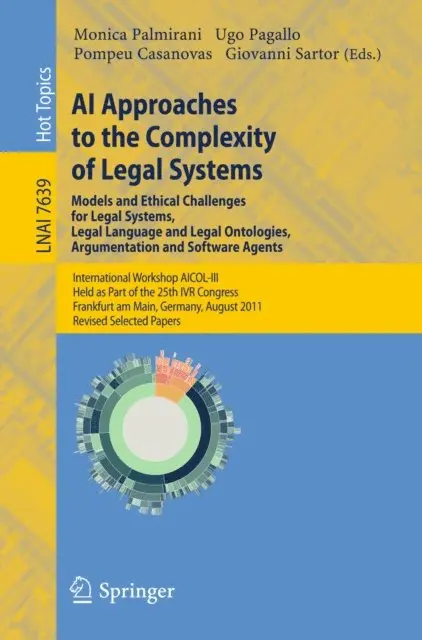
AI Approaches to the Complexity of Legal Systems - Models and Ethical Challenges for Legal Systems, Legal Language and Legal Ontologies, Argumentation and Software Agents
International Workshop AICOL-III, Held as Part of the 25th IVR Congress, Frankfurt am Main, Germany, August 15-16, 2011. Revised Selected Papers
Av Monica Palmirani, Ugo Pagallo m. fl.
Häftad, 2012
568 kr
Lägg i varukorg
The inspiring idea of this workshop series, Artificial Intelligence Approaches to the Complexity of Legal Systems (AICOL), is to develop models of legal knowledge concerning organization, structure, and content in order to promote mutual understanding and communication between different systems and …
AI Approaches to the Complexity of Legal Systems - Models and Ethical Challenges for Legal Systems, Legal Language and Legal Ontologies, Argumentation and Software Agents
International Workshop AICOL-III, Held as Part of the 25th IVR Congress, Frankfurt am Main, Germany, August 15-16, 2011. Revised Selected Papers
Av Giovanni Sartor, Pompeu Casanovas m. fl.
E-bok, 2012
675 kr
Lägg i varukorg
The inspiring idea of this workshop series, Artificial Intelligence Approaches to the Complexity of Legal Systems (AICOL), is to develop models of legal knowledge concerning organization, structure, and content in order to promote mutual understanding and communication between different systems and …
AI Approaches to the Complexity of Legal Systems
AICOL 2013 International Workshops, AICOL-IV@IVR, Belo Horizonte, Brazil, July 21-27, 2013 and AICOL-V@SINTELNET-JURIX, Bologna, Italy, December 11, 2013, Revised Selected Papers
Av Pompeu Casanovas, Ugo Pagallo m. fl.
Häftad, 2014
568 kr
Lägg i varukorg
This book constitutes revised selected papers from the two International Workshops on Artificial Intelligence Approaches to the Complexity of Legal Systems, AICOL IV and AICOL V, held in 2013. The first took place as part of the 26th IVR Congress in Belo Horizonte, Brazil, during July 21-27, 2013; …
AI Approaches to the Complexity of Legal Systems
AICOL 2013 International Workshops, AICOL-IV@IVR, Belo Horizonte, Brazil, July 21-27, 2013 and AICOL-V@SINTELNET-JURIX, Bologna, Italy, December 11, 2013, Revised Selected Papers
Av Giovanni Sartor, Monica Palmirani m. fl.
E-bok, 2014
675 kr
Lägg i varukorg
This book constitutes revised selected papers from the two International Workshops on Artificial Intelligence Approaches to the Complexity of Legal Systems, AICOL IV and AICOL V, held in 2013. The first took place as part of the 26th IVR Congress in Belo Horizonte, Brazil, during July 21-27, 2013; …
Legislative XML for the Semantic Web
Principles, Models, Standards for Document Management
Av Giovanni Sartor, Monica Palmirani m. fl.
Inbunden, 2011
1008 kr
Lägg i varukorg
This volume examines the basic layers of the standard-based creation and usage of legislation. In particular, it addresses the identification of legislative documents, their structure, the basic metadata and legislative changes. Since mature technologies and established practices are already in …
Legislative XML for the Semantic Web
Principles, Models, Standards for Document Management
Av Maria Angela Biasiotti, Enrico Francesconi m. fl.
E-bok, 2011
1342 kr
Lägg i varukorg
This volume examines the basic layers of the standard-based creation and usage of legislation. In particular, it addresses the identification of legislative documents, their structure, the basic metadata and legislative changes. Since mature technologies and established practices are already in …
Legislative XML for the Semantic Web
Principles, Models, Standards for Document Management
Av Giovanni Sartor, Monica Palmirani m. fl.
Häftad, 2013
1008 kr
Lägg i varukorg
This volume examines the basic layers of the standard-based creation and usage of legislation. In particular, it addresses the identification of legislative documents, their structure, the basic metadata and legislative changes. Since mature technologies and established practices are already in …