Monique Kremer – författare
Visar alla böcker från författaren Monique Kremer. Handla med fri frakt och snabb leverans.
9 produkter
9 produkter
E-bok
PDF, Engelska, 202526 kr
Läs direkt efter köp
Development aid has become the subject of much discussion. Why do we give aid, and does it help? What do we know about the development paths being taken by various countries, or the possibilities of helping them to achieve their goals from outside? How relevant is development aid now that remittances and foreign direct investments have increased as a result of globalization? When does aid have more negative than positive effects? What is the significance of shifting power relations in the world? And do policies focusing on issues like climate, migration, financial stability, knowledge, trade and security not have a greater impact than aid on the development opportunities of poor countries? These questions inspired the Dutch Scientific Council for Government Policy (WRR) to examine what form development aid should take in the era of globalization. At the start of 2010, on the basis of over 500 interviews with experts and an extensive literature survey, the WRR presented its far-reaching recommendations. In October 2010, the new Dutch government decided to use the report as the basis of a thorough modernization of its development policy. This book is based on the WRR report. It builds on the many responses to the report, resulting in more elaboration on specific lines of reasoning, coverage of new themes and more comprehensive analyses, without changing the core of the original report.
E-bok
Engelska, 20251 093 kr
Läs direkt efter köp
Development aid has become the subject of much discussion. Why do we give aid, and does it help? What do we know about the development paths being taken by various countries, or the possibilities of helping them to achieve their goals from outside? How relevant is development aid now that remittances and foreign direct investments have increased as a result of globalization? When does aid have more negative than positive effects? What is the significance of shifting power relations in the world? And do policies focusing on issues like climate, migration, financial stability, knowledge, trade and security not have a greater impact than aid on the development opportunities of poor countries? These questions inspired the Dutch Scientific Council for Government Policy (WRR) to examine what form development aid should take in the era of globalization. At the start of 2010, on the basis of over 500 interviews with experts and an extensive literature survey, the WRR presented its far-reaching recommendations. In October 2010, the new Dutch government decided to use the report as the basis of a thorough modernization of its development policy. This book is based on the WRR report. It builds on the many responses to the report, resulting in more elaboration on specific lines of reasoning, coverage of new themes and more comprehensive analyses, without changing the core of the original report.
E-bok
PDF, Engelska, 202527 kr
Läs direkt efter köp
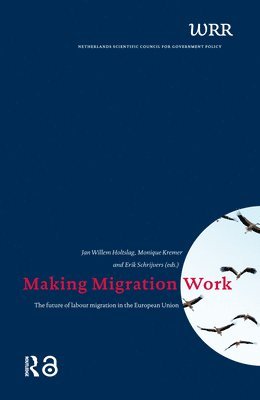
The complexion of labour migration in the European Union (EU) has altered in recent years. Not only has there been a shift in the length of time labour migrants spend abroad, but the nature, scale and direction of the migration flows have also changed dramatically. The enlargements of the EU in 2004 and 2007 were influential in this respect. A growing economy and large wage gaps encouraged a large stream of workers to leave the new Member States for the old. The EU's open internal borders made it easy for them to return home or to move on to another Member State. This publication considers what this means for the future of labour migration and how policy should address this issue.
E-bok
Engelska, 2025639 kr
Läs direkt efter köp
The complexion of labour migration in the European Union (EU) has altered in recent years. Not only has there been a shift in the length of time labour migrants spend abroad, but the nature, scale and direction of the migration flows have also changed dramatically. The enlargements of the EU in 2004 and 2007 were influential in this respect. A growing economy and large wage gaps encouraged a large stream of workers to leave the new Member States for the old. The EU's open internal borders made it easy for them to return home or to move on to another Member State. This publication considers what this means for the future of labour migration and how policy should address this issue.
Inbunden, Engelska, 2021
546 kr
Skickas inom 10-15 vardagar
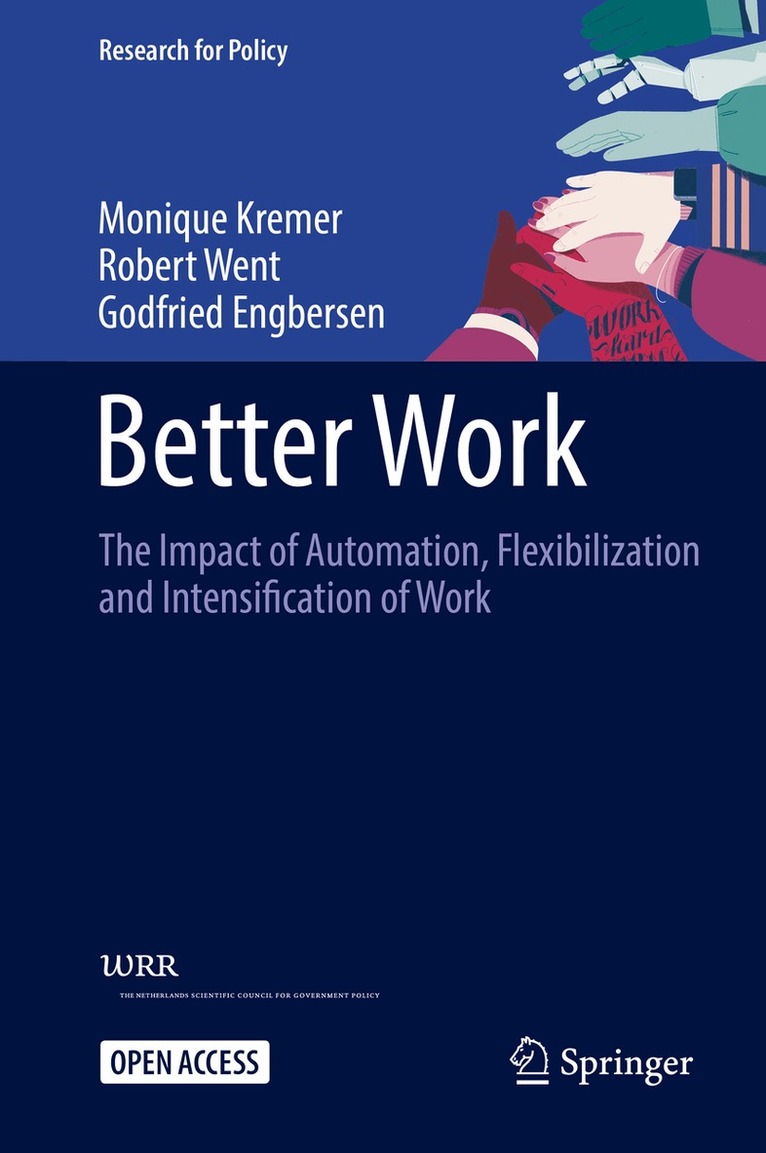
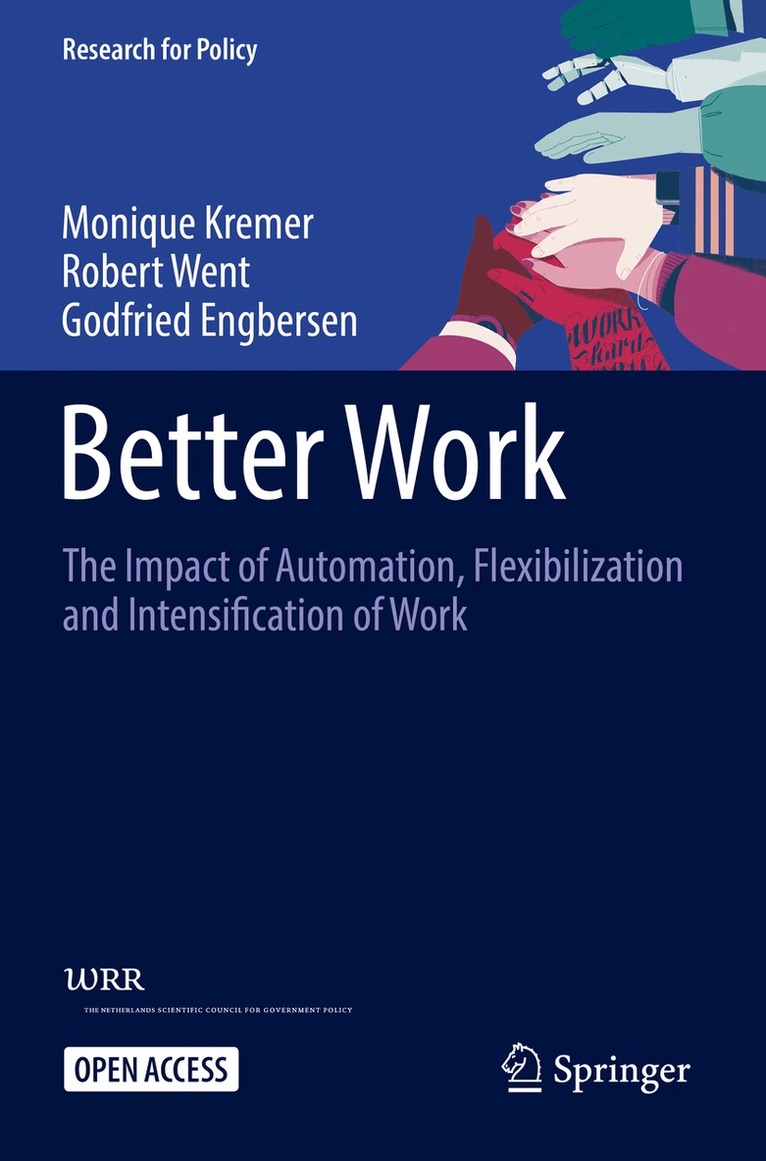
This Open Access book provides a thorough analysis of the quality of work in the Netherlands, and suggests policy proposals to promote and facilitate good work for more people. New technology, flexibilization and the intensification of work will have significant consequences for all those who will still have jobs in the future, and – much less studied so far – for the quality of their work. Good work is essential for general well-being: for the individual’s quality of life, for the economy and for society. Good work for everyone should therefore be seen as an important aspiration for companies, institutions, social partners and governments. An essential read for an international audience of academics in the field of the sociology of work, labor economics and social policy, as well as for policymakers and researchers of trade unions, and representatives of other social movements.
Häftad, Engelska, 2021
438 kr
Skickas inom 10-15 vardagar
This Open Access book provides a thorough analysis of the quality of work in the Netherlands, and suggests policy proposals to promote and facilitate good work for more people. New technology, flexibilization and the intensification of work will have significant consequences for all those who will still have jobs in the future, and – much less studied so far – for the quality of their work. Good work is essential for general well-being: for the individual’s quality of life, for the economy and for society. Good work for everyone should therefore be seen as an important aspiration for companies, institutions, social partners and governments. An essential read for an international audience of academics in the field of the sociology of work, labor economics and social policy, as well as for policymakers and researchers of trade unions, and representatives of other social movements.
Del 21 - WRR Verkenningen
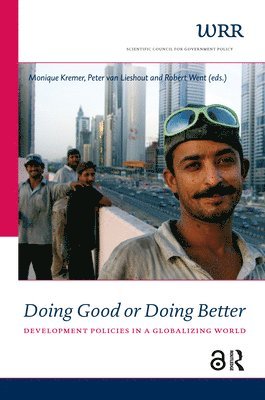
Doing Good or Doing Better
Development Policies in a Globalising World
Häftad, Engelska, 2009
1 053 kr
Skickas inom 10-15 vardagar
The world is changing, and so is the unquestioning belief that development policies are always right. Instead of focusing on the rather limited notion of poverty, this book aims to deepen our understanding of the broad issue of development. What are the drivers of development? What new issues have arisen due to globalization? And what kind of policies contribute to development in a world that is changing rapidly? The articles in this book provide insight into the muddled trajectories of development on various continents and rethink the notion of development in a globalizing, interdependent world. Taken together, the still fuzzy contours of a paradigm shift emerge from the ‘Washington Confusion’. Development can no longer be the ambitious, moral project based on a standard model of economic European or American modernization. ‘Doing better’ means being less moralistic, more modest and pragmatic, and taking seriously the path dependencies and social realities that exist in each country.
Häftad, Engelska, 2010
982 kr
Skickas inom 10-15 vardagar
The Dutch Scientific Council for Government Policy (WRR) to examined what form development aid should take in the era of globalization. This book is based on the WRR report of over 500 interviews in 2010.
Häftad, Engelska, 2013
572 kr
Skickas inom 10-15 vardagar
The complexion of labour migration in the European Union (EU) has altered in recent years. Not only has there been a shift in the length of time labour migrants spend abroad, but the nature, scale and direction of the migration flows have also changed dramatically. The enlargements of the EU in 2004 and 2007 were influential in this respect. A growing economy and large wage gaps encouraged a large stream of workers to leave the new Member States for the old. The EU’s open internal borders made it easy for them to return home or to move on to another Member State. This publication considers what this means for the future of labour migration and how policy should address this issue.