Moritz Balz – författare
Visar alla böcker från författaren Moritz Balz. Handla med fri frakt och snabb leverans.
7 produkter
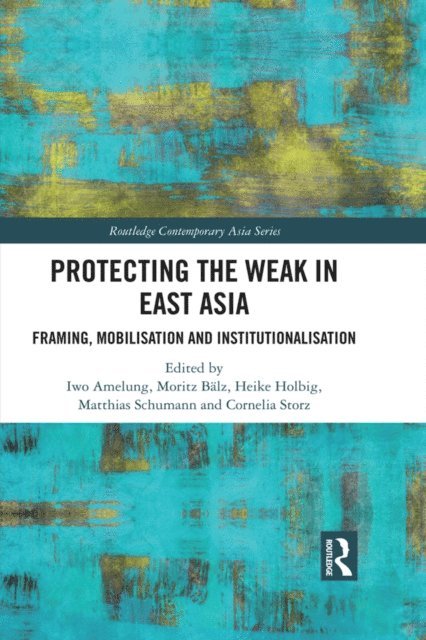
Protecting the Weak in East Asia
Framing, Mobilisation and Institutionalisation
Av Cornelia Storz, Matthias Schumann m. fl.
E-bok, 2018
796 kr
Lägg i varukorg
This book investigates public claims for the protection of weak groups and interests in Japan and China from the nineteenth century to the present day. Taking an interdisciplinary approach, it engages with ongoing global debates relevant to both Western and non-Western societies whilst also …
Protecting the Weak in East Asia
Framing, Mobilisation and Institutionalisation
Av Cornelia Storz, Matthias Schumann m. fl.
E-bok, 2018
814 kr
Lägg i varukorg
This book investigates public claims for the protection of weak groups and interests in Japan and China from the nineteenth century to the present day. Taking an interdisciplinary approach, it engages with ongoing global debates relevant to both Western and non-Western societies whilst also …
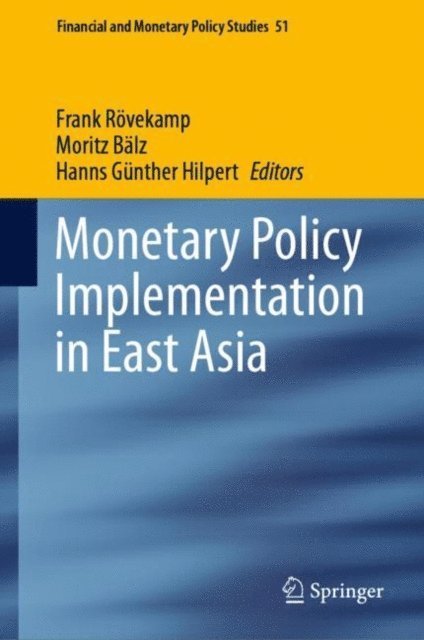
Monetary Policy Implementation in East Asia
Av Hanns Gunther Hilpert, Moritz Balz m. fl.
E-bok, 2020
1502 kr
Lägg i varukorg
This book shares essential insights into the implementation of monetary policy in various East Asian countries. Highlighting case studies from China, Taiwan, Korea, Japan and Singapore, leading economists and practitioners from central banks illustrate how dependent effective monetary policy is on …
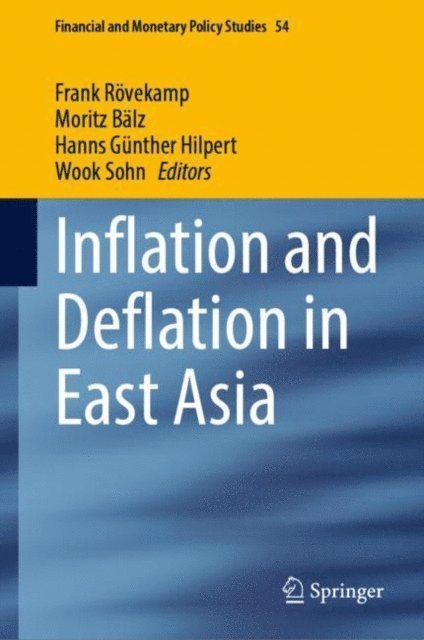
Inflation and Deflation in East Asia
Av Wook Sohn, Hanns Gunther Hilpert m. fl.
E-bok, 2023
2291 kr
Lägg i varukorg
In light of the deflationary trends following the 2008/2009 financial crisis, as well as the return of inflation triggered by the COVID-19 pandemic and the war in Ukraine, this book offers insights into price stability issues in various East Asian countries. Leading scholars from the fields of …
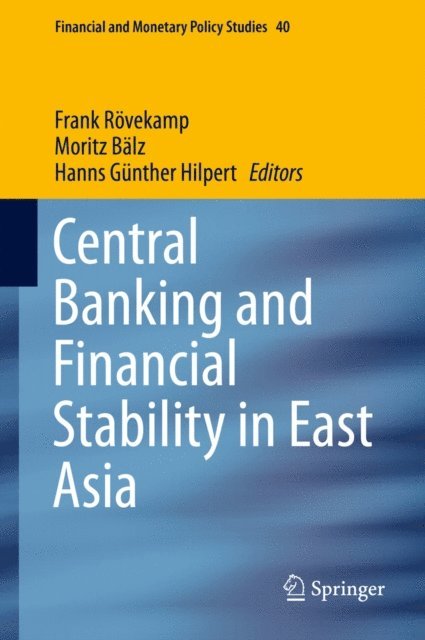
Central Banking and Financial Stability in East Asia
Av Hanns Gunther Hilpert, Moritz Balz m. fl.
E-bok, 2015
1502 kr
Lägg i varukorg
This book explores financial stability issues in the context of East Asia. In the East Asian region financial stability has been a major concern ever since the Asian crisis of 1997/98, which still looms large in the collective memory of the affected countries. The global crisis, which had its …
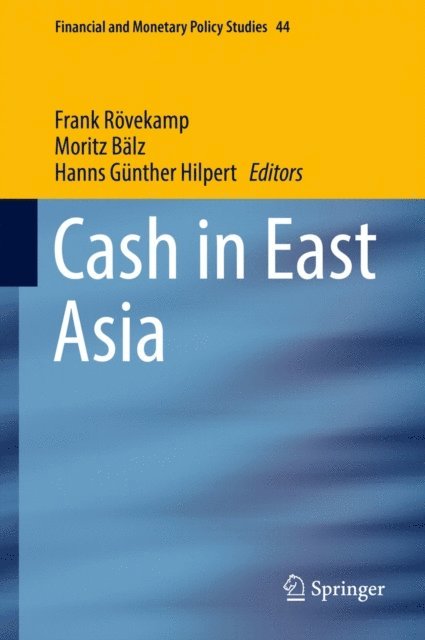
Cash in East Asia
Av Hanns Gunther Hilpert, Moritz Balz m. fl.
E-bok, 2017
1617 kr
Lägg i varukorg
This book presents contributions by leading academics and practitioners from central banks to shed light on the function and impact of cash in Asian countries. It explores the impact of cash on society, the role of cash in monetary policy, and the future of cash in various monetary systems, …
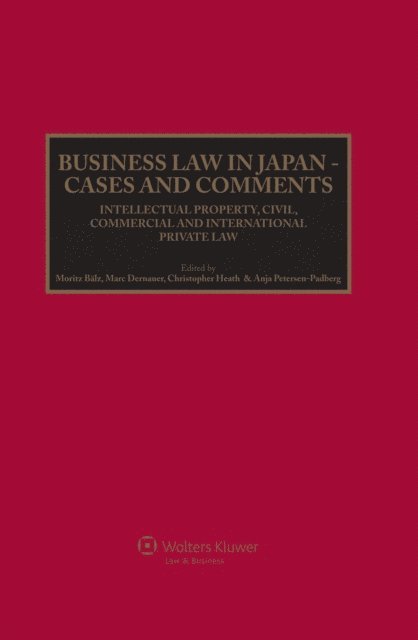
Business Law in Japan
Cases and Comments. Intellectual Property, Civil, Commercial and International Private Law
Av Moritz Balz, Christopher Heath
E-bok, 2012
3002 kr
Lägg i varukorg
Compilations of cases with commentary – in Japanese Hanrei Hyakusen – often provide the most practical way to obtain a quick and reliable understanding of a specific field of law, as well as guidance on how best to proceed in specific situations. In this respect, leading cases much more than …