Mozaharul Alam - Böcker
Visar alla böcker från författaren Mozaharul Alam. Handla med fri frakt och snabb leverans.
4 produkter
4 produkter
671 kr
Skickas inom 10-15 vardagar
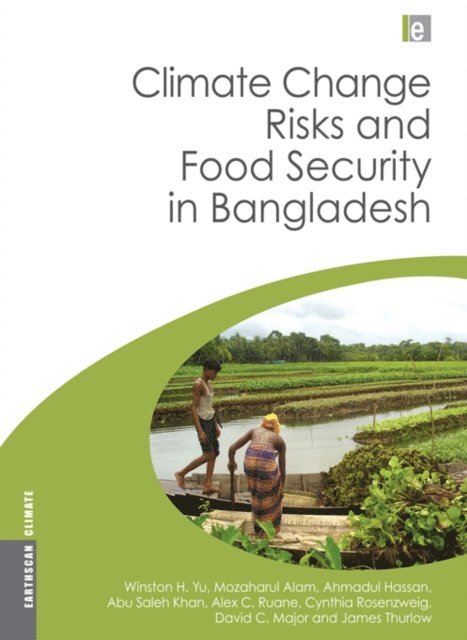
Managing climate variability and change remains a key development and food security issue in Bangladesh. Despite significant investments, floods, droughts, and cyclones during the last two decades continue to cause extensive economic damage and impair livelihoods. Climate change will pose additional risks to ongoing efforts to reduce poverty. This book examines the implications of climate change on food security in Bangladesh and identifies adaptation measures in the agriculture sector using a comprehensive integrated framework.First, the most recent science available is used to characterize current climate and hydrology and its potential changes. Second, country-specific survey and biophysical data is used to derive more realistic and accurate agricultural impact functions and simulations. A range of climate risks (i.e. warmer temperatures, higher carbon dioxide concentrations, changing characteristics of floods, droughts and potential sea level rise) is considered to gain a more complete picture of potential agriculture impacts. Third, while estimating changes in production is important, economic responses may to some degree buffer against the physical losses predicted, and an assessment is made of these. Food security is dependent not only on production, but also future food requirements, income levels and commodity prices. Finally, adaptation possibilities are identified for the sector. This book is the first to combine these multiple disciplines and analytical procedures to comprehensively address these impacts. The framework will serve as a useful guide to design policy intervention strategies and investments in adaptation measures.
1 181 kr
Tillfälligt slut
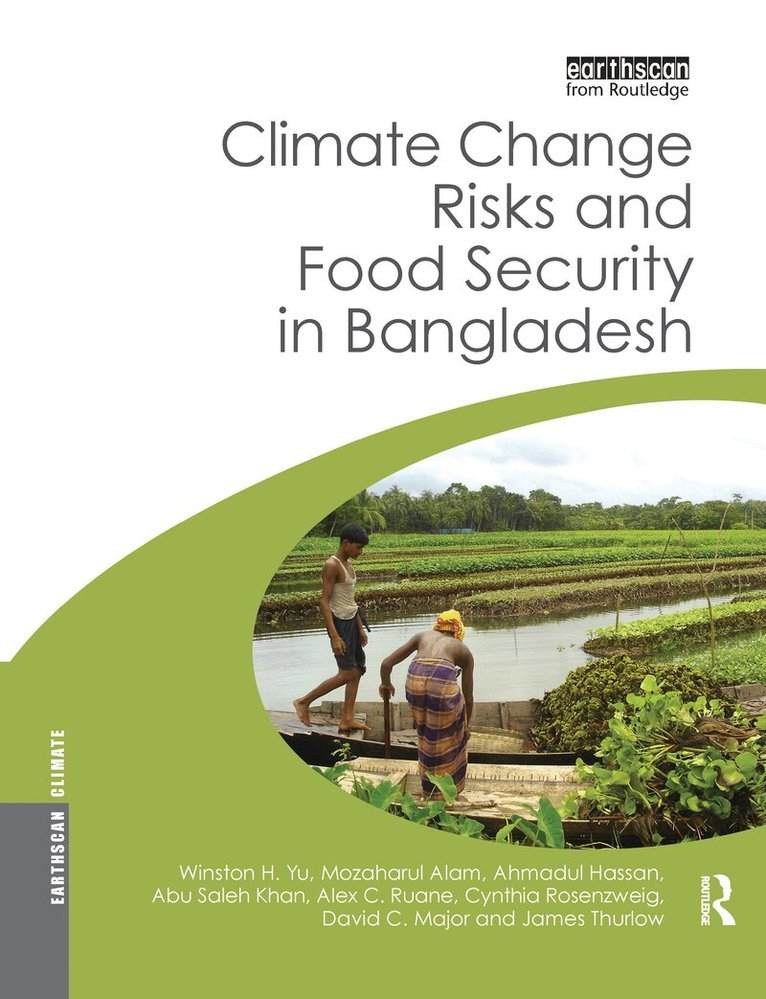
Managing climate variability and change remains a key development and food security issue in Bangladesh. Despite significant investments, floods, droughts, and cyclones during the last two decades continue to cause extensive economic damage and impair livelihoods. Climate change will pose additional risks to ongoing efforts to reduce poverty. This book examines the implications of climate change on food security in Bangladesh and identifies adaptation measures in the agriculture sector using a comprehensive integrated framework.First, the most recent science available is used to characterize current climate and hydrology and its potential changes. Second, country-specific survey and biophysical data is used to derive more realistic and accurate agricultural impact functions and simulations. A range of climate risks (i.e. warmer temperatures, higher carbon dioxide concentrations, changing characteristics of floods, droughts and potential sea level rise) is considered to gain a more complete picture of potential agriculture impacts. Third, while estimating changes in production is important, economic responses may to some degree buffer against the physical losses predicted, and an assessment is made of these. Food security is dependent not only on production, but also future food requirements, income levels and commodity prices. Finally, adaptation possibilities are identified for the sector. This book is the first to combine these multiple disciplines and analytical procedures to comprehensively address these impacts. The framework will serve as a useful guide to design policy intervention strategies and investments in adaptation measures.
1 473 kr
Skickas inom 10-15 vardagar
This volume provides an overview of the climate change adaptation objectives set, actions taken, and challenges faced by several countries in the Asia-Pacific region.
1 473 kr
Skickas inom 10-15 vardagar
This volume provides an overview of the climate change adaptation objectives set, actions taken, and challenges faced by several countries in the Asia-Pacific region. The majority of the populations in this region struggle to make a living from subsistence agriculture, and livelihoods are highly dependent on natural ecosystem services which are likely to be severely affected by climate change. Cases discussed in this book highlight successes made by governments towards achieving adaptation objectives, and efforts required to overcome challenges. While significant economic advances have been made, the pace of growth has been slow to impact the lives of a majority of the people who live below the poverty line. The chapters highlight adaptation actions for protecting people and their livelihoods in priority sectors, maintaining food and water security, supporting socio-economic stability including poverty reduction, and climate risk management. This book also maximizes readers' insights into the knowledge gaps and limitations of stated adaptation goals, and the bottlenecks that hinder implementation in different regions.