Muhammad Mubeen – författare
Visar alla böcker från författaren Muhammad Mubeen. Handla med fri frakt och snabb leverans.
9 produkter
9 produkter
Inbunden, Engelska, 2021
1 741 kr
Skickas inom 10-15 vardagar
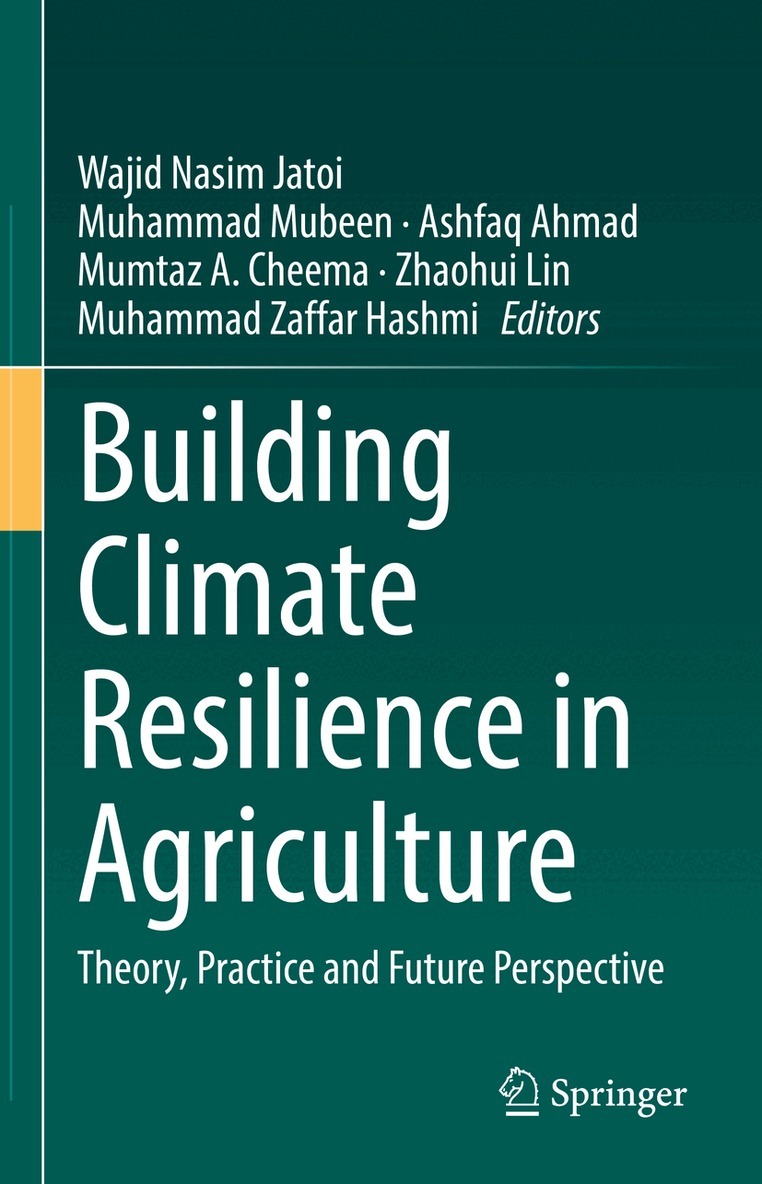
This volume discusses the need to adopt Climate-Resilient Agriculture (CRA) practices to address the increasing global impact that climate change has on agricultural productivity and agriculture-dependent communities. This approach applies technological, policy and economic measures to achieve sustainable agricultural growth in the sectors of grain, fruit, vegetable, fiber, feed, livestock, fisheries and forestry, with the ultimate goal of adapting and building resilience to climate change. The book also uses GIS, crop modeling and remote sensing techniques for future climate resilience applications in agriculture, and covers pest control measures that avoid the use of pesticides to boost crop and livestock productivity for improved food security. The book will be of interest to researchers and students in environmental science, climate science, sustainability and agriculture, as well as policy makers and environmental organizations.
E-bok
Engelska, 20212 207 kr
Läs direkt efter köp
This volume discusses the need to adopt Climate-Resilient Agriculture (CRA) practices to address the increasing global impact that climate change has on agricultural productivity and agriculture-dependent communities. This approach applies technological, policy and economic measures to achieve sustainable agricultural growth in the sectors of grain, fruit, vegetable, fiber, feed, livestock, fisheries and forestry, with the ultimate goal of adapting and building resilience to climate change. The book also uses GIS, crop modeling and remote sensing techniques for future climate resilience applications in agriculture, and covers pest control measures that avoid the use of pesticides to boost crop and livestock productivity for improved food security. The book will be of interest to researchers and students in environmental science, climate science, sustainability and agriculture, as well as policy makers and environmental organizations.
Häftad, Engelska, 2022
1 741 kr
Skickas inom 10-15 vardagar
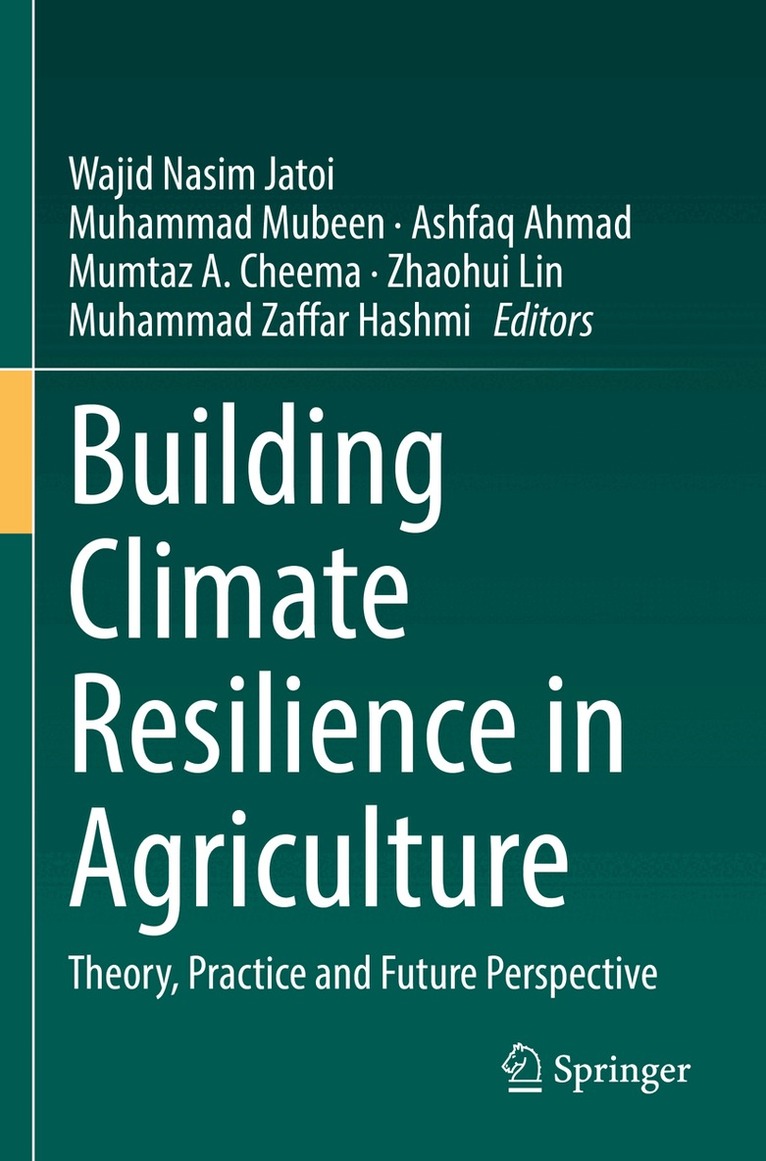
This volume discusses the need to adopt Climate-Resilient Agriculture (CRA) practices to address the increasing global impact that climate change has on agricultural productivity and agriculture-dependent communities. This approach applies technological, policy and economic measures to achieve sustainable agricultural growth in the sectors of grain, fruit, vegetable, fiber, feed, livestock, fisheries and forestry, with the ultimate goal of adapting and building resilience to climate change. The book also uses GIS, crop modeling and remote sensing techniques for future climate resilience applications in agriculture, and covers pest control measures that avoid the use of pesticides to boost crop and livestock productivity for improved food security. The book will be of interest to researchers and students in environmental science, climate science, sustainability and agriculture, as well as policy makers and environmental organizations.
Inbunden, Engelska, 2023
1 958 kr
Skickas inom 10-15 vardagar
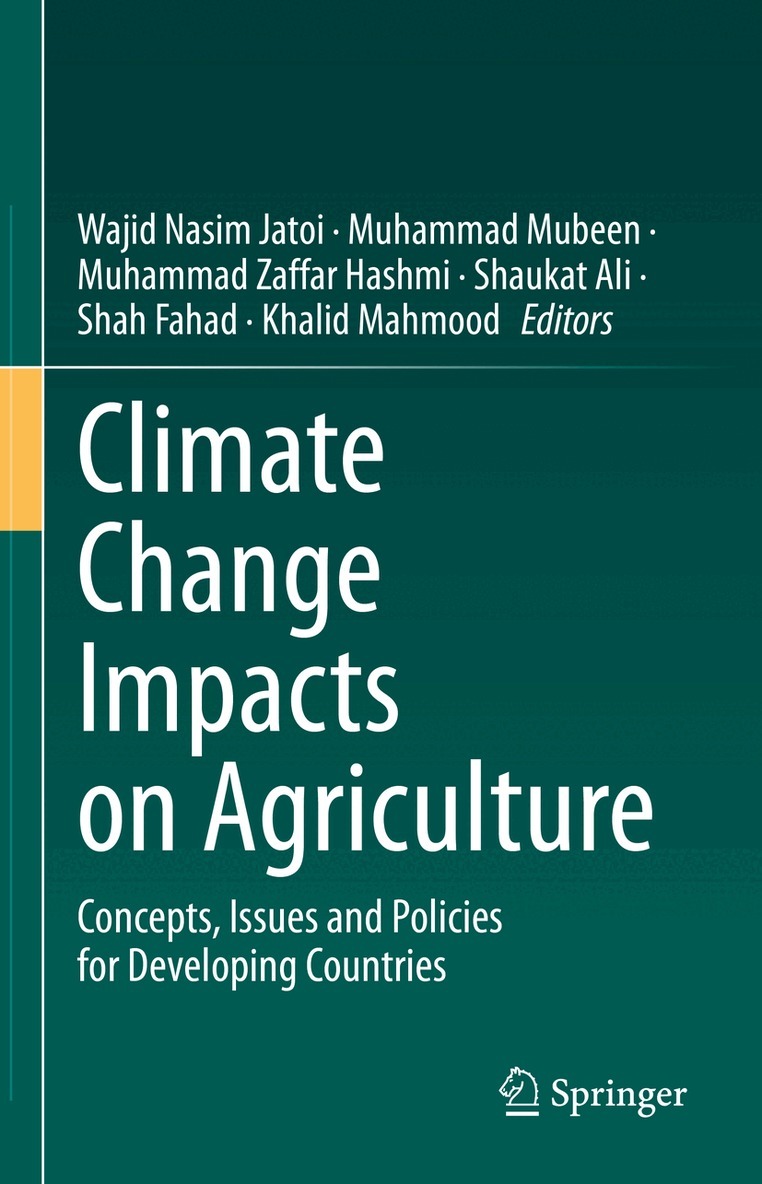
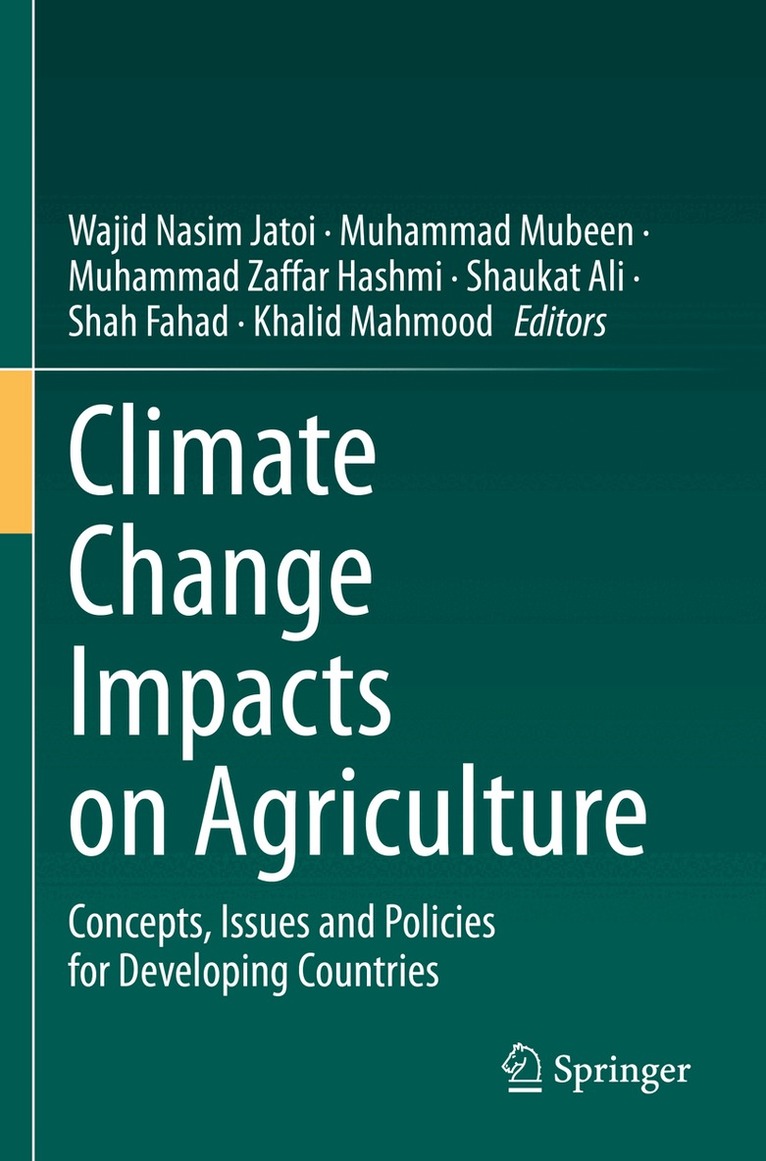
This book offers perspective on climate change impacts on developing nations from scholars within those nations, primarily focusing on agriculture. Throughout three parts containing a total of over twenty chapters from scholars in developing countries, it aims to offer guidelines for researchers, policymakers, and farmers themselves on how developing countries can achieve sustainable food security and continue development on a sustainable basis.Part I covers climate change concepts and issues for developing countries; Part II offers chapters dealing with social issues surrounding climate change and agriculture; Part III addresses practical policies that can be implemented to work toward achieving the goals described above. Agriculture is a key sector in developing countries in terms of economic growth and social well-being. Adapting and building resilience to climate change means increasing agricultural productivity and incomes and reducing greenhouse gases emissions. This volume represents an effort toward collecting knowledge on the technical, policy and investment measures to achieve sustainable agricultural growth in the sectors of grain, fruit, vegetable, fiber, feed, livestock, fisheries and forest under climate change in one place.
E-bok
Engelska, 20232 532 kr
Läs direkt efter köp
This book offers perspective on climate change impacts on developing nations from scholars within those nations, primarily focusing on agriculture. Throughout three parts containing a total of over twenty chapters from scholars in developing countries, it aims to offer guidelines for researchers, policymakers, and farmers themselves on how developing countries can achieve sustainable food security and continue development on a sustainable basis.Part I covers climate change concepts and issues for developing countries; Part II offers chapters dealing with social issues surrounding climate change and agriculture; Part III addresses practical policies that can be implemented to work toward achieving the goals described above. Agriculture is a key sector in developing countries in terms of economic growth and social well-being. Adapting and building resilience to climate change means increasing agricultural productivity and incomes and reducing greenhouse gases emissions. This volume represents an effort toward collecting knowledge on the technical, policy and investment measures to achieve sustainable agricultural growth in the sectors of grain, fruit, vegetable, fiber, feed, livestock, fisheries and forest under climate change in one place.
Engelska, 2023
648 kr
Skickas inom 5-8 vardagar
Häftad, Engelska, 2024
1 958 kr
Skickas inom 10-15 vardagar
This book offers perspective on climate change impacts on developing nations from scholars within those nations, primarily focusing on agriculture. Throughout three parts containing a total of over twenty chapters from scholars in developing countries, it aims to offer guidelines for researchers, policymakers, and farmers themselves on how developing countries can achieve sustainable food security and continue development on a sustainable basis.Part I covers climate change concepts and issues for developing countries; Part II offers chapters dealing with social issues surrounding climate change and agriculture; Part III addresses practical policies that can be implemented to work toward achieving the goals described above. Agriculture is a key sector in developing countries in terms of economic growth and social well-being. Adapting and building resilience to climate change means increasing agricultural productivity and incomes and reducing greenhouse gases emissions. This volume represents an effort toward collecting knowledge on the technical, policy and investment measures to achieve sustainable agricultural growth in the sectors of grain, fruit, vegetable, fiber, feed, livestock, fisheries and forest under climate change in one place.
Inbunden, Engelska, 2025
1 741 kr
Skickas inom 10-15 vardagar
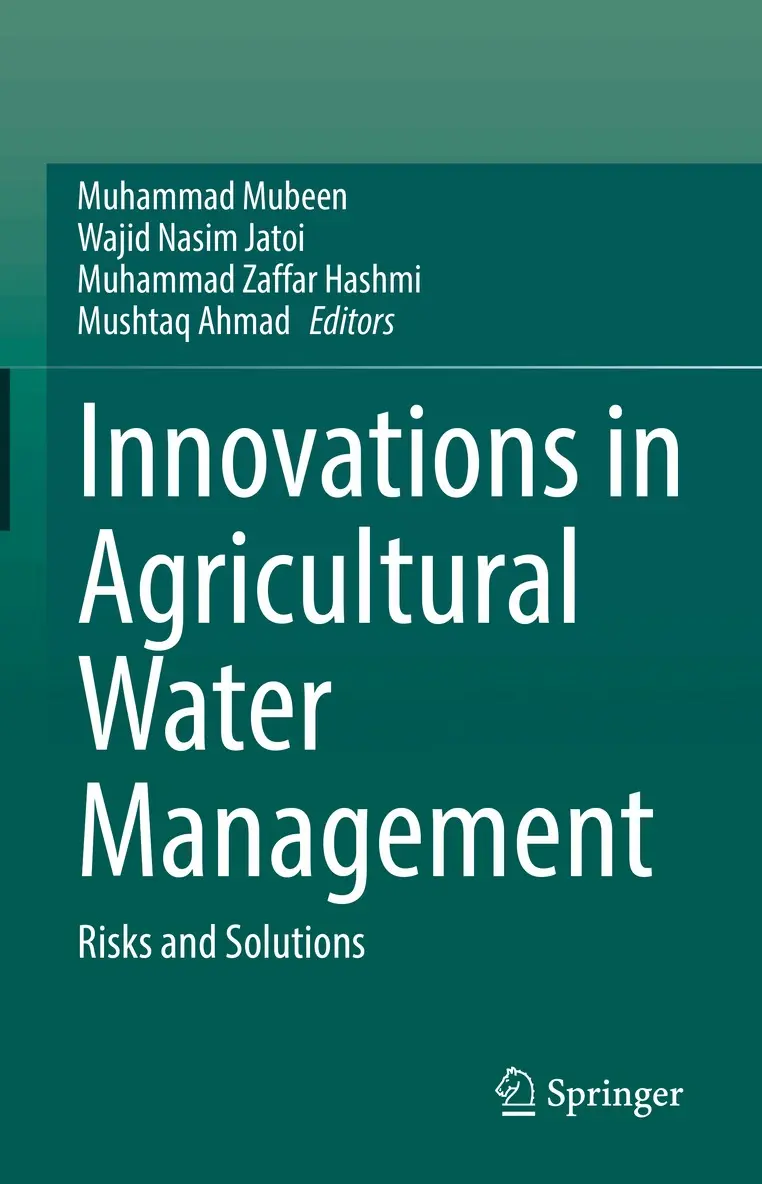
Due to climate change, population growth and urbanization, competition for water resources is expected to increase, with a particular impact on agriculture. Sustainable water management in agriculture is essential for ensuring food security and environmental protection. Sustainable agricultural water management includes integrated water resources management, the use of water-efficient technologies, and the adoption of water conservation practices. This contributed volume offers background and cases dealing with a variety of ways to sustainably manage water for agriculture in the context of climate change. It investigates the positives and downsides of a variety of approaches, including but not limited to precision agriculture, water harvesting, and wastewater for agricultural purposes. A number of biological and physical sciences (e.g. biotechnology, remote sensing, GIS and ecohydrology) can be involved for better adoption of innovations in agricultural water management. The book also describes possibilities of cultivars that use less water and detailed techniques for measuring and assessing water quality and quantity.
E-bok
Engelska, 20252 130 kr
Läs direkt efter köp
Due to climate change, population growth and urbanization, competition for water resources is expected to increase, with a particular impact on agriculture. Sustainable water management in agriculture is essential for ensuring food security and environmental protection. Sustainable agricultural water management includes integrated water resources management, the use of water-efficient technologies, and the adoption of water conservation practices. This contributed volume offers background and cases dealing with a variety of ways to sustainably manage water for agriculture in the context of climate change. It investigates the positives and downsides of a variety of approaches, including but not limited to precision agriculture, water harvesting, and wastewater for agricultural purposes. A number of biological and physical sciences (e.g. biotechnology, remote sensing, GIS and ecohydrology) can be involved for better adoption of innovations in agricultural water management. The book also describes possibilities of cultivars that use less water and detailed techniques for measuring and assessing water quality and quantity.