Muhammad Uzair – författare
Visar alla böcker från författaren Muhammad Uzair. Handla med fri frakt och snabb leverans.
1 produkt
1 produkt
2 411 kr
Kommande
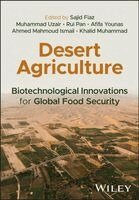
Biotechnological strategies for building resilient food systems in arid regions As climate change shrinks arable land, arid and semi-arid regions represent critical frontiers for food production. Desert Agriculture: Biotechnological Innovations for Global Food Security assembles a team of crop scientists and biotechnologists to present integrated farming systems, climate-smart production methods, and regenerative practices that optimize water use, restore degraded soils, and harness renewable resources. The volume details AI-driven crop modelling, data analytics for resource optimization, and mechanization approaches adapted to desert environments. Biotechnological coverage spans genetic engineering, stress-tolerance strategies, and beneficial microorganisms that enhance crop resilience. Case studies illustrate real-world applications, while dedicated sections examine how traditional agronomic knowledge integrates with modern molecular and computational tools for sustainable outcomes. Readers will also find: Policy frameworks and actionable strategies designed to advance sustainable farming practices and secure long-term nutrition in water-scarce regionsHydroponics and drip irrigation systems engineered to maximize yields while minimizing freshwater consumption across diverse arid landscape conditionsRegenerative soil management techniques including saline water utilization and solar energy integration for desert-adapted agricultural production systemsTranscriptomic and metabolomic approaches to identifying and developing stress-tolerant crop varieties suited for extreme heat and drought conditionsEvidence-based guidance on combining indigenous farming knowledge with genome editing and bioinformatics for culturally grounded crop improvement programsDesigned for plant and crop scientists, biotechnologists, agronomists, botanists, and policymakers, Desert Agriculture delivers the research foundations, technological frameworks, and practical case studies needed to transform unproductive arid landscapes into sustainable, climate-resilient food production systems for current and future generations.