Muysken Pieter Muysken – författare
Visar alla böcker från författaren Muysken Pieter Muysken. Handla med fri frakt och snabb leverans.
5 produkter
5 produkter
E-bok
Engelska, 20191 305 kr
Läs direkt efter köp
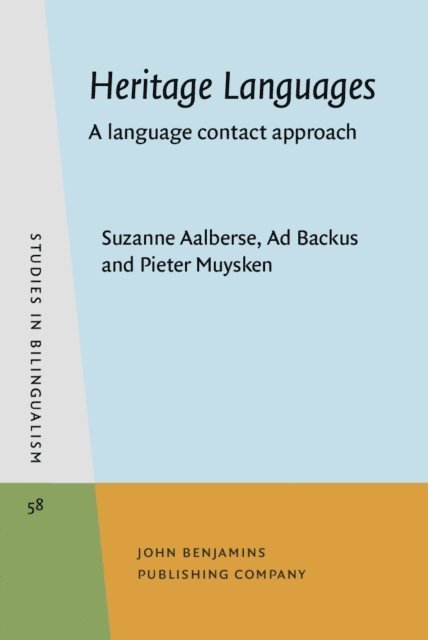
Heritage languages, such as the Turkish varieties spoken in Berlin or the Spanish used in Los Angeles, are non-dominant languages, often with little prestige. Their speakers also speak the dominant language of the country they live in. Often heritage languages undergo changes due to their special status. They have received a lot of scholarly attention and provide a link between academic concerns and educational issues. This book takes a language contact perspective: we consider heritage languages from the perspective of their history, their structural properties, and their interaction with other surrounding languages.
E-bok
PDF, Engelska, 19861 588 kr
Läs direkt efter köp
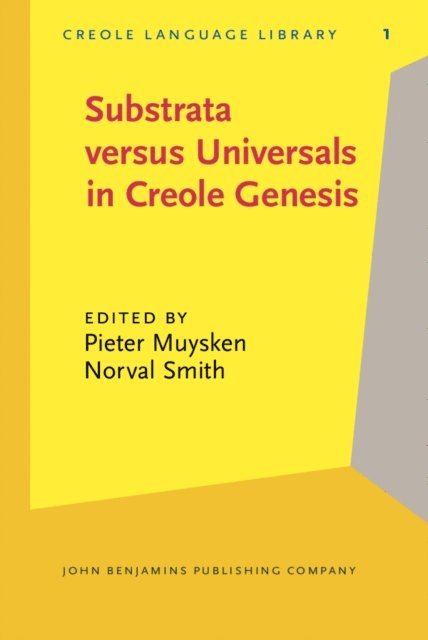
Two of the most prominent hypotheses about why the structures of the Creole languages of the Atlantic and the Pacific differ are the universalist and he substrate hypotheses. The universalist hypothesis claims, essentially, that the particular grammatical properties of Creole languages directly reflect universal aspects of the human language capacity, and thus Creole genesis involves, then, the stripping away of the accretions of language history. The substrate hypothesis claims, on the other hand, that creole genesis results from the confrontation of two systems, the native languages of the colonized groups, and the dominant colonial language, and that the native language leaves strong traces in the resulting Creole. The contributions of this ground breaking collection present new and historical research on the old debate of substrata versus universals in Creole languages.
E-bok
PDF, Engelska, 20111 305 kr
Läs direkt efter köp
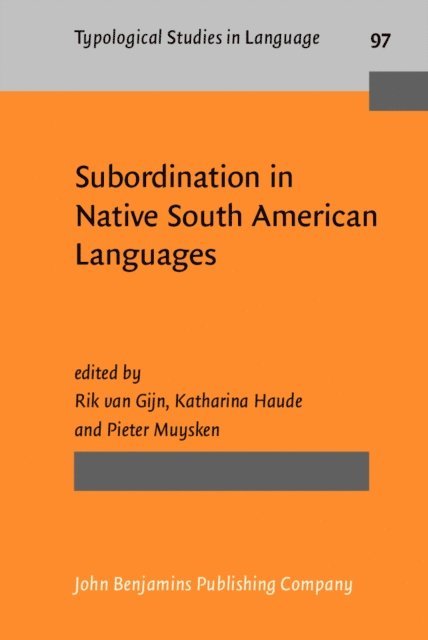
In terms of its linguistic and cultural make-up, the continent of South America provides linguists and anthropologists with a complex puzzle of language diversity. The continent teems with small language families and isolates, and even languages spoken in adjacent areas can be typologically vastly different from each other. This volume intends to provide a taste of the linguistic diversity found in South America within the area of clause subordination. The potential variety in the strategies that languages can use to encode subordinate events is enormous, yet there are clearly dominant patterns to be discerned: switch reference marking, clause chaining, nominalization, and verb serialization. The book also contributes to the continuing debate on the nature of syntactic complexity, as evidenced in subordination.
E-bok
PDF, Engelska, 20081 447 kr
Läs direkt efter köp
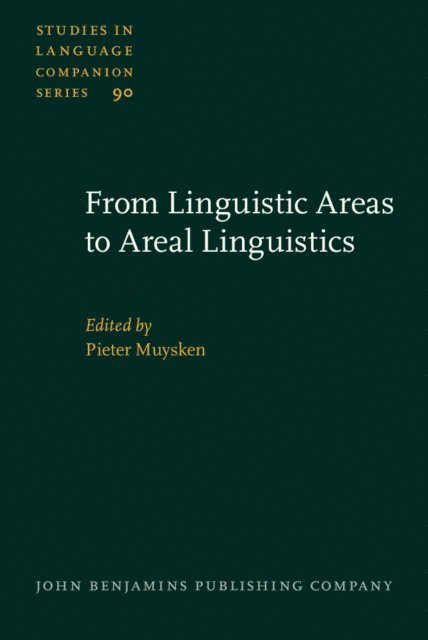
From linguistic areas to areal linguistics explores language description and typology in terms of areal background, presenting case studies in areal linguistics. Some concern well-established linguistic areas such as the Balkan, other regions such as East Nusantara (Indonesia) and the Guapore-Mamore (Amazon) regions have never before been studied in an areal perspective, and yet other areas are involved in current debates. The insight has gained ground that languages owe many of their characteristics to the languages they are in contact with over time. Yet the nature of these areal influences remains a matter of debate. Furthermore, areas are often hard to define. Hence the title: a shift from linguistic areas as concrete and circumscribed objects to a new way of doing linguistics: areally. New findings include the observation that there may be many more language areas than previously recognized. The book is primarily directed at linguists working in descriptive, comparative, historical and typological linguistics. Since it covers linguistic areas from four continents, it will have a wide appeal.
E-bok
PDF, Engelska, 19941 714 kr
Läs direkt efter köp
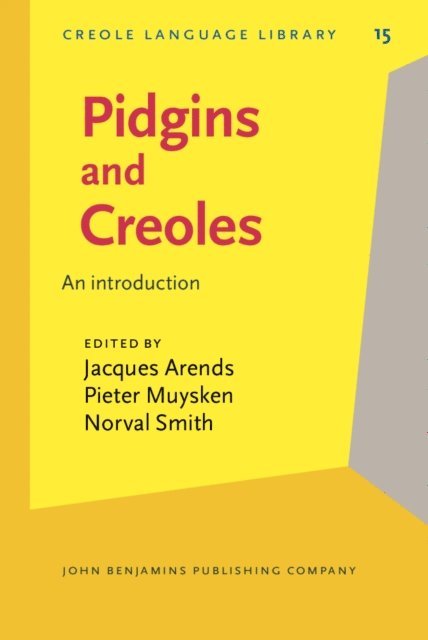
This introduction to the linguistic study of pidgin and creole languages is clearly designed as an introductory course book. It does not demand a high level of previous linguistic knowledge. Part I: General Aspects and Part II: Theories of Genesis constitute the core for presentation and discussion in the classroom, while Part III: Sketches of Individual Languages (such as Eskimo Pidgin, Haitian, Saramaccan, Shaba Swahili, Fa d''Ambu, Papiamentu, Sranan, Berbice Dutch) and Part IV: Grammatical Features (such as TMA particles and auxiliaries, noun phrases, reflexives, serial verbs, fronting) can form the basis for further exploration. A concluding chapter draws together the different strands of argumentation, and the annotated list provides the background information on several hundred pidgins, creoles and mixed languages.Diversity rather than unity is taken to be the central theme, and for the first time in an introduction to pidgins and creoles, the Atlantic creoles receive the attention they deserve. Pidgins are not treated as necessarily an intermediate step on the way to creoles, but as linguistic entities in their own right with their own characteristics. In addition to pidgins, mixed languages are treated in a separate chapter.Research on pidgin and creole languages during the past decade has yielded an abundance of uncovered material and new insights. This introduction, written jointly by the creolists of the University of Amsterdam, could not have been written without recourse to this new material.