Smith Norval Smith – författare
Visar alla böcker från författaren Smith Norval Smith. Handla med fri frakt och snabb leverans.
6 produkter
6 produkter
E-bok
Engelska, 20201 384 kr
Läs direkt efter köp
Issues in multilingualism and its implications for communities and society at large, language acquisition and use, language diversification, and creative language use associated with new linguistic identities have become hot topics in both scientific and popular debates. A ubiquitous aspect of multilingualism is language contact. This book contains twelve articles that discuss specific aspects of Contact Linguistics. These articles cover a wide range of topics in the field, including creoles, areal linguistics, language mixing, and the sociolinguistic aspects of interactions with audiences. The book is dedicated to Pieter Muysken whose work on pidgin and creole languages, mixed languages, code-switching, bilingualism, and areal linguistics has been ground-breaking and inspirational for the authors in this book, as well as numerous other scholars working on the various facets of this rapidly expanding field.
E-bok
PDF, Engelska, 20121 384 kr
Läs direkt efter köp
This is a new contribution to a theory of reiteration in natural languages, with a special focus on creoles. Reiteration is meant to denote any situation where the same form occurs (at least) twice within the boundaries of some linguistic domain. By including two case studies bearing on Hebrew and Breton alongside five chapters on creole languages (Surinam creole, Haitian, Mauritian, Sao Tome and Pitchi), this volume brings counter-evidence to the claim that reiteration phenomena are particularly typical of creoles. And by exploring the syntax of reiteration alongside its morphology, the authors are led to challenge the 'iconic' theory of 'reduplication' proposed in several other studies of similar phenomena. This volume will be relevant for creole studies, but also for readers more generally interested in language universals and the architecture of grammars.
E-bok
PDF, Engelska, 19861 588 kr
Läs direkt efter köp
Two of the most prominent hypotheses about why the structures of the Creole languages of the Atlantic and the Pacific differ are the universalist and he substrate hypotheses. The universalist hypothesis claims, essentially, that the particular grammatical properties of Creole languages directly reflect universal aspects of the human language capacity, and thus Creole genesis involves, then, the stripping away of the accretions of language history. The substrate hypothesis claims, on the other hand, that creole genesis results from the confrontation of two systems, the native languages of the colonized groups, and the dominant colonial language, and that the native language leaves strong traces in the resulting Creole. The contributions of this ground breaking collection present new and historical research on the old debate of substrata versus universals in Creole languages.
E-bok
PDF, Engelska, 20091 384 kr
Läs direkt efter köp
In recent years, there has been a new interest in evaluating 'complex' structures in languages. The implications of such studies are varied, e.g., the distinction between supposedly more complex and less complex languages, how complexity relates to human knowledge of language, and the role of the reduction or increase of complexity in language change and creolization. This book focuses on the latter issue, but the conclusions presented here hold of typological 'complexity' in general. The chapters in this book show that the notion of complexity as conceived of in linguistics mainly centres on the outer manifestations of language (e.g., numbers of affixes). This exercise is useful in establishing the patterning of languages in terms of their degrees of analyticity or synthesis, but it fails to address the properties of the inner rules of these grammars, and how these relate to the computational system that governs the human language capacity. Put simply, issues of complexity should not be equated with the complexity observed in surface patterns of grammars alone.
E-bok
PDF, Engelska, 20011 556 kr
Läs direkt efter köp
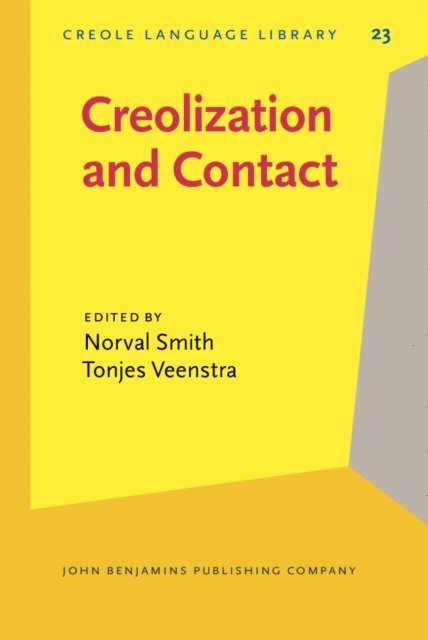
This volume contains revised and extended versions of a selection of the papers presented at “The Amsterdam Workshop on Language Contact and Creolization.” These studies apply the concept of relexification to creoles as well as other contact languages; highlight the relevance of strategies of second language learning for theories of pidgin/creole genesis; critically discuss the notions levelling (koine formation) and convergence; the relation between types of contact situations and processes of crosslinguistic influence; as well as the linguistic consequences of the social structure of the plantation system. In addition to discussing English-, French-, and Dutch-related creoles, the papers cover a wide range of contact languages spoken throughout Africa, Asia, and Europe. The breadth and coverage makes this an indispensable title for research in the field of contact linguistics.
E-bok
PDF, Engelska, 19941 714 kr
Läs direkt efter köp
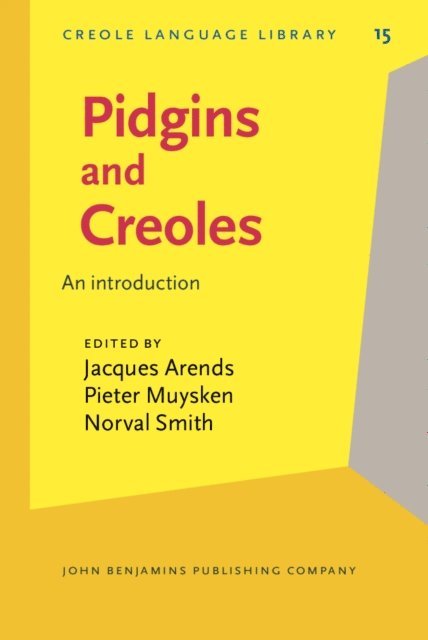
This introduction to the linguistic study of pidgin and creole languages is clearly designed as an introductory course book. It does not demand a high level of previous linguistic knowledge. Part I: General Aspects and Part II: Theories of Genesis constitute the core for presentation and discussion in the classroom, while Part III: Sketches of Individual Languages (such as Eskimo Pidgin, Haitian, Saramaccan, Shaba Swahili, Fa d''Ambu, Papiamentu, Sranan, Berbice Dutch) and Part IV: Grammatical Features (such as TMA particles and auxiliaries, noun phrases, reflexives, serial verbs, fronting) can form the basis for further exploration. A concluding chapter draws together the different strands of argumentation, and the annotated list provides the background information on several hundred pidgins, creoles and mixed languages.Diversity rather than unity is taken to be the central theme, and for the first time in an introduction to pidgins and creoles, the Atlantic creoles receive the attention they deserve. Pidgins are not treated as necessarily an intermediate step on the way to creoles, but as linguistic entities in their own right with their own characteristics. In addition to pidgins, mixed languages are treated in a separate chapter.Research on pidgin and creole languages during the past decade has yielded an abundance of uncovered material and new insights. This introduction, written jointly by the creolists of the University of Amsterdam, could not have been written without recourse to this new material.