M.W. Rosegrant - Böcker
Visar alla böcker från författaren M.W. Rosegrant. Handla med fri frakt och snabb leverans.
2 produkter
2 produkter
Del 15 - Natural Resource Management and Policy
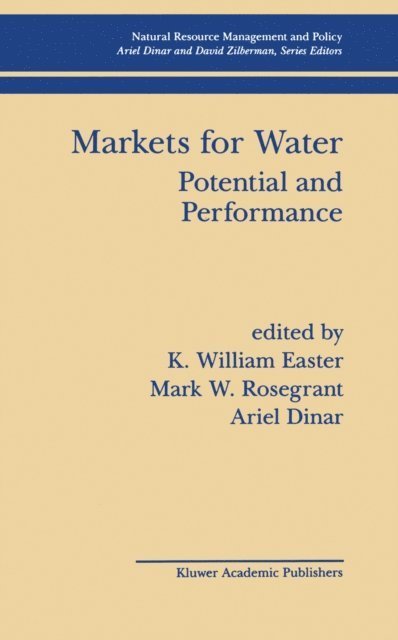
Markets for Water
Potential and Performance
Inbunden, Engelska, 1998
1 578 kr
Skickas inom 10-15 vardagar
Dispelling many of the myths surrounding water markets, this text gives readers a comprehensive picture of the way that markets have developed in different parts of the world. It is possible, for example, for a water market to fail, and for the transaction costs in water markets to be excessive. Too often water trading is banned because the water resources have been developed with public funds and the water agencies do not want to lose control over water. There is also a concern that poor farmers or households will be disadvantaged by water trading. These concerns about public resources and the poor are not very different from those that have been voiced in the past about land sales. The problem is that in many cases the poor already have limited access to resources, but this limit is not due to water trading. In fact, water trading is likely to expand the access to water for many small-scale farmers. The text provides an analytical framework for water market establishment. It develops the necessary conditions for water markets and illustrates how they can improve both water management and economic efficiency.Finally, the book gives readers an up-to-date picture of what we have learned about water markets in a wide range of countries, from the US to Chile and India in the late 20th century.
Del 15 - Natural Resource Management and Policy
Markets for Water
Potential and Performance
Häftad, Engelska, 2013
1 578 kr
Skickas inom 10-15 vardagar
Markets for Water: Potential and Performance dispels many of the myths surrounding water markets and gives readers a comprehensive picture of the way that markets have developed in different parts of the world. It is possible, for example, for a water market to fail, and for the transaction costs in water markets to be excessive. Too often water trading is banned because the water resources have been developed with public funds and the water agencies do not want to lose control over water. There is also a concern that poor farmers or households will be disadvantaged by water trading. These concerns about public resources and the poor are not very different from those that have been voiced in the past about land sales. The problem is that in many cases the poor already have limited access to resources, but this limit is not due to water trading. In fact, water trading is likely to expand the access to water for many small-scale farmers. Markets for Water: Potential and Performance provides an analytical framework for water market establishment. It develops the necessary conditions for water markets and illustrates how they can improve both water management and economic efficiency. Finally, the book gives readers an up-to-date picture of what we have learned about water markets in a wide range of countries, from the US to Chile and India.