Nadine Appelhans - Böcker
Visar alla böcker från författaren Nadine Appelhans. Handla med fri frakt och snabb leverans.
5 produkter
5 produkter
661 kr
Skickas
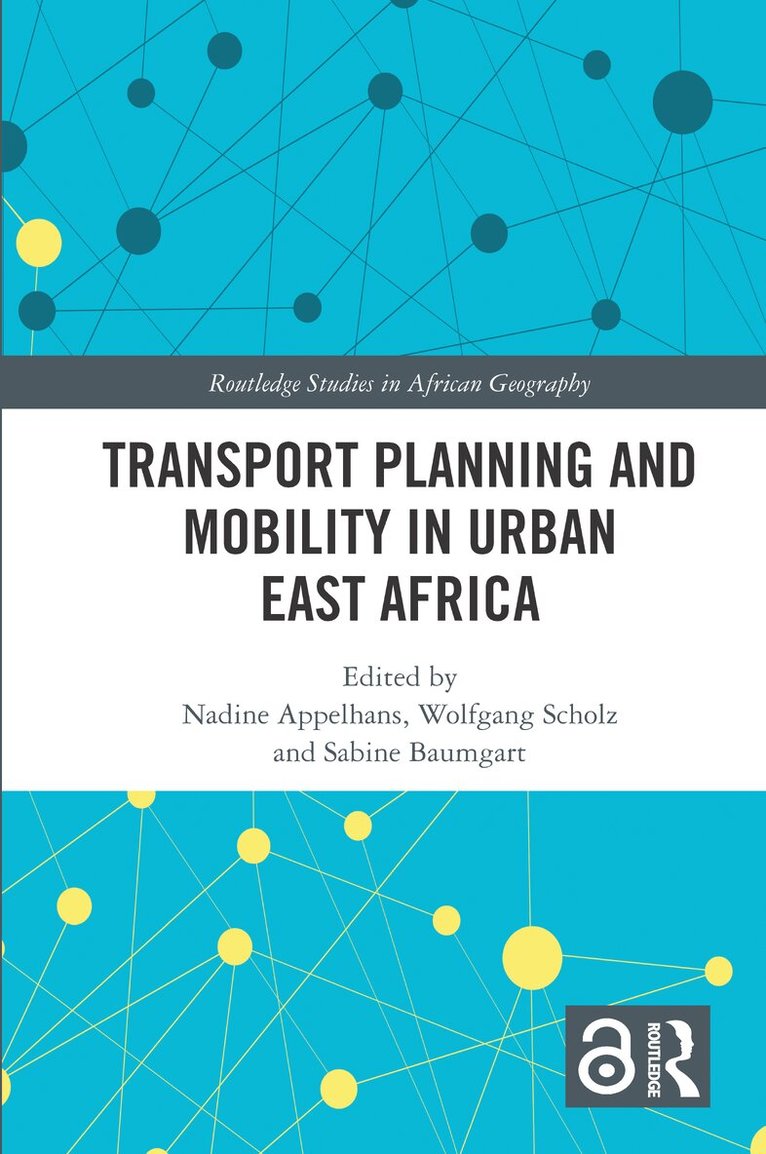
This book critically explores the relationship between mobility patterns, transport provision and urban development in East African cities.Bringing together contributions on the futures of mobility in urban East Africa, the chapters examine transport provision, mobility patterns, location-specific modes of transport and transformative factors for transport and mobility in the rapidly urbanising region. The book outlines different mobility needs to be addressed in transport planning to serve and shape the respective cities and examines the decision-making process in transport planning and the level of accountability to the public. The contributors show the dialectic between innovation in transport/mobility and urban development under rapid urbanisation and discusses how to practically integrate mobility and transport provision into urban development.This book will be of interest to scholars in urban planning, transport planning, transport geography, social sciences and African studies.
617 kr
Skickas inom 10-15 vardagar
This book critically explores the relationship between mobility patterns, transport provision and urban development in East African cities.Bringing together contributions on the futures of mobility in urban East Africa, the chapters examine transport provision, mobility patterns, location-specific modes of transport and transformative factors for transport and mobility in the rapidly urbanising region. The book outlines different mobility needs to be addressed in transport planning to serve and shape the respective cities and examines the decision-making process in transport planning and the level of accountability to the public. The contributors show the dialectic between innovation in transport/mobility and urban development under rapid urbanisation and discusses how to practically integrate mobility and transport provision into urban development.This book will be of interest to scholars in urban planning, transport planning, transport geography, social sciences and African studies.
2 088 kr
Skickas inom 10-15 vardagar
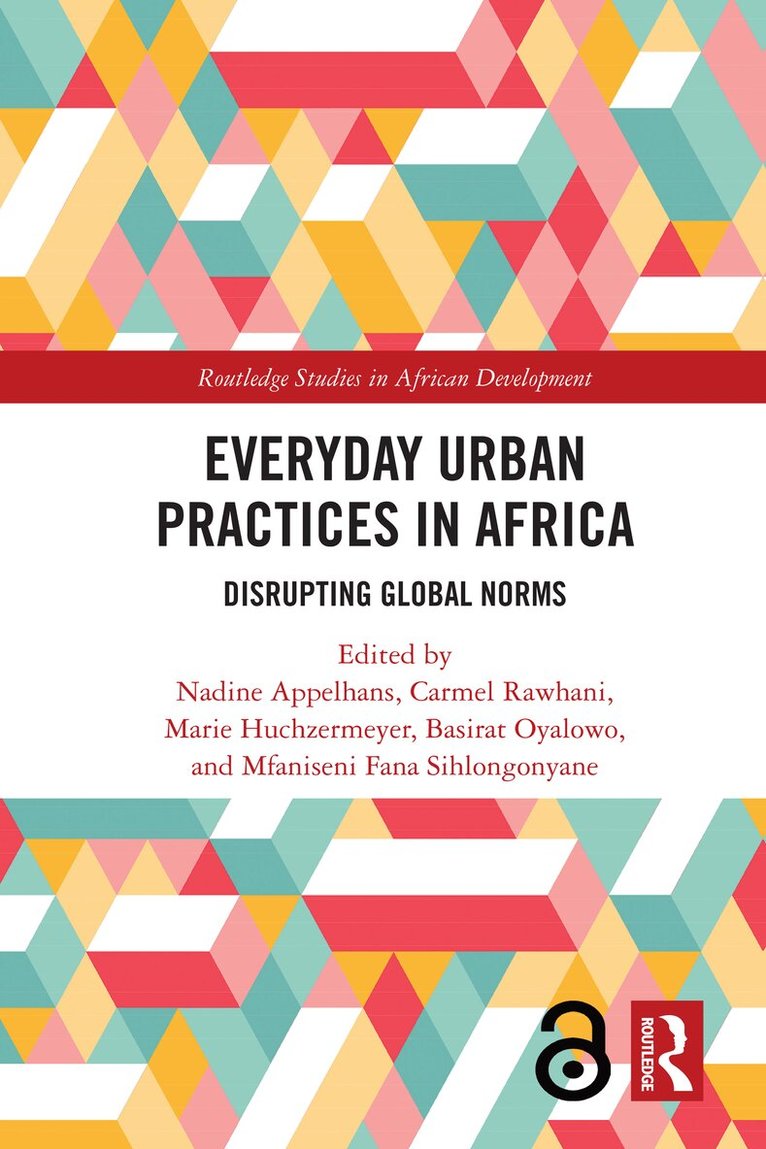
This book disrupts the dominant underlying international norms informing urban development strategies across African cities. International policy frameworks have created a new universal agenda for developing cities. However, these frameworks have also imposed global paradigms and discourses that are often in conflict with local urbanisms. As we approach the deadline for achieving the Sustainable Development Goals, there is need for reflection and deliberation on a post-2030 agenda.The authors identify powerful assumptions, norms, and positionalities that obfuscate the efforts to achieve sustainable development in African cities, as well as along the North–South divide. They argue that a disruptive critique of these normative concepts, grounded in the lived African urban everyday, opens up opportunities to dismantle their assumed neutrality. Through disruption, the authors critically re-interpret the meanings of policy and the praxis of local urbanism, ultimately challenging the logic of universalising concepts underpinning implementation in the current international policy system, and asserting the need for contextualised urban policies.The book will be of interest to scholars and students of urban studies, development planning, urban governance, human settlements, development studies, urban geography, and African studies. It will also be useful for practitioners including town and regional/urban planners, urban policy consultants, and international development cooperation agencies.The Open Access version of this book, available at http://www.taylorfrancis.com, has been made available under a Creative Commons Attribution-Non Commercial-No Derivatives (CC-BY-NC-ND) 4.0 license.
630 kr
Skickas inom 10-15 vardagar
This book disrupts the dominant underlying international norms informing urban development strategies across African cities. International policy frameworks have created a new universal agenda for developing cities. However, these frameworks have also imposed global paradigms and discourses that are often in conflict with local urbanisms. As we approach the deadline for achieving the Sustainable Development Goals, there is need for reflection and deliberation on a post-2030 agenda.The authors identify powerful assumptions, norms, and positionalities that obfuscate the efforts to achieve sustainable development in African cities, as well as along the North–South divide. They argue that a disruptive critique of these normative concepts, grounded in the lived African urban everyday, opens up opportunities to dismantle their assumed neutrality. Through disruption, the authors critically re-interpret the meanings of policy and the praxis of local urbanism, ultimately challenging the logic of universalising concepts underpinning implementation in the current international policy system, and asserting the need for contextualised urban policies.The book will be of interest to scholars and students of urban studies, development planning, urban governance, human settlements, development studies, urban geography, and African studies. It will also be useful for practitioners including town and regional/urban planners, urban policy consultants, and international development cooperation agencies.The Open Access version of this book, available at http://www.taylorfrancis.com, has been made available under a Creative Commons Attribution-Non Commercial-No Derivatives (CC-BY-NC-ND) 4.0 license.
573 kr
Skickas inom 11-20 vardagar
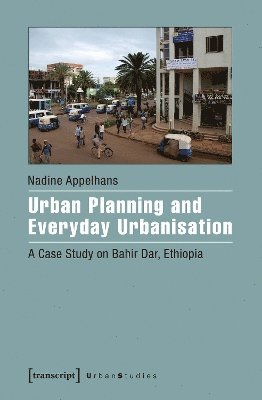
Urbanisation in Bahir Dar, Ethiopia, poses challenges to urban living conditions. Despite large scale housing programmes from the side of the government, construction and settling processes have largely remained incremental. Nadine Appelhans focuses on the relation between statutory planning and practices of everyday urbanisation. The findings from Bahir Dar suggest that some mundane regimes of building the city are patronised, while others are considered undesired by policy makers. Based on this insight, the author argues that urban development in Bahir Dar needs to be locally grounded, differentiated and inclusive to avoid further tendencies of segregation.