Nadya Nedelsky – författare
Visar alla böcker från författaren Nadya Nedelsky. Handla med fri frakt och snabb leverans.
8 produkter
Encyclopedia of Transitional Justice
Av Lavinia Stan, Nadya Nedelsky
Inbunden, 2015
314 kr
Lägg i varukorg
Encyclopedia of Transitional Justice
Av Lavinia Stan, Nadya Nedelsky
Inbunden, 2015
307 kr
Lägg i varukorg
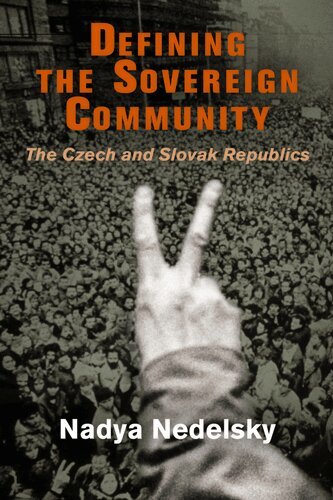
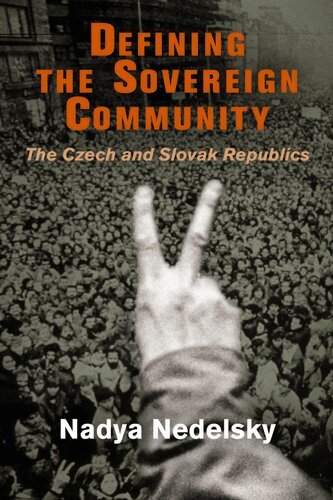
Defining the Sovereign Community
The Czech and Slovak Republics
E-bok, 2012
1180 kr
Lägg i varukorg
Though they shared a state for most of the twentieth century, when the Czechs and Slovaks split in 1993 they founded their new states on different definitions of sovereignty. The Czech Constitution employs a civic model, founding the state in the name of "the citizens of the Czech Republic," while …
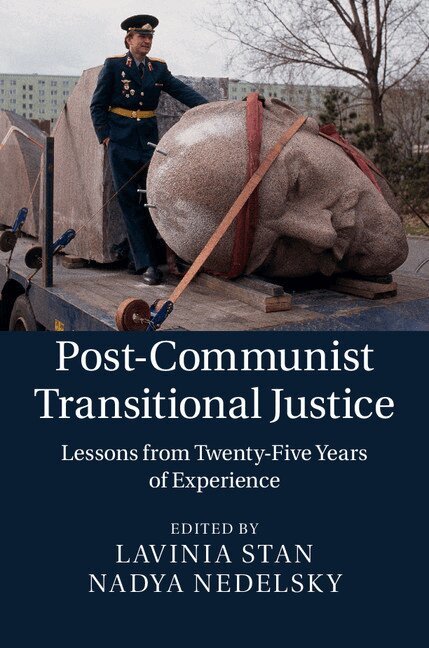
Post-Communist Transitional Justice
Lessons from Twenty-Five Years of Experience
Av Lavinia Stan, Nadya Nedelsky
Inbunden, 2015
1813 kr
Lägg i varukorg
Taking stock of the twenty-fifth anniversary of the collapse of the communist regimes of Central and Eastern Europe, this volume explores how these societies have grappled with the serious human rights violations of past regimes. It focuses on the most important factors that have shaped the nature, …
Encyclopedia of Transitional Justice
Av Nadya Nedelsky, Lavinia Stan
E-bok, 2023
5832 kr
Lägg i varukorg
Encyclopedia of Transitional Justice
Av Nadya Nedelsky, Lavinia Stan
E-bok, 2023
5832 kr
Lägg i varukorg
Defining the Sovereign Community
The Czech and Slovak Republics
Inbunden, 2009
1011 kr
Tillfälligt slut
Though they shared a state for most of the twentieth century, when the Czechs and Slovaks split in 1993 they founded their new states on different definitions of sovereignty. The Czech Constitution employs a civic model, founding the state in the name of "the citizens of the Czech Republic," while …
Encyclopedia of Transitional Justice 3 Volume Hardback Set
Av Lavinia Stan, Nadya Nedelsky
2023
7666 kr
Tillfälligt slut
The Encyclopedia of Transitional Justice remains the premier reference tool that presents the state of the art in the field of reckoning with the legacy of past gross human rights abuses. Almost 200 scholars and practitioners from all continents summarize country efforts to address and redress the …