Lavinia Stan – författare
Visar alla böcker från författaren Lavinia Stan. Handla med fri frakt och snabb leverans.
31 produkter
Religion and Politics in Post-Communist Romania
Av Lucian Turcescu, Lavinia Stan
E-bok, 2007
1133 kr
Lägg i varukorg
In the post-communist era it has become evident that the emerging democracies in Eastern Europe will be determined by many factors, only some of them political. Throughout the region, the Orthodox, Roman Catholic, and Greek Catholic churches have tried to impose their views on democracy through …
Religion and Politics in Post-Communist Romania
Av Lavinia Stan, Lucian Turcescu
Inbunden, 2007
1720 kr
Lägg i varukorg
In the post-communist era it has become evident that the emerging democracies in Eastern Europe will be determined by many factors, only some of them political. Throughout the region, the Orthodox, Roman Catholic, and Greek Catholic churches have tried to impose their views on democracy through …
Church, State, and Democracy in Expanding Europe
Av Lavinia Stan, Lucian Turcescu
Inbunden, 2011
1793 kr
Lägg i varukorg
Lavinia Stan and Lucian Turcescu examine the relationship between religion and politics in ten former communist Eastern European countries. Contrary to widespread theories of increasing secularization, Stan and Turcescu argue that in most of these countries, the populations have shown themselves to …
Religion and Politics in Post-Communist Romania
Av Lucian Turcescu, Lavinia Stan
E-bok, 2007
1133 kr
Lägg i varukorg
In the post-communist era it has become evident that the emerging democracies in Eastern Europe will be determined by many factors, only some of them political. Throughout the region, the Orthodox, Roman Catholic, and Greek Catholic churches have tried to impose their views on democracy through …
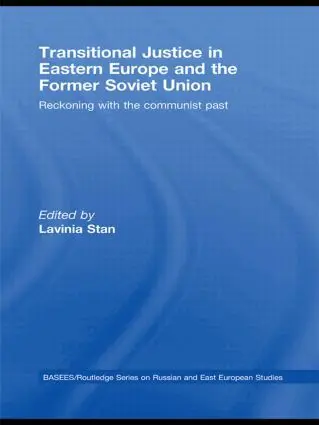
Transitional Justice in Eastern Europe and the former Soviet Union
Reckoning with the communist past
Av Lavinia Stan
Häftad, 2010
978 kr
Lägg i varukorg
During the last two decades, the countries of Eastern Europe and the former Soviet Union have attempted to address the numerous human rights abuses that characterized the decades of communist rule. This book examines the main processes of transitional justice that permitted societies in those …
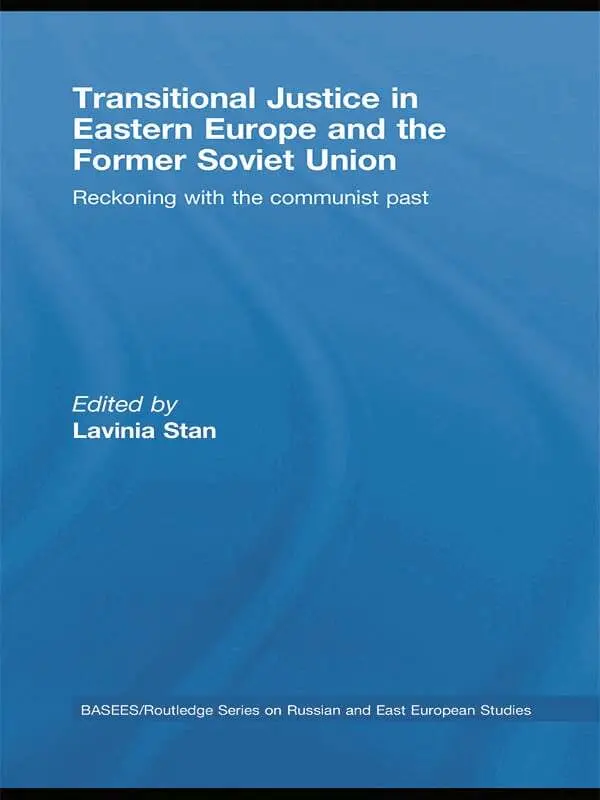
Transitional Justice in Eastern Europe and the former Soviet Union
Reckoning with the communist past
Av Lavinia Stan
Inbunden, 2008
2590 kr
Lägg i varukorg
During the last two decades, the countries of Eastern Europe and the former Soviet Union have attempted to address the numerous human rights abuses that characterized the decades of communist rule. This book examines the main processes of transitional justice that permitted societies in those …
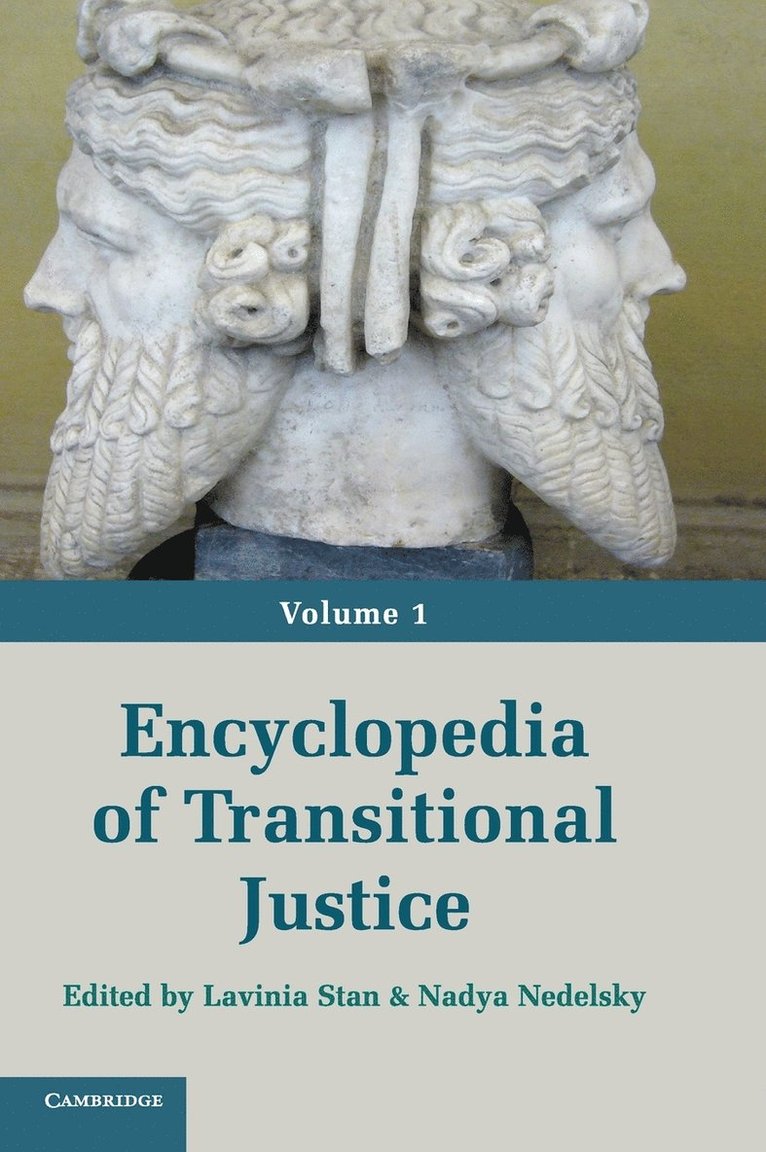
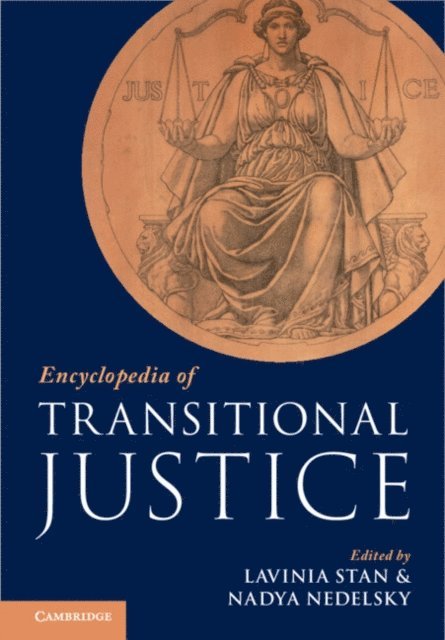
Encyclopedia of Transitional Justice
Av Lavinia Stan, Nadya Nedelsky
Inbunden, 2015
314 kr
Lägg i varukorg
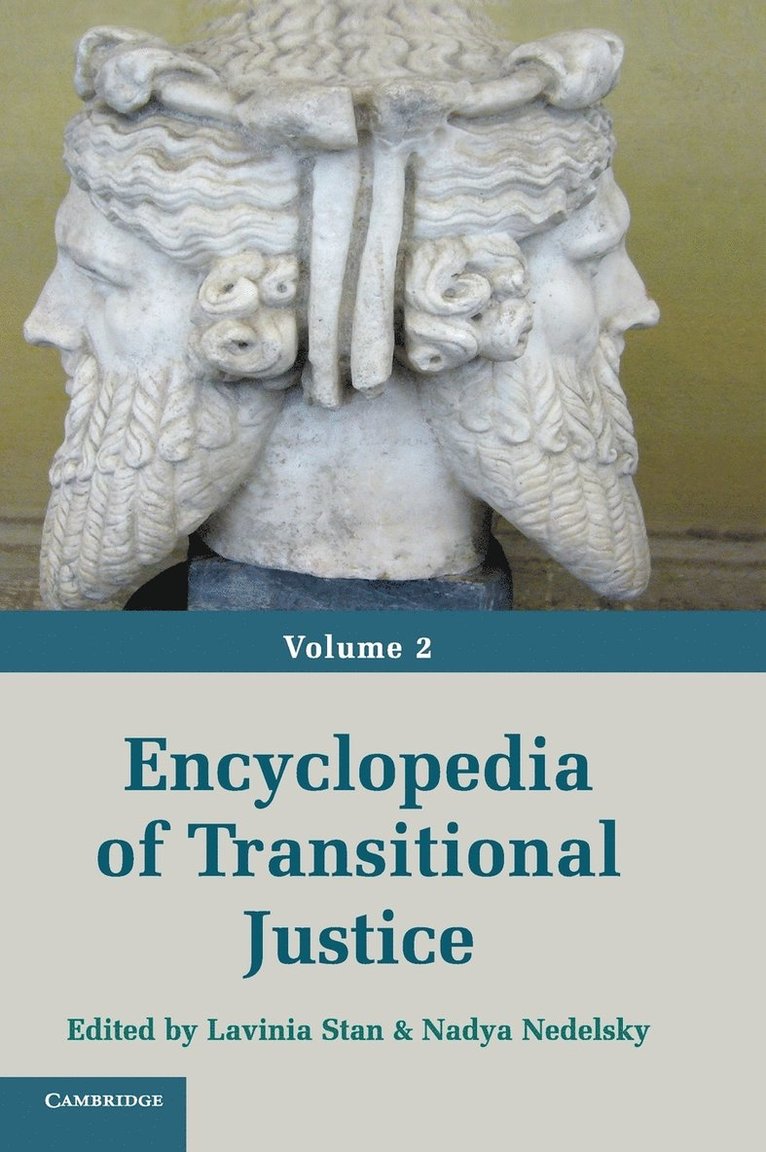
Encyclopedia of Transitional Justice
Av Lavinia Stan, Nadya Nedelsky
Inbunden, 2015
307 kr
Lägg i varukorg
Leaders and Laggards – Governance, Civicness, and Ethnicity in Post–Communism Romania
Av Lavinia Stan
Inbunden, 2003
397 kr
Lägg i varukorg
The collapse of the European communist regimes has provided social scientists with the rare opportunity to observe the birth of new political institutions and to reexamine the effect of political behavior on institutional change. In the last decade, scholars and policy makers have argued that new …
East Central Europe since 1989
Politics, Culture, and Society
Av Sabrina P. Ramet, Lavinia Stan
Inbunden, 2024
2590 kr
Lägg i varukorg
This groundbreaking treatment of post-communist developments in East Central Europe examines politics, economics, media, religious institutions, transitional justice, gender inequality, and literature, highlighting the overt functions, latent functions, and side effects associated with each …
East Central Europe since 1989
Politics, Culture, and Society
Av Sabrina P. Ramet, Lavinia Stan
Häftad, 2024
623 kr
Lägg i varukorg
This groundbreaking treatment of post-communist developments in East Central Europe examines politics, economics, media, religious institutions, transitional justice, gender inequality, and literature, highlighting the overt functions, latent functions, and side effects associated with each …
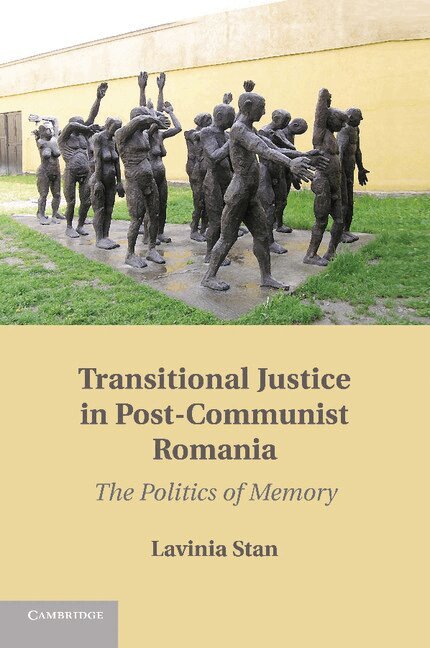
Transitional Justice in Post-Communist Romania
The Politics of Memory
Av Lavinia Stan
Inbunden, 2012
1505 kr
Lägg i varukorg
A close examination of an understudied European Union member state such as Romania reveals that, since 1989, post-Communist state and non-state actors have adopted a wide range of methods, processes and practices of working through the Communist past. Both the timing and the sequencing of these …
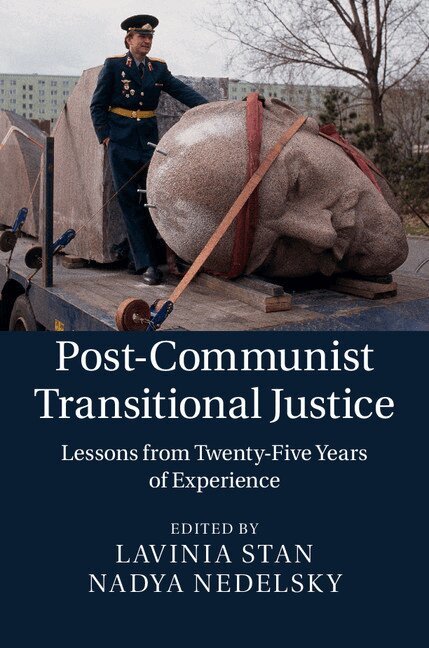
Post-Communist Transitional Justice
Lessons from Twenty-Five Years of Experience
Av Lavinia Stan, Nadya Nedelsky
Inbunden, 2015
1813 kr
Lägg i varukorg
Taking stock of the twenty-fifth anniversary of the collapse of the communist regimes of Central and Eastern Europe, this volume explores how these societies have grappled with the serious human rights violations of past regimes. It focuses on the most important factors that have shaped the nature, …
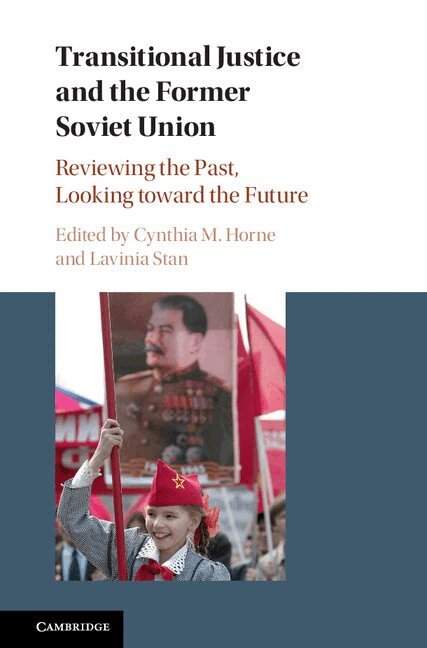
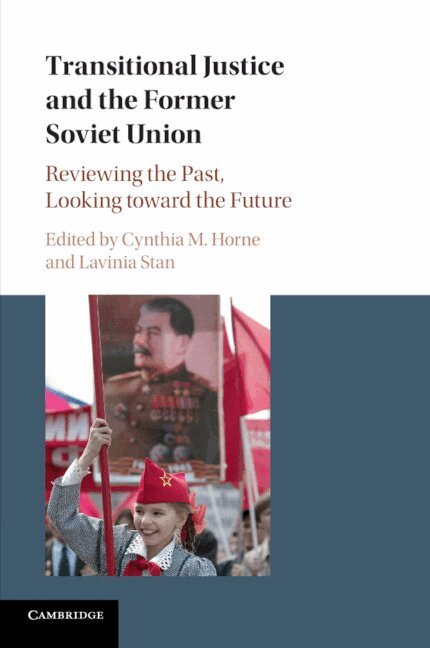
Transitional Justice and the Former Soviet Union
Reviewing the Past, Looking toward the Future
Av Cynthia M. Horne, Lavinia Stan
Inbunden, 2018
1979 kr
Lägg i varukorg
In the twenty-five years since the Soviet Union was dismantled, the countries of the former Soviet Union have faced different circumstances and responded differently to the need to redress and acknowledge the communist past and the suffering of their people. While some have adopted transitional …
Transitional Justice in Post-Communist Romania
The Politics of Memory
Av Lavinia Stan
Häftad, 2014
523 kr
Lägg i varukorg
A close examination of an understudied European Union member state such as Romania reveals that, since 1989, post-Communist state and non-state actors have adopted a wide range of methods, processes and practices of working through the Communist past. Both the timing and the sequencing of these …
Encyclopedia of Transitional Justice
Av Nadya Nedelsky, Lavinia Stan
E-bok, 2023
5832 kr
Lägg i varukorg
Encyclopedia of Transitional Justice
Av Nadya Nedelsky, Lavinia Stan
E-bok, 2023
5832 kr
Lägg i varukorg
Transitional Justice in Eastern Europe and the former Soviet Union
Reckoning with the communist past
Av Lavinia Stan
E-bok, 2009
813 kr
Lägg i varukorg
During the last two decades, the countries of Eastern Europe and the former Soviet Union have attempted to address the numerous human rights abuses that characterized the decades of communist rule. This book examines the main processes of transitional justice that permitted societies in those …
Transitional Justice in Eastern Europe and the former Soviet Union
Reckoning with the communist past
Av Lavinia Stan
E-bok, 2009
795 kr
Lägg i varukorg
During the last two decades, the countries of Eastern Europe and the former Soviet Union have attempted to address the numerous human rights abuses that characterized the decades of communist rule. This book examines the main processes of transitional justice that permitted societies in those …
Transitional Justice and the Former Soviet Union
Reviewing the Past, Looking toward the Future
Av Cynthia M. Horne, Lavinia Stan
Häftad, 2019
687 kr
Lägg i varukorg
In the twenty-five years since the Soviet Union was dismantled, the countries of the former Soviet Union have faced different circumstances and responded differently to the need to redress and acknowledge the communist past and the suffering of their people. While some have adopted transitional …
Post-Communist Romania at Twenty-Five
Linking Past, Present, and Future
Inbunden, 2015
1705 kr
Lägg i varukorg
2014 marked the 25th anniversary of the collapse of communist regimes in Eastern Europe. The events of 1989 are widely seen as having ushered in new all-encompassing reforms in almost all areas of life. In few other places were reforms more contested and divisive than in Romania, a country that …
Post-Communist Romania at Twenty-Five
Linking Past, Present, and Future
Häftad, 2019
615 kr
Lägg i varukorg
2014 marked the 25th anniversary of the collapse of communist regimes in Eastern Europe. The events of 1989 are widely seen as having ushered in new all-encompassing reforms in almost all areas of life. In few other places were reforms more contested and divisive than in Romania, a country that …
Church Reckoning with Communism in Post-1989 Romania
Av Lucian Turcescu, Lavinia Stan
Inbunden, 2021
1210 kr
Lägg i varukorg
The present volume focuses on the relationship with Communism of Romania's most important religious denominations and their attempt to cope with that difficult past which continues to cast an important shadow over their present. For the first time ever, this volume considers both the majority …
Churches, Memory and Justice in Post-Communism
Av Lucian Turcescu, Lavinia Stan
Inbunden, 2021
1532 kr
Lägg i varukorg
This book is the first to systematically examine the connection between religion and transitional justice in post-communism. There are four main goals motivating this book: 1) to explain how civil society (groups such as religious denominations) contribute to transitional justice efforts to address …
Churches, Memory and Justice in Post-Communism
Av Lavinia Stan, Lucian Turcescu
E-bok, 2021
1942 kr
Lägg i varukorg
This book is the first to systematically examine the connection between religion and transitional justice in post-communism. There are four main goals motivating this book: 1) to explain how civil society (groups such as religious denominations) contribute to transitional justice efforts to address …
Churches, Memory and Justice in Post-Communism
Av Lucian Turcescu, Lavinia Stan
Häftad, 2022
1532 kr
Lägg i varukorg
This book is the first to systematically examine the connection between religion and transitional justice in post-communism. There are four main goals motivating this book: 1) to explain how civil society (groups such as religious denominations) contribute to transitional justice efforts to address …
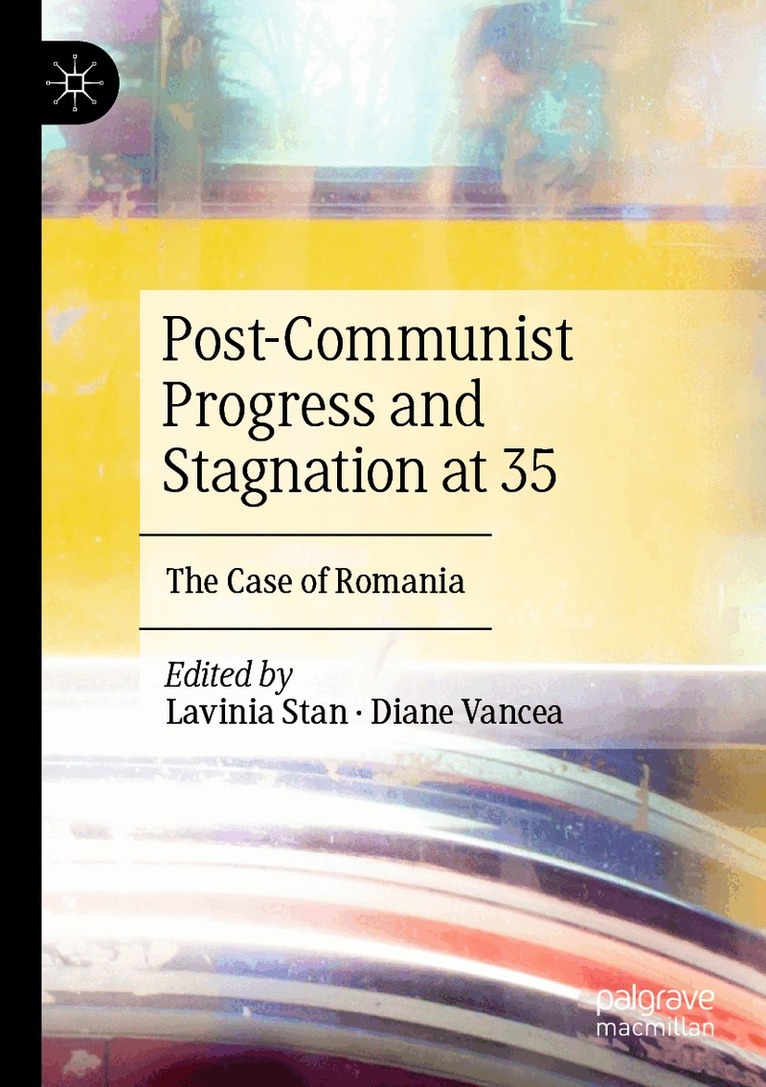
Post-Communist Progress and Stagnation at 35
The Case of Romania
Inbunden, 2024
1641 kr
Lägg i varukorg
This book examines Romania’s efforts to consolidate liberal democracy and market economy, as desired by the generation who effected change in 1989 and required by the European Union. The ousting of Nicolae Ceausescu, leader of an autarchic and nationalistic dictatorship, underscored the limitations …
Post-Communist Progress and Stagnation at 35
The Case of Romania
E-bok, 2024
2065 kr
Lägg i varukorg
This book examines Romania’s efforts to consolidate liberal democracy and market economy, as desired by the generation who effected change in 1989 and required by the European Union. The ousting of Nicolae Ceausescu, leader of an autarchic and nationalistic dictatorship, underscored the limitations …
Post-Communist Progress and Stagnation at 35
The Case of Romania
Häftad, 2025
1641 kr
Lägg i varukorg
This book examines Romania’s efforts to consolidate liberal democracy and market economy, as desired by the generation who effected change in 1989 and required by the European Union. The ousting of Nicolae Ceausescu, leader of an autarchic and nationalistic dictatorship, underscored the limitations …
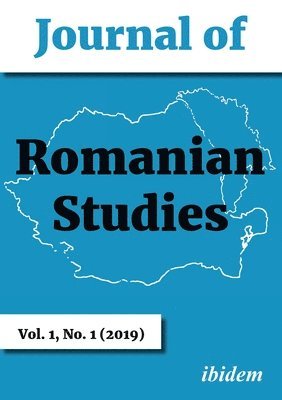
Journal of Romanian Studies
Volume 1,1 (2019)
Av Margaret Beissinger, Lavinia Stan m. fl.
Häftad, 2019
364 kr
Lägg i varukorg
Contents Vintilă Mihăilescu A Subjective Centenary: The Peasant Footprint in Recent Romanian History Katherine Verdery Notes on a Century of Surveillance Dennis Deletant Shattered Illusions: Britain and Iuliu Maniu, 1940–1945 Maria Bucur The Queen Is No Sister: Three Faces of Marie of Romania …