Nana Osei-Kofi - Böcker
Visar alla böcker från författaren Nana Osei-Kofi. Handla med fri frakt och snabb leverans.
5 produkter
5 produkter
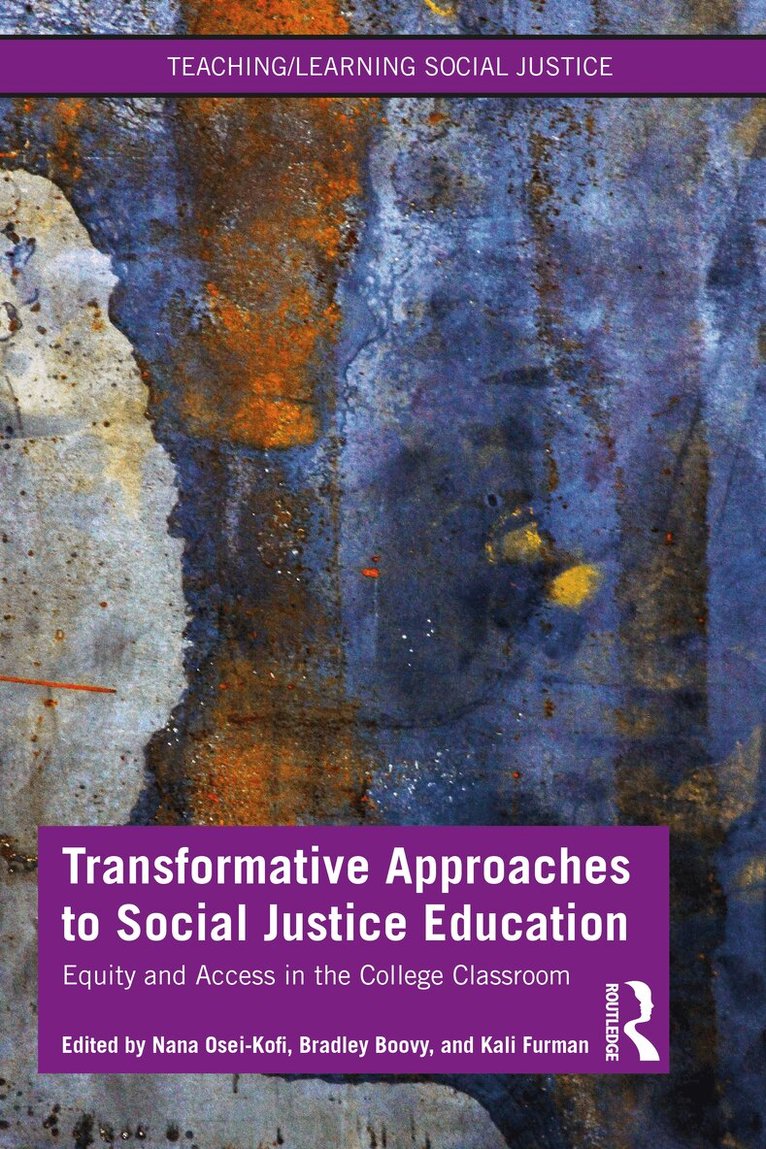
Transformative Approaches to Social Justice Education
Equity and Access in the College Classroom
Häftad, Engelska, 2021
468 kr
Skickas inom 10-15 vardagar
Transformative Approaches to Social Justice Education is a book for anyone with an interest in teaching and learning in higher education from a social justice perspective and with a commitment to teaching all students. This text offers a breadth of disciplinary perspectives on how to center difference, power, and systemic oppression in pedagogical practice, arguing that these elements are essential to knowledge formation and to teaching. Transformative Approaches to Social Justice Education is structured as an ongoing conversation among educators who believe that teaching from a social justice perspective is about much more than the type of readings and assignments found on course syllabi. Drawing on the broadest possible definition of curriculum transformation, the volume demonstrates that social justice education is about both educators’ social locations and about course content. It is also about knowing students and teaching beyond the traditional classroom to meaningfully include local communities, social movements, archives, and colleagues in student and academic affairs. Premised on the notion that continuous learning and growth is critical to educators with deep commitments to fostering critical consciousness through their teaching, Transformative Approaches to Social Justice Education offers interdisciplinary and innovative collaborative approaches to curriculum transformation that build on and extend existing scholarship on social justice education. Newly committed and established social justice pedagogues share their experiences taking up the many difficult questions pertaining to what it means for all of us to participate in shaping a more just, shared future.
Transformative Approaches to Social Justice Education
Equity and Access in the College Classroom
Inbunden, Engelska, 2021
2 032 kr
Skickas inom 10-15 vardagar
Transformative Approaches to Social Justice Education is a book for anyone with an interest in teaching and learning in higher education from a social justice perspective and with a commitment to teaching all students. This text offers a breadth of disciplinary perspectives on how to center difference, power, and systemic oppression in pedagogical practice, arguing that these elements are essential to knowledge formation and to teaching. Transformative Approaches to Social Justice Education is structured as an ongoing conversation among educators who believe that teaching from a social justice perspective is about much more than the type of readings and assignments found on course syllabi. Drawing on the broadest possible definition of curriculum transformation, the volume demonstrates that social justice education is about both educators’ social locations and about course content. It is also about knowing students and teaching beyond the traditional classroom to meaningfully include local communities, social movements, archives, and colleagues in student and academic affairs. Premised on the notion that continuous learning and growth is critical to educators with deep commitments to fostering critical consciousness through their teaching, Transformative Approaches to Social Justice Education offers interdisciplinary and innovative collaborative approaches to curriculum transformation that build on and extend existing scholarship on social justice education. Newly committed and established social justice pedagogues share their experiences taking up the many difficult questions pertaining to what it means for all of us to participate in shaping a more just, shared future.
352 kr
Skickas inom 7-10 vardagar
This is a work of cultural studies rooted in critical feminist thought that grapples with AfroSwedishness in relation to processes and experiences of racialization, imagination of self, and notions of belonging, agency, and kinship. Nana Osei-Kofi focuses on the function of diverse forms of critical cultural expressions, paying particular attention to their liberatory public pedagogical potential. Drawing from biographical narratives, documentary film, digital Black feminism, and queer organizing, Osei-Kofi offers insights into the embodied, affective, and experiential processes through which the formation of an emergent AfroSwedish coalitional identity is made possible. Through self-reflexive, structural, and community-based forms of exploration that resist binary oppositions, AfroSwedish Places of Belonging asks what the nomenclature of AfroSwede, AfroSwedish, and AfroSwedishness brings into being, what it makes possible, and what this means for Swedish society from both a historical and a contemporary perspective. This work brings together two identity categories that have historically been constructed as not only mutually exclusive but oppositional to detail the emergence of AfroSwedishness as a counterhegemonic and coalitional act. AfroSwedishness, Osei-Kofi argues, must be understood as a coalitional identity, one made legible through kinship-based community.
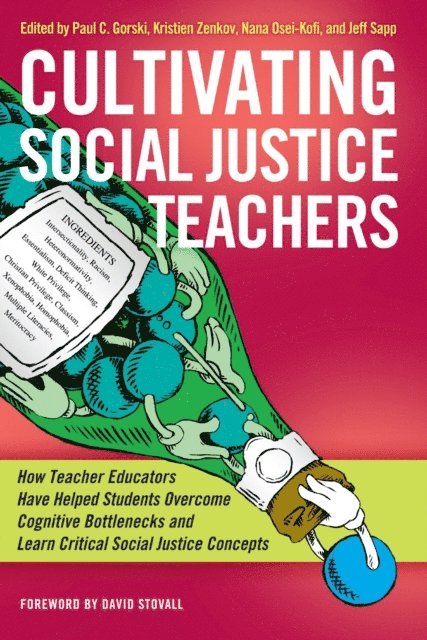
Cultivating Social Justice Teachers
How Teacher Educators Have Helped Students Overcome Cognitive Bottlenecks and Learn Critical Social Justice Concepts
Inbunden, Engelska, 2012
2 032 kr
Skickas inom 10-15 vardagar
Frustrated by the challenge of opening teacher education students to a genuine understanding of the social justice concepts vital for creating an equitable learning environment?Do your students ever resist accepting that lesbian, gay, bisexual, transgender, or queer people experience bias or oppression, or that their experiences even belong in a conversation about “diversity,” “multiculturalism,” or “social justice?”Recognizing these are common experiences for teacher educators, the contributors to this book present their struggles and achievements in developing approaches that have successfully guided students to complex understandings of such threshold concepts as White privilege, homophobia, and heteronormativity, overcoming the “bottlenecks” that impede progress toward bigger learning goals and understandings. The authors initiate a conversation – one largely absent in the social justice education literature and the discourse – about the common content- and pedagogy-related challenges that social justice educators face in their work, particularly for those doing this work in relative or literal isolation, where collegial understanding cannot be found down the hall or around the corner. In doing so they hope not only to help individual teachers in their practice, but also strengthen social justice teacher education more systemically. Each contributor identifies a learning bottleneck related to one or two specific threshold concepts that they have struggled to help their students learn. Each chapter is a narrative about individual efforts toward sometimes profound pedagogical adjustment, about ambiguity and cognitive dissonance and resistance, about trial and error, and about how these educators found ways to facilitate foundational social justice learning among a diversity of education students. Although this is not intended to be a “how-to” manual, or to provide five easy steps to enable straight students to “get” heteronormativity, each chapter does describe practical strategies that teachers might adapt as part of their own practice.
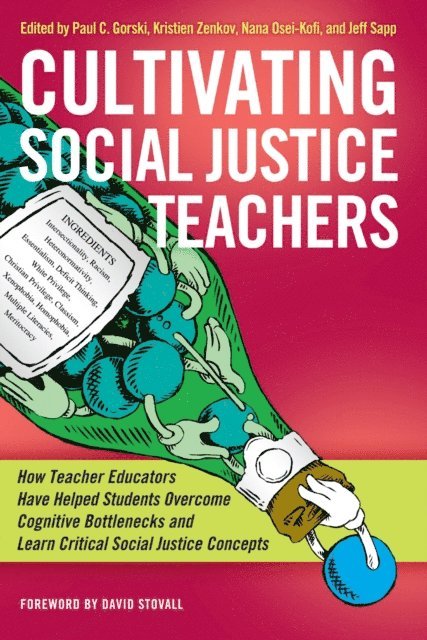
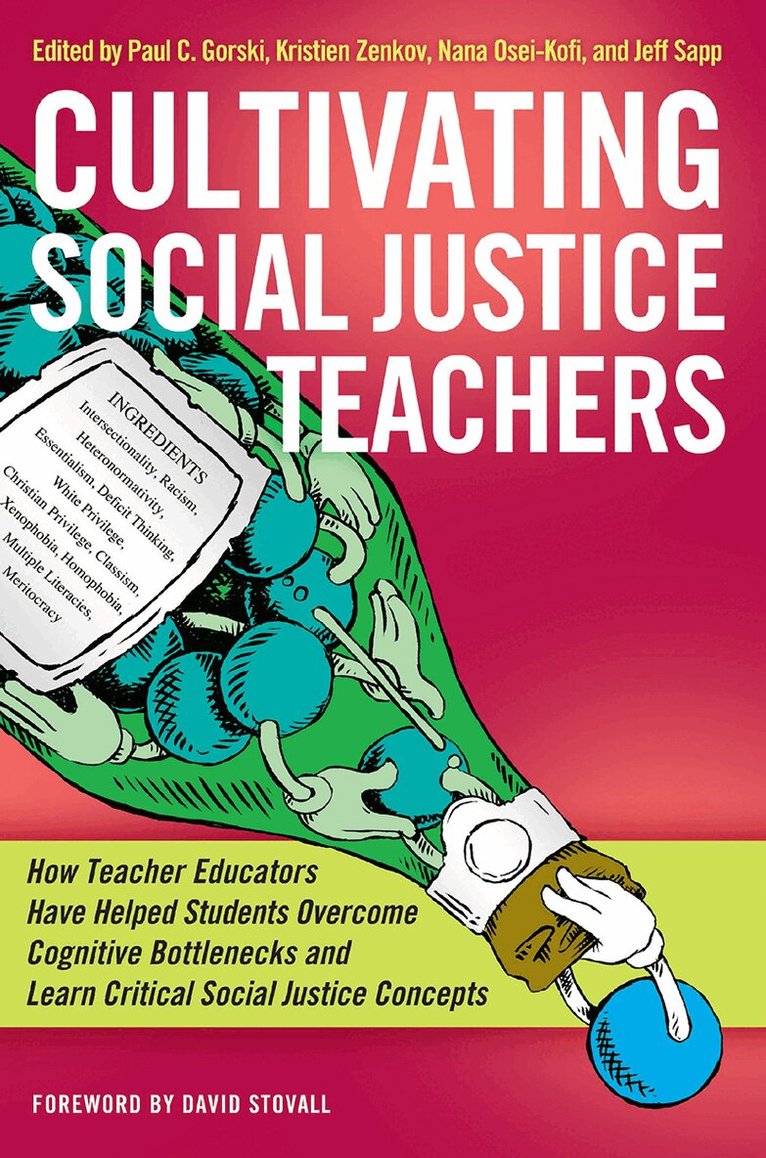
Cultivating Social Justice Teachers
How Teacher Educators Have Helped Students Overcome Cognitive Bottlenecks and Learn Critical Social Justice Concepts
Häftad, Engelska, 2012
468 kr
Skickas inom 10-15 vardagar
Frustrated by the challenge of opening teacher education students to a genuine understanding of the social justice concepts vital for creating an equitable learning environment?Do your students ever resist accepting that lesbian, gay, bisexual, transgender, or queer people experience bias or oppression, or that their experiences even belong in a conversation about “diversity,” “multiculturalism,” or “social justice?”Recognizing these are common experiences for teacher educators, the contributors to this book present their struggles and achievements in developing approaches that have successfully guided students to complex understandings of such threshold concepts as White privilege, homophobia, and heteronormativity, overcoming the “bottlenecks” that impede progress toward bigger learning goals and understandings. The authors initiate a conversation – one largely absent in the social justice education literature and the discourse – about the common content- and pedagogy-related challenges that social justice educators face in their work, particularly for those doing this work in relative or literal isolation, where collegial understanding cannot be found down the hall or around the corner. In doing so they hope not only to help individual teachers in their practice, but also strengthen social justice teacher education more systemically. Each contributor identifies a learning bottleneck related to one or two specific threshold concepts that they have struggled to help their students learn. Each chapter is a narrative about individual efforts toward sometimes profound pedagogical adjustment, about ambiguity and cognitive dissonance and resistance, about trial and error, and about how these educators found ways to facilitate foundational social justice learning among a diversity of education students. Although this is not intended to be a “how-to” manual, or to provide five easy steps to enable straight students to “get” heteronormativity, each chapter does describe practical strategies that teachers might adapt as part of their own practice.